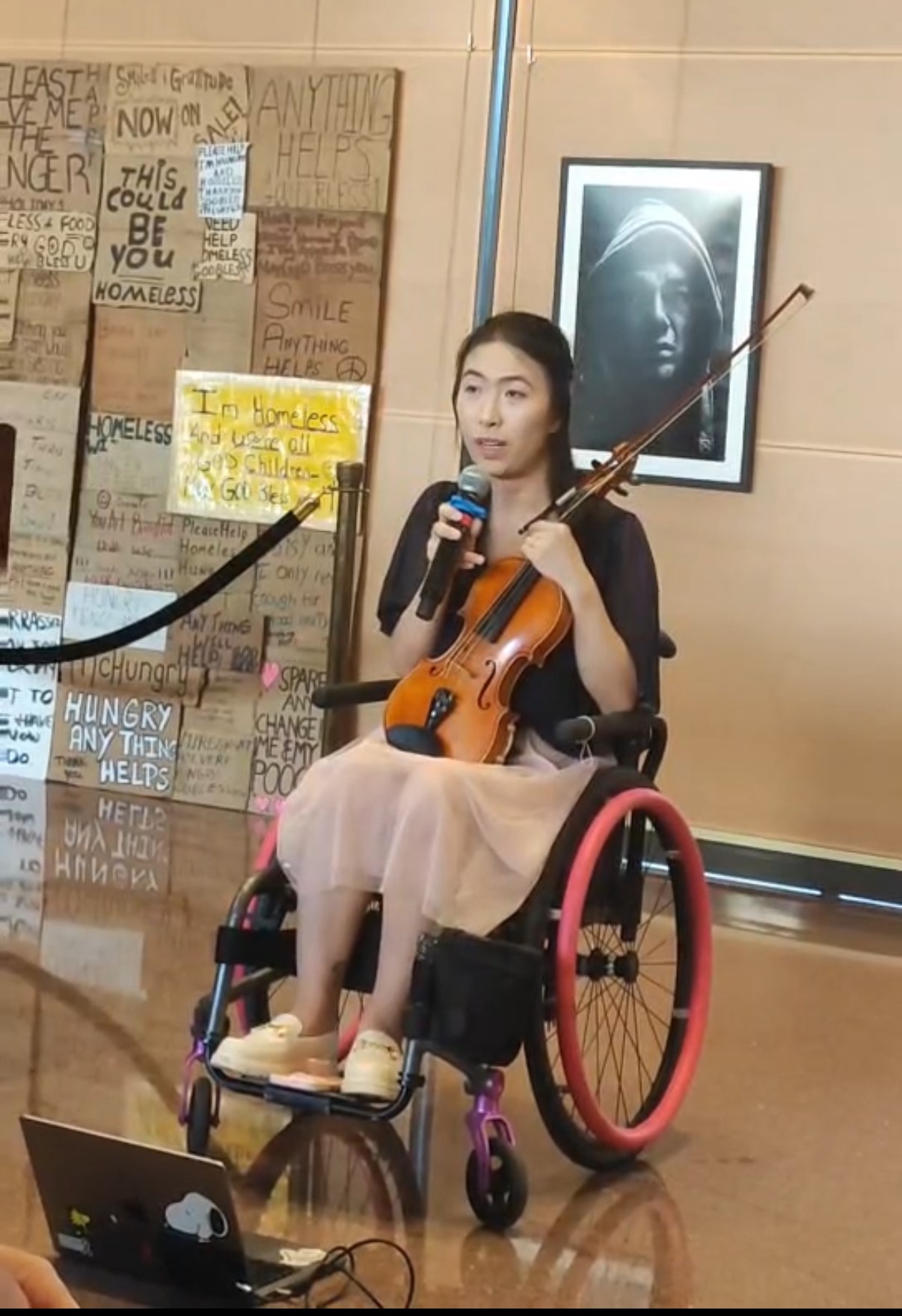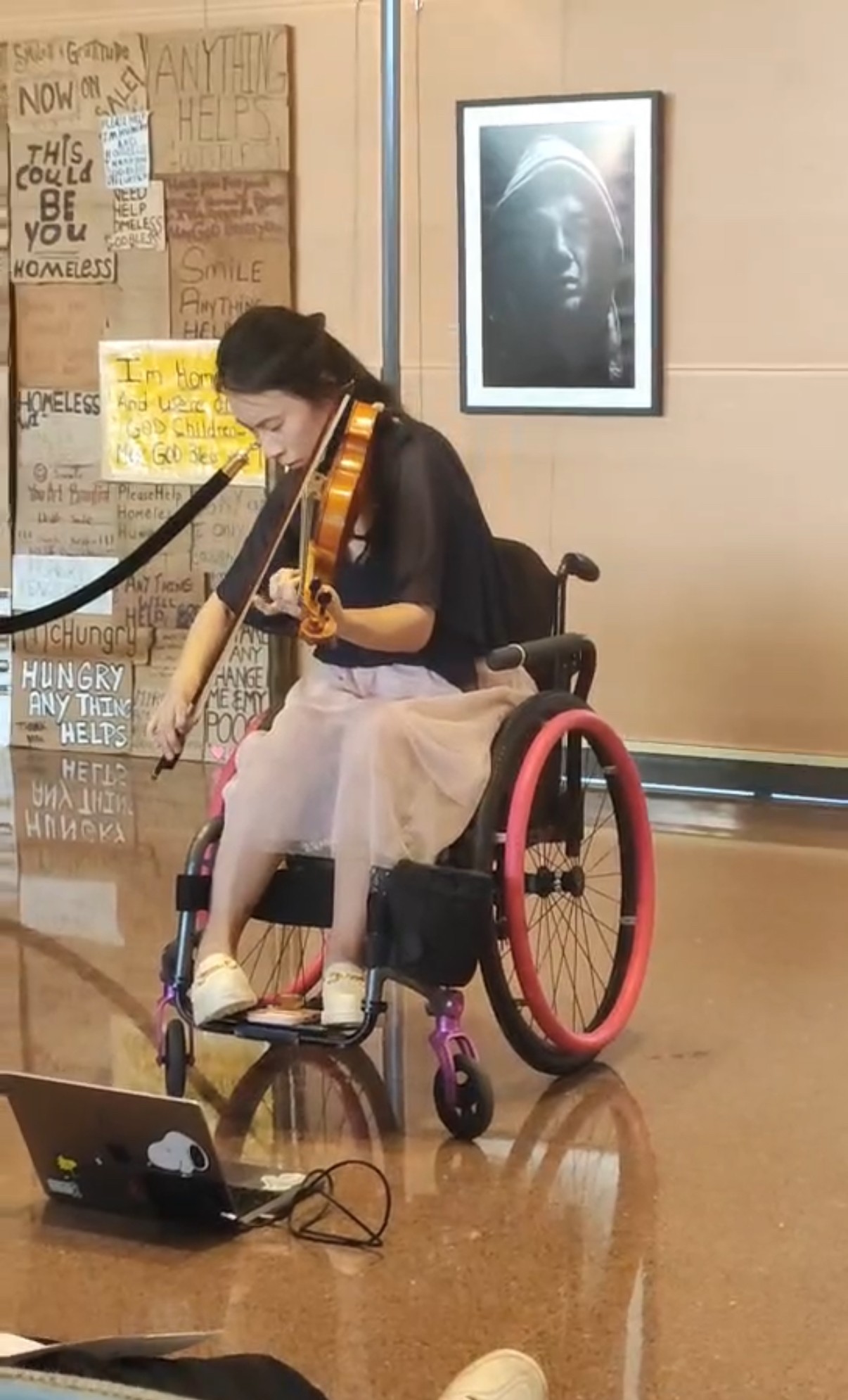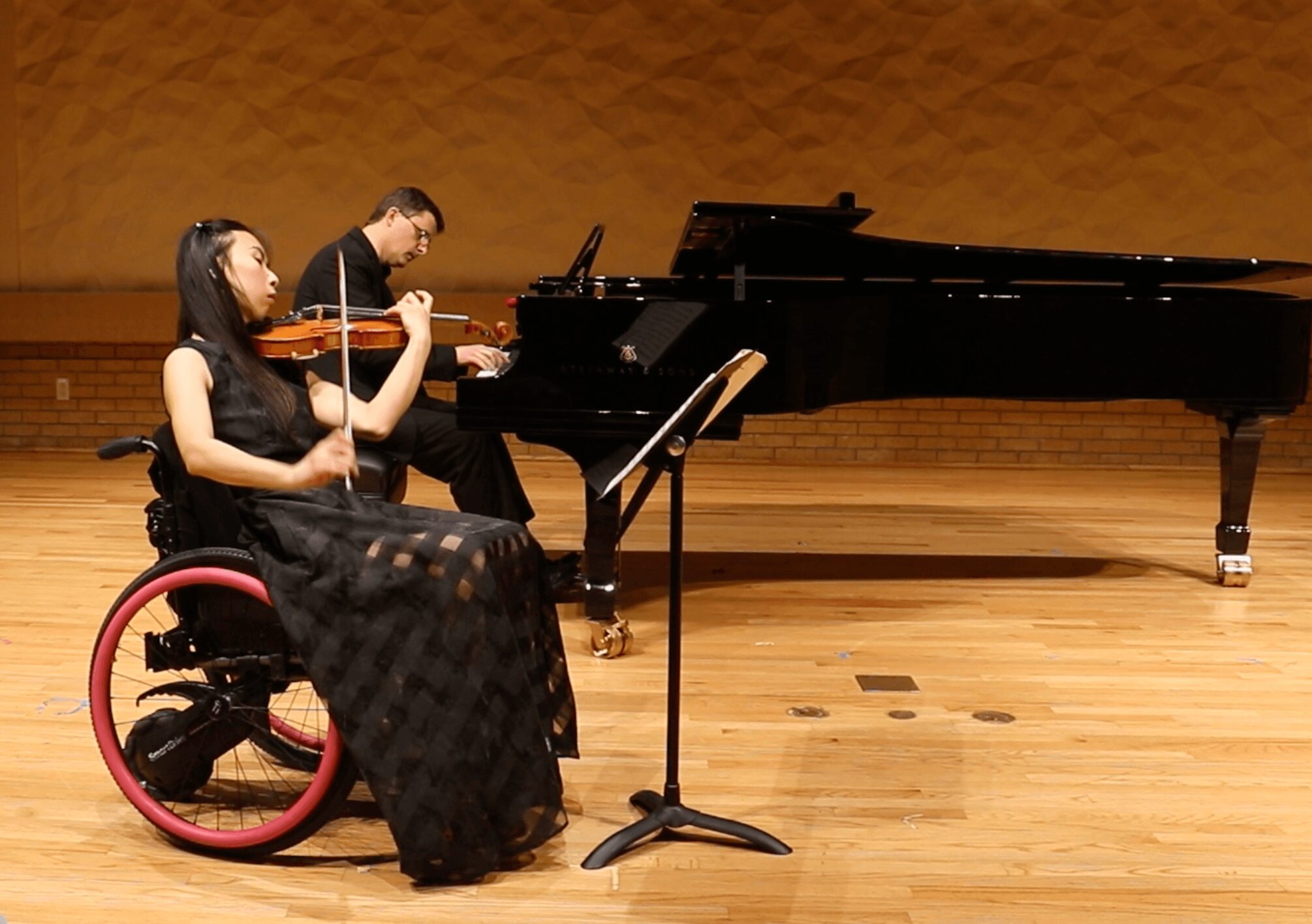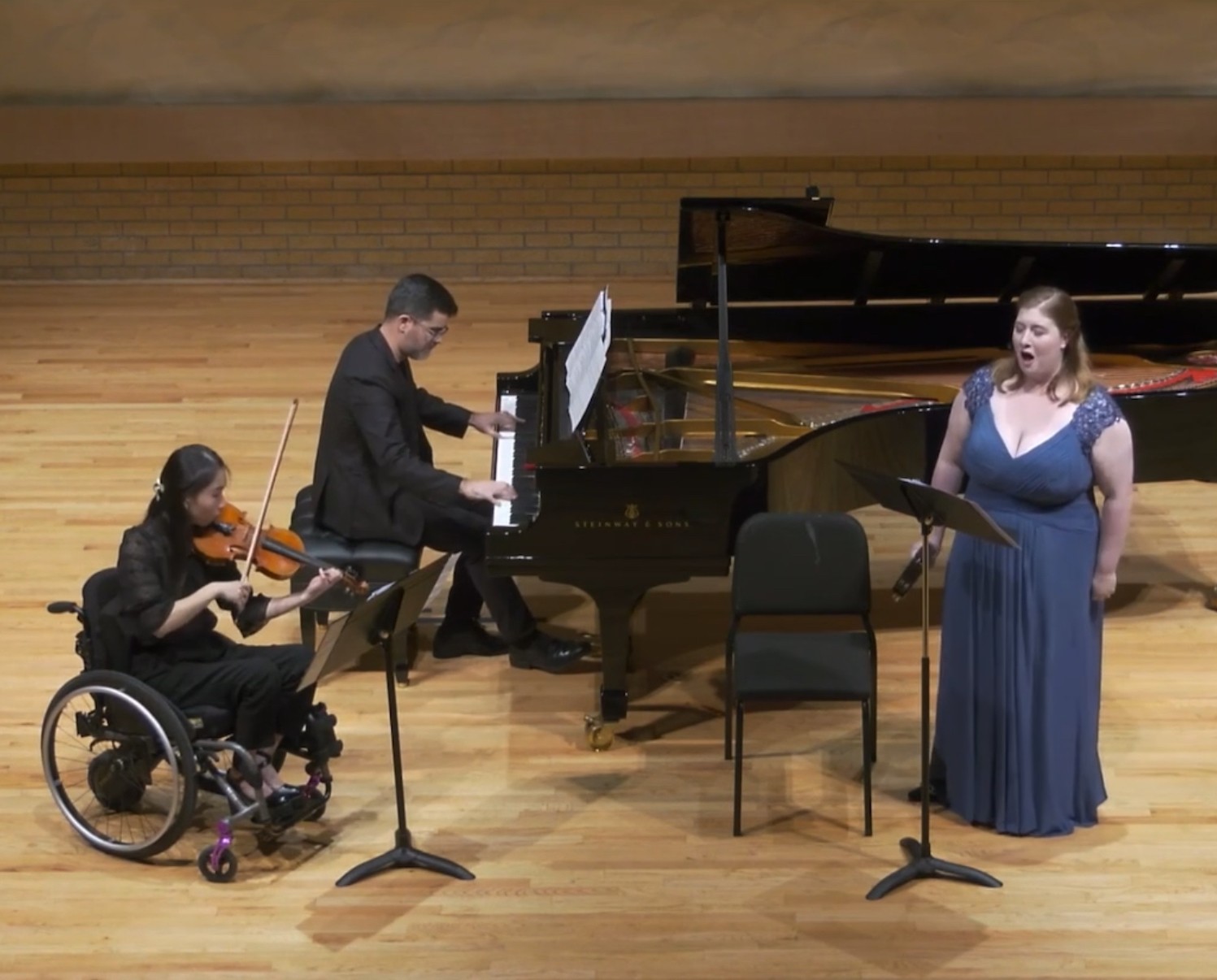





Today we’d like to introduce you to Amy Wang-Hiller.
Hi Amy, so excited to have you with us today. What can you tell us about your story?
I grew up in Shanghai, China, where I began playing the violin at age 3.5. My parents initially chose the violin for me, but they didn’t expect I would fall in love with it and ask to make violin my career as early as middle school. I have to give credit to my frequent tonsillitis and days with fevers at a younger age. One thing I was interested in doing was asking my parents for my violin and practicing right after my fevers went down. I met many great teachers early in my life. They might not have been famous or professional, but they were great people with a simple heart for teaching music, and they also influenced me as a person. My persistent passion for the violin, with their guidance, led me to pursue a bachelor’s degree in violin performance in Shanghai. And it also carried me from Shanghai to the United States. I came to the United States for my master’s degree. I am more than grateful for my professor’s recommendation, and I received full teaching assistance throughout the program. But two years had passed quickly.
When it was time for me to consider the next step at the beginning of my second year, I did not even give a gap year a thought. That year of audition season, I selected the longest and one of the most challenging violin concertos from a list. The moment I listened to the Elgar Violin Concerto, I fell in love with it. Even though my professor at the time told me I would need to put a lot of effort into it, there was only one phrase on my mind: “challenge accepted”. Similarly, after meeting this humorous German professor in a masterclass, I was determined to study with him. So, it’s as if life were already written. I smoothly passed the audition, received the scholarship, and moved to Denton to pursue my DMA (Doctor of Musical Arts) in violin performance in 2014. That audition year was also the year when my body started having more issues. With a small whiplash minor injury in 2013 and multiple different accidents to those ligaments, I slowly had deterioration while my music career was on the upswing.
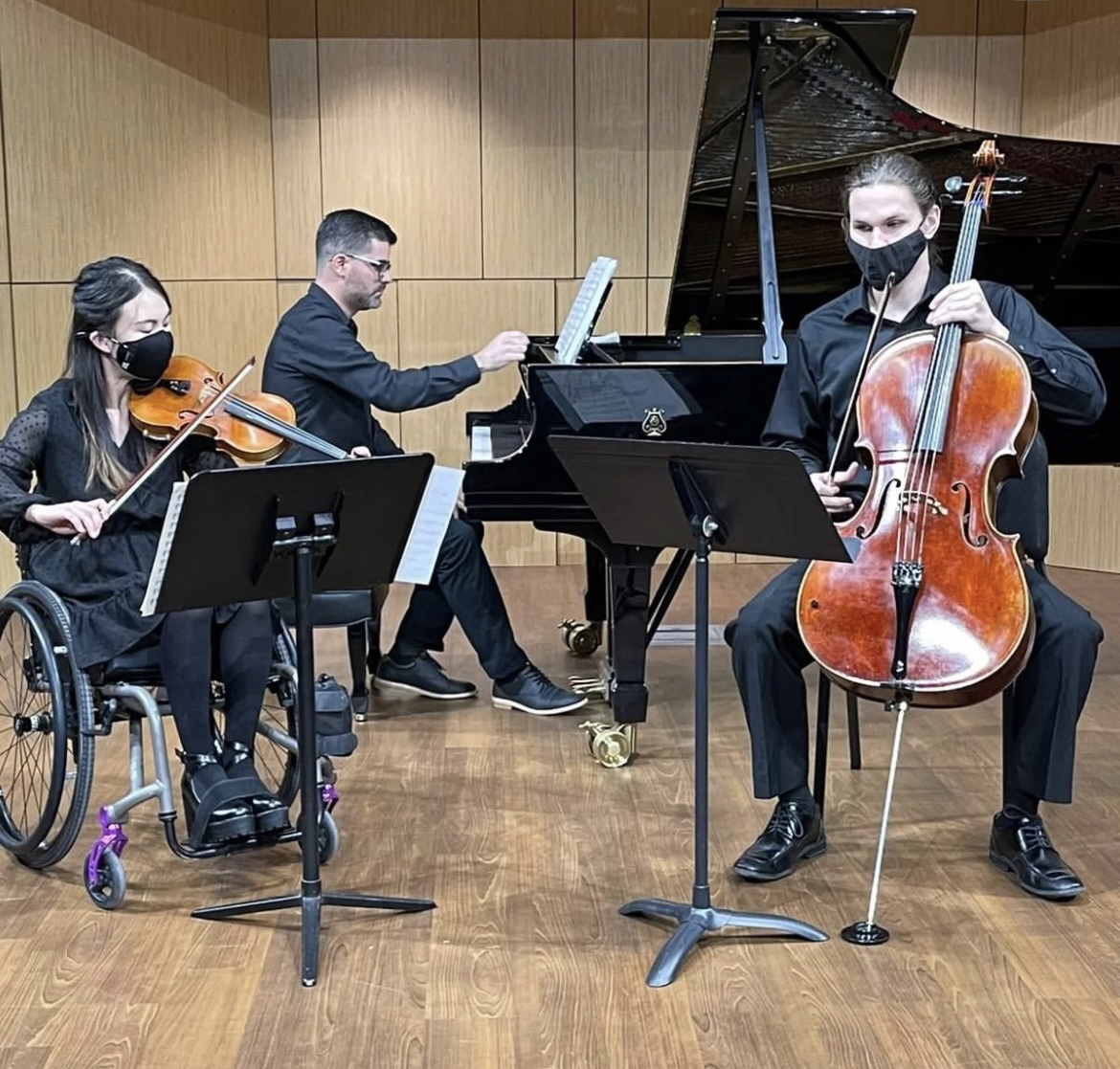
For the last 11 years, I have had a much richer experience, from the school’s Early Music Ensemble to various music festivals each year, including the Brevard Music Center and Aspen Music Festival. Additionally, I spent two years as a teaching fellow in higher education at UNT. My major professor, Dr. Olschofka, his a teaching style and mastery of the bow technique that have completely changed the way I play. The focus on technique early in my doctoral program also provided tremendous support. I enjoy teaching concentrated student violin and working with violin in many school districts. The teaching often also helps me reflect on my own play. It was a great way to keep my practice more mindful. I meanwhile decided to choose a related field in instrumental conducting from the early music study. It helped to understand masterworks so much better and made me a better player in the orchestra and chamber settings. That also slowly shifted me into more contemporary music, where I found much fun in a co-creation process in many of those premiere pieces.
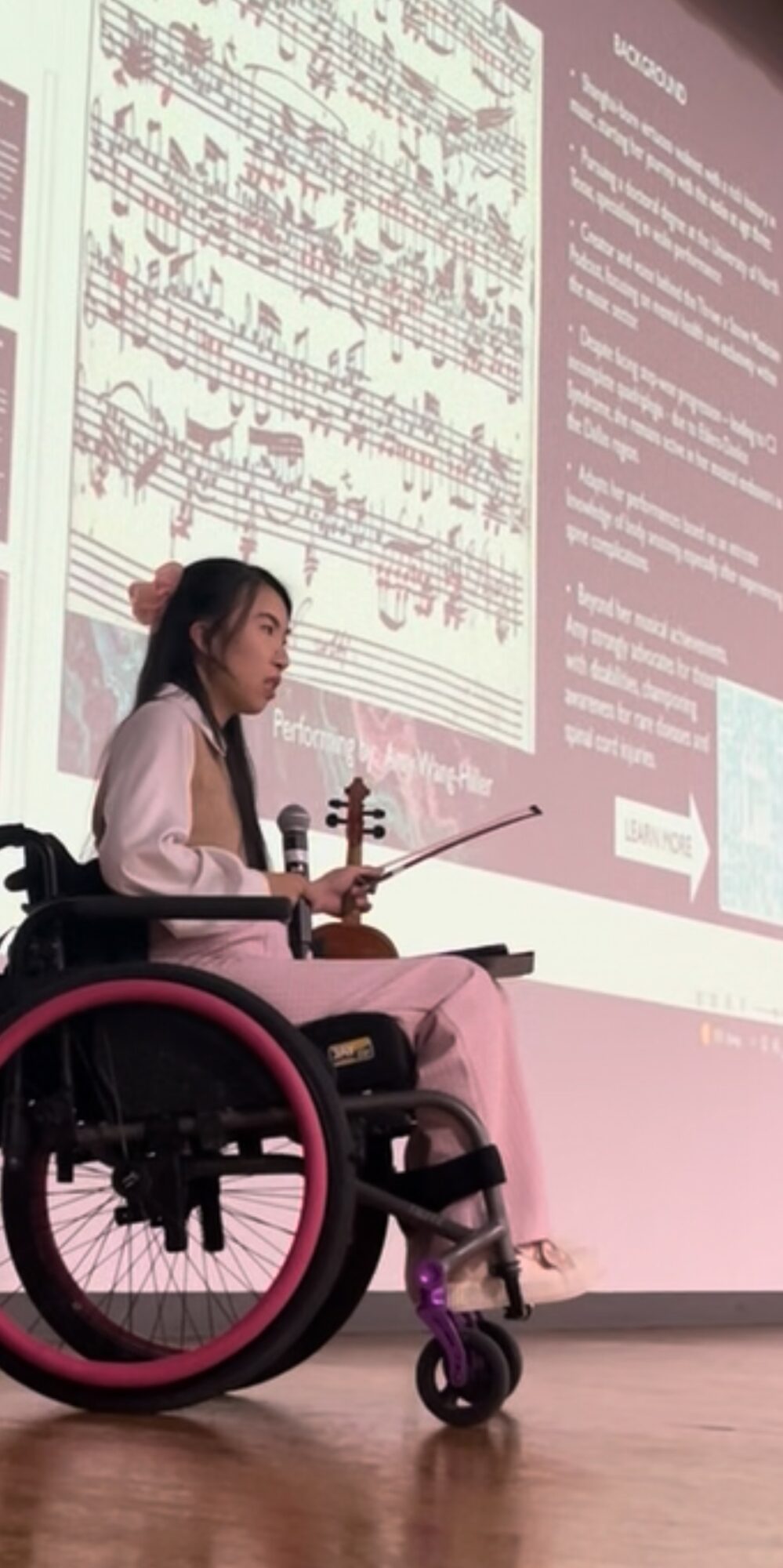
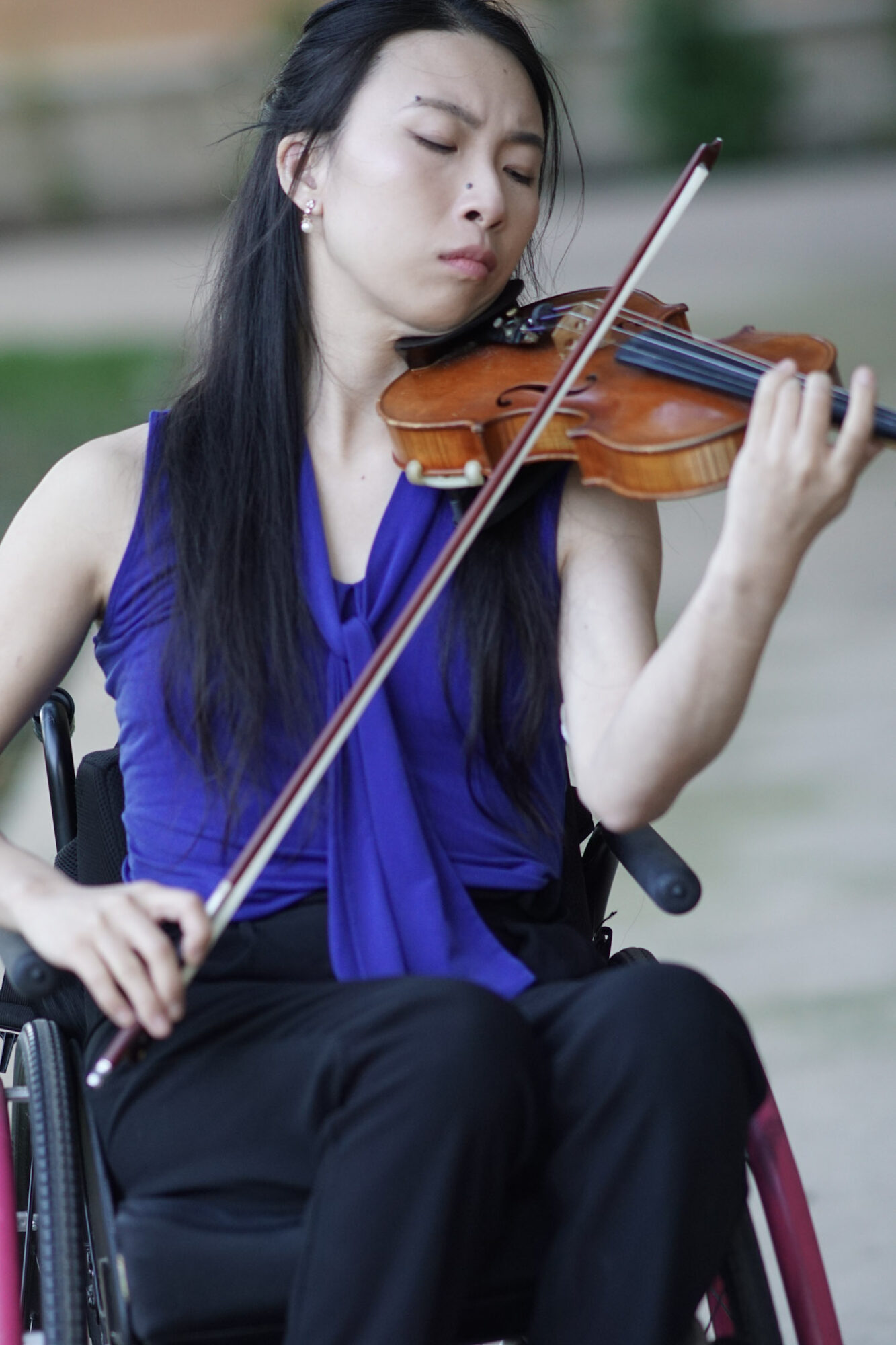
In late 2020, I suddenly started having unstable feelings with my head after a deprivation pool experience. That turned into dystonic storms and was told to be just psychogenic seizures after repetitive EEG testing. After 2 years, I developed into incomplete C1 quadriplegia. The severity of my paralysis was so severe that my spinal cord injury specialist graded ASIA B – motor complete. Because of how it was developed, I had a window of opportunity to adapt as much as I could, especially in my playing. Starting from using a lumbar pillow since my waist down paralysis from the tethered spinal cord, I discovered ways to combat the further progression of weakness. I started sharing my story online as “the quadriplegic violinist,” talking openly about disability, medical dismissals, and the gaslighting phenomenon, all those adaptations I learned over the years, and what it means to rebuild a career when your body no longer follows the traditional conservatory script.
Today, I’m based in the Dallas–Fort Worth area, finishing my doctorate, performing when I can, and teaching violinists and musicians with upper-body weakness how to adapt so they don’t have to abandon their instruments. I also host podcasts and am founding a nonprofit, the InclusiVibe Foundation, to bridge equity in music and healthcare—supporting disabled artists, amplifying patient stories, and pushing for more humane, accessible systems of care.
Can you talk to us a bit about the challenges and lessons you’ve learned along the way. Looking back would you say it’s been easy or smooth in retrospect?
Definitely not. As my musical life was blossoming, my body was quietly deteriorating. I took a few semesters off, even before the biggest storm. And I surprisingly discovered my hEDS, one of those connective tissue disorders, while seeking answers to my continuously deteriorating neurological symptoms. This opened my door in realizing how my years-long stomach issues I was having, which previously led to a period of mental health crisis from the frustration and pain, even in patient treatment for an eating disorder. It was an aha moment when I finally got the issue treated. However, it was also because of those experiences that I found my way into meditation the year before my health completely crumbled. Because of this genetic connective tissue disorder (Ehlers-Danlos Syndrome), I didn’t have any medical background. To me, EDS is a brand-new word and field that I didn’t know the precautions for either. I began developing serious spine and brainstem complications that led to aggressive progression of paralysis. It first caused stretch injuries from the waist down. Although it was a distinctive nipple line of sensation change and bladder/bowel involvement, I wasn’t believed. And later, my cervical and upper cervical instability progressed from just my right hand clawing up to my neck down paralysis with difficulty breathing within less than 6 months. Within that year and a half, no one was able to provide me with any cushion in preventive or treatment plans. The moment I accepted and adapted to my next level of weakness, everyone was about to move on to additional adaptive tools and equipment. The system was also letting me see the “if you can’t, just move less” pattern.
Meanwhile, I am still fighting to get answers and adapting my play with no rulebooks. I had to carpool with my colleagues to rehearsals and performances because I could no longer drive with my hand control.
Although I was determined to perform until I absolutely couldn’t, the sudden complication months after my decompression/fusion surgery put me on the ventilator 24/7 plus oxygen. I came out of the hospital with a daily locked-in episode, less mobility, and respiratory failure. However, because of their unwillingness to figure out, the neurologist used their own words, “deemed (me) to be FND” (conversion disorder). In fact, I was unable to breathe with less than 6L oxygen, or the CO2 would keep rising, and my O2 would drop so drastically. It was the very first time that I felt so isolated and smaller behind the nasal mask. I couldn’t participate in the school ensemble, no matter how hard I tried to find a solution. No concentrated O2 6L on a continuous flow can last more than 2 hours. And the rehearsal time plus time on the road would be way past that. So I had to just enjoy practicing at home. For that last year, the challenge was way more than just not socializing or performing publicly. The similar ischemic strokes in August also happened in December, and dystonic storm was making my eyeballs completely contracted into the back. The feeding tube placed into me happened to cause constant anaphylaxis for months. It was again being blamed on psychological issues when the Hospital did not know how to handle the situation. Even when my O2 dropped to 20%, they chose to walk away with a pointed finger, saying, “It’s all in her mind.” I am surprised that I didn’t die, and I’m finally seeing improvement recently.
While I adapted my technique, posture, and setup constantly with new works, I also noticed the assumptions doctors and people in the music field often have around my disability. The “she can still play violin so well” comments and the objective bias caused a delay in the diagnostic process. Although I was already advocating for myself and seeking out experts’ opinions outside of Texas, my diagnoses and surgical interventions for my cervical instability and related spinal issues were more than 2 years late.
Can you tell our readers more about what you do and what you think sets you apart from others?
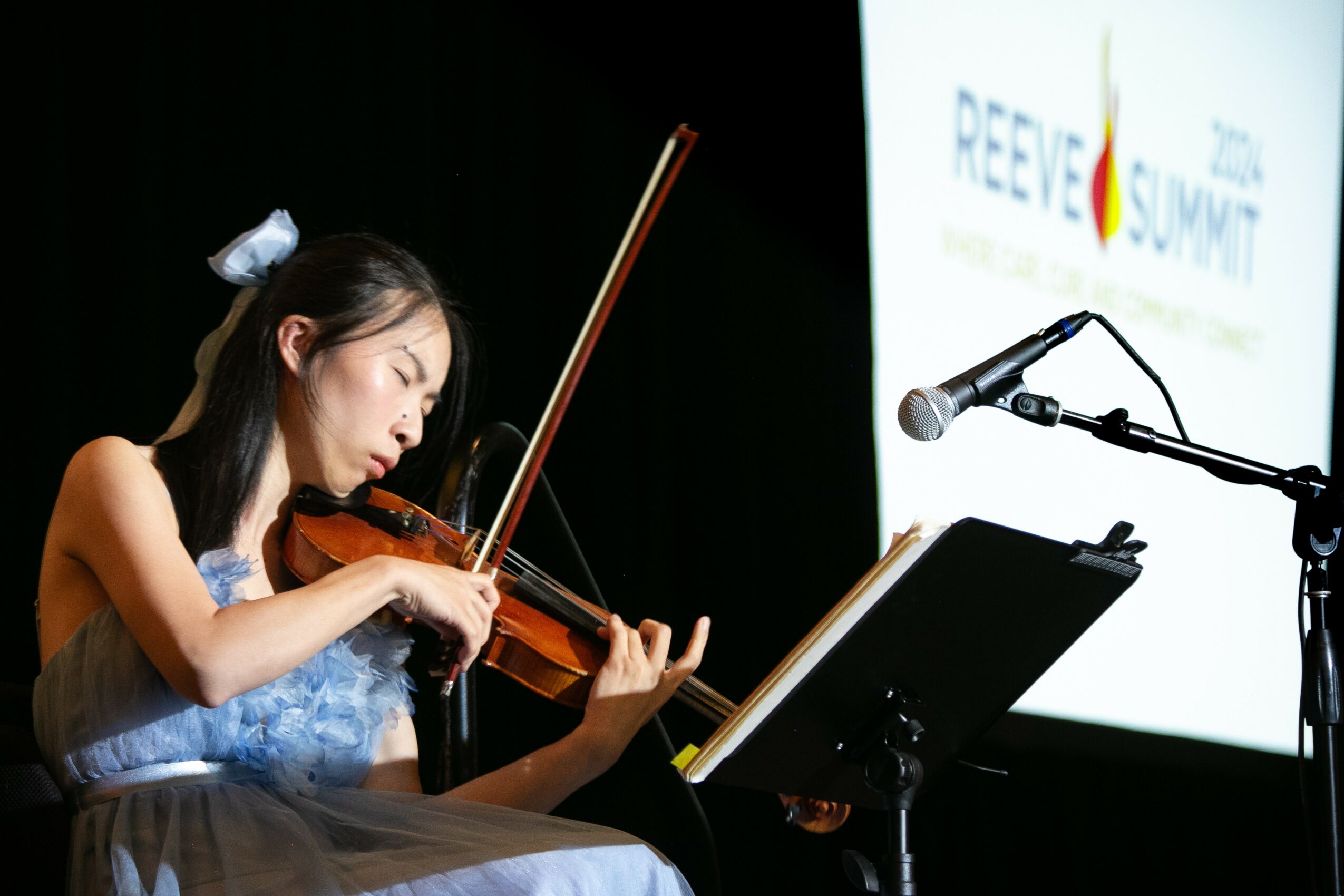
I’m a violinist, educator, and disability advocate based in Denton, and most people now know me online as the “quadriplegic violinist” who refuses to leave the stage just because my body changed.
I had been training professionally and performing as a soloist and orchestral musician in China before coming to the U.S. for my master’s at LSU and my doctorate in violin performance at the University of North Texas. Over the years, I’ve performed with orchestras at several International Violin Competitions.
Midway through my doctoral work, everything changed. A genetic connective tissue disorder and severe cervical spine instability led to progressive paralysis from the neck down and brainstem injury. While I was losing motor function, I was experimenting with new setups, support devices, and ways of using weight rather than force to continue sharing my skills with orchestras and chamber ensembles. That’s where my current work was born: I now specialize in adaptive violin technique for people with upper-body weakness, paralysis, or complex neurological conditions who’ve been told their musical lives are “over.”
These days my work lives in a few spaces: my private studio, where I teach violinists and string players with any abilities; my podcasts and storytelling projects, where I talk openly about medical gaslighting, spinal cord and brainstem injury, and inclusion in classical music; and a newer initiative focused on using concerts and short films to center disabled artists and patient stories.
What I’m most proud of isn’t a specific performance or award—it’s that I kept playing while paralyzed, refusing to fit into a simple “can” or “can’t,” and helping carve out a roadmap for other musicians whose bodies are changing. What sets me apart is that I stand at the intersection of conservatory-level training and lived experience of high-level quadriplegia: I understand what it means to chase a traditional technical setup _and_ to fight for a diagnosis, a wheelchair, or a fusion surgery. My work is about making sure no one has to choose between their health and their art. Instead, I believe in a realistic mind but a positive problem-solving spirit.
How do you think about luck?
Luck has shown up in my life as pure yin-yang—nothing fully “good” or “bad,” just forces that keep flipping into each other over time.
On paper, a lot of my story looks like terrible luck: a genetic connective tissue disorder, brainstem and cervical instability, years of medical dismissal, and eventually paralysis from the neck down in the middle of my doctoral studies. None of that is something I’d ever romanticize. It was terrifying, traumatic, and it cost me a version of my life and career I’d worked for since childhood.
But in that same arc, there’s another side. Losing function forced me to question everything I thought I knew about “proper” technique, productivity, and success. That “bad luck” pushed me to invent new ways of playing, to listen to my body instead of fighting it, and to build a studio and nonprofit model centered on patients and disabled musicians. I’ve also had extraordinary “good luck” in the people who showed up: mentors who didn’t abandon me when I could no longer play the same way, friends and collaborators who helped me tell my story, and doctors who _finally_ listened and intervened. Those moments of alignment are luck, too.
In my work, I hold both truths at once. The same events that nearly ended my career also gave me a lens—and a sense of urgency—that only comes from lived experience. There is an old Chinese saying that ‘good luck and bad luck create each other,’ and that feels very true of my path as a disabled musician and advocate. My job now is to turn a very uneven mix of good and bad luck into something useful: better pathways for care, more inclusive stages, and a roadmap for musicians whose bodies no longer fit the old “all or nothing” story.
Pricing:
- Private violin lessons (online or Denton/DFW) $45 – 30-minute lesson
- $65 – 45-minute lesson
- $85 – 60-minute lesson
- Adaptive violin & injury/disability consulting (for musicians & families) $125 per 60-minute session
- Speaking & workshops (music, disability, healthcare) “Local talks and panels in DFW generally $1000
Contact Info:
- Website: https://amywanghiller.com
- Instagram: https://www.instagram.com/amywangviolin/
- Facebook: https://www.facebook.com/amy.wang.hiller/
- LinkedIn: https://www.linkedin.com/in/amywanghiller/
- Youtube: https://www.youtube.com/@amywangviolin