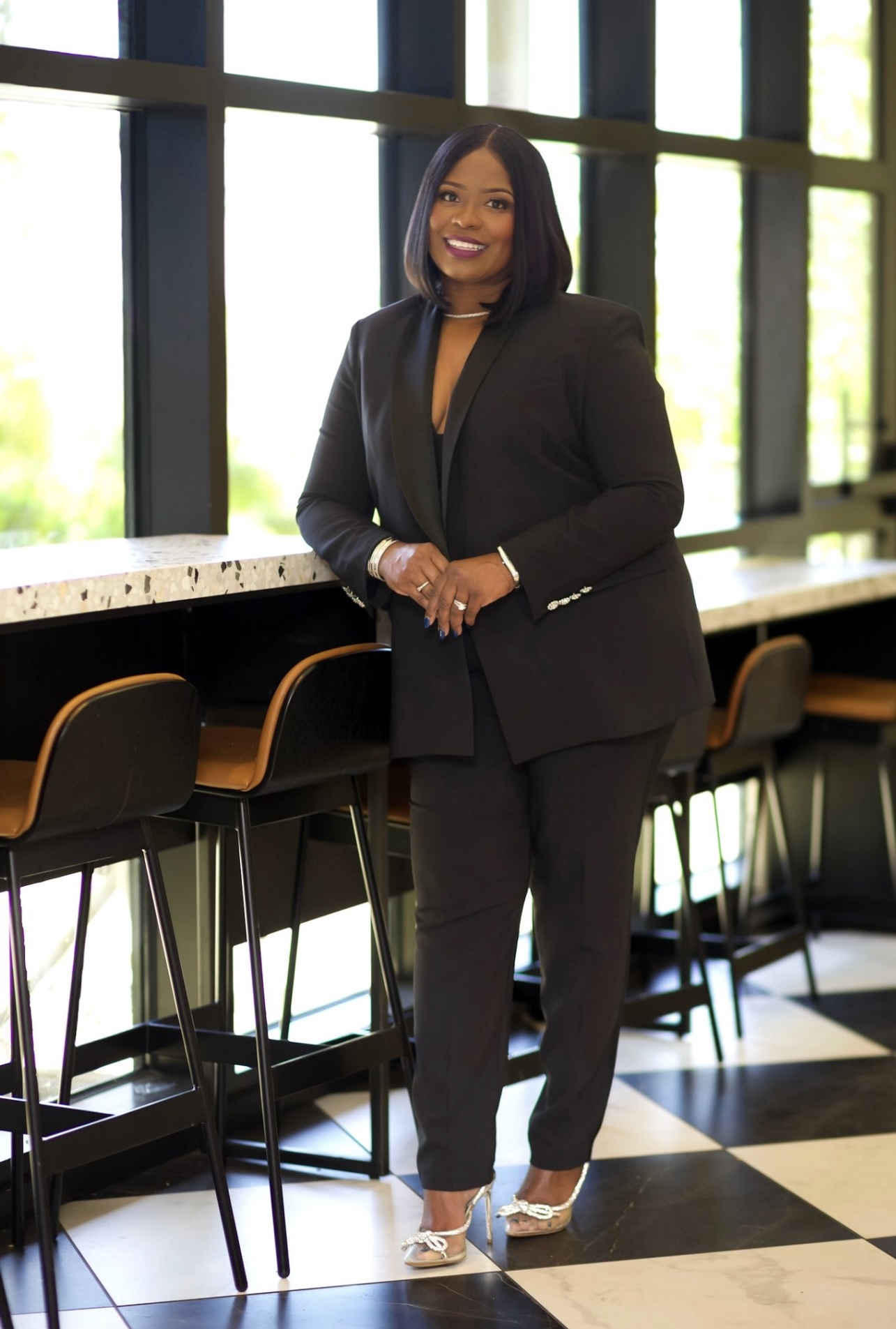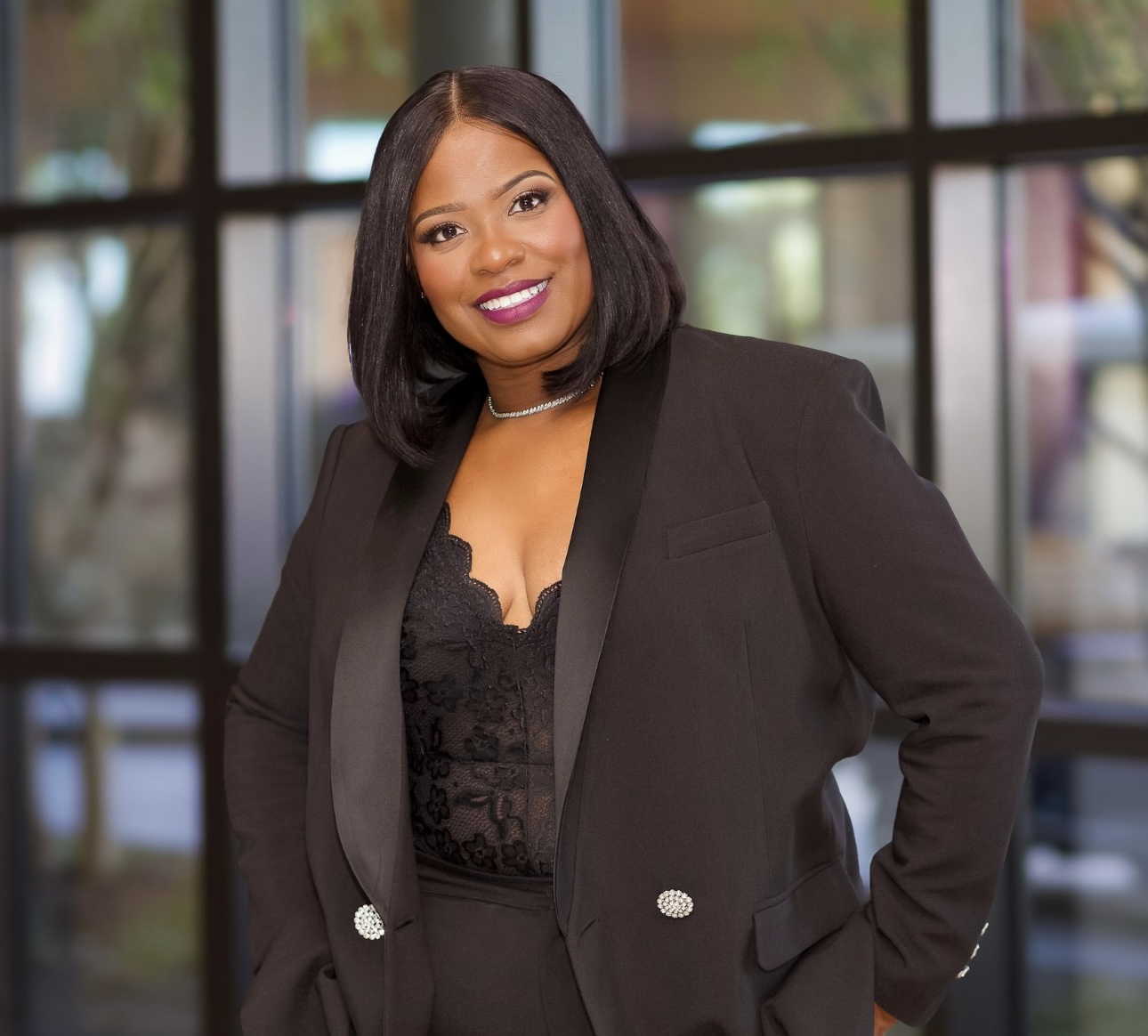





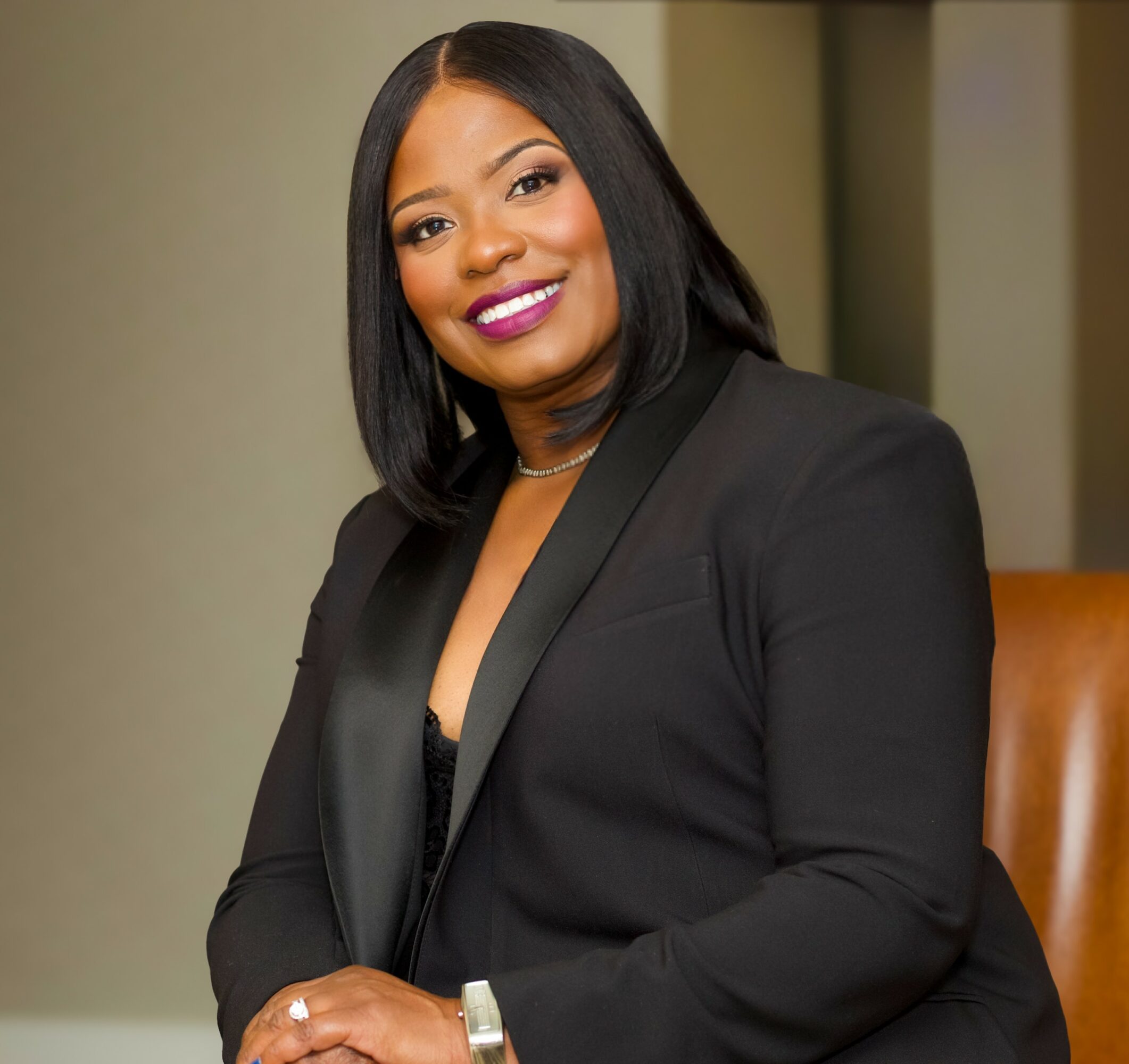
We’re looking forward to introducing you to Deondriea Csntrice. Check out our conversation below.
Deondriea , really appreciate you sharing your stories and insights with us. The world would have so much more understanding and empathy if we all were a bit more open about our stories and how they have helped shaped our journey and worldview. Let’s jump in with a fun one: What are you being called to do now, that you may have been afraid of before?
I’m being called to name the harm out loud—not just coach around it.
For a long time, it felt safer to focus on resilience, confidence, and leadership without fully confronting the systems that quietly wound high-performing people. Especially women. Especially first-generation leaders. Especially those who were taught to be grateful instead of truthful. I knew the damage was there, but naming it publicly—calling it Profliction™—meant risking comfort, credibility, and approval.
What I’m being called to do now is different.
I’m being called to tell the truth without cushioning it. To say that work shouldn’t hurt. That overachievement is often a survival response, not a virtue. That silence is not professionalism—it’s conditioning. And that confidence doesn’t erode because people are “too sensitive,” but because they are repeatedly taught to self-abandon in order to belong.
Before, I was afraid of being labeled difficult, radical, or ungrateful. Now, I understand that those labels are often assigned to people who stop participating in their own diminishment.
So my call right now is to build language, frameworks, and spaces that give people their power back—not by helping them endure broken systems better, but by helping them see clearly, trust themselves again, and choose sovereignty over survival.
That’s the work. And I’m no longer afraid of how disruptive the truth might be.
Can you briefly introduce yourself and share what makes you or your brand unique?
I’m Deondriea—certified confidence coach, author, speaker, and systems disruptor for people who look successful on paper but feel silently depleted inside.
My work centers on helping high-achieving, first-generation leaders, especially women—reclaim their voice, presence, and self-trust after years of what I call Workplace Wounding and Profliction™: the cumulative, often invisible harm caused by professional environments that reward over-performance, punish truth, and normalize self-abandonment in the name of success.
What makes my work different is that I don’t treat confidence as a mindset problem or a motivation issue. I treat it as a sovereignty issue. I blend psychology, nervous-system safety, identity work, and lived experience to help people stop performing confidence and start inhabiting it. The goal isn’t to help clients “push through” broken systems—it’s to help them see clearly, name what’s happening, and choose power without losing themselves.
My brand is built on one core belief: work shouldn’t hurt. And if it does, the answer isn’t more grit—it’s more truth.
Right now, I’m expanding this work through books, coaching programs, and digital tools designed to give language to experiences people were taught to silence. Everything I build is about one thing: helping people move from survival and silence into presence, principle, and power—on their own terms.
Amazing, so let’s take a moment to go back in time. What’s a moment that really shaped how you see the world?
There was a moment when I realized that doing everything “right” still wasn’t enough to protect me.
I had the credentials, the results, the work ethic, the reputation. From the outside, I was thriving. On the inside, I was slowly learning that success in many professional spaces comes at a quiet cost—the cost of self-trust, safety, and voice. I watched how truth was penalized, how my overachievement was exploited, and how the people carrying the most responsibility were often the least protected. That realization reshaped how I see the world.
It taught me that harm doesn’t always announce itself as trauma. Sometimes it shows up as exhaustion you can’t explain, confidence that keeps eroding despite your accomplishments, and a constant pressure to prove you belong even after you’ve already earned your seat. I saw how entire systems are designed to benefit from people not naming what’s happening to them.
That moment changed my trajectory. It’s why I do the work I do now—creating language, tools and frameworks for the experiences people were taught to normalize, and helping them understand that the problem was never that they weren’t enough. It was that they were surviving inside systems that required their silence.
What have been the defining wounds of your life—and how have you healed them?
For a long time, my deepest wounds didn’t look like wounds at all. They looked like achievement.
I learned early that being capable, composed, and accommodating kept me safe. I learned how to perform excellence, swallow discomfort, and turn pressure into productivity. Over time, that adaptation became a quiet injury—what I now call Workplace Wounding and Profliction™: the slow erosion of self-trust that happens when your value is tied to output, silence, and resilience at any cost.
Another defining wound was learning how often women—especially women of color and first-generation leaders—are praised for strength while being denied protection. I internalized the belief that needing rest, clarity, or support meant I wasn’t built for leadership. That belief cost me my body’s signals, my intuition, and, at times, my voice.
And then there is the wound that cracked everything open: becoming intimately aware that harm doesn’t just happen “out there.” When exploitation touches your own life, your family, your sense of safety, you stop believing in neat narratives about grit and goodness. You see how silence is maintained, how systems protect themselves, and how truth is often the most dangerous thing you can carry. Healing didn’t come from fixing myself, it came from telling the truth about what I was feeling and witnessing.
I healed by slowing down enough to listen to my nervous system instead of overriding it. By separating my worth from my usefulness. By giving language to what I had been taught to endure quietly. By choosing presence over performance, principle over approval, and power over survival.
My wounds are no longer something I hide or hustle past. They are the evidence that I stopped abandoning myself—and the reason I help others do the same.
So a lot of these questions go deep, but if you are open to it, we’ve got a few more questions that we’d love to get your take on. How do you differentiate between fads and real foundational shifts?
I differentiate fads from foundational shifts by asking one simple question: does this ask people to perform differently—or to be differently?
Fads tend to focus on optics. They offer new language, quick frameworks, or polished narratives that help people look aligned without requiring real change. They move fast, feel exciting, and promise transformation without discomfort. Most importantly, they leave the underlying systems and the power dynamics—untouched.
Foundational shifts are quieter and more inconvenient. They change how people relate to themselves before they change how people show up publicly. They require unlearning, not just learning. They slow the nervous system instead of overstimulating it. And they often face resistance, because they threaten familiar hierarchies, productivity myths, and identity structures that people have built their lives around.
Another tell: fads thrive on urgency and dependency—do this now or fall behind. Foundational shifts restore agency. They give people language, discernment, and choice. They don’t collapse when trends change because they’re rooted in human psychology, biology, and truth, not algorithms.
If something helps you perform confidence, resilience, or leadership better, it’s likely a fad. If it helps you reclaim self-trust, name harm, and stop betraying yourself to belong—that’s a foundational shift. And those are the only ones that last.
Okay, so before we go, let’s tackle one more area. If you laid down your name, role, and possessions—what would remain?
What would remain is my presence. Not the curated version of me, not the résumé, not the titles or the proof. What would remain is the part of me that knows how to listen deeply to truth, to the body, to what is being said and what is being avoided. The part that can sit with discomfort without needing to dominate it, explain it away, or perform through it.
What would remain is principle—an internal compass that doesn’t bend for approval or convenience. A commitment to naming harm, protecting dignity, and choosing integrity even when it costs me proximity to power.
And what would remain is power, but not the kind we usually mean. Not control, status, or influence. Power as self-trust. Power as the refusal to abandon myself. Power as the ability to stand clear, whole, and unmuted no matter what is stripped away.
If everything external fell away, what would remain is the truth that I belong to myself. And that has always been enough.
Contact Info:
- Website: https://www.deondriea.com
- Instagram: @deondriea
- Linkedin: https://www.linkedin.com/in/deondriea
- Facebook: @deondriea
- Youtube: @deondriea