






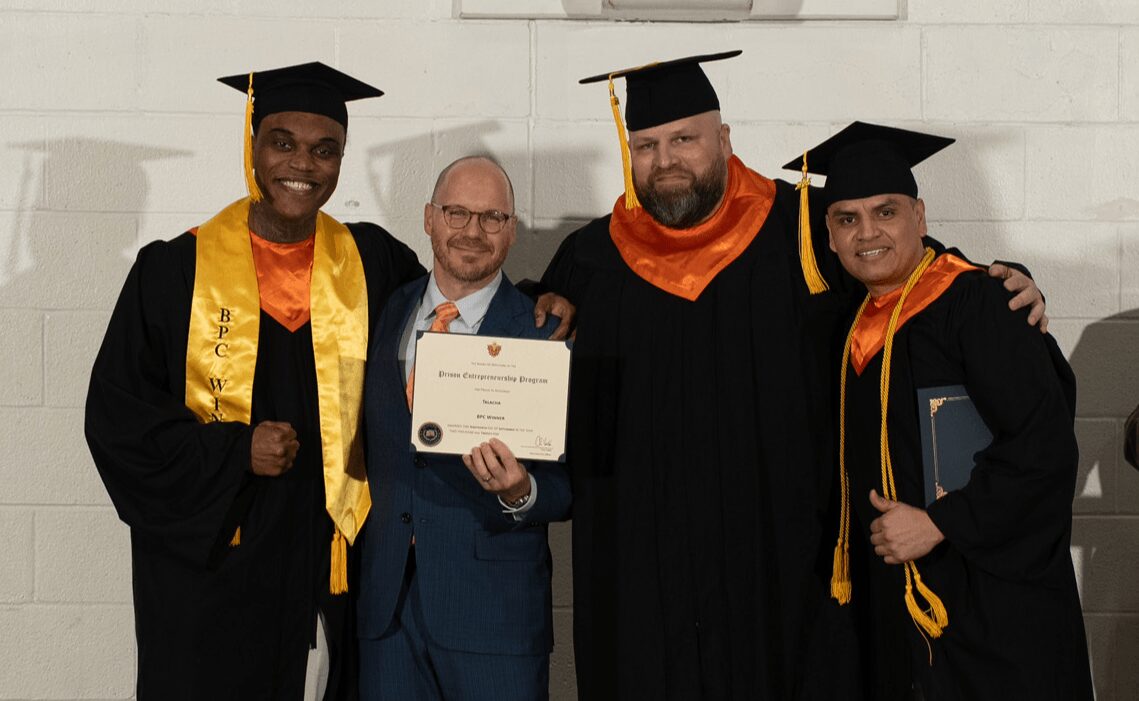
Today we’d like to introduce you to Chris Valka.
Hi Chris, so excited to have you with us today. What can you tell us about your story?
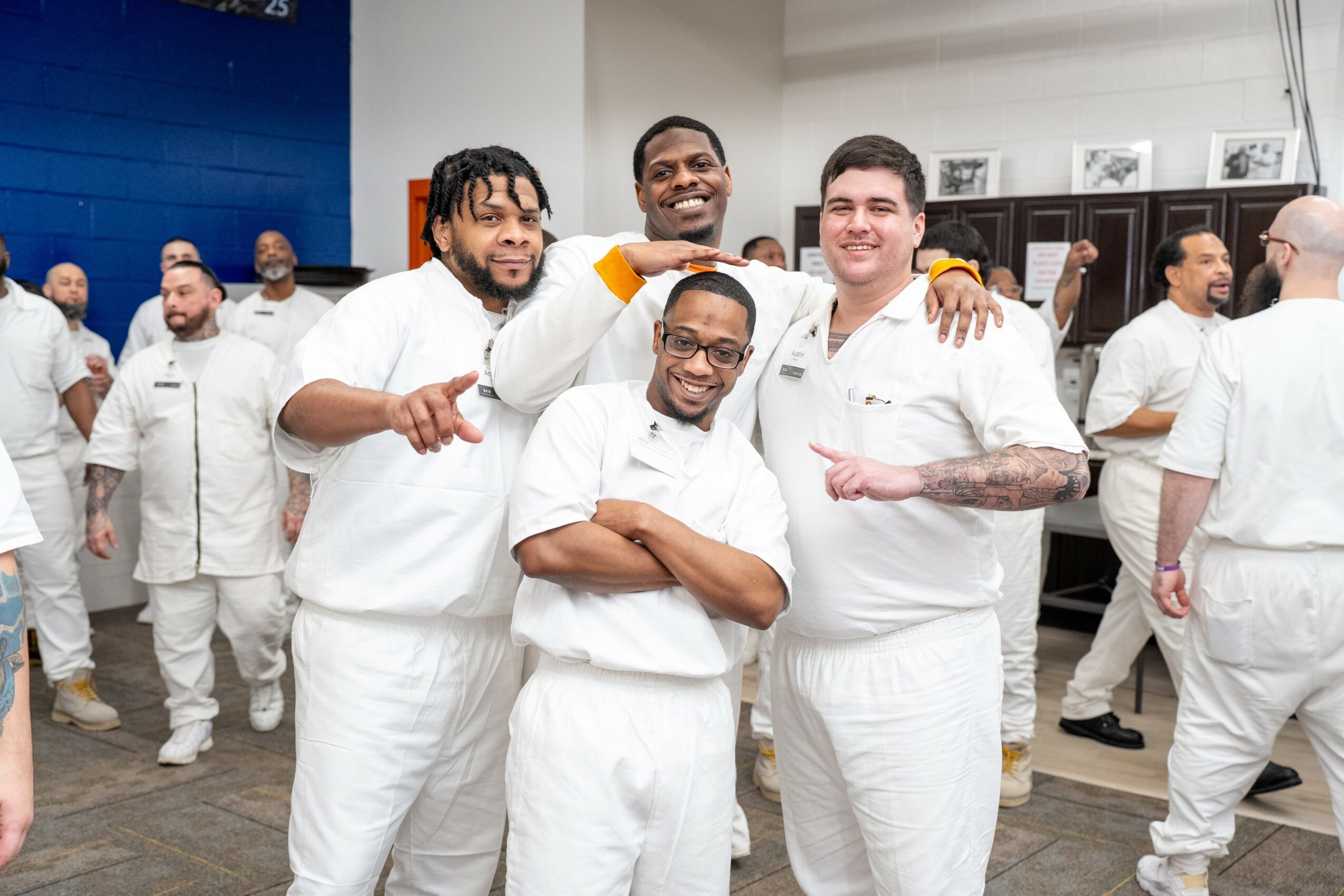
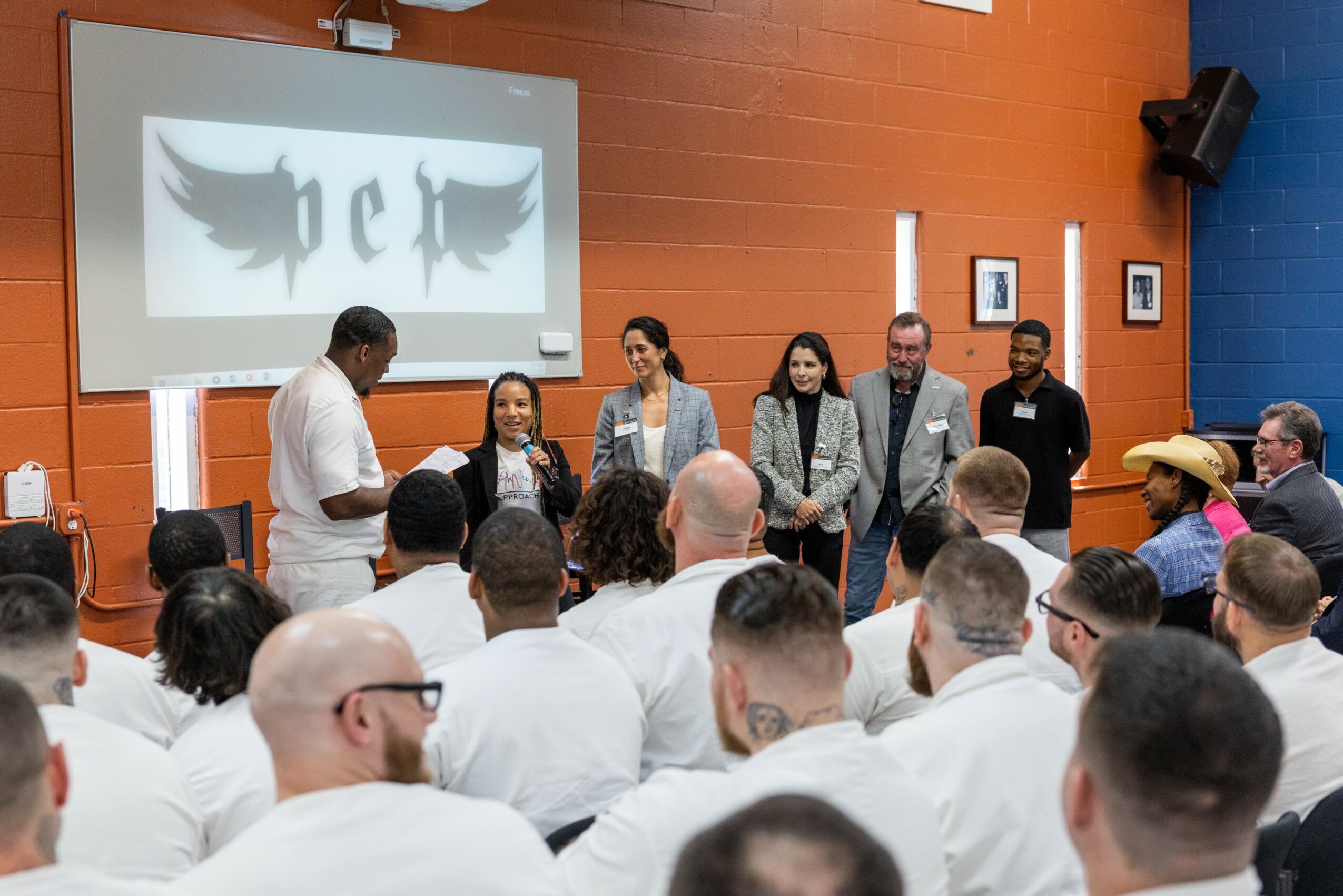
I currently serve as the CEO of Prison Entrepreneurship Program (PEP) – a non-profit with primary locations in Houston and Dallas aimed at increasing the success of incarcerated individuals re-entering society through the power of entrepreneurship. While not everyone launches a business, PEP has learned that entrepreneurship is a powerful agent in the transformation of one’s character and makes a significant impact on their families and communities.
I joined PEP because I have never encountered a program with such a track record of success: 100% employment within 90 days of release; 43% home ownership within 3 years of release; average wage increase from $17/hr to $27/hr within years; and the list goes on. Equally impressive as the statistics are the values which drive the organization of 30 staff and over 400 volunteers: excellence, innovation, accountability, love, fun, wise-stewardship, fresh-start outlook, servant leader mentality, integrity, and execution. These values fuel opportunities for second-chances through connection to community, and an understanding of how to belong. These ideas – community, belonging, reconciliation, and education – have defined my life’s work.
Prior to PEP, I served as a Roman Catholic Priest, ordained for 10 years, and belonging to an international community of priest-teachers for 20 years. During this time, I lived and worked around the world. This gave me the opportunity to see our common humanity in so many different expressions. Assignments during these years included the United Nations, Radio and Television production, caring for the impoverished in South America, teaching high school in several cities in the USA and Canada, serving as a university chaplain and administrator, and a pastor of a couple of churches. I have seen humanity at its best and at it worst and been invited to share in some of the most intimate moments of peoples lives – births, deaths, marriages, and everything in between.
My life has been defined by service to others. As a child my mother was bed-ridden with a chronic illness. Since dad worked on the other side of town, I was a care-giver at a young age. While it may be tempting to view this a hardship, I have come to understand it as a gift that taught me to take nothing for granted and to live with few expectations. Life takes unexpected turns – sometimes of our own making and others not much at all.
Even for those in prison, there are times when the ideas of those imprisoned live up to the preconceived notions, but there are also many times when they do not. The question is will we give people a chance when they have done all that we have asked them to do, or will we continue to exercise our biases?
This, and the questions like these – the ones that don’t have easy answers are the questions I have dedicated my life to; not as an academic exercise, but through lived experience. In all my encounters with people, I have found we have much more in common with each other than we think, which we only realize when we encounter people radically different than ourselves.
Whether I am at work, running early in the morning or having dinner with my wife and two young children, these are the ideas that keep me working for a better world.
Can you talk to us a bit about the challenges and lessons you’ve learned along the way. Looking back would you say it’s been easy or smooth in retrospect?
Hardly smooth. My mother has been sick all my life. I have lost my job a few different times. I didn’t grow up poor, but we had to work hard to survive. Even as a young child, I worked to earn money, had to pay my way through school – working two jobs from time to time. The formation process for priesthood forces you to encounter and reconcile some of the darkest areas of your life – and I had several. I had to take assignments to live and work in places where I did not want, though they always turned out good in the end. There were several long periods of doubt and feeling lost.
When I left the priesthood, I had a difficult time re-entering society because people assumed the worst as to why I left. My skills, though many, where hard to translate and accept. The prejudice was very palpable. I had to rebuild my life with almost nothing, trusting that I was making the right decision.
Appreciate you sharing that. What should we know about Prison Entrepreneurship Program?
For over two decades, the Prison Entrepreneurship Program has demonstrated that structured character development combined with entrepreneurship education produces transformative outcomes.
Outcome metrics demonstrate program effectiveness: recidivism reduction from 21% (Texas baseline) to 7% represents a 67% improvement. Employment outcomes show 100% participant placement within 90 days of release, averaging 22 days to employment—significantly outperforming state and national benchmarks. Within three years, 20% of participants establish businesses, contributing to local economic development and job creation.
Despite serving individuals who face exponentially greater barriers than the average entrepreneur, PEP graduates have launched 700+ businesses. PEP produces more reliable, more consistent, and more socially impactful business outcomes than traditional accelerators, because it provides what standard programs do not: a foundation of character transformation, a community of accountability, and long-term post-release support.
Financial impact per graduate includes $1,800 in annual tax revenue generation and avoidance of $28,470 in annual reincarceration costs, yielding an approximate $14,316 benefit per participant through avoided incarceration expenses, reduced public assistance dependency, and positive economic contribution.
The program integrates four core components: character development through PEP’s 10 Driving Values framework, entrepreneurship curriculum delivered in partnership with Baylor University, executive mentorship from 400+ annual volunteer business leaders, and comprehensive reentry support including transitional housing and case management. This framework is anchored in PEP’s unique three-phase pre-release program, which blends character formation, business and leadership education, and peer-driven servant-leadership development inside the prison. Upon release, participants enter a comprehensive post-release program featuring individualized case management, wrap-around services, employment support, and safe, structured transitional housing—each designed to ensure successful reentry and long-term stability. Critically, PEP sustains a deep, ongoing connection to mentors and a community of peers with shared experience, inspiring graduates to pursue entrepreneurship and economic mobility with confidence and accountability. This integrated approach produces documented outcomes demonstrating both moral imperative and economic rationality.
What Makes PEP Unique:
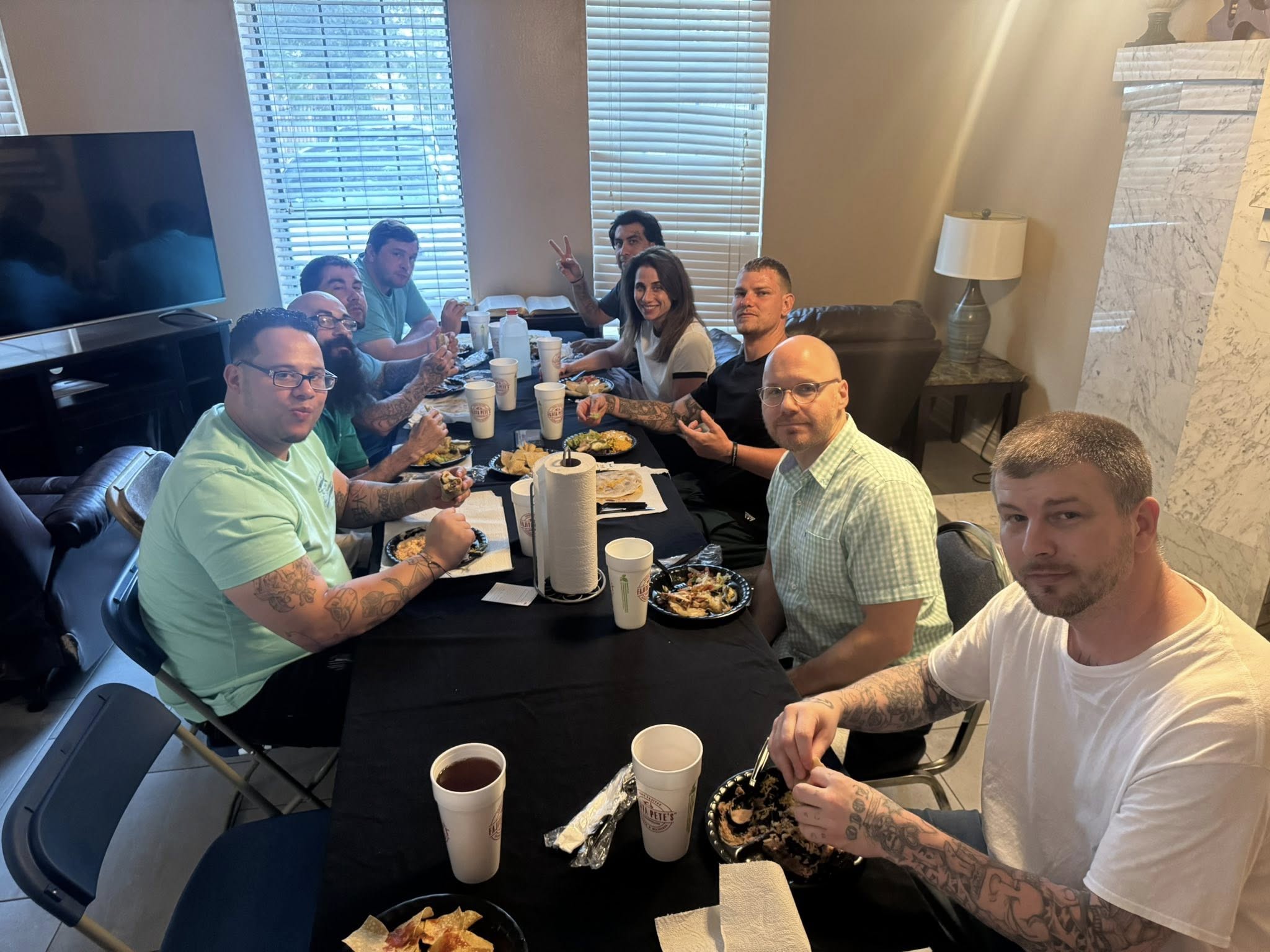
1. A continuous community across the prison wall. PEP is one of the few organizations that operates seamlessly both inside and outside of prison, ensuring continuity of culture, support, and expectations. The same values, relationships, and mentors accompany participants from incarceration through reentry, reducing drop-off and dramatically strengthening retention.
2. A data-informed curriculum delivered by business leaders. PEP’s curriculum is built on evidence and refined through two decades of practice, but its real power comes from being delivered by executive volunteers who bring industry credibility and real-world expectations. Signature activities, such as the Business Plan Competition and Shark Tank–style pitches, create applied, meaningful learning experiences that prepare participants for the demands of today’s economy.
3. Character formation as the necessary foundation for economic mobility. Unlike most reentry or workforce organizations that begin with skills training, PEP begins with the internal competencies that predict long-term success: resilience, emotional regulation, responsibility, and leadership.
4. Servant leadership as a requirement, not a suggestion. PEP requires graduates to practice servant leadership, integrating what they’ve learned into daily life, contributing to the community, and modeling accountability. This approach disrupts the transactional mindset of consumer culture and forms men who see themselves as creators, citizens, and leaders rather than recipients of services.
Is there anyone you’d like to thank or give credit to?
PEP is a team of 30 incredible staff and over 400 phenomenal volunteers. I often feel like I am standing on their shoulders.
For 20 years, I lived according to the motto of the Basilian Fathers: “Teach me goodness, discipline and knowledge”, which comes from Psalm 119. Though I am now longer Basilian, I was formed by that motto and it guides so much of who I am even now. That religious community, and all the people I met through the Basilians formed me.
Then of course, there is my wife and kids and my own parents and brother.
Contact Info:
- Website: https://www.pep.org
- LinkedIn: https://www.linkedin.com/in/chrisvalka/
- Other: https://www.chrisvalka.org
Popular
-

Deborah Fessenden on Turning Foraged Beauty into Purpose-Driven Jewelry and Advocacy
-

Andrew Finch on Building Elite Athletes Through Fundamentals, Mindset, and Global Experience
-

Genai Walker on Turning Life Experience into Impact Through Writing, Business, and Self-Mastery
-

The Most Inspiring Stories in Dallas