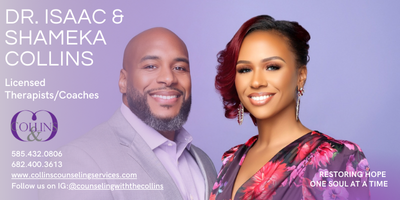






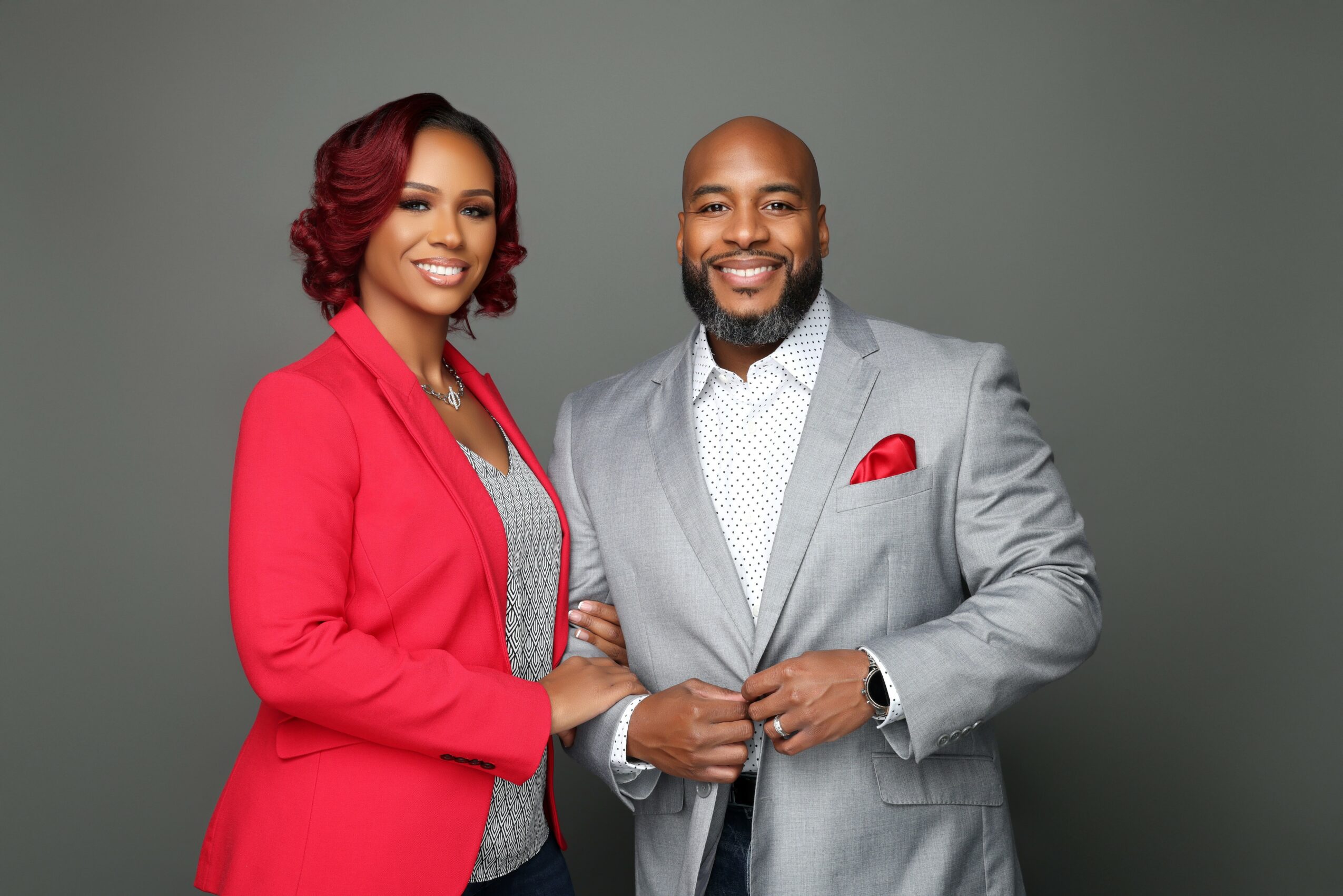
Today we’d like to introduce you to Isaac & Shameka Collins.
Hi Isaac & Shameka , we’re thrilled to have a chance to learn your story today. So, before we get into specifics, maybe you can briefly walk us through how you got to where you are today?
Collins & Collins Counseling Services began as more than a practice — it started as a response to seeing how deeply people are hurting, often silently. As husband and wife, and as licensed therapists, we’ve both witnessed the weight individuals, couples, and families carry when life, trauma, and broken relationships go unaddressed.
We felt called to create a space where people don’t have to pretend to be okay. A place where healing is not rushed, where culture and faith are respected, where marriages are strengthened, and where people rediscover hope.
Our purpose is simple but life-changing:
to help people heal emotionally, grow relationally, and live with clarity, purpose, and wholeness.
We specialize in marriage counseling, anxiety, depression, childhood trauma, men’s issues, and life transitions. Because we’re married and working together, we bring both professional training and lived experience — we understand the real work it takes to build healthy relationships.
Our approach is compassionate, culturally aware, and practical. We believe that when individuals become healthier, families transform — and when families transform, communities thrive.
At Collins & Collins Counseling Services, every session is about more than coping — it’s about restoring identity, strengthening connection, and building lives that can stand through hard seasons. Helping people heal isn’t just our career. It’s our assignment. And we’re humbled to serve our community in that way.
I’m sure it wasn’t obstacle-free, but would you say the journey has been fairly smooth so far?
No — it definitely hasn’t always been smooth. Building Collins & Collins Counseling Services has stretched us in ways we didn’t expect. As business owners and licensed therapists — and also as husband and wife — we had to learn how to balance multiple roles without losing ourselves or our marriage in the process.
Some of the early challenges were practical: learning the business side of private practice, managing finances, building systems, and figuring out how to grow while still giving every client quality care. There were seasons where we questioned whether we had enough resources, enough time, or enough support.
There were also emotional challenges. As therapists, we carry people’s stories — their trauma, their grief, their marital struggles — and we have to be intentional about protecting our own mental and emotional health. We learned quickly that if we don’t practice boundaries, rest, prayer, and honest communication with each other, burnout can creep in quietly.
Another hurdle was visibility. Many people still struggle with stigma around therapy, and in some communities, asking for help feels like weakness. Part of our journey has been educating, normalizing, and reminding people that seeking counseling is actually a sign of strength.
Those struggles shaped us. They forced us to grow as leaders, as partners, and as clinicians. Today, we’re more grounded, more organized, and more clear about our mission because of the difficulties we walked through. The road hasn’t been easy — but it has been worth it.
As you know, we’re big fans of you and your work. For our readers who might not be as familiar what can you tell them about what you do?
At Collins & Collins Counseling Services, we help individuals, couples, and families do the hard—but hopeful—work of healing and growth. Our practice focuses on helping people navigate anxiety, depression, unresolved childhood trauma, communication breakdown, and marriage or relational challenges. We believe people don’t just need coping skills—they need clarity, support, and tools that actually translate into everyday life.
One of our core specialties is marriage and relationship counseling. As a husband-and-wife team, we don’t just teach theory—we’ve lived the realities of commitment, conflict, forgiveness, parenting, and partnership. That lived experience allows us to connect deeply with couples, offering a balanced, gender-neutral perspective that helps both partners feel heard, respected, and understood.
Another defining feature of our practice is our ability to integrate faith with therapy when clients desire it. We provide faith-based counseling that honors both sound clinical practice and spiritual grounding. For many clients, their faith is a major part of how they make meaning, process pain, and find hope—and we create space for that in a healthy, clinically responsible way. At the same time, clients who prefer a strictly clinical approach still receive excellent, evidence-based care. We meet people where they are.
We’re known for creating a safe, judgment-free environment where people can finally say the things they’ve been carrying inside. Our style is warm, honest, culturally aware, and practical. We challenge clients, but we also walk alongside them.
We’re most proud of watching transformation unfold: couples who were once distant learning to reconnect and communicate; men and women who once felt overwhelmed finding confidence, peace, and direction; families repairing patterns that have existed for generations. Seeing healing ripple out into homes, children, and communities is deeply rewarding.
What truly sets us apart is the combination of who we are and how we serve: licensed therapists, a married team with real-life relationship wisdom, faith-integrated counseling when requested, and a commitment to honoring every client’s story with dignity and compassion. For us, this work is not just about running a practice — it’s about helping people rebuild their lives from the inside out.
What sort of changes are you expecting over the next 5-10 years?
Over the next decade, the field of counseling and mental health is going to continue evolving in ways that make care more accessible, holistic, and culturally competent. One of the biggest shifts we’re already seeing—and that we expect to accelerate—is the normalization of therapy across communities that have traditionally stigmatized it. People are talking more openly about mental health, and that’s powerful. It means folks are more willing to reach out before they reach crisis.
Another major trend is the integration of mental health care with other aspects of life—faith, spirituality, community support systems, and preventative wellness. Clients today are asking for counseling that honors their whole identity—not just symptoms. They want clinicians who understand cultural context, spiritual values, and relational systems, not just psychological frameworks. This holistic approach is something we’ve championed in our practice, and we see it becoming more mainstream.
Technology will continue to be a big factor as well. Teletherapy, digital tools for emotional tracking, and online groups will expand access — especially for people who live far from traditional offices or who juggle busy lives. But alongside tech, I also see a renewed emphasis on genuine human connection — in-person groups, community-based workshops, and therapeutic spaces that feel relational rather than transactional.
Pricing:
- Individual Counseling (50–55 minutes): $120–$160 per session
- Couples / Marriage Counseling (60 minutes): $150–$275 per session
- Intensive Marriage Sessions (90 minutes): $275–$350
- Premarital Counseling Packages: $275/50 minutes
- Workshops & Groups: pricing varies based on topic and duration
Contact Info:
- Website: https://www.collinscounselingservices.com/
- Instagram: counselingwiththecollins