






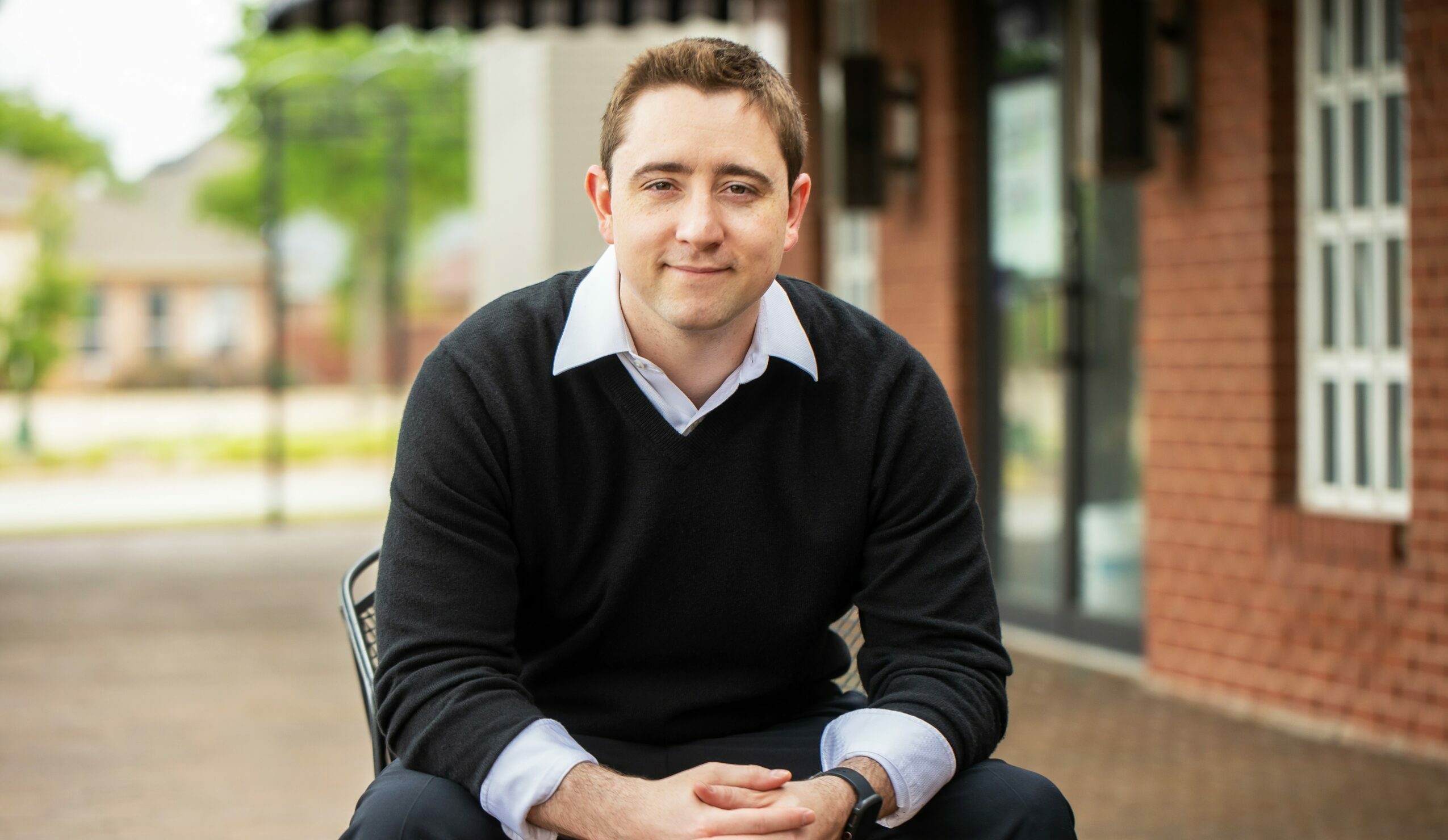
Dr. Jonathan Marcotte shared their story and experiences with us recently and you can find our conversation below.
Jonathan, it’s always a pleasure to learn from you and your journey. Let’s start with a bit of a warmup: What is something outside of work that is bringing you joy lately?
I recently got into woodworking. I thought I was getting into gardening as I was building a raised garden bed to grow some vegetables, but alas, my love of woodworking was the only thing that grew last summer. Its provided me opportunities to learn new skills, try out new tools, and use my creative and detail-oriented sides to actually make something. Its something I’ve been looking for for a long time – a safe place to be creative and to interact with nature.
Can you briefly introduce yourself and share what makes you or your brand unique?
I am Dr. Jonathan Marcotte and I am a clinical psychologist and co-director of Sacred Ground Psychotherapy (SGP) with my wife (also a psychologist) in Keller, TX. We originally opened in February 2019 in Lincoln, NE, and then moved to Texas during COVID to be closer to family. I’ve worked as a therapist for about 13 years now, and about 9 years ago my wife and I fell in love with Emotionally Focused Couples Therapy (EFCT) – the gold standard approach for working with couples. To answer some of your questions – No, my wife and I learned a long time ago not to “therapize” each other (the hard way), and yes, we did do EFCT as clients and have been wildly in love ever since!
Overall, we at SGP are a Catholic-Christian outpatient clinic that specializes in using Emotionally Focused Therapy to help couples, families, and individuals unblock the parts of them that struggle to seek care from, and give care to, each other. We believe that all were created by love and for love, and that the ultimate form of human connection and experience happens when we are securely attached to our most important others. EFCT gives us a roadmap to this “ideal” relationship by taking a bottom-up approach to therapy. Specifically, we work with our clients’ instinctual reactions to each other by slowing them down in order to illuminate the good intentions, and horrible impact, of each person’s behavior that keeps them feeling stuck. We work to create a safe place where our clients can feel vulnerable and loved at the same time in order to promote their ability to bond and overcome psychological distress within themselves and in their interactions with others. Additionally, my wife and I enjoy giving talks integrating faith with the science of psychology to various organizations and churches.
Amazing, so let’s take a moment to go back in time. What breaks the bonds between people—and what restores them?
Bonds are built on an accrual of moments where others are there for them. Specifically, others have displayed an ability to accessible, responsive, and engaged (ARE) in moments of great need. Both the ability to reach for others when in need, as well as the ability to successfully give care to others, are equally important for building a secure bond between people. For example, when a spouse is ARE to their partner when the partner feels vulnerable in the world, and the partner can receive their care – and vice versa – their bodies release oxytocin (the trust/bonding hormone) that psychologically and biologically bonds them to each other. Every time they have an ARE moment with each other, its like they’re laying down another brick on a developing wall that protects their feelings of security during the ups and downs of life. We as mammals need these types of bonds with at least 1 other person to be resilient in the world. The unfortunate thing is that these bricks are not permanent, and couples need consistent moments of positive attention from each other to maintain that sense of security.
This bond can be broken in the accrual of moments that the other stops being ARE. This can happen due to relational injuries or simply because life gets busy and fostering the bond takes a back seat (e.g., kids, jobs, etc…). Overtime, the bond dissipates, but the need for a secure relationship with the other doesn’t. We become insecurely attached, which usually shows up as either getting angry at, or withdrawing from, the other in moments of conflict. We get angry and protest the distance in order to get close again or we withdraw in order to give the relationship space from the intensity that feels so destructive. These interactions keep us stuck in a pursue/withdraw pattern that feeds the insecurity and, if it persists, can continue to erode the bond.
When did you stop hiding your pain and start using it as power?
I grew up in a loving family; however, we didn’t have many tools for managing intense emotions. I ended up getting very good at suppressing, and later repressing, my feelings to the point where I was often unaware of them. I was also the 2nd of 5 children, with my immediate younger brother having special needs. This dynamic put me “under the radar” as far as how I would self-sooth in times of need, which opened me up to a slew of healthy and unhealthy behaviors to manage my big feelings. I was also an excellent athlete and generally got along with almost everyone, which allowed my outer-image to be generally positive. I took on a personality that was competent and could give care for others, but struggled to receive it on a deeper level. This tendency, of course, wasn’t helpful when it came to bonding in my marriage; however, my wife showed me over and over again that I could be my worse self and still be lovable. My marriage gave me a safe space to explore my pain, feel it, and then integrate it as part of my story. When I was no longer afraid of feeling and sharing painful moments, I became more self-aware and self-assured of who I was, what I felt, and how I wanted to navigate my life. I became more confident when I could see my emotions as consultants helping me understand the world, and not as scary things that might consume me.
Sure, so let’s go deeper into your values and how you think. What’s a belief you used to hold tightly but now think was naive or wrong?
Growing up I always had a very tight group of friends and was close to my siblings and cousins. I’d say that I strongly believed there was nothing that could ever hurt those relationships. After a series of unforseen life events including romantic relationships, illnesses, and mental health issues, I now see that relationships are not as resilient as I thought. However, I do continue to believe that relationships can always be repaired should we have the courage to confront and work through things.
Okay, so before we go, let’s tackle one more area. Could you give everything your best, even if no one ever praised you for it?
For the most part, yes! Praise is always nice, I won’t shy away from it. But honestly, I think I’d feel really bored if I didn’t put my heart and soul into what I do.
Contact Info:
- Website: https://www.sgpsych.com






Image Credits
Lacey Whitmer