







Today we’d like to introduce you to Lindsay O’Connor.
Lindsay, we appreciate you taking the time to share your story with us today. Where does your story begin?
I grew up in a family that is deeply curious about what God is like and what makes people tick. I was a quiet kid who often had my nose in a book and my pen and tablet at the ready to record ideas for poetry and stories. I have always been captivated by great storytelling.
Those interests naturally led me to pursue a master’s degree in education and work as an elementary teacher before making a career shift that invited me to hold space for the sacred stories of others. I was drawn to my work as a spiritual director through the impact of spiritual direction in my own life. Meeting with my spiritual director has given me a space to slow down, reflect, share openly about my struggles and doubts, and listen to the deepest longings and truths of my soul in the presence of a wise and compassionate listener.
I began meeting with my spiritual director when I was experiencing a major shift in my beliefs and understanding of my core identity. After leaving my career in education, my identity had become entwined with motherhood. The transition to motherhood had been difficult and all-consuming, largely due to postpartum depression and anxiety. I felt like a failure in the part of my identity that mattered most to me.
Some of the core beliefs of the religion I had inherited no longer seemed expansive enough to reflect the deeply compassionate God I had begun to encounter through contemplative practices, the study of (Christian) church history, and the teachings of theologians, activists, and other people of faith–particularly those who belonged to and advocated for marginalized groups. I learned from contemplative activists that our inner work clarifies, roots, and sustains our work in the world, for the ultimate purpose of co-creating a world in which all can flourish.
I had also recently been introduced to the Enneagram, which continues to be a powerful tool for growth in awareness and compassion for myself and others. The Enneagram helped me to name my primary motivation and notice how it played out in my thoughts, feelings, and actions. I realized that when I became a mother, my typical patterns of behavior were insufficient to meet the moment, which launched me into a bit of an identity crisis. The practice of nonjudgemental self-observation allowed me to develop compassion for the ways I had subconsciously tried to protect myself when life felt overwhelming.
Spiritual direction, contemplative practices, and the Enneagram have helped me practice slowing down and making space to listen deeply to myself and the voice of the Holy as I continually discern how to engage in my work in the world from a more grounded, authentic place. Over the past decade, the evolution of my spiritual journey has invited me to embrace a more inclusive and contemplative spirituality. I am passionate about providing compassionate spaces for seekers to experience the divine in new, more expansive ways.
Many faith traditions share a belief in the imprint of the divine within each person. Quakers refer to the “inner light,” contemplative Thomas Merton uses the language of the “true self” (or essence) and “false self” (or ego), and Jews and Christians have the foundational concept of “imago Dei”–the belief that humans were created in the image of God. Jewish, Hindu, and Sufi mystics reference the divine spark within each person. Buddhist teachings include the concepts of enlightenment and the “Buddha nature.” These are many ways of describing the sacred essence of each person and the interconnectedness of all of creation.
In spiritual direction, my goal is to provide a contemplative space where directees experience enough safety and compassion to become more attuned to the wisdom and unconditional love of the divine within. This process leads to healing, growth, and inner freedom that enables clearer discernment and deeper, more authentic connections with God, self, others, and creation.
I’m sure it wasn’t obstacle-free, but would you say the journey has been fairly smooth so far?
Discerning the call to work as a spiritual director was a years-long process that began with frustration around understanding my identity and what work I wanted to do in the world after I left teaching. Looking back, I can see that my healing and growth needed time to unfold before I could clearly see the next steps I needed to take in changing careers.
While I have clarity around my strengths as a listener, teacher, writer, and group facilitator who holds space for people to heal and grow, how that looks in a concrete, practical sense continues to evolve. The most difficult part is being an entrepreneur of sorts. While I love the freedom of setting my own schedule, I am not really a business-minded person, so I’m always looking for opportunities to collaborate with other people and organizations.
Thanks for sharing that. So, maybe next you can tell us a bit more about your work?
I work with groups and individuals who are interested in the inner work of healing and growth, which helps clarify, root, and sustain our work in the world. I am a trained spiritual director through the Certificate in Spiritual Direction program at Perkins School of Theology (at Southern Methodist University in Dallas). I am also an Accredited Enneagram Professional through the International Enneagram Association. I hold a master’s degree in education.
My training and experience in those areas equip me to teach, facilitate groups, and work with individuals for personal and spiritual growth. I offer workshops, retreats, and small groups on topics such as contemplative practices, the Enneagram, and poetry as a spiritual practice. I also enjoy meeting with individuals for monthly spiritual direction sessions. Many of the directees I meet with choose spiritual direction with me because of my knowledge of the Enneagram, which is a powerful tool for growth. I also incorporate somatic work, spiritual practices, and reflective listening. I am in the process of learning more about Internal Family Systems.
Culturally, we are in a unique moment of spiritual and religious reckoning. Massive numbers of people who have spent much of their lives involved in religious communities are questioning their faith, leaving their religious communities, and searching for new spaces where their full, authentic selves will be met with love and compassion.
Some of the people I work with are healing from religious trauma and fundamentalism. Many are reevaluating the belief systems they inherited. Some are in a period of discernment during significant life changes, and others are ministers or seminary students who are seeking support for their own spiritual journey. Still others are activists who are looking for practices that will ground and sustain them in their work. All benefit from a compassionate, non-judgmental listener who provides space for them to feel deeply seen, known, and accepted.
I find great joy in serving as a compassionate companion for the spiritual journey as people share their sacred stories and explore their questions, grief, joy, and longings. I am inspired by the earnestness and wisdom of the individuals and groups I’m honored to companion. It is inspiring to witness them grow in freedom to live a more authentic life that is rooted in love.
One part of my work that I’m proud of is Words From Silence, the contemplative podcast I host and produce, which is part of my Words From Silence Substack publication. Though I’ve taken a break from recording in 2026 (one episode is posted for this year), 19 episodes are available. Most of them are interviews with authors, spiritual directors, contemplatives, and friends who share wisdom on a wide range of topics related to finding healing and wholeness in relation to the divine, self, and others.
So, before we go, how can our readers or others connect or collaborate with you? How can they support you?
I am always looking for opportunities to collaborate with individuals, groups, and organizations. I have partnered with churches, teachers, other spiritual directors, volunteer groups, and non-profit organizations to facilitate small groups, discussions, book studies, retreats, and half-day or day-long workshops. Topics include, but are not limited to, the Enneagram, spiritual/contemplative practices, healing from religious trauma, faith and doubt, self-compassion, grief, justice, the divine feminine, and contemplative activism.
If you, your group, or your organization are interested in collaborating with me to provide spaces for people to heal, learn, rest, be refreshed, and grow, please reach out! I would be glad to meet with you and hear more about the needs and goals of your group.
I offer a free introductory Zoom call for people who are interested in spiritual direction and/or one-on-one Enneagram work. After the initial Zoom call, directees may choose to meet virtually or in person at Retreat House Spirituality Center in Richardson, Texas, just north of Dallas. You can contact me through my website, www.lindsayoconnor.com, or email me at lindsayloconnor@gmail.com.
Contact Info:
- Website: https://lindsayoconnor.com
- Instagram: https://www.instagram.com/lindsayloconnor/
- Facebook: https://www.facebook.com/yindsal
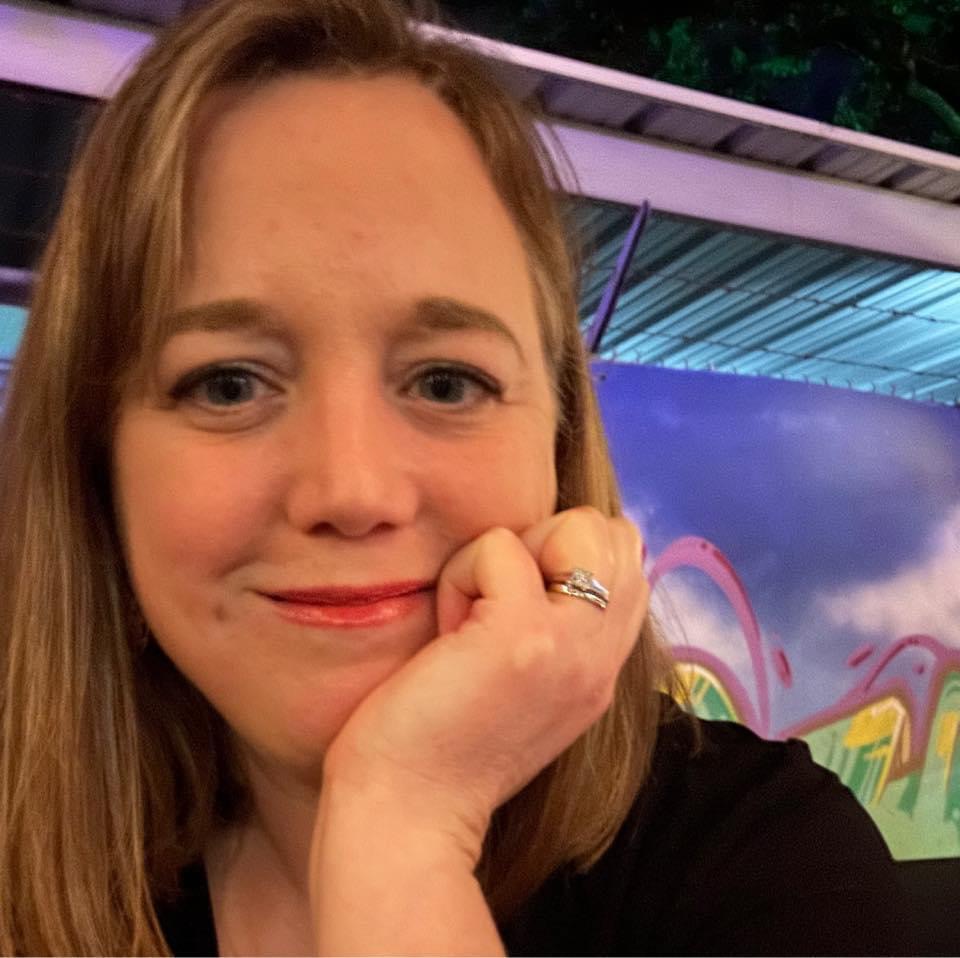
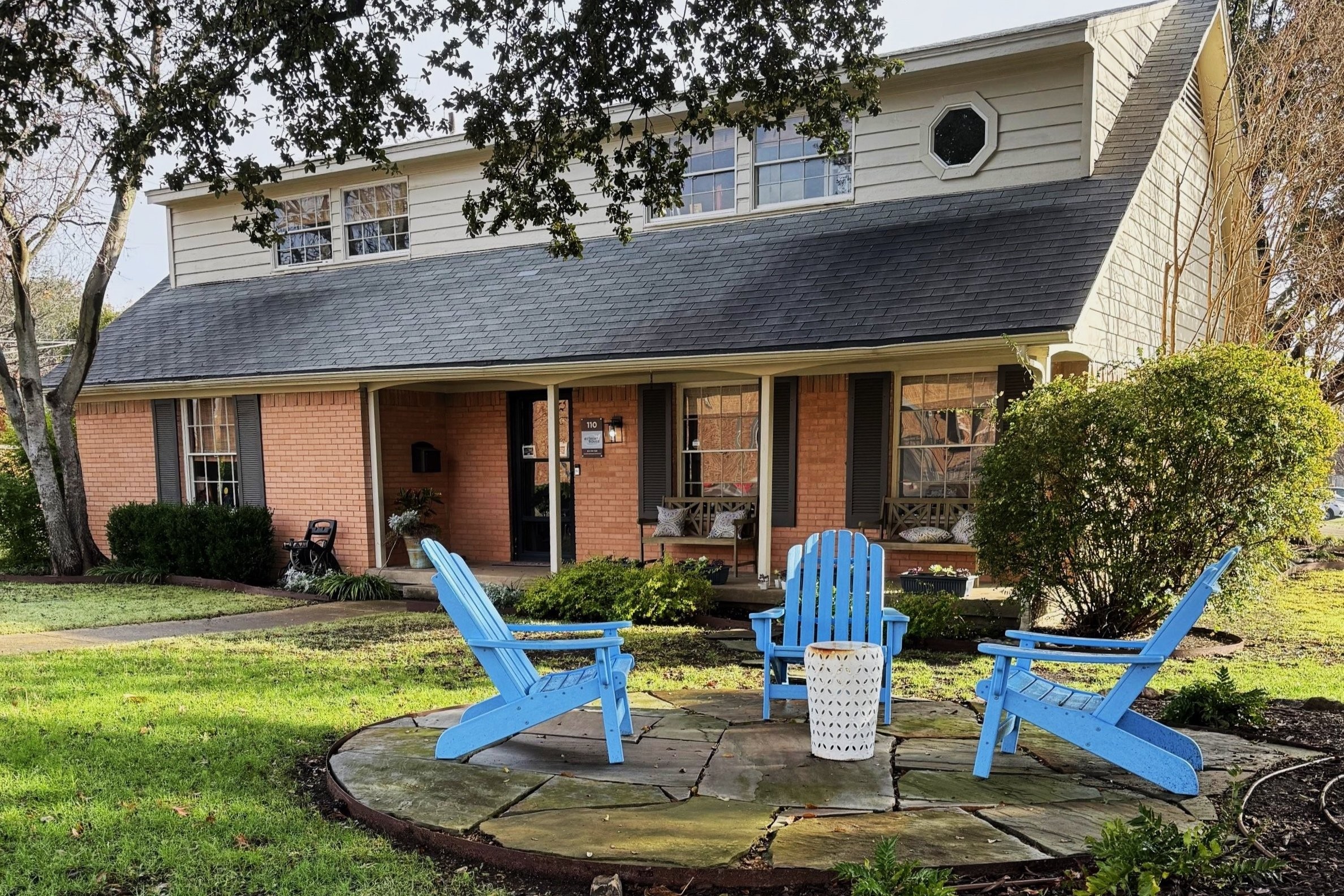
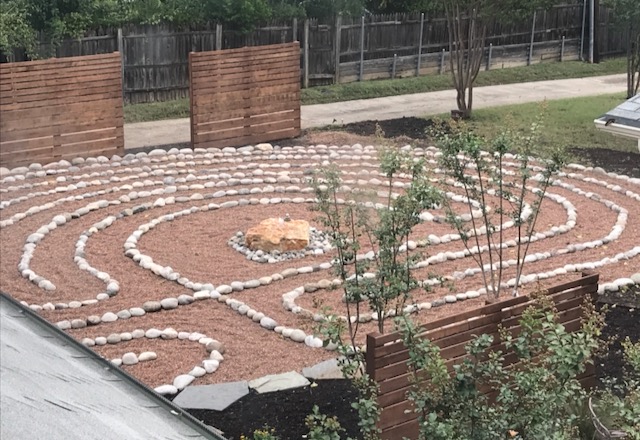
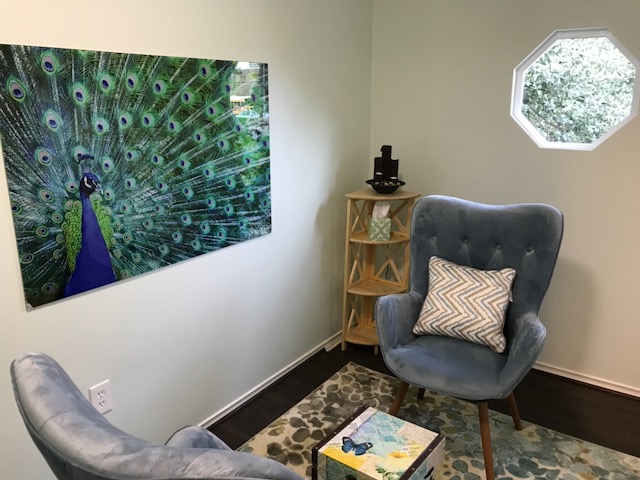
Image Credits
Images of the house, office, and labyrinth were photographed by Gavin Cogburn and are from Retreat House Spirituality Center in Richardson, Texas.