





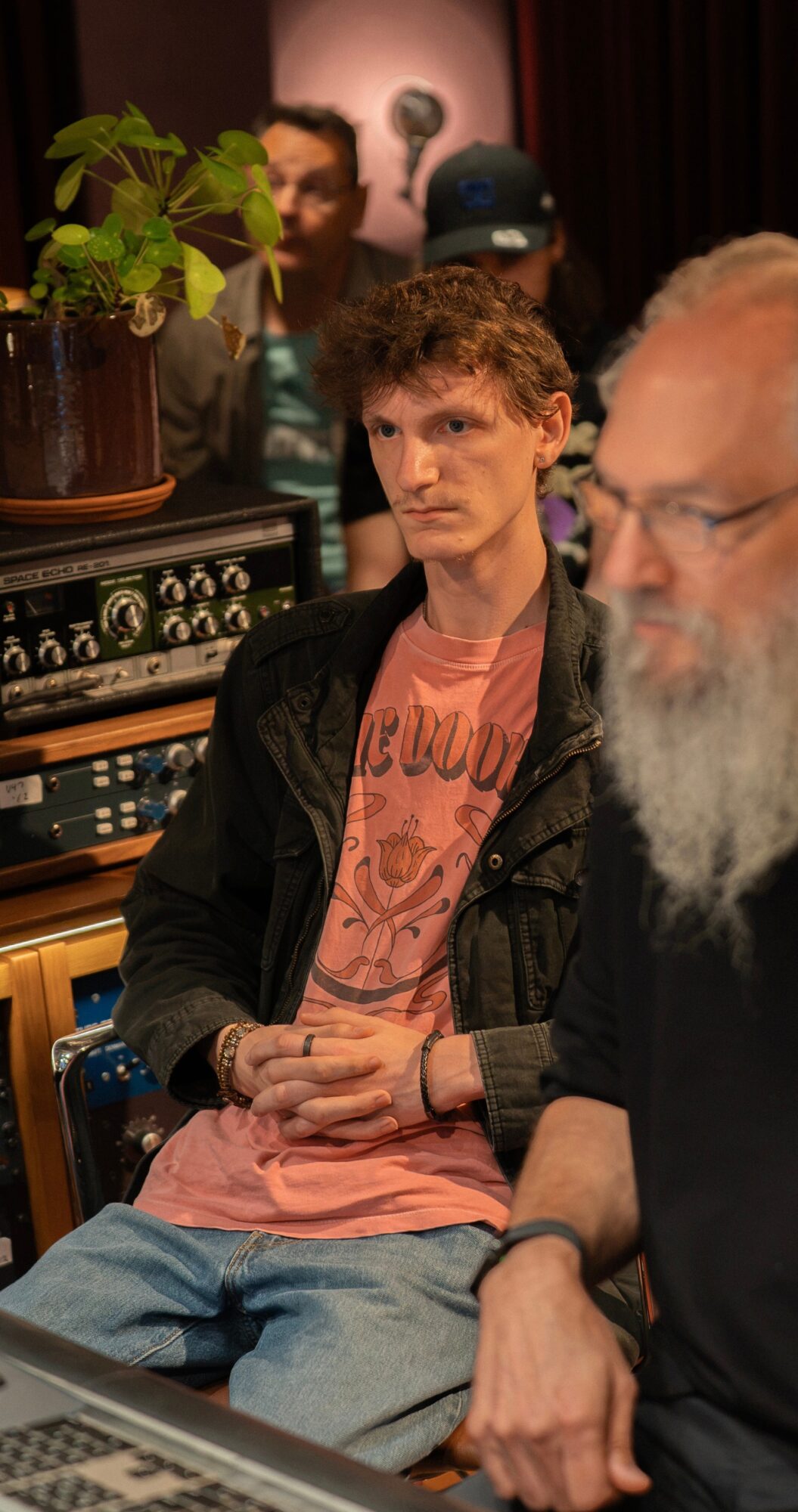
Today we’d like to introduce you to Antoni Potera.
Hi Antoni, thanks for sharing your story with us. To start, maybe you can tell our readers some of your backstory.
My journey began about ten years ago when my 9 year old self heard electronic music for the first time. Something immediately clicked. I became completely absorbed in learning DAWs, composition, music theory, mixing, and mastering before I even hit double digits. I stuck with EDM for a few years, until I started learning how to play drums and guitar in 6th grade and my music taste completely changed. I started listening to my parents’ music more, which was stuff like Muse, RHCP, Metallica, etc… and ever since then I started studying production in a rock/metal context.
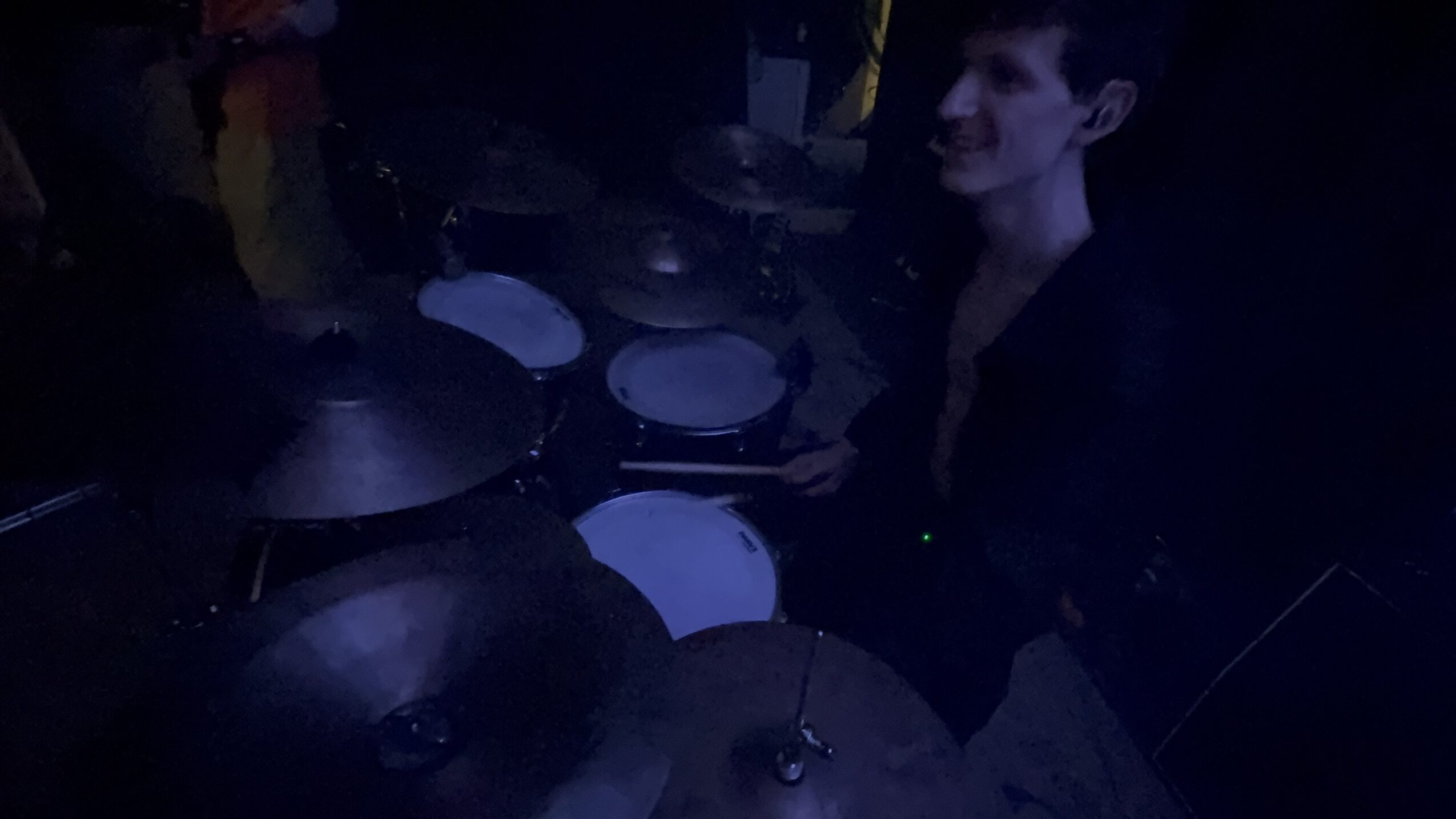
I learned mostly through trying to replicate sounds from a bunch of different songs, which led me to making full instrumental covers of songs I loved. That process trained my ear and gave me a deep understanding of tone, arrangement, and production. Being in my high school drumline was also a huge help, as we studied and composed arrangements quite often. I pretty much only did covers from middle school up to my senior year. It took a lot of time to transition into writing original material. But I’m now heavily involved with 3 bands. Not just as an engineer/producer, but as a composer and performer. (Though in many cases, I handle the mixing and mastering process independently)
In terms of education, I learned the basics of drumming in my middle school percussion section. Once I got to high school, the percussion section turned into drumline with a marching band for the first semester. In the second semester, it was back to concert band, but the percussion program in Plano gave several opportunities for students to arrange/compose their own ensembles, which I took full advantage of. My instructor, Michael A. Hernandez, really deserves credit for my love for music as a whole. And my private lesson teacher, Rob Tovar, laid down a solid foundation for my drumset skills.
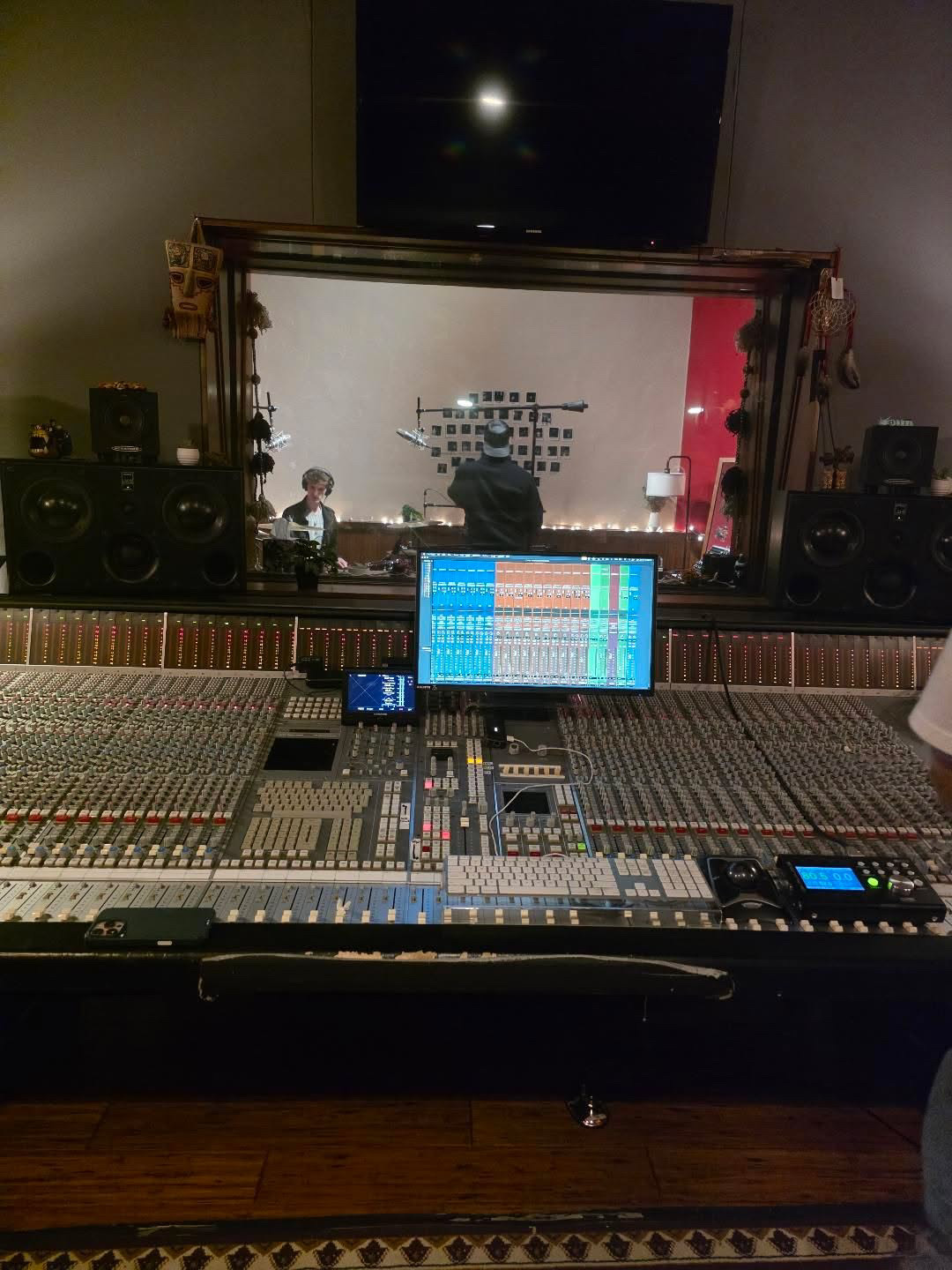
In terms of production, I have been a long time member of the URM Academy and Mix With The Masters. Throughout my high school years, I had wonderful educators and mentors who are globally renowned in their respective fields in the industry. I’ve studied privately under people like Adam Bentley, Cameron Carbone, Joe Scaletta, and the 2x Grammy award-winning Jon-John Robinson. I also had the privilege of flying out to the private Rue Boyer Studio in Paris earlier this year to study under the legendary Andrew Scheps, who is best known for his work with Hozier, Metallica, and the Red Hot Chili Peppers. All of these experiences have given me both a strong technical foundation and insight into professional workflows.
In my first year of college, I managed to get invited to NAMM (an international music conference near LA), where I met so many wonderful people who I still talk to and work with almost daily. Those relationships have already led to significant opportunities that have shaped the path of my career as both a professional musician and producer.
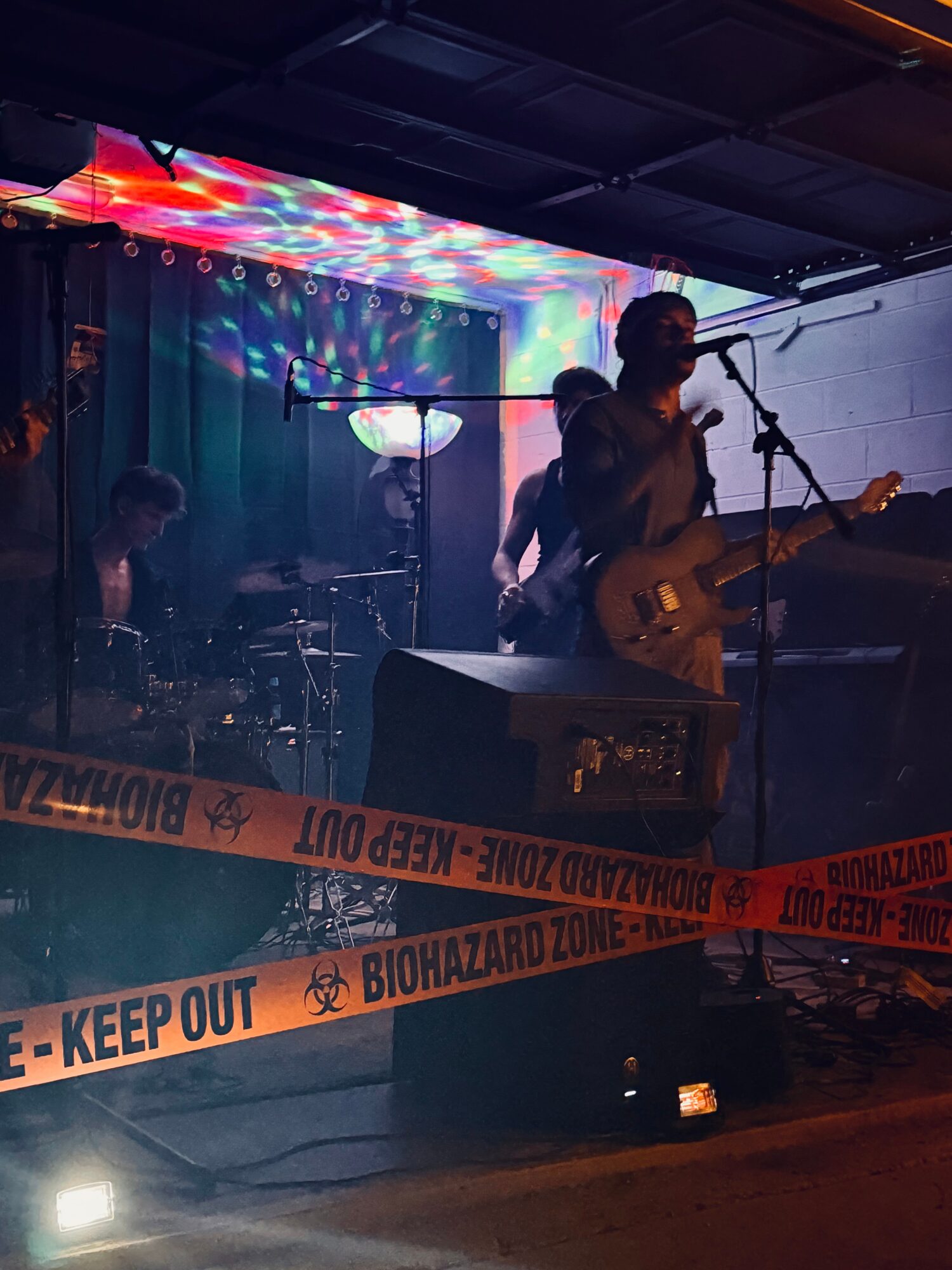
Now, I’m throwing free shows in my backyard, bringing local bands together and trying to strengthen the music community as a whole. I also usually end up producing for the bands that come and perform with us, focusing on capturing their sonic identity and creating a record that they are proud of.
I’m sure it wasn’t obstacle-free, but would you say the journey has been fairly smooth so far?
Not exactly. Firstly, I think I should acknowledge that music production is very expensive to get into. Not only do you need to buy every instrument and piece of equipment, but also the education. However, I am fortunate enough to have amazing parents that have supported me throughout my journey.
Secondly, when I was applying to UNT, I wanted to major in music. But I totally blew my audition and was rejected from the College of Music. I entered as an Environmental Science major, and couldn’t take any of the music classes I wanted to because they’re restricted to music majors only.
Ultimately I think this was a good thing, because it led me to get my education elsewhere, which resulted in me forming relationships with my mentors that have helped me enter the professional world much quicker than if I completed a full Commercial Music Production degree.
It was also insanely difficult to be noticed by anyone at first, but I found that the hardest part was actually putting myself out there. Imposter syndrome is very real, and I was scared of being judged, but eventually realized that nobody would be able to find me if I never put myself on the map. It was a little disheartening never being recognized for the crazy amount of time and effort I’ve put in to perfecting my craft, but with the encouragement of my current mentor (Cameron Carbone) I decided to just do it
Alright, so let’s switch gears a bit and talk business. What should we know about your work?
I offer a lot of services, but I am most commonly hired for recording, mixing, and mastering. If you’re unfamiliar, there are many phases of putting a song together: conceptualizing, arranging, tracking, editing, mixing, and mastering. Each step of the process heavily affects the next, so it’s important to nail each of them.
The first question I ask artists is what their vision is. That alone can heavily influence what gear I choose to use, what recording techniques we do, whether I edit the performance to be tighter or leave it natural, etc… Usually the artists already have their songs well arranged, but sometimes I find that if something isn’t quite working in the mix, it’s an arrangement issue. So I’ll suggest we change something about it and they decide, since it is ultimately their song.
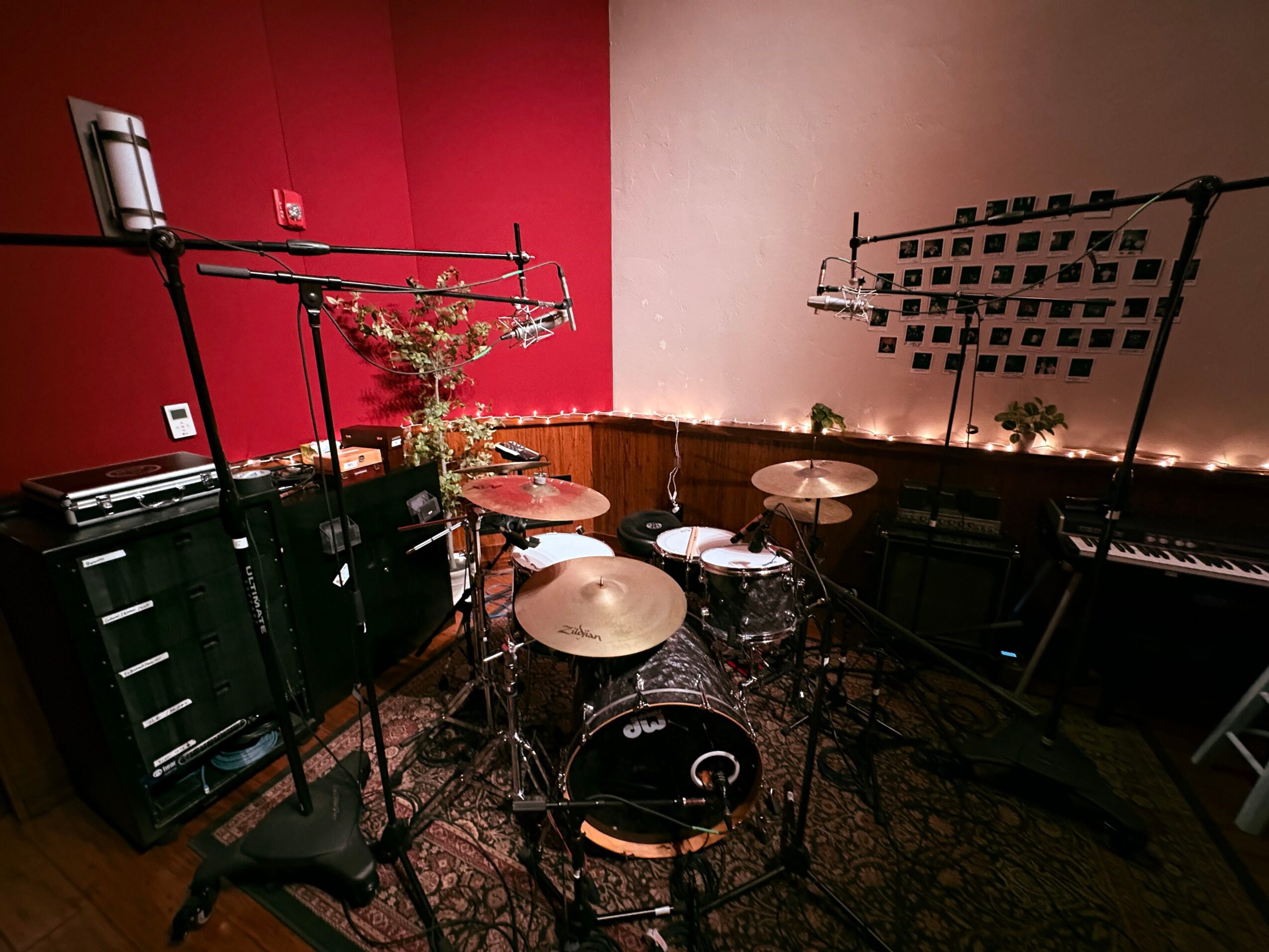
The next step would be to record, or “track”, and my goal here is to authentically capture their performance. This is also where their vision will influence, for example, what guitar pedals we use, what amp, what cabinet, what microphone combo, etc… Some bands have a signature sound, and of course I respect that, but I have yet to work with an artist who has an established sound, since I’ve only worked with new bands so far.
Then we get to the exciting part: mixing. Something a lot of people don’t realize is that you really shouldn’t have to do too much work here. If everything is well recorded (with intention), then it should already be halfway there. When working remotely with people I’ve never met, I tend to do a lot of audio restoration work before mixing, which is very time consuming.
Finally, we reach the mastering stage. Mastering can be broken down into three stages: dynamics, frequency, and loudness. This process is pretty universal, and it’s often quick and easy if the mix I’m mastering is done well. It’s also the cheapest service I provide. The main idea here is controlling the dynamics of the performance, followed by tonal shaping (frequency), then brought up to the appropriate loudness level. Music is consumed in a wide variety of ways, such as streaming, CDs, vinyl, etc… and each form of consumption has different standards of loudness, though they are often ignored because of the loudness wars. If you’re unfamiliar, loudness has turned into a competition in the music industry. It’s notorious for killing dynamics and distorting mixes.
As for what I’m known for, I think it’s the crazy high standard I hold myself to. Although this is my primary source of income, the music is more important. If I can’t deliver a product I’m proud of, I will not charge. There have been instances where I’ve turned down projects because I know I wouldn’t be able to deliver something I’m confident enough to put my name on, since it will be listed in the credits.
I’d say I’m most proud of the community I’ve built around myself through music. Most of everyone I’m closest with I’ve met through something music related. I also like that I have the ability to make people’s music sound how they’ve always imagined it. Seeing people happy with their music is the best part of my job, and I always meet people where they’re at monetarily.
I think what sets me apart is my ability to learn extremely quickly. It’s like my brain never stopped being a sponge after growing up. Also my sociability, half of being a great engineer is being able to connect with anybody. As was discussed at the NAMM Tec Summit, the number one reason most people don’t succeed in this field is because they break the number one rule: don’t be a dick.
Can you talk to us a bit about happiness and what makes you happy?
As basic of an answer as this is, making someone’s musical vision a reality brings me so much joy. I am fortunate enough to have the resources and knowledge to make great sounding records, and I love giving people access to that to make them sound amazing.
Pricing:
- **All prices negotiable**
- Mix & Master (Single) – $250
- Mix & Master (Album) – $150/song
- Full Production – $350
- Mastering – $50/song
Contact Info:
- Website: https://antonipotera.com
- Instagram: https://www.instagram.com/antoni.potera
- Facebook: https://www.facebook.com/share/1BsYMf57BS/
- Youtube: https://youtube.com/@antoni.potera