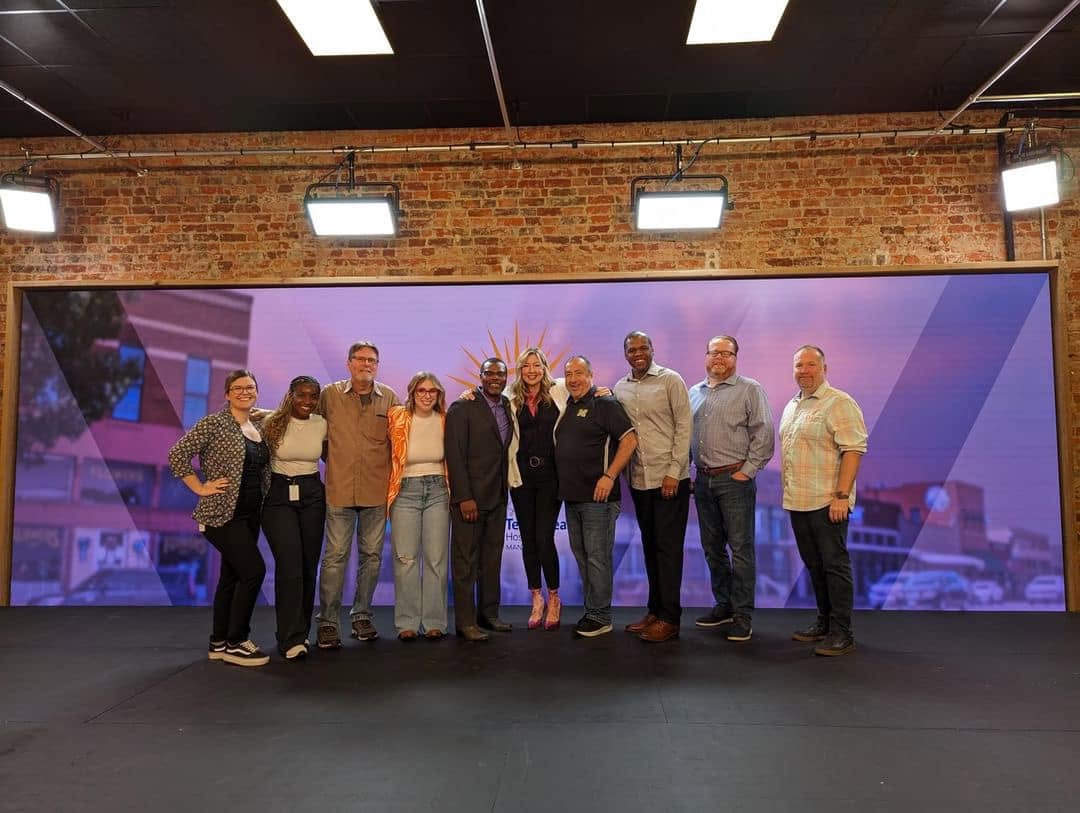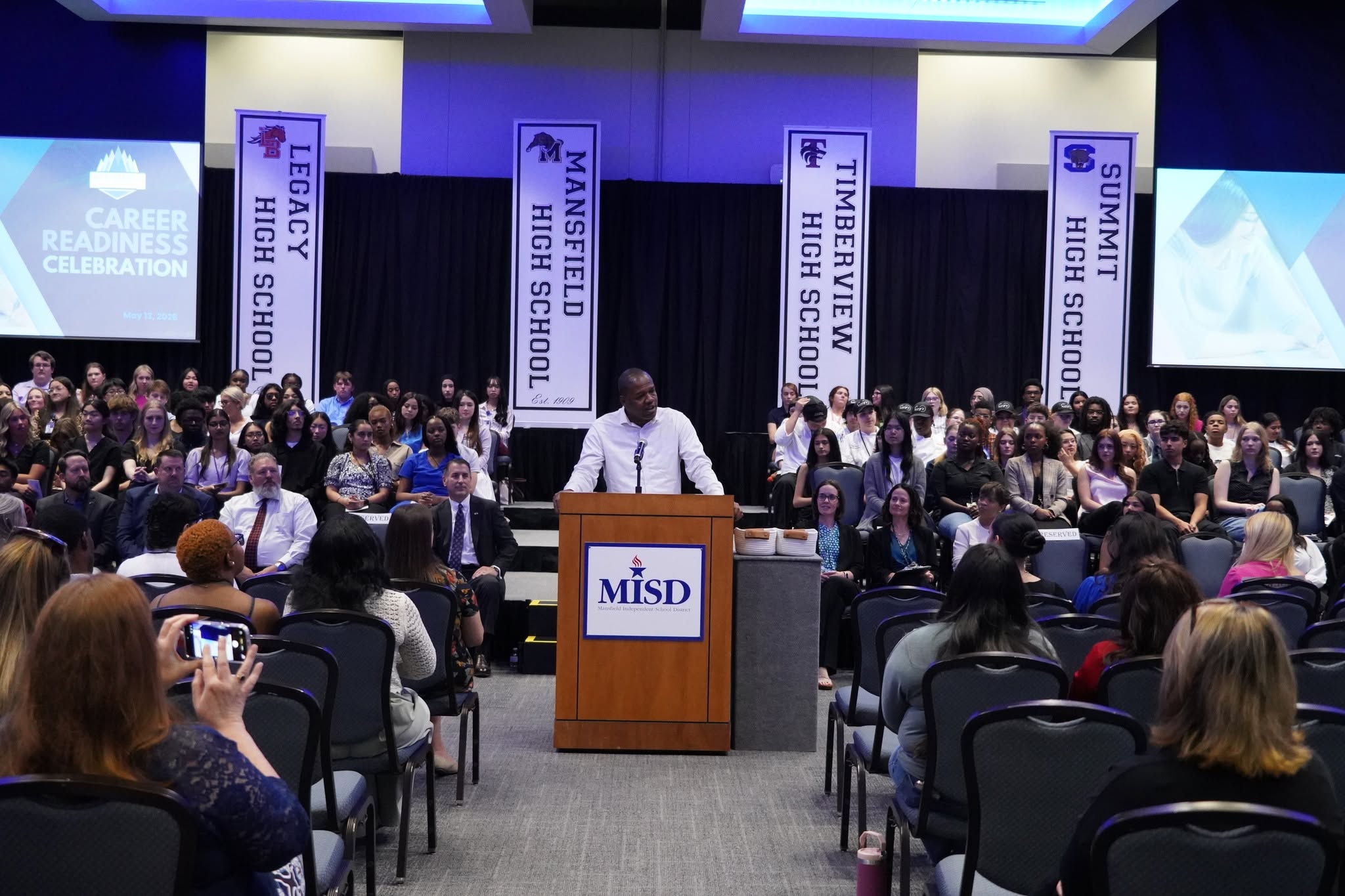






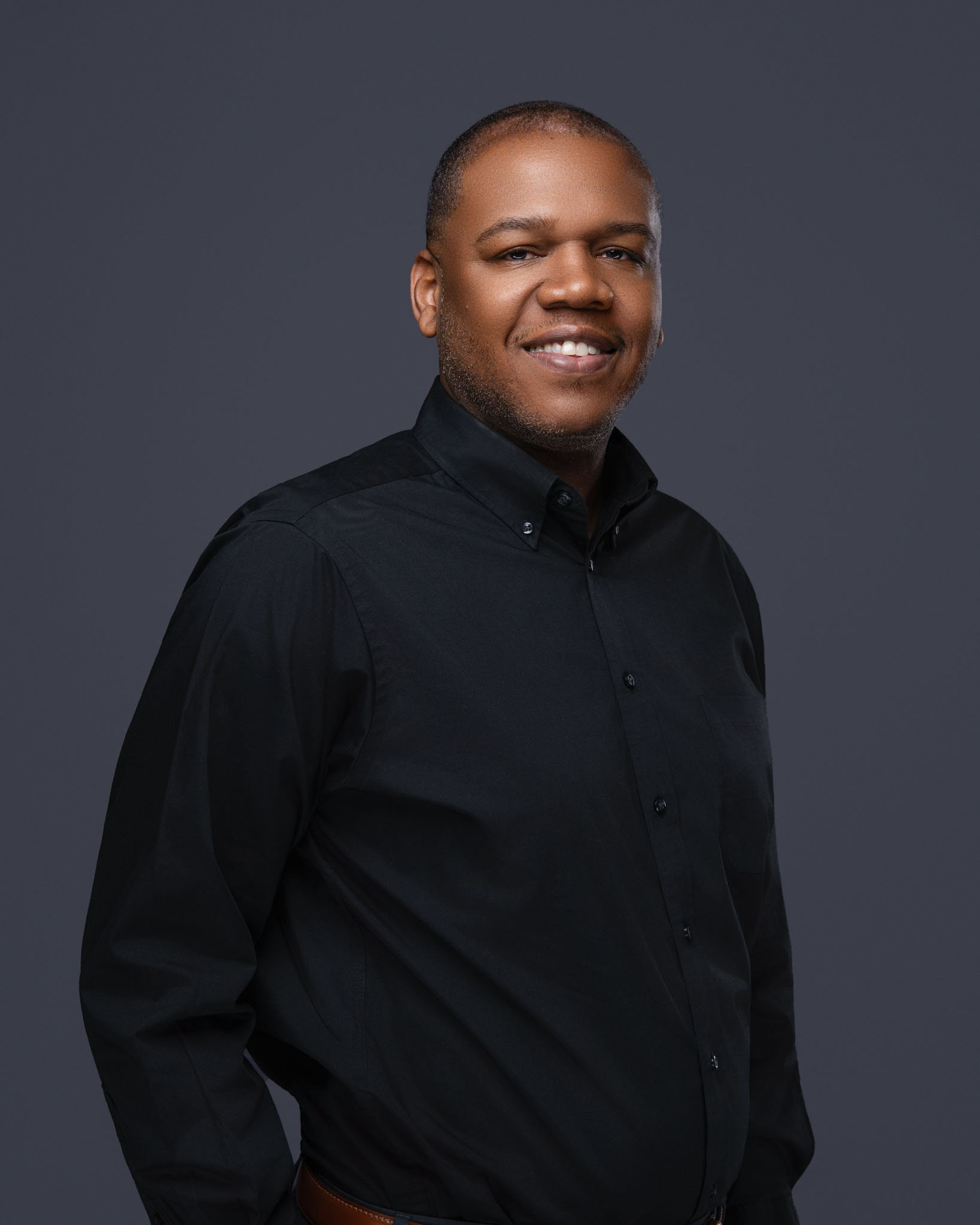
Today we’d like to introduce you to Jonathan Taylor.
Hi Jonathan, can you start by introducing yourself? We’d love to learn more about how you got to where you are today?
My path to entrepreneurship really started before there was ever a company called TaylorMade.
My background is in accounting, marketing, technology and business, but throughout my career I consistently became the person people called when something needed to be figured out. Sometimes it was a technology problem. Sometimes it was a business process, branding issue, operational challenge or simply a situation where someone needed another set of eyes.
I realized that what I really enjoyed was not selling people something. I enjoyed understanding the problem, connecting the pieces and helping people make a better decision.
That became the foundation for TaylorMade Consulting Group.
As I worked with more businesses, I started noticing the same problems repeatedly. Companies had several technology vendors that did not communicate with one another. They were paying for services they did not fully understand. Their phone system might be with one company, internet with another, cybersecurity somewhere else, IT support outsourced to another provider and cloud services spread across several platforms. When something went wrong, everyone pointed at someone else.
At the same time, many businesses had a completely different challenge on the growth side. They needed a stronger website, better search visibility, branding, content, automation or marketing strategy.
That is why TaylorMade eventually grew into something broader than a traditional consulting company.
Today, James Leggs and I are partners and co-owners, and we are building TaylorMade as a group of services that helps organizations solve problems on both sides of growth. We help businesses build and manage the technology infrastructure that keeps the organization running, and we also provide marketing, digital and business-growth services that help the organization become more visible and competitive.
The technology side has evolved into a significant part of the company. As a technology advisor, we help businesses evaluate providers, understand contracts and costs, compare solutions, implement new technology and manage those relationships over time.
Our areas of work now include business internet and connectivity, dedicated fiber, SD-WAN, business phone systems and UCaaS, contact centers and CCaaS, cybersecurity, managed IT services, cloud infrastructure, data centers and colocation, mobility and IoT, Google Workspace, AI and workflow automation, along with related technology consulting.
But business is only one part of my story.
Service has always been important to me. I have been fortunate to work with students and interns, mentor young people, serve in community organizations and serve through my church. My wife and I have 2 kids but have also been walking through an adoption journey to provide a safe home for four children with special needs.
That experience has reinforced some things for me about leadership: listen before making decisions, prepare thoroughly, advocate for people who are depending on you, stay calm when the process becomes difficult, and understand that trust comes with responsibility.
Those principles influence how I try to lead TaylorMade.
The company has grown tremendously from where it started, but the basic idea has never changed. People come to us with complicated problems, and our responsibility is to help make the path forward clearer.
We all face challenges, but looking back would you describe it as a relatively smooth road?
It definitely has not been a smooth road, and I actually think some of the difficult seasons are responsible for making TaylorMade a better company.
One of my earliest challenges was trying to do too much myself.
When you start a business, you can become the salesperson, strategist, project manager, technician, marketer, accountant and customer service department all at once. That can work for a period of time, but eventually you realize that working harder is not the same thing as building a scalable company.
I had to learn how to create systems, document processes, delegate responsibility and trust other people to carry the vision with me.
That transition from being the person who solves everything to building a team and organization capable of solving problems without everything depending on one person has probably been one of the biggest areas of growth for me as a leader.
Another challenge has been learning when not to sell something.
Technology companies are constantly introducing new platforms, software, AI tools and services. Businesses are told they need the newest system or the latest technology, and sometimes they do. But sometimes the best recommendation is to keep what they have.
That required us to become very disciplined about starting with the client’s business problem instead of starting with a product.
If your existing provider is doing a great job, I should be able to tell you that. If your current technology works but the contract needs to be renegotiated, we should focus on the contract. If the real problem is the process rather than the software, buying another application may make the problem worse.
That philosophy has become central to TaylorMade.
My personal life has also taught me a great deal about leadership. Our family’s adoption journey has involved preparation, training, advocacy and navigating situations where the answer was not always immediate or easy.
It has reminded me that important decisions deserve patience. People deserve honest communication. And when someone places their trust in you, you have a responsibility not to take that trust casually.
Those lessons translate directly into business.
Whether we are evaluating a multimillion-dollar technology decision or helping a small company build its first professional website, I want our team to understand that there is a person on the other side of that decision depending on us to get it right.
Growth has taught me that TaylorMade cannot simply be known for knowing technology.
I want us to be known for judgment.
Technology changes constantly. Good judgment, integrity, preparation and accountability are what allow you to help someone navigate that change.
Appreciate you sharing that. What should we know about TaylorMade Consulting Group, LLC?
TaylorMade Consulting Group helps businesses make better decisions about technology, operations, marketing and growth.
The easiest way to understand us is that we want to become a trusted resource businesses can call before making an important decision.
Our technology advisory practice works with small and midsize businesses, mid-market organizations and enterprises that need help evaluating, sourcing, implementing or managing technology.
We can work with businesses of different sizes, but we tend to create the most measurable value for organizations with 20 or more employees and a meaningful technology environment involving multiple users, locations, systems, contracts or vendors.
When an organization is spending $4,000 or more per month across technology and communications, there is usually enough complexity to justify taking a closer look. When that spend reaches $10,000, $20,000 or more per month and multiple vendors are involved, the opportunity becomes even greater because we can examine cost, contracts, redundancy, risk, performance, support and vendor accountability together instead of evaluating each service in isolation.
A typical engagement may begin with something as simple as a technology bill review.
We want to understand what you are paying for, which providers you are using, when contracts renew, how many locations and users you have, what problems employees or customers are experiencing and what the business is trying to accomplish.
Then we can determine what actually deserves attention.
Our technology services include business internet and connectivity, dedicated internet access and fiber, network design and SD-WAN, business phone systems and unified communications, UCaaS, contact center technology and CCaaS, managed IT support, cybersecurity and resilience, cloud infrastructure, data center and colocation services, mobility and IoT, Google Workspace, AI sourcing and implementation, workflow automation and other technology infrastructure.
One of our biggest differentiators is the ability to look beyond a single provider.
Instead of calling one carrier and asking that carrier what you should buy, TaylorMade can evaluate solutions across a broad ecosystem of more than 285 technology providers. That allows us to begin with the business requirement and then determine which providers deserve consideration.
We can help develop requirements, compare proposals, evaluate total cost, negotiate, coordinate implementation and remain involved after the contract is signed.
That last part is extremely important to me.
A lot of technology sales relationships end when the agreement is signed. We want to remain involved throughout the life of the relationship. When there is an escalation, renewal, expansion, new location or new requirement, our clients should have someone they already know who understands their environment.
We also work alongside internal IT departments and existing managed service providers. We do not necessarily need to replace anyone. Sometimes the most valuable role we can play is filling the gaps, managing carrier relationships, sourcing specialized services or helping leadership evaluate an important decision without adding more work to the internal team.
The other side of TaylorMade focuses on business growth and visibility.
We provide website development, search engine optimization, digital marketing, social media, branding and graphic design, video and photography, printing, business consulting and related services.
That combination is unusual, but it makes sense when you look at the problems growing businesses actually face.
A company might come to us because their internet is unreliable, their phone system is outdated, their cybersecurity needs attention or their IT provider is not responsive. Another company may have strong operations but almost no digital visibility. Another may need both.
We do not believe every customer needs every TaylorMade service.
We believe every customer deserves the right solution to the problem they actually have.
That is what I am most proud of about the brand.
TaylorMade is not supposed to represent a particular product.
It is supposed to represent having someone in your corner who can help you figure out what to do next.
Where do you see things going in the next 5-10 years?
I think the next five to ten years will completely change the way businesses think about technology.
For a long time, businesses bought technology in categories. You had a phone provider, internet provider, IT company, cybersecurity company, cloud provider, CRM and dozens of software applications.
Those boundaries are starting to disappear.
The future is going to be much more connected.
AI will become embedded into communications, customer service, cybersecurity, analytics, sales, marketing and everyday business applications. Eventually, businesses will stop talking about having an “AI strategy” in the same way we no longer talk about having an “internet strategy.” It will simply become part of how modern businesses operate.
The important question will not be whether a company uses AI.
It will be whether they are using it responsibly and whether it is actually producing a measurable business outcome.
Cybersecurity will also move from being viewed primarily as an IT issue to being viewed as a business continuity issue.
Identity security, employee access, backups, ransomware protection, vendor risk, compliance and recovery planning will increasingly become leadership and board-level conversations. Small and midsize businesses will have to take those issues just as seriously as large enterprises because attackers do not care how many employees a company has.
I also believe businesses are going to become much less tolerant of technology sprawl.
For years, companies solved each new problem by buying another application or hiring another vendor. Now they have dozens of subscriptions, overlapping capabilities, disconnected data and no clear ownership.
The next phase will be optimization.
Businesses are going to ask: What are we paying for? What are employees actually using? Which contracts overlap? Which systems should integrate? What can be automated? Where are we exposed? Which vendors are actually performing?
That is why I believe the technology advisor role is going to become increasingly important.
Businesses do not necessarily need another company trying to sell them another product.
They need someone capable of looking across connectivity, communications, cloud, cybersecurity, managed services, mobility, AI and business applications and helping leadership understand how those pieces work together.
Technology will continue getting more sophisticated.
Our job is to make the decision-making process simpler.
Pricing:
- Technology Audit & Bill Review: FREE
- Technology Contract Review: FREE
- 25 Minute Consultation: FREE
- 25 Minute Discovery: FREE
- 30 Minute Product Demo: FREE
Contact Info:
- Website: https://www.taylormadeconsultinggroup.com
- Instagram: https://www.instagram.com/taylormadeconsultinggroup2026/
- Facebook: https://www.facebook.com/taylormadeconsults/
- LinkedIn: https://www.linkedin.com/company/taylormadeconsultinggroup
- Yelp: https://www.yelp.com/biz/taylormade-consulting-group-mansfield
- Other: https://www.zoominfo.com/pic/taylormade-consulting-group-llc/457051661