





Today we’d like to introduce you to Diana Crowder.
Diana, let’s start with your story. We’d love to hear how you got started and how the journey has been so far.
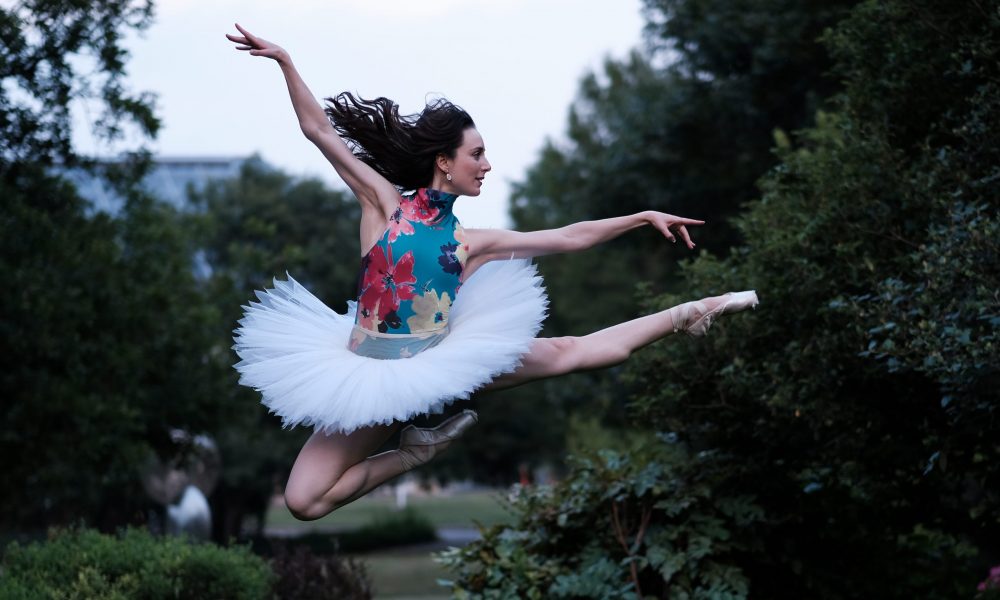
For as long as I can remember, I have wanted to be a ballet dancer. I have not only wanted to dance for the enjoyment of it, but I have also wanted to make it a career. Even with the hard work, alternate life path, challenges of the field and extreme technical discipline, it all seemed obvious to me at a young age that this is what I was going to do. With the incredible support of my parents, I left home in 9th grade to attend Canada’s National Ballet School in Toronto. This is a preeminent professional ballet school where I would receive world-class training, as well as high school education. I attended the National Ballet School through high school, and one year of post-secondary training. My first job after school was at Tulsa Ballet, in their second company. After two years in Tulsa, I auditioned all over the country a second time. At the time, my boyfriend and I were dating long distance. He was from Dallas and, while very much in love, we were at a point in our relationship where we needed to be in the same place in order to grow into the future. I was offered one job after a long and hard audition season, and it was to dance in the company at Texas Ballet Theater in Dallas/Fort Worth. It felt like fate. I took the job and moved to DFW. I had a full-time job dancing in a professional ballet company, and that boyfriend that was from Dallas is now my amazing husband. Somehow, awestruck, it seemed I had everything I had ever wanted.
Sometimes, life opens these unbelievable doors for you, but then you realize that the door only leads to the lobby. While at Texas Ballet Theater I had some wonderful experiences, for which I am grateful. However, for a variety of reasons, I became very unhappy, and at a certain point, it became clear that I was not in a place that was good for me. I left Texas Ballet Theater in 2017, not knowing what I was going to do next other than that I was going to keep dancing. With the support of my husband, I decided that I was going to pursue a freelance dance career. I poured myself into research, reaching out to former colleagues that had taken this path, spending hours online looking for potential gigs and opportunities, and diving headfirst into getting to know the Dallas dance scene. At Texas Ballet Theater, I had not been aware of the rest of the dance happening in Dallas, but I soon found out that there is a dance community that is bubbling up and growing at a rapid pace.
In the first year of freelancing, I joined two local Dallas companies, guested with two others, guested for a company in New York, joined ARC Dance in Seattle where I met some incredible artists, worked on a music video, and started teaching ballet 10 hours a week. I found that working in smaller groups, with new people, new choreographers, and fresh ideas, I was finding more fulfillment in my work than I had in years. Not to sugar coat it, it was not easy. There were many ups and downs, but I discovered that being a freelance artist brought me a rich experience that I would have otherwise never known. I get to perform contemporary ballet for new audiences and contribute, in any small way, to the vibrant arts and culture that Dallas has to offer. I am thankful for this every day.
I have devoted a lot of myself recently working with Ballet Dallas. In this company, I have found an amazing group of devoted, talented and determined artists who share a passion for creating and performing new and innovative works, as well as choreographers and artistic directors who encourage and support artists. It is a small, growing company, and I strongly believe that we are creating the kind of work that contributes meaningfully to the arts and vibrant culture of this city I love so much.
Great, so let’s dig a little deeper into the story – has it been an easy path overall and if not, what were the challenges you’ve had to overcome?
Broadly, I think that pursuing something that you are so passionate about, to the point that it becomes part of who you are, is difficult in any field because there is more at stake emotionally. In ballet and other athletic pursuits, the demand is simultaneously physical, emotional and psychological. The competition is high, especially with yourself, and the physicality is extremely difficult. You are constantly dealing with your own self-criticism and perfectionism while making yourself vulnerable to other people’s judgments of your work. Believing in yourself from within can be a huge emotional challenge in a field that is grueling and subjective.
Through various challenges and setbacks, I have had to really reconnect with what it is about dancing, rehearsing and performing that brings me so much meaning and joy. My advice for other women is to connect with what drives you on a deeper level to overcome the challenges that you face. I would also say it is important to work for and with people who treat you with respect and honor your value. True, it is difficult for others to believe in you if you do not believe in yourself, but it is also difficult to believe in yourself if others do not value your contribution.
Do you think there are structural or other barriers impeding the emergence of more female leaders?
I think that the biggest barrier in ballet is the simple principle that there are many more women who pursue a career in ballet than men. Men are much more in demand professionally, and the field is less competitive for them. Because of this, boys are trained with more encouragement while a woman is trained with more discipline. Men are less likely to be dismissed, while women are seen as replaceable. Culturally in ballet situations, women are taught a ‘be quiet, nod, and do as you’re told’ mentality, which is less reinforced with men. I want to be clear, this is a very large generalization, however, it is a sense that many dancers I have talked to have felt. While women make up a much greater percentage of dancers, men still go on to make up a much greater percentage of leadership, and I think these cultural differences in the way we are trained and treated during our careers are in part to do with that. This is changing, and we are starting to see more equality in ballet leadership. I think that we will continue to see this change as the broader societal discussion around women in leadership continues to shift.
Contact Info:
- Instagram: @dianacrowd
- Other: www.balletdallas.org


 Image Credit:
Tim Drake, Allen Gonzalez, Sharen Bradford
Suggest a story: VoyageDallas is built on recommendations from the community; it’s how we uncover hidden gems, so if you or someone you know deserves recognition please let us know here.