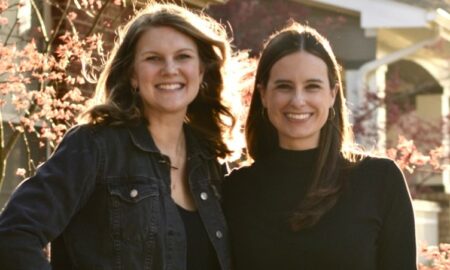






Today we’d like to introduce you to Lamisa Mustafa.
Lamisa, please share your story with us. How did you get to where you are today?
My story – a second generation immigrant’s story – begins with my dad, who dreamed of studying in North America (first Canada, then the United States) and his family members who supported him in making that dream a reality. An 18-year-old and recent high school graduate, Shabbir Mustafa navigated his way through two new countries and would go on to graduate with a BS in Electrical Engineering. Along the way, during his visits to his motherland of Bangladesh, he met my mom, Taslima Yusuf, and married her. (He married up – my mom’s dad was Bangladesh’s Minister of Health.) Like my dad, my mom was born and raised in Bangladesh. When she moved to the U.S., she didn’t even speak English. Both of them had to start from scratch (my mom more-so than my dad): a new language, new culture, new life, new everything. My parents waited to have me until after my dad graduated so that they could support me. And they’ve persevered through a lot for me: like sticking with a job that requires long hours of standing and has caused severe leg pain, and dealing with harassing and hurtful behavior from a racist supervisor. They’ve endured these tough professional – and personal – experiences to be able to fund my education. They’ve survived so that I can thrive. As an only child, I was born having two built-in best friends, and they’ve measurably improved my life every day since.
Whereas most South Asian parents expect their children to be doctors, engineers, lawyers, and businesspeople, my parents took a chance on my nontraditional interest: being a human rights scholar-activist, a career choice with no clear-cut path. Contrary to popular belief, there are numerous possibilities with a degree in Human Rights, because each student’s journey is based on her/his/their unique combination of interests. My parents have raised me with the idea that I should do what I love, rather than doing something for the sole purpose of making money. So, that’s what I’m doing, with their blessing: unapologetically pursuing my passions.
My interest in human rights was inspired by my social location as a Bangladeshi, Muslim, American woman; stories of my maternal grandfather’s life as an advocate for social justice; and family lessons of being and doing good with humility and gratitude. I realized that human rights activism had to be at the center of my educational and professional career – and, therefore, my life – during my first year of high school, and I haven’t looked back since. I am grateful to have family, mentors, and friends in my corner. On days when the world’s tragedies seem like too much to bear, I hold onto this quote from artist Brandan “Bmike” Odums: “I am my ancestors’ wildest dreams.” I am where I am today because of the sacrifices of those who came before me.
Great, so let’s dig a little deeper into the story – has it been an easy path overall and if not, what were the challenges you’ve had to overcome?
At this point, I don’t even trust smooth roads. For me, it’s always been the case that the things I spend months planning never work out, while I am successful at the opportunities I find out about days before their deadlines. Perhaps this is Allah’s way of telling me to let life take its course, and to understand that “it’s usually the last key on the ring which opens the door.” Everything won’t go as planned, but that can be a good thing – I take it as a sign of bigger and better things coming my way in the future.
For young women, and, especially, young women of color: many of the spaces you operate in were not built for you. While it’s sad and unjust and unfair, knowing this truth will help you get through those frustrating moments of working harder than everyone around you and receiving little to no words of appreciation or promotion in return. Don’t be too hard on yourself; there are systemic injustices in place working against you. Just know that your struggle is worthwhile and world-shaking. By being unapologetically you, you are making room for others like you. If the journey toward justice was easy and comfortable, there wouldn’t be any work to start with.
Please tell us more about your work, what you are currently focused on and most proud of.
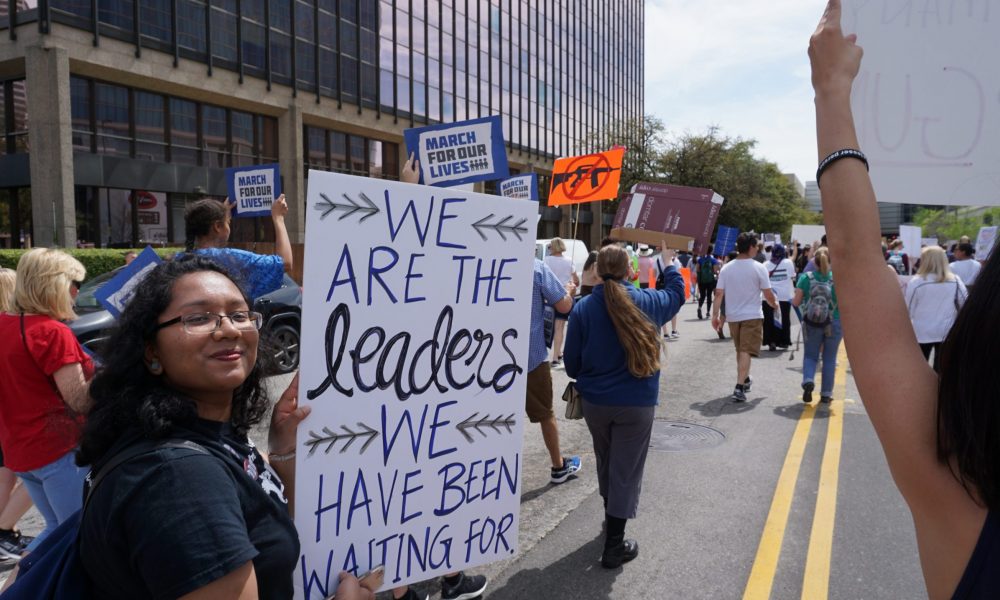
I am an undergraduate student at Southern Methodist University in Dallas, Texas, majoring in Human Rights, Public Policy, and Sociology (and minoring in French). In a nutshell, I’m learning about society’s problems, as well as gaining and honing the skills necessary to address those local- and global-scale issues. I’ve taken classes on human rights violations throughout time and space, nonprofit organizations, comparative politics, social networks and network effects, minority-dominant relations, statistics, calculus, economics, social science research methods, the history of gender and sexuality in America, and the literature of Francophone women writers. But my studies wouldn’t mean anything if I wasn’t applying them outside of the classroom. At SMU, I am Vice President of the Feminist Equality Movement, a Caswell Leadership Development Program Fellow, a student representative on the University Honors Program Advisory Council, and a volunteer for the ESL Program.
During high school, I served as President of the Human Rights Forum, a student-run organization dedicated to raising awareness of human rights issues among the student body. Through my involvement in this organization, I forged personal relationships with faculty, staff, and students in the SMU Human Rights Program. I went on to choose to attend SMU because of the built-in support system provided by the program, and my involvement in the program has been the highlight of my college career. I feel blessed to learn from and work with a diverse community of changemakers. We’re unique because our program is one of only seven undergraduate degree-granting human rights institutions in the U.S.
Since my first semester of college, I’ve worked as Community Outreach Intern for the SMU Human Rights Program; my projects include high school recruitment, community organizing, social media, leadership development, and networking with community activists and organizations. Through these initiatives, I work to promote human rights education in the SMU and greater Dallas communities. I am also a co-investigator on a research project, funded by SMU Undergraduate Research and the SMU Human Rights Program, on college access attitudes among North Texas high school students interested in human rights. My research partner Tannah actually went to the same high school as me and served as President of the Human Rights Forum the year before I did – I think our friendship embodies the idea that “wherever you go, you never go alone.” Tannah and I recently learned that our proposal to present our research at a national conference was accepted! We’re excited and honored to share our work and, hopefully, encourage other higher education institutions to create human rights programs like ours on their campuses.What sets the SMU Human Rights Program apart from others is the myriad of initiatives we facilitate, for people of all backgrounds, including: academic development, global awareness, and community innovation. The program has supported me in my endeavors, like publishing a poetry anthology for social justice titled “Voices of Resilience,” and challenged me to go after more opportunities, like presenting at a national conference on higher education. This supportive and challenging community helps each of us in our professional development, and it ensures that we can take informed action as responsible citizens of the world. My fellow human rights champions always encourage me to be and do better.
It would be great to hear about any apps, books, podcasts or other resources that you’ve used and would recommend to others.
Staying informed is a big part of human rights work. In fact, the struggle for human rights is largely a struggle against ignorance. Those who have the comfort of not knowing about the experiences – and oppression – of others will never build empathy. It’s important for me to keep up with the news, even though it can often be heartbreaking. I prefer reading blogs and articles rather than watching TV – this is mostly because a lot of news programming seems to intentionally pit people against each other, instead of encouraging constructive and informative conversation.
These are some of my favorite resources (in no particular order):
– YES! Magazine
– Metta Center for Nonviolence
– Everyday Feminism
– Brown Girl Magazine
– No White Saviors
– Yaqeen Institute for Islamic Research
– The New York Times Race/Related Newsletter
– Equal Justice Initiative
– Southern Poverty Law Center
– Inside Higher Ed
– Antiracism Center
– PEN America
– Haymarket Books
– Nonprofit Quarterly
– Contexts Magazine
– TIME’S UP
– Pod Save the People
– Don’t @ Me (podcast hosted by the creator of Dear White People, Justin Simien)
– Justice She Wrote (created by my friend and SMU Human Rights alumna MacKenzie Jenkins)
– Muslims Thrive (co-founded by my friend and Columbia alumna Saba Chowdhury)
– The North Star (launching soon!)
– Some larger outlets I like and should keep up with more: Human Rights Watch, Amnesty International, Al Jazeera, Vox, The New Yorker, The Atlantic
I recently read Hope in the Dark by Rebecca Solnit and felt really reenergized after finishing it. I think it should be required reading for every activist – aspiring, in-training, and well-seasoned. Rebecca Solnit is a great thought leader to follow on social media; she shares important information on climate change, feminism, LGBTQ+ rights, Indigenous justice, capitalism, social movements, and more. Some of my other favorite follows are: Imam Omar Suleiman, Rev. Dr. Michael Waters, Alia Salem, Shaun King, Clint Smith, Ibram X. Kendi, Adrienne Keene, Sarah Kay, Lin-Manuel Miranda, Linda Sarsour, Khaled Beydoun, Valarie Kaur, Brittany Packnett, DeRay Mckesson, Ava DuVernay, Xiuhtezcatl, Elizabeth Alexander, Jelani Cobb, Rebecca Nagle, Anirvan Chatterjee, and so many more! (When you start following a few academics, activists, and artists, you are introduced to vast networks of people working for social justice. It’s amazing and reminds you that you’re not alone in this work.)
Contact Info:
- Email: [email protected]
- Instagram: @notlamisa
- Twitter: @notlamisa
- Other: smu.edu/humanrights


 Image Credit:
Alec Mason, World Affairs Council of Dallas/Fort Worth, SMU Human Rights Program, SMU Office of Engaged Learning, Ryan Callie, Mustafa family
Getting in touch: VoyageDallas is built on recommendations from the community; it’s how we uncover hidden gems, so if you know someone who deserves recognition please let us know here.