






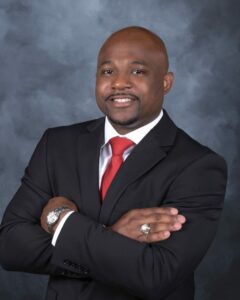
Today we’d like to introduce you to Dr. Tre Pennie. He and his team share their story with us below:
Dr. Demetrick “Tre” Pennie holds a Doctorate of Education in Higher Education from Texas Tech University. He is a 22-year retired police sergeant with the Dallas Police Department. He also served as an adjunct college professor for two major universities specializing in Criminal Law and Justice, Terrorism, Ethics, and Cultural Diversity. Prior to joining the police force, he served four years of honorable service in the U.S. Army as an artillery specialist. He strongly values philanthropy and is the executive director of three non-profit organizations that focuses on: education and advocacy for law enforcement, providing financial assistance and social engagement events to the families of “fallen” officers, and offering programs including community engagement campaigns to promote awareness – The National Fallen Officer Foundation and Texas Fallen Officer Foundation, respectively.
No stranger to adversity, Dr. Pennie was raised in the inner-city of Houston, Texas in a non-traditional household, having his grandmother as his primary influence. During his formable teenage years, Pennie’s community was stricken with poverty, drugs and violent crime; but the police intervention was still not unwelcomed. The tumultuous relationship between the police and community at the time shaped many of Pennie’s beliefs and values about the police and government influence on the minority community.
At the age of 16, Pennie’s perspective on life and many community beliefs changed forever after witnessing his female cousin get shot and killed days before her wedding day. In the immediate aftermath of the tragedy, Pennie saw his family’s reluctance to cooperate with the police investigation; yet the officers remained professional and eventually brought the assailant to justice. That experience had a profound impact on Pennie’s life and ultimately inspired him to become a police officer.
At the age of 17, Pennie joined the U.S. Army, where he served four years as an artillery specialist. While in the military, Pennie attended college in his off-duty time, balancing his personal life around his military deployment schedule. In 1998, he earned an Associate Degree in Administration of Justice from Honolulu Community College. This achievement marked the beginning of Pennie’s success in becoming an academic scholar, considering that he was the first in his family to receive a college degree.
After his service term ended in 1999, he joined the Dallas Police Department, rising through the ranks over the years and becoming a police sergeant. While working as an officer, go on to earn multiple college degrees including: Bachelor Degree in Criminal Justice from Midwestern State University, a Master’s degree in Counseling from Prairie View A&M University, more than 21 hours of graduate specializing at University of North Texas and a Doctorate degree in Higher Education from Texas Tech University. Pennie also held two university professorships throughout his own academic career specializing in social science doctrine such as: cultural diversity, ethics, and criminal justice.
While obtaining his doctorate degree at Texas Tech University, Pennie researched emergent threats to campus safety including the rise of extremist movements, mass shooting attacks, and social media’s influence on radicalization. Dr. Pennie interviewed several police chiefs and other practitioners from across the country regarding this phenomenon in an effort to develop more effective strategies aimed at mitigating the tragic outcomes of shooting attacks. Pennie’s research, leveraged by his advocacy for law enforcement, led to him lecturing at conferences across the country in support of public safety initiatives.
Following the July 7, 2016, mass shooting attack in Dallas, Texas that claimed the lives of five police officers during a Black Lives Matter (BLM) protest in downtown Dallas, Pennie’s profile excelled. He understood the illegitimate nature of the BLM movement and acknowledged that no politician wanted to condemn their actions. He saw that BLM was a grievance-driven organization that only sought to exploit the deep-seated fears of the Black Community while enriching itself.
In contest, while grieving the loss of his colleagues, Pennie filed a federal lawsuit against Black Lives Matter, and other high-profile politicians for inciting violence against police officers, and subsequent to that filing, he sued Facebook, Google, and Twitter to raise awareness about the companies’ negligence in restricting content used to promote violence against our police and to destroy our underserved communities.
In 2017, Dr. Pennie sparked scholarly interest after his editorial was published in the legal journal, Law 360, about revising an outdated piece of legislation, known as Section 230 of the 1996 Communications Decency Act; which provides immunity for social media companies in avoiding liability for third-party content on their platforms. Dr. Pennie’s keen understanding of the policy as it relates to nefarious content on social media led to him speaking at numerous conferences across the country about emergent threats to public safety. He has appeared in several national television and radio interviews.
Today, Dr. Pennie is a nationally-recognized law enforcement advocate and remains a champion for underserved communities while challenging the status quo. In 2018, he was offered a Presidential appointment to the White House but elected to run for Congress in Texas Congressional District 30.
Although Dr. Pennie was unsuccessful in the congressional run, he has remained committed to his advocacy and now serves as the Criminal Justice Committee Chair for the NAACP (Dallas Chapter); a board member for the Hidden Light Institute Foundation; a board member for the Coalition of Safer Web; and has formed a new 501(3) organization called “EARN-IT USA Foundation” to help empower underserved communities to acquire opportunities through education and workforce training.
Alright, so let’s dig a little deeper into the story – has it been an easy path overall, and if not, what were the challenges you’ve had to overcome?
From where I’m from, I learned that no one is going to give you anything and that you have to “earn it”. My road to success has been challenging and I’m still learning every day. I know it sounds cliche, but anything worth having is worth fighting for. I have applied this principle to overcome every challenge and controversy that I have encountered in life.
Thanks for sharing that. So, maybe next you can tell us a bit more about your work?
Dr. Pennie is a nationally-recognized law enforcement and community advocate. He travels the country advocating for the interest of law enforcement and working to bridge the relationship between police and majority-minority communities.
Do you have any advice for those looking to network or find a mentor?
It is important to make yourself available to others. I am a strong proponent of community service and volunteerism. I believe that community service is the key to success and volunteerism is the door to opportunity. The same way that people are encouraged to volunteer to help build a better society, businesses, corporations and government should play a role in creating opportunities for people to advance. We simply can’t expect people to pick themselves up by their bootstraps if they don’t have access to boots.
Contact Info:
- Email:info@nationalfof.org
- Website: www.nationalfof.org
- Instagram: trepennie
- Facebook: Dr. Tre Pennie
- Twitter:@sgt_pennie