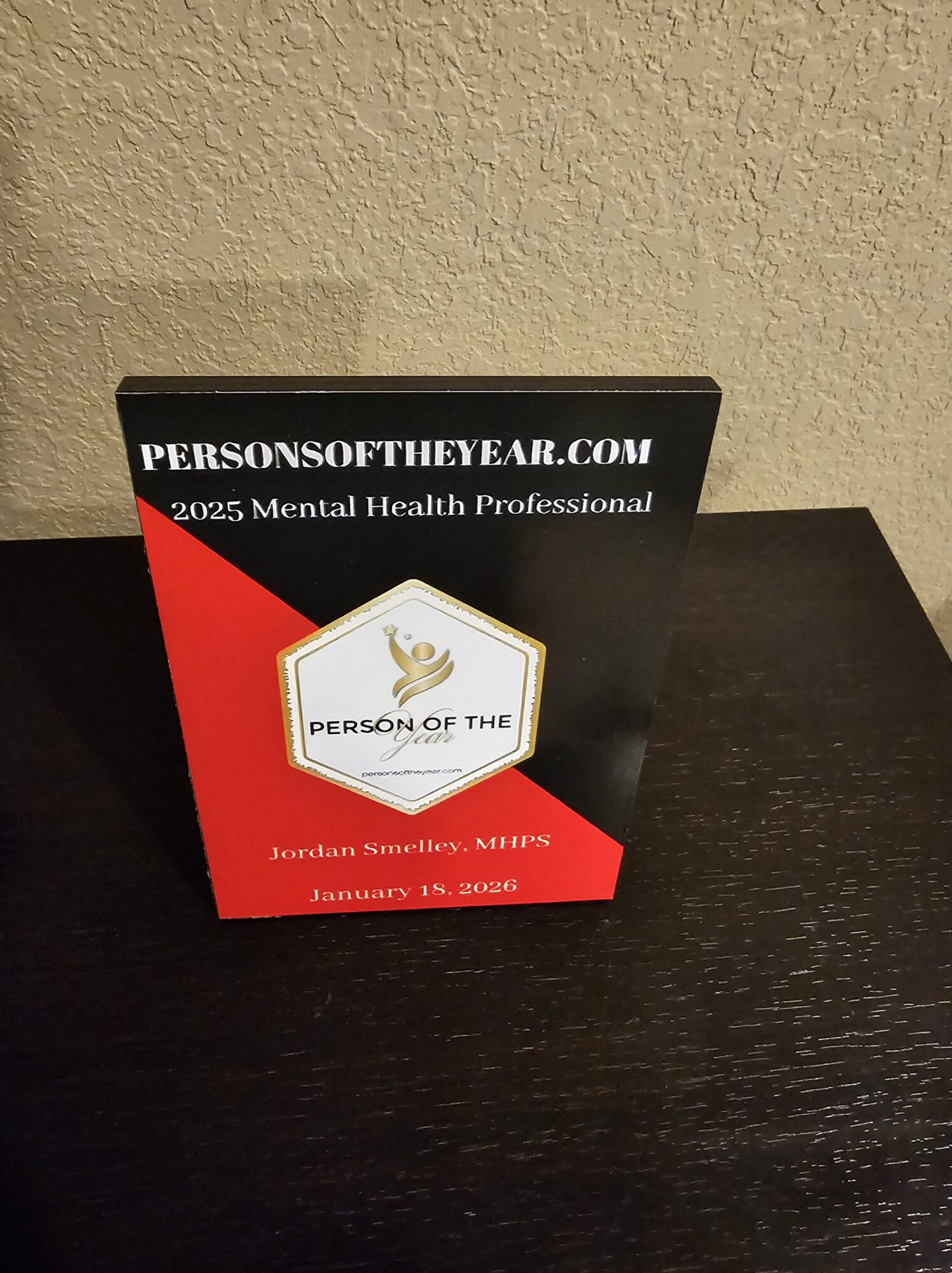
Hi Jordan, thank you so much for taking the time to share this milestone with our readers, and congratulations on being named Personsoftheyear.com’s 2025 Mental Health Professional. When you first learned about this recognition, what did it mean to you personally and professionally, especially given how deeply rooted your work is in lived experience and advocacy?
Personally, the recognition was deeply affirming. My work has always come from lived experience—often from moments that were painful, vulnerable, and misunderstood. To have that journey recognized as meaningful rather than “too personal” or “unprofessional” was incredibly powerful. It felt like a reminder that survival, insight, and advocacy can coexist—and that lived experience has real value in shaping better systems.
Professionally, it reinforced why I do this work the way I do. I’ve never aimed to fit neatly into traditional boxes. This recognition affirmed that bridging lived experience with professional expertise isn’t a weakness—it’s a strength. It tells me the field is increasingly ready to listen to voices that understand systems not just from policy manuals, but from the inside. If you would like to read what personsoftheyear.com said you can visit https://personsoftheyear.com/poty-awards I am about half way down on that page.
Your work uniquely bridges formal clinical training with firsthand lived experience navigating mental health and disability systems. How has holding both perspectives shaped the way you support individuals and train professionals to deliver more person-centered, recovery-oriented care?
Holding both perspectives keeps me grounded in reality. Lived experience helps me recognize when policies, plans, or interventions look good on paper but fail people in practice. Formal training helps me translate those lived realities into language systems that can be heard and acted on.
In direct support, it means I lead with dignity, autonomy, and trust—because I know what it feels like when those are missing. In training professionals, it allows me to bridge gaps: I can explain why someone’s behavior makes sense and how to respond in ways that are ethical, trauma-informed, and sustainable. My goal is always to help professionals move from “managing” people to partnering with them.
A major focus of your work is helping people navigate complex, high-barrier systems like Medicaid managed care and waiver services. What do you see as the biggest gaps or challenges in these systems today, and how do you help individuals and teams move through them with greater clarity and dignity?
One of the biggest gaps is that these systems are built around compliance and cost containment rather than human experience. People are often expected to navigate complex rules, appeals, and documentation while already in crisis or dealing with disability-related barriers.
I help individuals and teams by slowing things down and making the system legible. That means translating bureaucratic language into plain terms, restoring a sense of agency, and reminding people that needing support does not mean they’ve failed. I also help professionals see how process itself can be traumatizing—and how small shifts in communication, transparency, and expectations can dramatically reduce harm.
You’re widely respected for advancing trauma-informed, accessible, and person-centered planning practices. Can you share an example of how shifting toward these approaches has meaningfully improved outcomes for individuals or reduced unintended harm within services?
A powerful example comes from my own experience navigating Texas Medicaid to access Zepbound after experiencing a life-threatening allergic reaction to the only FDA-approved medication for my condition. Initially, the system treated my situation as a standard formulary denial—focused on checkboxes, step therapy, and rigid rules—rather than on medical risk and lived reality. That approach caused real harm: delays, instability, and repeated re-traumatization through having to “prove” my safety concerns over and over again.
What changed things was a shift toward a trauma-informed, person-centered lens. Instead of asking, “Does this fit the usual pathway?” the question became, “What does this person actually need to stay safe and stable?” By centering lived experience, medical evidence, and risk of harm—and by slowing the process down enough to listen—the system response shifted. That shift ultimately led not only to my own access to Zepbound, but to Zepbound being added to the Texas Medicaid formulary.
The impact went far beyond a single medication approval. That person-centered approach reduced harm for others by creating a pathway that acknowledges medical complexity, disability, and real-world risk. It demonstrated that when systems prioritize dignity, safety, and context over rigid process, outcomes improve—not just for individuals, but for the system as a whole.
Much of your impact happens through education and training. What are some of the most important mindset shifts you hope professionals walk away with when learning about neurodivergent sensory needs, recovery-focused responses, and autonomy-centered care?
The most important shift is moving from “What’s wrong with this person?” to “What’s happening for them?” Sensory needs, regulation differences, and survival responses are not deficits—they’re information.
I also want professionals to understand that autonomy and safety are not opposites. When people are respected, informed, and involved in decisions about their own care, outcomes improve. Finally, I hope professionals leave knowing they don’t need to have all the answers—they need curiosity, humility, and a willingness to partner rather than control.
As your work continues to gain state-level and international recognition, what feels most urgent or inspiring for you right now, and how do you hope to continue shaping the future of mental health and disability services in the years ahead?
What feels most urgent is ensuring lived experience remains central as systems evolve. There’s a real risk that person-centered language becomes performative rather than transformative. I’m inspired by the growing openness to peer leadership, trauma-informed design, and accountability—but only if those concepts are implemented with integrity.
Looking ahead, I hope to continue shaping systems that are transparent, humane, and responsive—where people don’t have to be in crisis to be believed, and where professionals are supported to do ethical, compassionate work. My goal is simple but ambitious: fewer people harmed by the very systems meant to help them.













 Why Eddie Wiewel Is Rethinking Real Estate by Helping Clients Build Long-Term Wealth Instead of Just Closing Transactions
 Ashlee Nicole on Building Ill Boss™ and Redefining Success While Living with Chronic Illness
 Ahmani Green on Building AGFIT Around Education, Confidence, and Lasting Personal Transformation
 Seth Whalen on Bringing PTL’s Luxury Event Standard to a Rapidly Growing Dallas Market
 Kathy Rollwage on Expanding Creative Event Services While Keeping a Personal Touch
 Deborah Fessenden on Turning Foraged Beauty into Purpose-Driven Jewelry and Advocacy
 Andrew Finch on Building Elite Athletes Through Fundamentals, Mindset, and Global Experience
 Genai Walker on Turning Life Experience into Impact Through Writing, Business, and Self-Mastery
 Beauty with Purpose: Brianne Provenzale on Building Zamara Through Resilience, Motherhood, and Meaning