





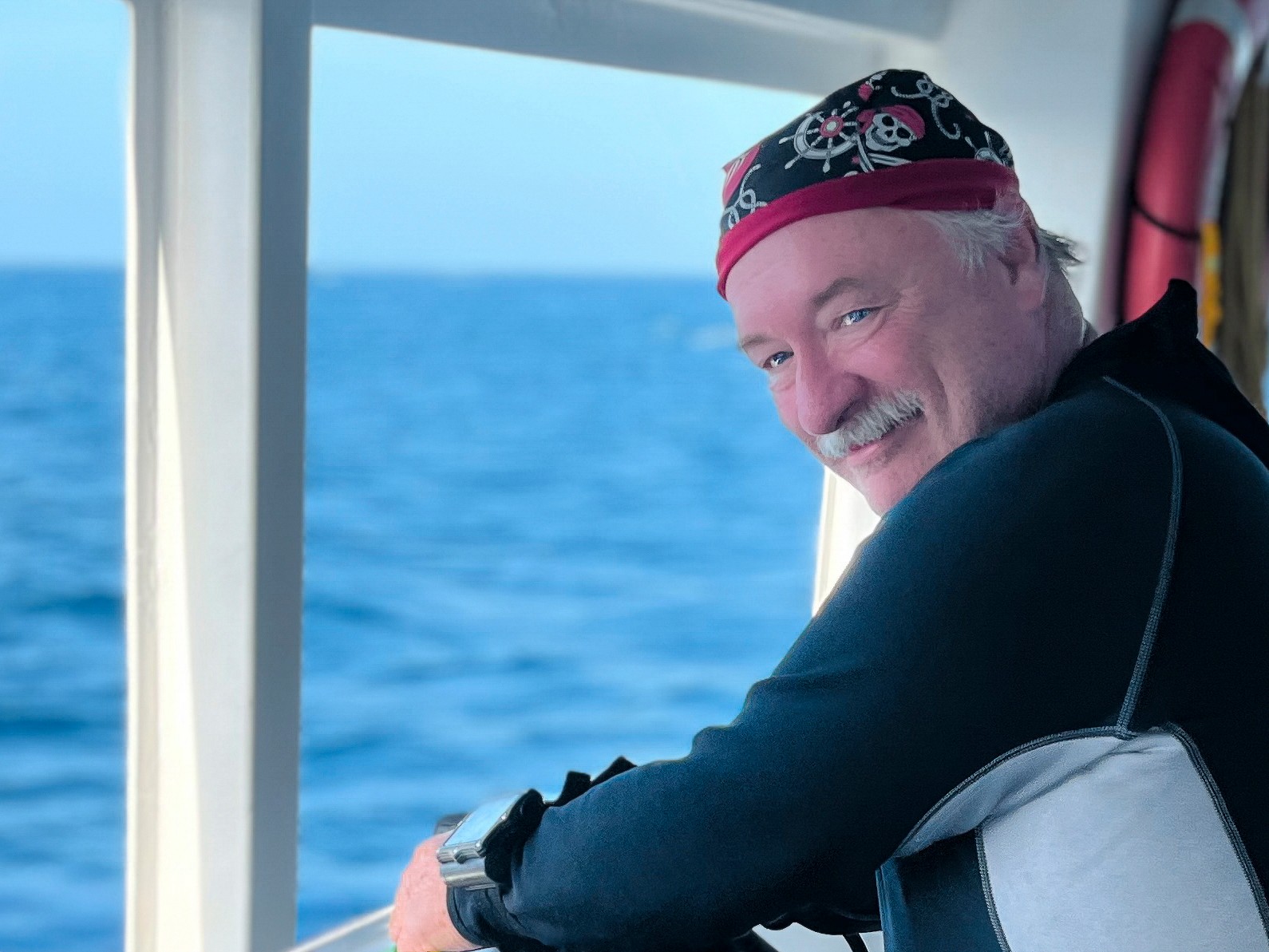
Today we’d like to introduce you to Bruce Campbell.
Hi Bruce , please kick things off for us with an introduction to yourself and your story.
As an underwater photographer, I spend much of my time underwater, observing environments and moments that are easily missed. My work grows from extended immersion–returning, waiting, and learning to recognize when nothing should be forced.
Before a photograph can be made underwater, the water itself must be understood. I hold a NAUI Instructor certification — the same credential that qualifies professionals to teach others to dive safely — and that foundation shapes everything about how I work beneath the surface.
Instructors learn to read water to a greater degree than recreational divers. We learn to manage buoyancy with precision, to move without disturbing, to remain calm when conditions shift, and to make deliberate decisions in an environment that is constantly shifting. Those same disciplines — stillness, control, patience, and presence — are what allow me to position myself within inches of a subject without altering its behavior, or to remain motionless long enough for the light and the moment to resolve.
Most photographers who work underwater are accomplished in one world and competent in the other. The work I make depends on being fully at home in both.
Before working as a photographer, I spent over 40 years as a lawyer defending lawyers, I retired last May. As a lawyer much of my work involved listening closely to how people described events and the details they remembered. That experience sharpened my attention to nuance—how truth often lives in what is noticed, what is omitted, and what changes when a moment is retold. Underwater, those same instincts guide my work as a fine art photographer.
In the water, attention becomes physical. Breath slows, movement quiets, and presence matters more than intention. There is no rehearsal and no repetition—only a brief alignment of conditions before the moment dissolves.
When I am not diving, I work with the same restraint in the studio, allowing each image to resolve without embellishment. I believe the strongest photographs leave space for the viewer—to slow down, to notice, and to bring their own experience into the work.
We all face challenges, but looking back would you describe it as a relatively smooth road?
There is very little in underwater photography that is a smooth road. Before I fly to any of the many reefs where I have created images, I have reviewed what species of animals have been found in the location and have studied their natural habitat. I have considered the corals and sponges, if any, that may exist in the habitat. I typically will mull over how I want to create the images I hope to make.
Every dive begins with a decision that shapes the entire day’s work — one that cannot be undone once I enter the water. I must choose whether to shoot with a wide-angle or a macro lens. There is no “one-lens-fits-all” solution for underwater photography, and lenses cannot be changed once submerged. This choice determines not only the style of imagery I can capture but often whether a once-in-a-lifetime encounter becomes an image — or simply a memory.
One of my recurring nightmares is descending with my macro setup and then watching a humpback whale glide into view. Encounters like that are extraordinarily rare, commanding awe and presence. Yet, with the wrong lens, the most I can capture might be the detail of an eye or the texture of barnacles on a fin — beautiful, but hardly the sweeping portrait such a subject deserves.
Before any dive, setting up the camera housing, strobes, modifiers, and lenses can take an hour or more. Any mistakes can undue all of the prior preparations and mean that I come back empty handed and sometimes worse, the camera floods which usually renders the camera and housing unusable. Many of my dives are in remote places and the airlines make it nearly impossible to carry many redundant parts, Once assembled, I place the camera under a vacuum seal for hopefully an hour or more to ensure it’s watertight. Any leak would not only destroy that day’s work but potentially end photography for the remainder of the expedition — since carrying backup systems on remote dives is nearly impossible.
Alright, so let’s switch gears a bit and talk business. What should we know about your work?
The underwater images I create explore themes of transition, suspension, and the relationship between the subject and the underwater world. My work was recently recognized in the international Ocean Art photography competition where I received both first place for my image titled “Flying Angel” and honorable mention for my image “Just Breathe”. I have three images that will be exhibited in Strasberg Germany this month and another two images that will be exhibited in Milan Italy next month.
My photography begins with real moments underwater, but the goal is not documentation. I’m interested in the emotional and symbolic dimension of those moments—the feeling of suspension, the sense of entering another world, the quiet stillness that exists below the surface.
I think of the images less as records and more as visual meditations. The diver, the light, and the water become elements in a composition that invites the viewer to slow down and reflect.
The vast majority of photographs that you might see on Instagram are what you might think of as documentary photographs that show what happened. Fine art photography explores what it felt like to be there.
Do you have any advice for those just starting out?
Fine art underwater photography requires exacting precision in two disciplines. First and foremost you must be a skilled diver either as a free diver and/or as a scuba diver. Without that technical knowledge and those skills, there is no assurance that you will come back alive.
Equally important to the creation of fine art images are the technical skills that are required to make the most of a camera and various light and light modifiers that can be used to uncover the feeling that is to be conveyed by the image. of course, all of that technical knowledge is meaningless if it is not wrapped in an understanding of art and composition.
My advice to anyone starting out is after obtaining the necessary water skills and certifications, to begin with one type of image, for instance wide angle images and grow your experience and artistry in that genre and only after mastering all of the skills in that genre should you then branch out to other disciplines such as macro, fashion, blackwater or anything else.
Contact Info:
- Website: https://www.campbellphotogallery.com
- Instagram: @bcampbell65
- Facebook: https://www.facebook.com/profile.php?id=61587496264658
- Other: https://www.mydivetravels.com
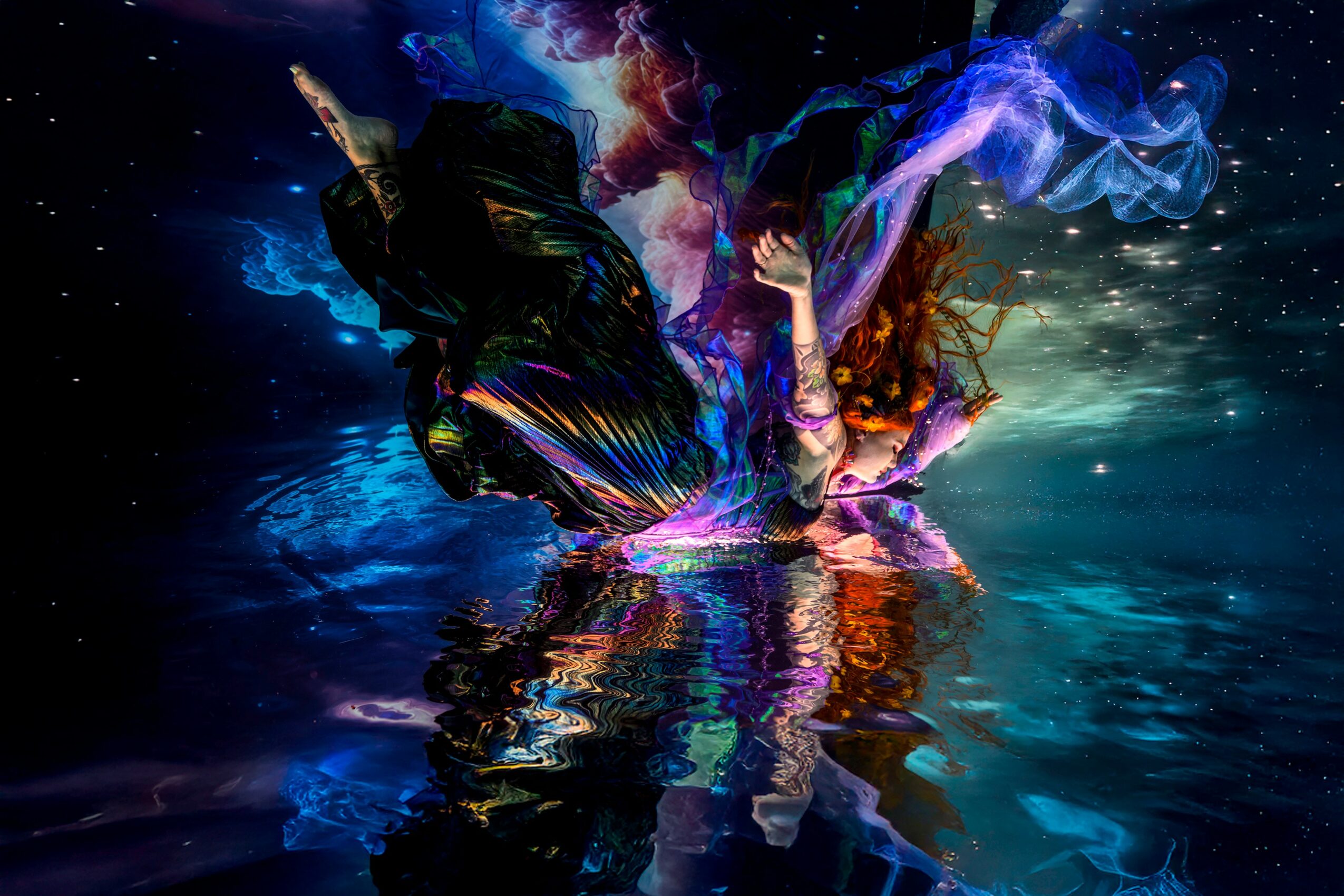
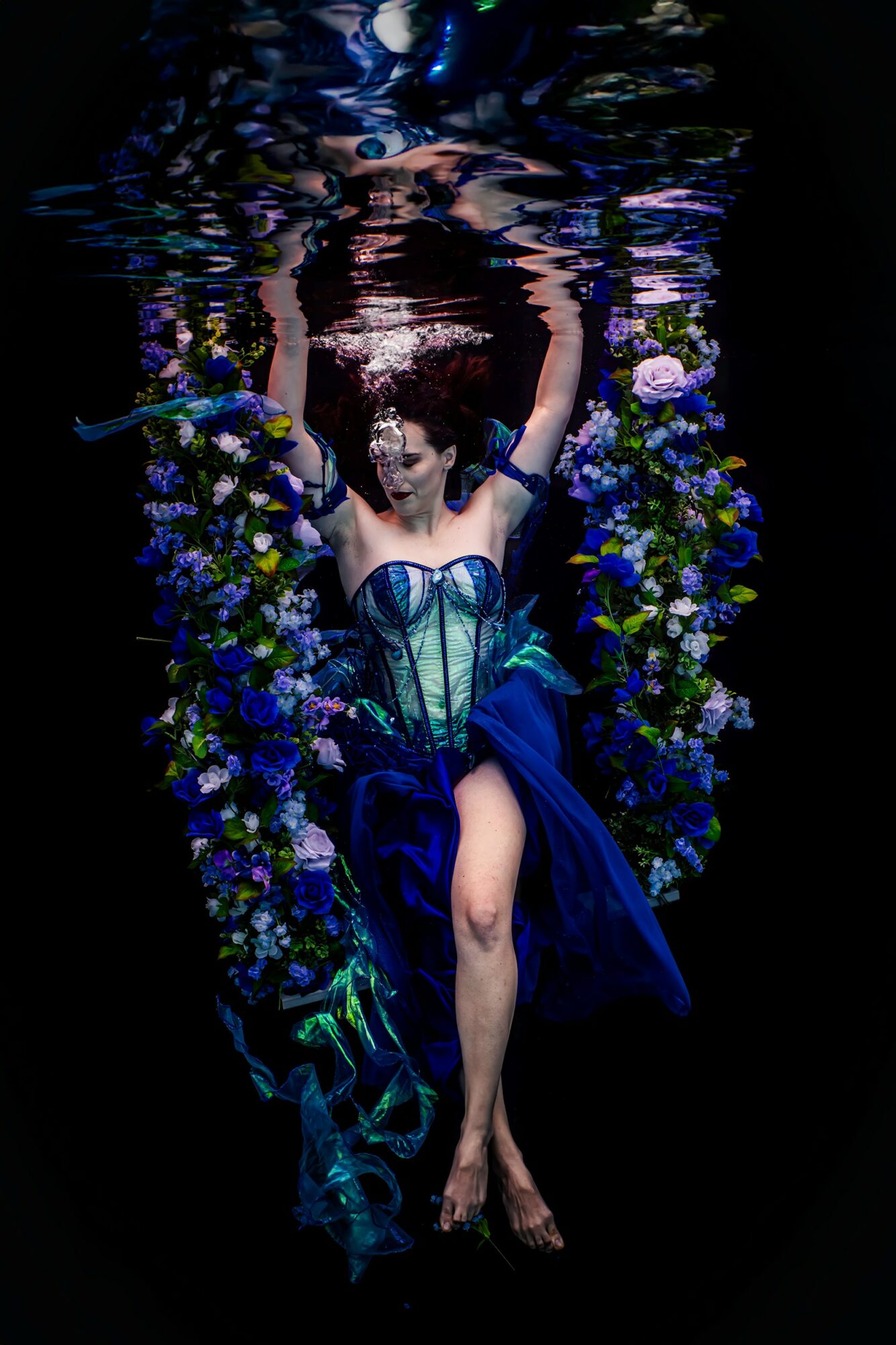
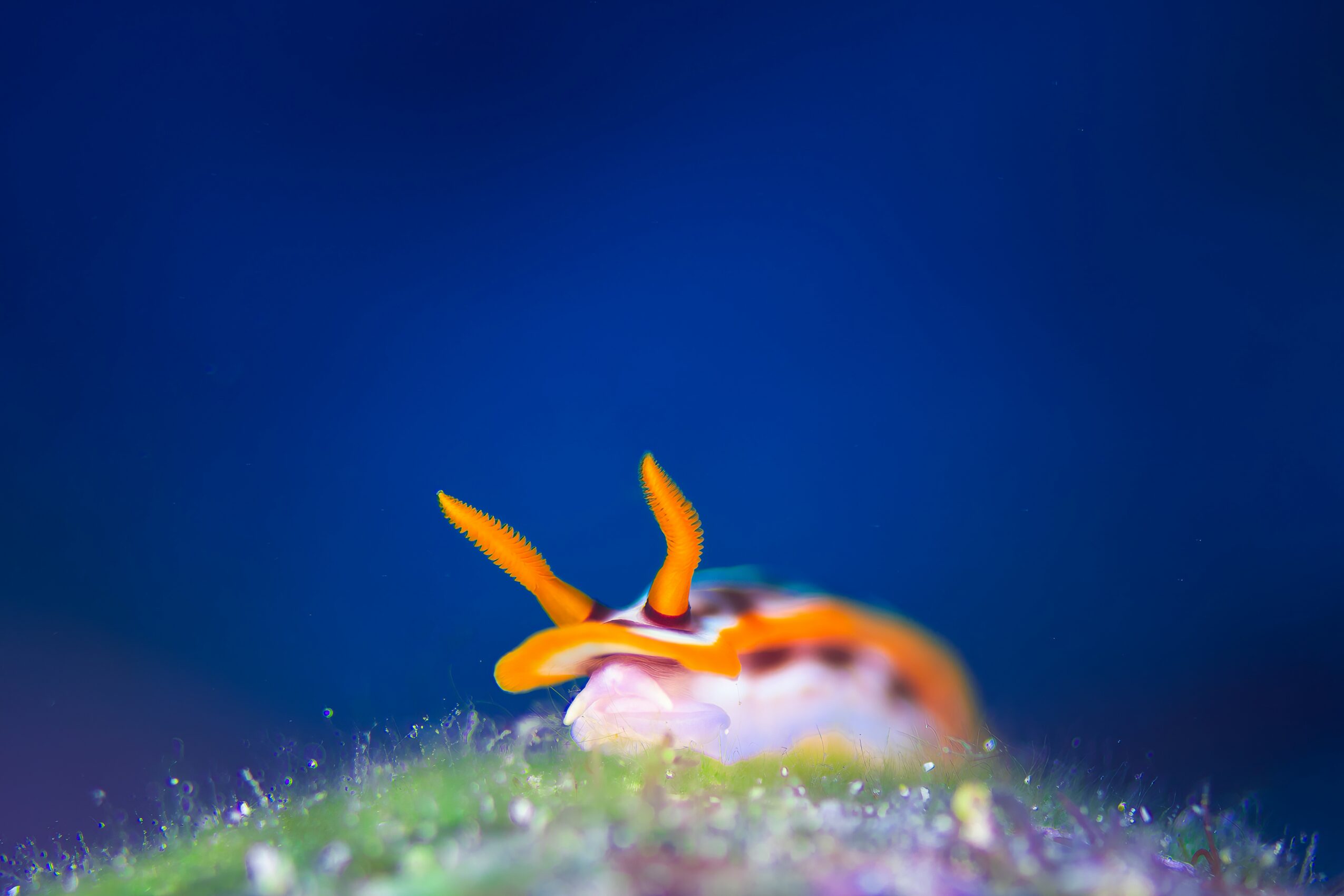
Image Credits
“Flying Angel” , model, Haley Smith
“Just Breathe”, model, Shannon Scott