





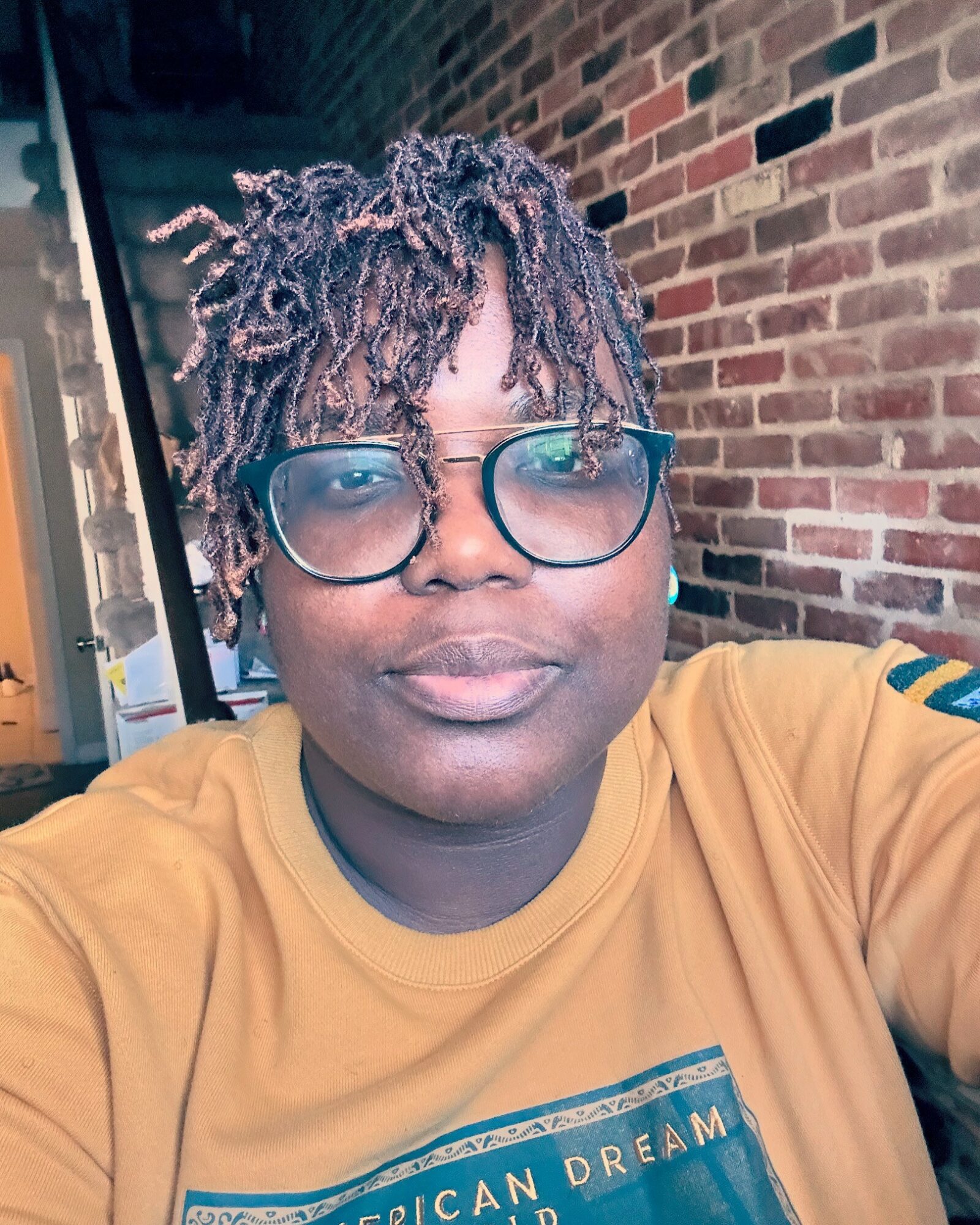
Today we’d like to introduce you to RonAmber Deloney.
Hi RonAmber, thanks for sharing your story with us. To start, maybe you can tell our readers some of your backstory.
Well, my name is RonAmber Deloney. Some people call me Flow, my stage name as a poet. I’m also DJ Skinpolitik from time to time. I started performing poetry in the 1st grade in oratorical contests. Around that time, I was going to church with my aunt and was also performing in church – Easter speeches and other events. My 1st-grade teacher let me watch my sister compete in the 3rd-grade oratorical contest, and I was so impressed by her performance. So, when it was time to learn a poem and compete for my 1st-grade class, my teacher asked if I wanted to participate, and I said yes. So, that’s how the poet emerged as a little girl on stage reciting Boa Constrictor by Shel Silverstein.
My poems are about my family. So, even when the language I use is figurative, there’s always a very true story behind what I’m writing. I have to thank my family for being such good troopers my whole life and allowing me to tell their stories so vividly. They’ve been my best audience. I always say, I’m famous across my mother’s living room. When I finish a poem, someone in my family usually hears it first. Most of the time, that’s my mom, and no one is ever surprised that a scenario we experienced together is alluded to in the poem. It’s how we heal and face the reality of our shared experiences together. For me, this has been very liberating and has helped me live in my truth. This is why I feel connected to rap music from the south. It’s problematic in lots of ways, but I get it, and I recognize the stories they tell about the streets. People’s lives are wild and that some of them are surviving what could have taken them down, from one poet to the next, I hear you.
Growing up and going to school in Oak Cliff, I participated in school oratorical contests, plays, and talent shows, and at church I competed in the National Baptist Convention speech and memory competitions and performed in Black History programs. I was learning other people’s poems, though, not writing my own. I didn’t start writing until high school. During my senior year at FD Roosevelt High School, I wrote a poem for a local Act-So competition and didn’t win, but I still got the chance to go to New York and share it at the national competition because the organizers felt it was impactful. And that’s where I really started taking myself as a writer seriously. At the ACT-SO competition, I saw a lot of young people like me learning, reciting, and writing poetry, and I thought, wow, people are actually getting booed, too. I got booed a lot in school talent shows. Back then, young people wanted to see the poplockers and the dancers; they didn’t want to hear The Negro Mother. So, it was important for me to see that I was not the only one finding myself in words, rhythm, and storytelling.
I went to college in Sherman, TX, at Austin College. I double majored in English and German. During my freshman year, I shared some poetry with my friends, and they encouraged me to go to local open mics in Dallas and perform. My homegirl, Gere, would drive me to Dallas to the events on the weekend because I didn’t have a car. That’s how I found Reciprocity and Sankofa and how I met all of the cool poets in Dallas who were talented writers and performers. Teetah and Emmanuel were leading at Reciprocity, Mo Browne, and GNO were hosting at Sankofa. Now, I think of that time as “back in the day,” but it was like a Black Arts Renaissance at the time. Badu was blowing up. Everybody was young and finding their way creatively. Initially, on the local scene, I participated in poetry slams, and then I started working with musicians. I did some recording in Sherman with friends and in Dallas, Me, GNO, Mo, Common Folk, we used to do this cool live band, poetry show in Deep Ellum called Artist One. I can’t remember the spot we’d perform at, but this was back when Lavida Samuel and Cory Akins had the Main Street Internet Cafe rocking, and would always invite poets to perform. Mo would do a yearly show at TBAAL, and all of that was good preparation for the performing and organizing I did when I got to Berlin.
I went abroad during my junior year of college to study in Vienna, Austria, because my German professors at Austin College, Jim Knowlton and Truett Cates, knew I was into poetry and theater and encouraged me to study abroad. My college had a study abroad program in partnership with the University of Vienna. I thought it was going to be too expensive, but back then, and maybe still now, your tuition at your home college paid for the year abroad at your host institution, so it worked out. That year marked the start of my world citizenship. I think of myself as a citizen of the world. Little black girl from Oak Cliff in Germany. I was Dianna Ross in Oz and eventually found my way back to Germany after college, found my motley crew, and started a band called The New Night Babies.
At the start of my junior year abroad, I was in Berlin for one month, taking a language class before starting the semester in Vienna, Austria. I was riding the train and saw an advertisement for a poetry slam, and I couldn’t believe it. What were Germans doing at slams? I had only found out about slams in Dallas within the last couple of years, so when I saw they were happening in Germany, I was intrigued. A few days after this train ride, 911 happened, and I had to get to Vienna to start my year abroad, and didn’t get to check out the event. In Vienna, I eventually found out they were slamming, too. So, I started going to those slams. They were held at an old movie theater called Prater Kino. I won a few, and what surprised me most was that they were slamming for bottles of tequila, not money. The prize might be a book or something non-monetary. I also noticed folks were performing fairy tales, short stories, and other literary forms, so not just poetry. The themes were also different. I found that the poets in Vienna and, eventually, in Berlin were writing from their own lens of experience, which was different from mine. I was writing about the impact of prison and drugs on black people, and they were writing about how cold the winter was in Germany. This sharpened my awareness and appreciation for travel, as I learned that your social reality can shape what you can access and express creatively, and that can look very different in other parts of the world.
It was also wild to be slamming in English when no one understood me. People would say we loved your performance, but what were you talking about? That challenged me to try to learn German in a way that would help me express myself in German. I did a little bit, but I soon learned that German culture and black American culture are different, and because experiences differ across cultures, the German language didn’t have the words and phrases to describe what I was writing about. So, I didn’t force myself to write in German anymore, but I did start a band with some people whom I still consider good friends, and together, we’ve built a bridge between Oak Cliff and Germany that sounds different, and I am proud of that.
I left Vienna to finish my senior year of college, still thinking about that slam I missed in Berlin. Back on campus in Sherman, I told my German professors about my trip and the slams, and they told me to apply for a Fulbright to go back and investigate what German slams had in common with US slams. So, I applied, and I was selected. So, I graduated from college and headed back to Berlin on a Fulbright scholarship.
Back in Berlin in 2003, I challenged myself to get out and find some community, and eventually I started organizing open mics and performing at slams. I interned at the Berlin Poetry Festival, met The Last Poets, and worked with them for a while, organizing gigs for them in Europe. I helped them secure gigs in London, Rome, Vienna, and Paris. One day, while still abroad, I got a CD in the mail of my poem from a slam I attended over some German electronic music, and The New Night Babies were born. Two German guys, Frank and Jorg Pokall, and I started making records. They produced the music, and I wrote the poems. We were initially called Flow and Takeshi Beats. And then I met Philipp “Khabo” Koepsell, who was producing beats and rapping, and we started writing poems together, organizing open mics with another friend, Stephanie “Steph Soul” Canty, who is a singer. The three of us started calling ourselves The New Night Babies, based on the poem “Ivory Masks in Orbit” by Willie Kgositsile, whose poetry also inspired The Last Poets to name their group. This was also when I started learning to manage projects. We did a lot of performing around Europe and have two poetry albums out – Of Brickwalls and Breezeways and Lilac and Rapeseed.
This is also when Skinpolitik was born. When my Fulbright year ended, I enrolled in Humboldt University so I could qualify for the student train ticket. I thought I wanted to study Contemporary German Literature, but I was too busy being an organizer and artist to really focus. There is a strong black activist community in Berlin, and I am still close to some folks I met during that time who are still organizing and collaborating in the city. I learned a lot from the artists, professors, and organizers in Berlin, so when I needed a DJ name, I chose Skinpolitik because having black skin is a political thing wherever you go in the world. Everywhere I’ve been, Black people are dealing with colonial fallout. In 2001 in Vienna, African people living there were being harassed and brutalized by the police. In 2007 in Berlin, Black people in Germany were being harassed and attacked by Neo-Nazis (Oury Jalloh). Still today, the same thing. I didn’t know I’d become a DJ at the time, but when I did, I knew exactly what my name would be.
While I was in Berlin, I did some cool and important work. Besides starting a band and organizing open mics, I interned at The Berlin Poetry Festival for three years, and one year, I met The Last Poets. At the time, they were looking for someone to help organize gigs in Europe. I was ambitious, so once Umar gave me the green light to give it a shot, I researched where poets were performing in Europe, contacted those venues, and eventually secured a total of 5 gigs for the group. This was before the larger group got back together, so during this time, only Umar, Baba, and Abiodun were performing together. They came back to Europe twice and performed at Jazz Cafe London, Trieste (?) in Paris, the Poetry festival in Rome, a club in Munich that I can’t remember, and Porgy and Bess, I believe, in Vienna. I learned a lot about arts administration, contracts, and artist fees, and about biting off more than you can chew, but I was determined to make something happen, and I did.
I also got to moderate conversations with the late Amiri Baraka and Jayne Cortez as part of the Black Atlantic project at the Haus der Kulturen der Welt back then. It was a magical time to be young, creative, and tenacious in Europe. It was also a struggle because once the Fulbright funding ended after a year and a half (I got an extension), I had to find a job, and working on a student visa in Germany was limiting, to say the least.
After four years in Berlin, I moved back to the US in 2007, and I lived in New York. I went to NYU and earned an MA in Arts Politics, which helped me understand why my time in Berlin was important to my artistic development. After I graduated from NYU, I needed a job, and the economy was in the tank. So, I went back to school in 2009 at St. John’s to get certified to teach. I never wanted to teach, but I started teaching at language schools in Berlin to make money. After four years in New York, I moved back to Dallas, and I’ve been launching myself from here ever since. Teaching, managing projects, and still mostly making poetry records with Jorg from The New Night Babies. From 2010 – 2017, I went to Berlin every year to make music and perform with band. Since 2017, it’s been every two years, but we’ve been sending music and vocals back and forth, so the collaboration has continued. Now, I’ve been making music videos and turning some of our poetry into visuals. My videographer is a talented guy from Dallas named Caton Bailey, Criiipa Cognito, and we’ve been doing some good work together.
Professionally, I’m a learning project manager and adjunct Humanities professor at Paul Quinn College and Southern New Hampshire University. I also occasionally support production planning for community arts projects around Dallas. Eight years ago, I decided I needed to learn how to make money with my hands, so I started learning to DJ at Jay Clipp’s Keep Spinnin’ DJ Academy. It was a great choice, and I’ve enjoyed having a great time with people at their parties and events as the sound selector.
In 2019, I went back to school one last time to get my doctorate. I finished my EdD in Global Training and Development in 2022. I feel like I did everything the adults asked me to do as a child. Go to school, get an education. Do something with your life. It has certainly been full of adventures, and I look forward to them continuing.
I’m sure it wasn’t obstacle-free, but would you say the journey has been fairly smooth so far?
I can’t say I’ve had a more difficult path than anyone else. I wouldn’t call the road smooth, and it certainly hasn’t been a crystal stair, but I’ve learned to keep it moving despite the setbacks, and that’s helped keep all my troubles light overall.
One challenge I’ve had is the pull between making a living and being a full-time artist. I had a hard time finding a way to do both successfully, so I chose to make a living and be an artist on the side. Although I’ve been able to realize some of my creative ideas, most recently with the music videos I’ve completed, the creative work often takes a backseat to the professional because my professional work finances my creative projects. I’d like to get to a place where I can be a full-time creative and still live comfortably.
Appreciate you sharing that. What else should we know about what you do?
I’ve held multiple jobs for most of my adult life. As many adults know, one job is often not enough to cover all of the fun you want to have. So, one of the things I do is I’m a learning program manager. I work as a contractor, so job security can be a little precarious, but I enjoy the flexibility and knowing that, at some point, I’ll move on to a new project and learn some new skills. While I don’t show up as an artist on this job, I started managing projects and programs as an artist organizing open mics in Berlin. I learned how to think through schedules, timelines, staff, and all the moving parts involved in any event. So, those multitasking skills transferred well when I decided to pursue project management as a career. I also get to support community projects that often have an artistic element, so the arts are never too far from what I’m doing.
I’m also an adjunct Humanities instructor at Paul Quinn College and Southern New Hampshire – online. The Humanities is broad and takes a close look at a lot of ideas, but mostly what I’m teaching is about society, identity, and creativity, and how we can use the arts to better understand each other.
What sets me apart is that I’ve lived several creative and professional lives. As a poet, I’m Flow. Professionally, people call me RonAmber. As a DJ, I’m Skinpolitik. As a professor, I’m Dr. Deloney. I’m most proud of how I’ve continuously reinvented myself as an artist and a professional. I’m known for doing well in any role. I credit this to my liberal arts background, travel, and commitment to being independent.
What makes you happy?
Brunch with my mom. Going to the mall. Airport landings. Finishing a new poem. Finishing a 5K. Laughing with my family and friends. These are the things that matter most to me. They’re the small joys I count as accomplishments and how I measure my success.
Contact Info:
- Website: https://www.ronamberdeloney.com
- Instagram: https://www.instagram.com/djskinpolitik
- LinkedIn: https://www.linkedin.com/in/rtdeloney
- Youtube: https://www.youtube.com/@Skinpolitik
- Soundcloud: https://soundcloud.com/newnightbabies
- Other: https://www.tiktok.com/@poemsontiktok
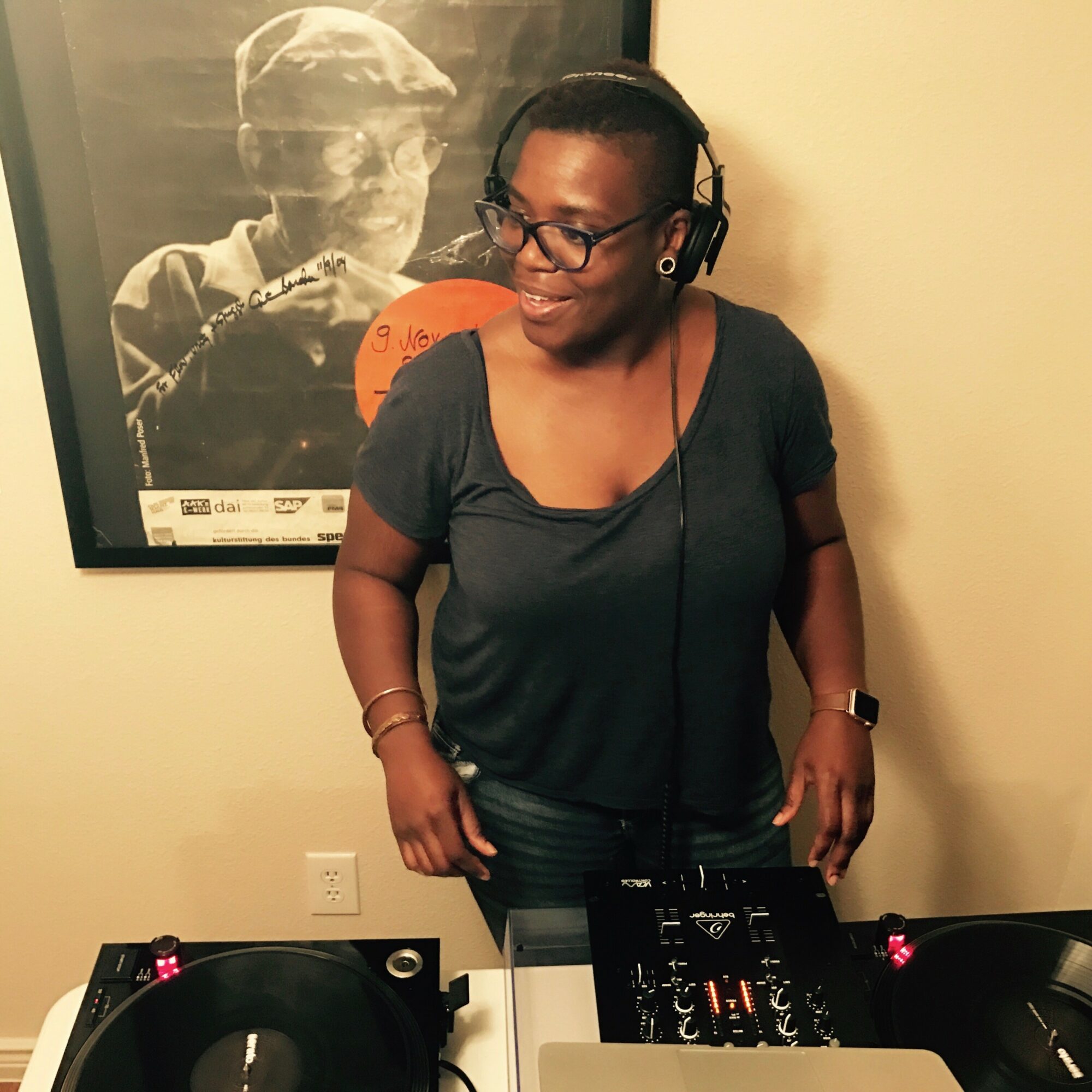
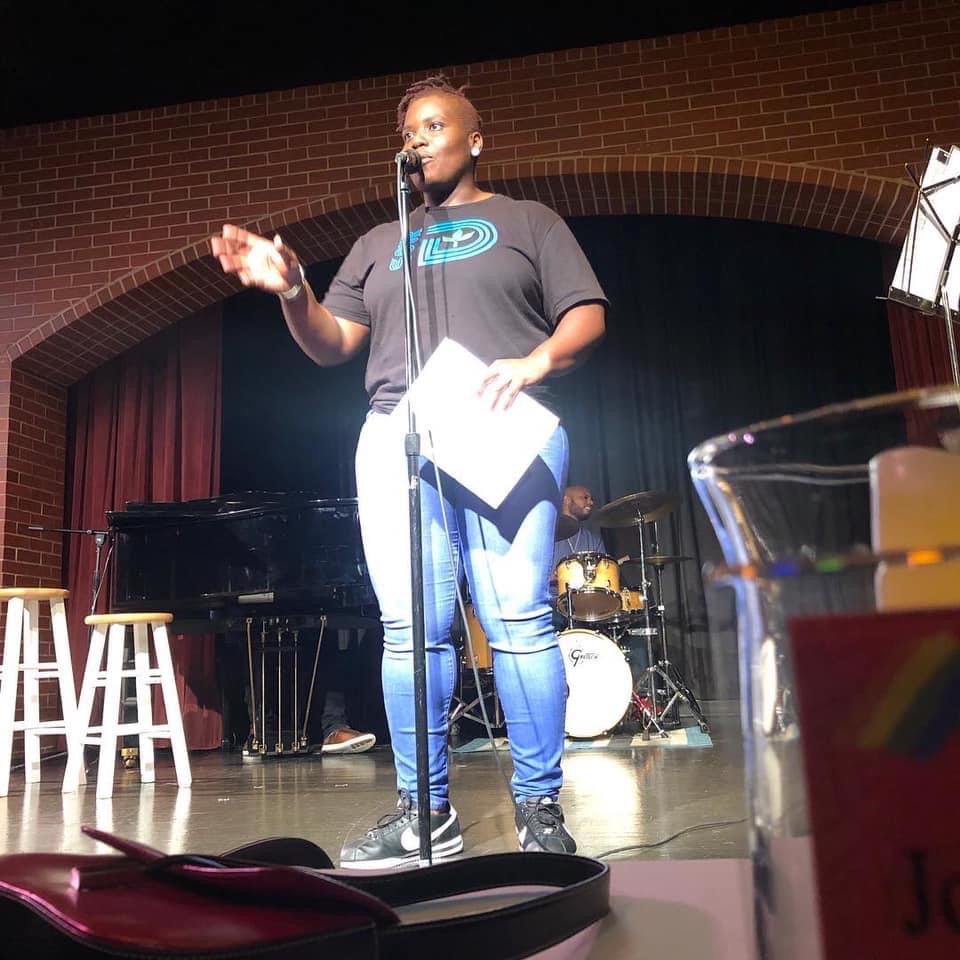
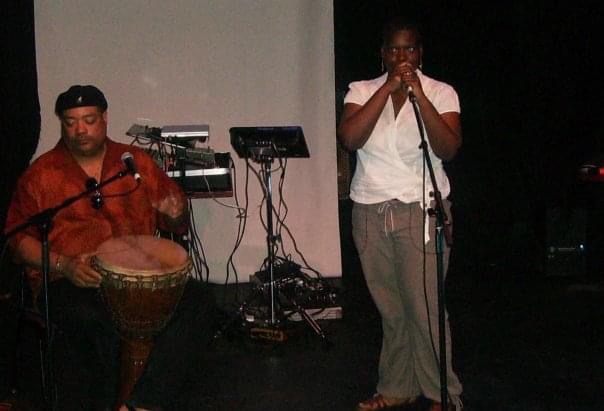
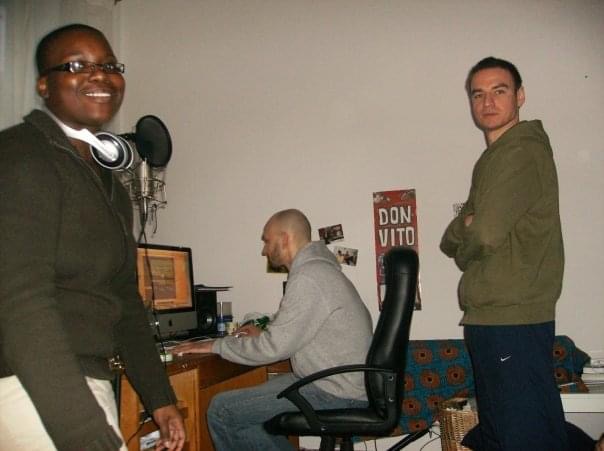
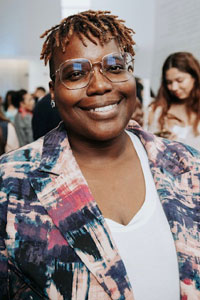
Image Credits
Christian Vasquez, Austin College