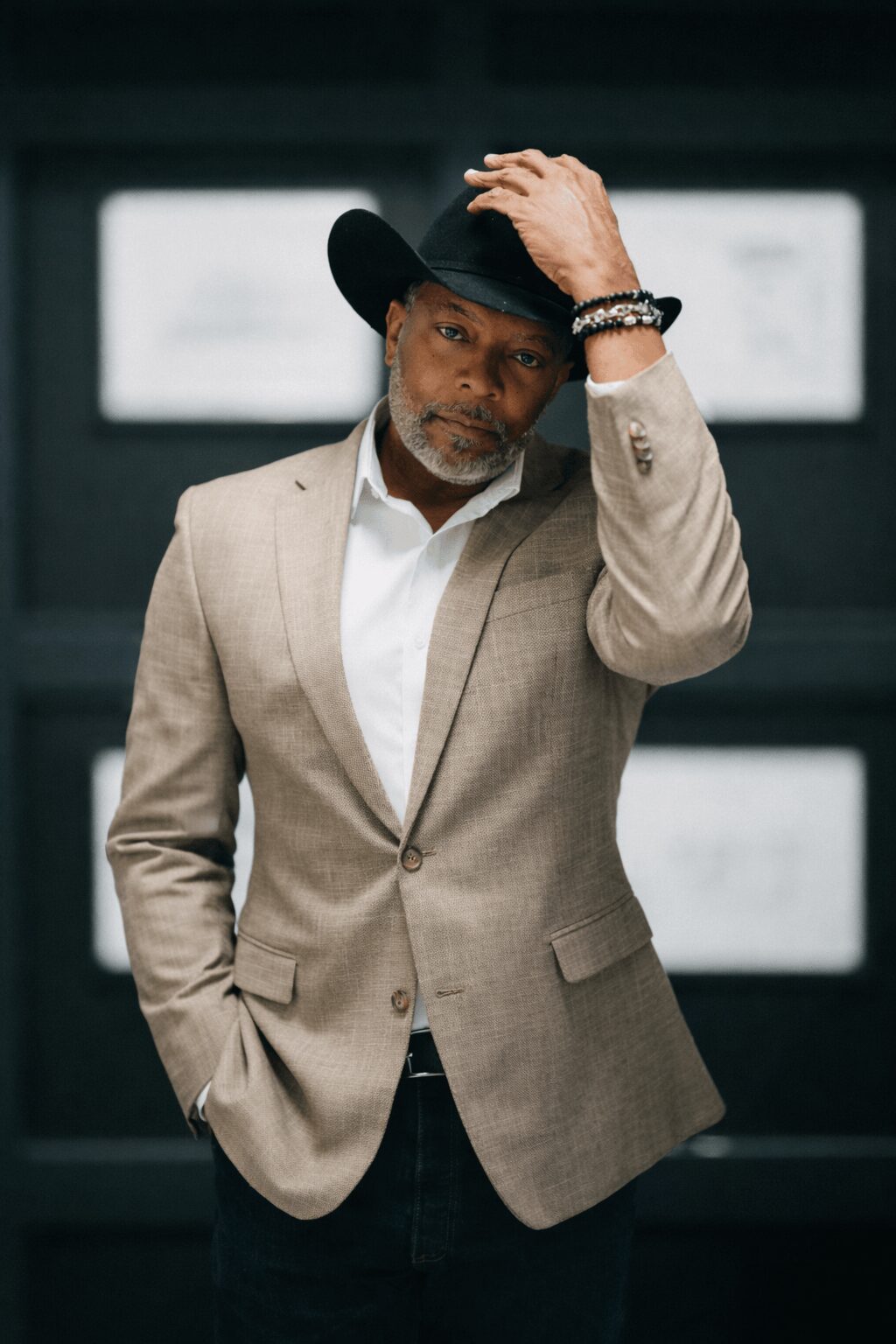





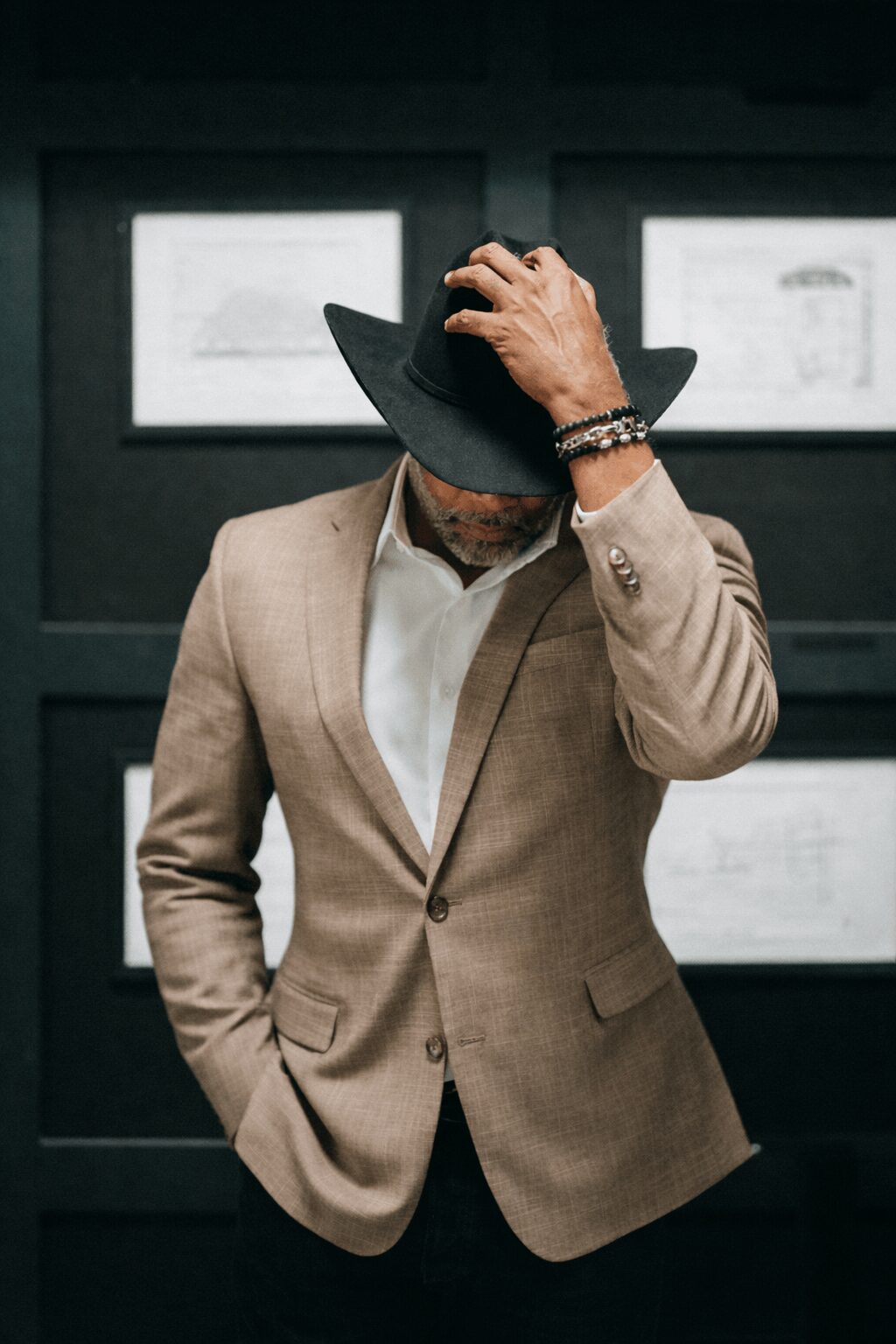
Today we’d like to introduce you to Kenneth Young.
Hi Kenneth , thanks for sharing your story with us. To start, maybe you can tell our readers some of your backstory.
I grew up feeling like we were behind.
Not behind the billions of people around the world who had less than us. I never thought about them. I was comparing us to the family next door. Two Cadillacs in the driveway. A brand new truck. Blue Bell ice cream in the freezer before anyone else had cable. I thought something was wrong with us.
What I didn’t understand as a kid was that the only real difference between our family and theirs was simple. They had two incomes. My mom was doing it alone. She wasn’t behind. She was extraordinary. I just didn’t have the context to see it yet.
So, when I had kids of my own, I made a promise. I was going to give them everything I didn’t have. Every toy. Every experience. Every want before it became a need. I was proud of it. I thought giving them everything was the same thing as preparing them for everything.
I was wrong.
What I didn’t realize, and what nobody told me, was that I was quietly teaching my kids how to receive but not how to earn. I have older children who showed me the result of that approach. And I have younger kids who still have time if I do something different right now.
That moment of clarity is what started everything.
I came across research that stopped me in my tracks. 85 years of data from the Harvard Study of Adult Development pointing to the same truth over and over. Children who earn what they have develop stronger work ethics, better financial habits, and more successful lives than children who simply receive. Then I found a story about a father who transformed his relationship with his kids just by making them earn their allowance instead of handing it over. Not to be harsh. Not to withhold love. But to give them something more valuable than money. The experience of earning it.
That hit me like a lightning bolt.
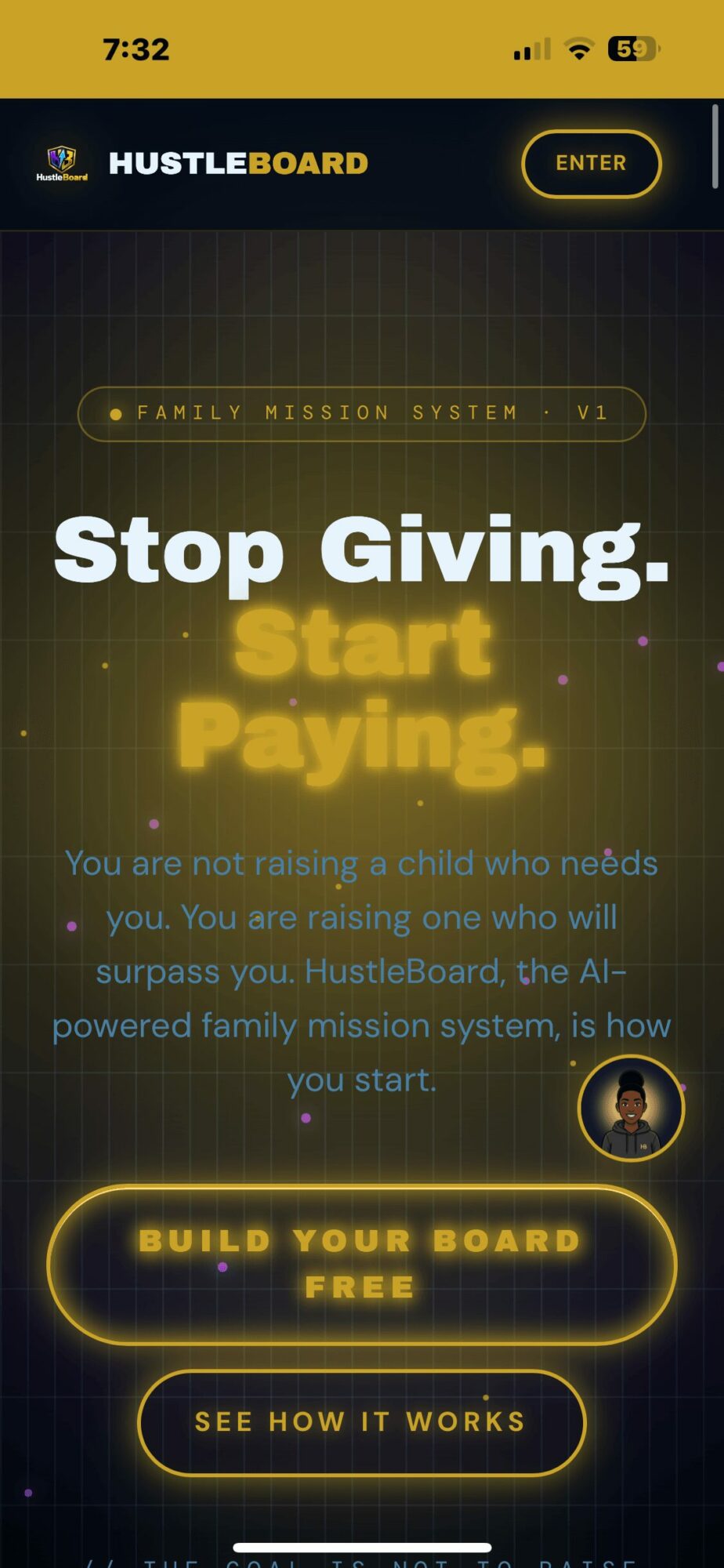
So, I built HustleBoard.
It started as something I was doing for my own family. Parents post missions, real household tasks with real dollar values attached. Kids complete them, submit photo proof, and get paid into a digital vault that teaches them how to spend, save, and invest. The AI builds a custom mission board for your family in 60 seconds. The whole thing runs like a game but the money is real and the lessons are permanent.
What I didn’t expect was what happened to my relationship with my kids.
We don’t argue anymore. Not because I got stricter. Because the system holds the standard now. They know there’s no paycheck without the completed task. But more than that, they’re starting to understand something I wish I had known at their age. Their effort has value. They have value. They are their own most valuable asset. And they’re learning that before the world gets the chance to tell them otherwise.
Then we found out that my kids and I have ADHD. And suddenly a lot of things made sense. Why they would forget mid-task. Why they would get sidetracked. Why verbal reminders never stuck. What I discovered, and what the research confirms, is that the ADHD brain responds powerfully to clear structure and immediate reward. HustleBoard gave them both. A defined mission. A hard finish line. A real paycheck waiting on the other side. The forgetting stopped. The half-finished jobs stopped. The focus showed up because now finishing actually meant something.
I didn’t build HustleBoard as an ADHD tool. But it turns out it might be one of the best ones out there.
And then something happened that I wasn’t ready for.
Our family has been walking through grief. We lost a child, and we lost my brother. Heavy losses, close together. One afternoon my daughter chose her own mission from the board. Make a family video. She put it together herself. And when we sat down to watch it, there were pictures of her brother we lost. Pictures of my brother. Her mom was having one of her hardest days. And this video, built by a child through a mission on an app I made at my kitchen table, became the thing that held us together that afternoon.
That’s not a feature I built. That’s what happens when a tool is made with the right intention.
I’m a Dallas native. I’m a father. I’m the author of a historical book series called THOU, The History of Us, where I use campfire storytelling to bring overlooked African American history to life. I’m the COO of HighLite Sports, a custom apparel company my son Torrance runs. I’m building a general contracting company called Grain and Vision that I co-founded with my late brother and am now continuing alongside my son and nephew. And I’m the founder of HustleBoard, which launches July 16th, 2026.
Every one of those things is connected by the same thread. I believe in legacy. I believe in what you leave behind and what you pass forward. I believe that the patterns our families carry can be changed and that the generation sitting in your house right now is the one that changes them.
HustleBoard is my most personal bet on that belief.
Some families are starting fresh. Some are rewriting something older. Either way, this is where it begins.
We all face challenges, but looking back would you describe it as a relatively smooth road?
Smooth is not the word I would use.
I started this journey as someone who had never built software before. I am an entrepreneur and a storyteller and a father, but I am not a developer. So the first real struggle was learning how to build something I could see clearly in my head but had no technical roadmap to get to. I had to figure out tools, platforms, databases, authentication flows, payment systems, and AI integrations, all while running other businesses and raising a family. There were nights I didn’t know if what I was building was actually going to work.
And then there was the financial reality. Building a product costs money. Time costs money. Every decision about what to build next, what to cut, what to simplify, those weren’t just product decisions. They were financial ones. I bootstrapped this entirely. No investor writing checks. No safety net. Just belief that this thing was real and worth finishing.
The platform itself gave me problems I never anticipated. I had authentication breaking at the wrong moment. Payment systems failing in ways that took days to diagnose. Database architecture decisions that had to be rebuilt from scratch because I made them before I fully understood what I was building. Every layer of this product introduced a new problem I didn’t know existed until I was already in the middle of it.
I also built this during one of the hardest seasons of my life personally. We lost a child. I lost my brother. Grief doesn’t pause because you have a launch date. There were days I sat down to work and couldn’t. There were days I worked because it was the only thing that gave me somewhere to put my energy. Building HustleBoard became part of how I processed loss, which is a strange thing to say about an app but it is the truth.
The other struggle nobody talks about is doubt. Not other people’s doubt. Your own. There are moments in every build where you look at what you have and wonder if anyone outside your family is going to care. If the problem you are solving is real to other people the way it is real to you. If you are too late or too early or just too small to make a dent. I had all of those moments. More than once.
What kept me going was watching my kids use it. Watching my daughter submit photo proof of a completed mission and then check her vault balance like she was checking a stock portfolio. Watching the arguments stop. Watching the dynamic in my household shift in a way I had been trying to create for years through sheer willpower and never could. The product was working in my own home before it was finished. That was enough to keep building.
I also carry my brother with me in this. Grain and Vision, the contracting company we built together, taught me that you can create something meaningful even when the road is hard. He showed me that. I try to honor that every day I sit down to work.
So, no. It has not been a smooth road. But I have learned that smooth roads don’t build the kind of person who can sustain something real. The hard parts were the education. And I am still in school.
As you know, we’re big fans of you and your work. For our readers who might not be as familiar what can you tell them about what you do?
I am a builder of things that did not exist before I made them.
That is the through line across everything I do. The book series. The app. The contracting company. The sports brand. The websites. The history sessions on TikTok Live. They all come from the same place in me, the part that looks at a gap and feels compelled to fill it.
I started as a storyteller. My book series, THOU: The History of Us, came out of a frustration I had been carrying for years. I grew up not seeing myself in the history I was taught. Not because the history wasn’t there but because nobody was telling it in a way that made it feel alive. So I started writing it myself. Daily readers built around overlooked African American history, told in a campfire style. No lectures. No textbooks. Just pull up a chair and let me tell you something you need to know. The voice I write in is the same voice I talk in. Y’all. Picture this with me. Let me tell you. I wanted people to feel the history before they understood it. Feel it first. Then carry it.
That same instinct carried over into HustleBoard. I saw a gap in how families talk about money and work and value. I saw kids who were being given everything and learning nothing about what earning feels like. I saw parents who wanted to do something different but didn’t have a system. So I built one. The whole product is designed around a story. The parent is the Commander. The child is the Operative. The missions, the ranks, the vault, the marketplace, all of it is a narrative that a family lives inside together. I didn’t hire a design team. I didn’t bring in a creative director. I built the voice, the visual identity, the copy, the brand, the feature logic, all of it, from the same creative instinct I use when I write.
What I specialize in is making things accessible. History that feels like a conversation. Financial concepts that feel like a game. Contracting work through Grain and Vision that honors craft and tells a story about what skilled hands can build. A sports brand through HighLite Sports that gives athletes and organizations something they are proud to wear. I do not make things that feel distant or complicated or above anybody. I make things that pull people in and make them feel like they belong in the room.
What sets me apart is that I do not separate the creative from the functional. Most people think of creativity as decoration. Something you add after the real work is done. I think creativity is the architecture. The way a thing feels is inseparable from whether it works. HustleBoard looks the way it does because children need to want to open it. The copy on the platform reads the way it does because parents need to feel like someone understands their household. The THOU books are formatted the way they are because a reader who feels something on page one will still be reading on page one hundred.
What I am most proud of is that the things I build are actually changing people. Not in a marketing way. In a real way. My daughters are learning about compound interest because of a simulator I built. My family processed grief through a video mission a child completed on her own because of a system I designed. Families I have never met are going to change their relationship with money and work and each other because of something I made at my kitchen table during one of the hardest years of my life.
That is what I make. Things that matter to real people in real moments.
I am a Dallas native, a father, a writer, a builder, and a founder. I carry my late brother in everything I create. I believe that the most important stories are the ones that haven’t been told yet and the most important tools are the ones that haven’t been built yet.
I am still building. I am nowhere near done.
Do you have recommendations for books, apps, blogs, etc?
Here’s the full answer with that added in naturally:
I am going to be honest. My relationship with resources looks different than most people would expect from a founder and author.
I do not have a stack of business books I rotate through. I do not have a morning podcast routine. The way I consume information is more instinctive than that. I go deep on something when I need it and I move on when I have what I came for. That is probably the ADHD talking but it has also never steered me wrong.
That said, there are things that have genuinely shaped how I think and work.
Legacy thinking is foundational for me. Not a book or a podcast, a mindset. I am constantly asking myself what this decision looks like ten years from now. What does my kid see when they look back at this moment. What am I leaving behind and what am I passing forward. That filter has kept me from chasing the wrong things and has kept me anchored when building got hard. Most of the best decisions I have made did not come from a resource. They came from sitting still long enough to ask the right question.
History is my other resource and it is not one most people would put in this category. But I study history the way other people study business strategy. Every problem I face as a founder has already been faced by someone who had less and figured it out anyway. Every pattern I see in my family or my community has roots I can trace if I look far enough back. Understanding where something came from tells you more about where it is going than any forecast or trend report. That is why I write THOU. I am not just sharing history with other people. I am processing it myself.
I also had to become technically educated out of necessity. Early on I trusted a development company with one of my projects and got robbed. Plain and simple. They took the money, delivered nothing that worked, and left me with nothing to show for it. That experience was painful but it changed everything about how I operate. I was not going to let that happen again. So I studied. I learned how platforms are built. I learned what questions to ask. I learned enough to know when someone is building something real versus taking your money and running. That education did not come from a classroom. It came from getting burned and deciding I would never be that vulnerable again.
Now I use four AI tools daily and I have five AI agents working alongside me at any given time. Each one has a specific role. One manages my technical project direction before anything goes to the development platform. Others handle research, content, strategy, and customer support inside my products. I am not just a user of AI. I have built an operation around it. For a solo founder running multiple businesses, that is the difference between drowning and actually getting things done. I treat my AI stack the way a CEO treats a team. Clear roles. Clear expectations. Real accountability.
Claude has become one of my most important working partners specifically. I want to be clear about why. It is not a shortcut. I do not use it to skip the thinking. I use it as a strategic partner the way I would use a trusted colleague. I talk through ideas, pressure test them, build from what comes back. It has helped me go from concept to launched product across multiple businesses. Architecture decisions. Legal documents. Brand copy. Interview answers. The best tool is one that makes you sharper, not one that replaces you. That is exactly how I use it.
The Harvard Study of Adult Development changed how I parent. 85 years of research following the same people across their entire lives and the conclusion was not about money or status or achievement. It was about relationships and contribution. That study is part of why HustleBoard exists. It confirmed what I felt in my gut before I had the language for it.
TikTok Live has become a resource for me in a way I did not expect. Not consuming it, doing it. Hosting live history sessions forces me to know my material well enough to talk about it in real time with real people asking real questions. Teaching something is the fastest way to find out what you actually understand and what you only think you understand. Every session makes me sharper.
And the last one I will name is my community. The people in my life who have been through something. Who have lost something and kept building anyway. My late brother was one of those people. He showed me what it looks like to create with your hands and your heart and not wait for permission or perfect conditions. I carry that with me every day I sit down to work.
The real resource is paying attention. To history. To your family. To what breaks and what holds. Everything else is commentary.
Contact Info:
- Instagram: https://www.instagram.com/hustleboard_ops/
- Facebook: https://www.facebook.com/profile.php?id=61590718820130
- Youtube: https://www.youtube.com/@HustleBoard-z5o