





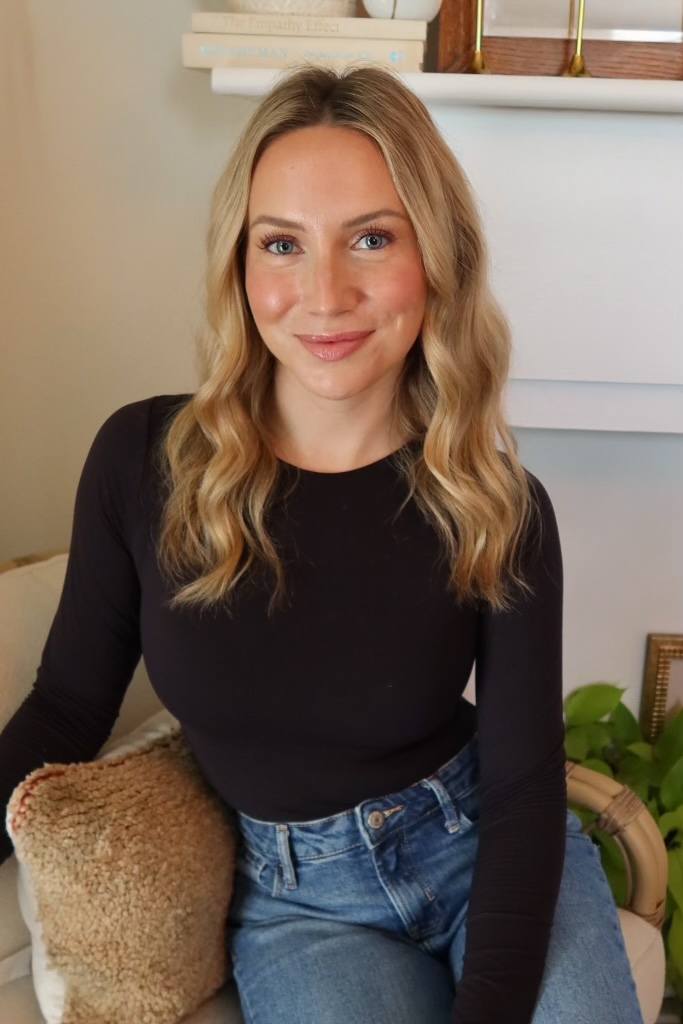
Today we’d like to introduce you to Abby Hartman.
Alright, so thank you so much for sharing your story and insight with our readers. To kick things off, can you tell us a bit about how you got started?
I’ve been a therapist for about eight years, and if there’s one theme that has defined my career, it’s curiosity. I started in a traditional addiction treatment setting doing more short-term therapy, and while I learned so much during those early years, I quickly found myself wanting to understand people on a deeper level and build more meaningful relationships with my clients. That curiosity eventually led me toward trauma therapy and specialized training in approaches like EMDR.
As my career evolved, I took the leap into private practice. Building my own practice gave me the freedom to create a therapeutic approach that felt authentic to me and aligned with the kind of work I wanted to do. For a while, I felt like I had found my niche. But a few years later, I found myself asking a question that felt a little uncomfortable: “Is this all that there is?” As a therapist, I almost felt guilty for wondering that, but I’ve learned that some of the most important growth in my life and career has come from paying attention to those inner nudges rather than ignoring them.
That question ultimately led me to explore psychedelic-assisted therapy, particularly ketamine-assisted psychotherapy. While the medicine itself is certainly an important part of the process, what impacted me most was discovering a different way of working with clients. It challenged many of the ideas I had been taught early in my training about what therapy should look like and deepened my belief that healing happens through genuine human connection.
Over the years, I’ve come to believe that while techniques and modalities matter, the therapeutic relationship is often where the real transformation occurs. The more I’ve allowed myself to show up authentically in the therapy room, the more meaningful the work has become. Today, I’m grateful to have built a practice that allows me to integrate trauma therapy, EMDR, and ketamine-assisted psychotherapy while helping clients create lasting change and reconnect with parts of themselves they may have thought were lost.
I’m sure it wasn’t obstacle-free, but would you say the journey has been fairly smooth so far?
Oh my gosh, absolutely not.
In many ways, my life felt like it was falling apart around the same time I decided to take my first steps into learning about psychedelic-assisted therapy. Looking back, that’s almost funny because I’ve since come to realize that many of the biggest transformations in life begin that way. There is often a kind of ending before a new beginning. We have to be willing to enter those darker, more uncertain parts of ourselves in order to find meaning, grow, and learn to trust ourselves more deeply.
Professionally, one of the challenges has been navigating the stigma and misconceptions that can exist around medicine-assisted therapy. I came from a background working in addiction treatment, so incorporating ketamine-assisted psychotherapy into my practice naturally raised some questions and occasionally drew skepticism. At times, that has been difficult. But I have learned to trust my own experience, my training, and the outcomes I see in the people I work with.
Another challenge has been balancing this deeply meaningful work with the realities of being a business owner. As a private practice therapist, I’m not just the therapist. I’m also the accountant, marketer, scheduler, problem solver, and everything in between. Those roles don’t always fit together seamlessly, and there are certainly days when one side demands more attention than the other.
Private practice can also be surprisingly lonely at times. That’s one reason I’ve made it a priority to build relationships with other professionals and stay connected to a community of people who share similar values and interests.
More than anything, though, these experiences have reinforced what I believe is most important: while modalities, techniques, and trainings all have value, meaningful change happens through human connection. The relationship I have with my clients will always matter more to me than any specific approach or intervention.
Thanks for sharing that. So, maybe next you can tell us a bit more about your business?
In my practice I specialize in trauma therapy, EMDR, ketamine-assisted psychotherapy, and therapy intensives for adults who are looking for more than just symptom management. While many of my clients come in struggling with anxiety, trauma, relationship challenges, or major life transitions, my focus is helping people understand themselves on a deeper level and create meaningful, lasting change.
What sets my practice apart is not necessarily a specific modality or technique. There are many talented therapists who offer EMDR or ketamine-assisted psychotherapy. What matters most to me is the depth of the work and the quality of the therapeutic relationship. I believe people heal when they feel genuinely seen, understood, and safe enough to explore the parts of themselves they may have spent years avoiding.
My approach has evolved significantly throughout my career. Early on, I was trained in more traditional models of therapy, but over time I found myself drawn toward approaches that allow clients to move beyond simply talking about their problems and into deeper experiences of healing and transformation. Whether we are using EMDR, ketamine-assisted psychotherapy, or traditional talk therapy, my goal is always the same: helping clients reconnect with themselves, process what has been keeping them stuck, and move forward with greater clarity and self-trust.
The thing I am most proud of is that I have built a practice that feels deeply aligned with my values. I never wanted to create an environment where clients felt like they had to hide parts of themselves or fit into a certain mold. My hope is that every person who walks through my door feels accepted exactly as they are while also being challenged and supported in their growth.
More than anything, I want people to know that therapy does not have to be a place where you simply talk about the same struggles year after year. Healing is possible, change is possible, and sometimes the most transformative part of the process is having another human being willing to sit beside you as you navigate the journey.
We’d love to hear about how you think about risk taking?
I don’t naturally think of myself as a huge risk-taker. In fact, most people who know me would probably describe me as thoughtful and fairly cautious. But I’ve come to realize that some of the biggest opportunities in my life have come from being willing to take risks when something inside me was telling me it was time to grow.
One of the biggest risks I took was leaving the security of traditional employment to start my own private practice. There was no guarantee it would succeed, and there were certainly moments of uncertainty along the way. Another significant risk was pursuing training in ketamine-assisted psychotherapy. At the time, it wasn’t something many therapists in my circle were doing, and I knew there would be skepticism and questions about that decision. Still, I couldn’t ignore my curiosity or the feeling that there was something important for me to learn.
Over time, my perspective on risk has changed. I used to think risk meant doing something bold or fearless. Now I think risk is often much quieter than that. Sometimes it looks like trusting yourself when there isn’t a clear roadmap, making a decision before you have complete certainty, or being willing to outgrow a version of yourself that once felt comfortable.
Looking back, many of the biggest risks I’ve taken have happened during periods when my life felt uncertain or messy. Ironically, those are also the moments that led to the most growth. I’ve learned that while risk can be uncomfortable, staying stuck can be even more uncomfortable. Most of the things I’m most grateful for today—my practice, my specialty areas, and the work I get to do with clients—exist because I was willing to lean into the uncertainty.
Contact Info:
- Website: https://www.therapywithabby.com/
- Other: abby@therapywithabby.com 972-503-6964