






Today we’d like to introduce you to Juliette Vaissière.
Juliette, please kick things off for us by telling us about yourself and your journey so far.
Growing up in Avignon, France, I was constantly immersed in classical art during my childhood. I fell in love with the luminosity that can be achieved in the figure with oils and I have always had a unique appreciation for the Baroque/Rococo, and Medieval periods. The former, because of the extreme density of the compositions, the detailed intricate organic shapes, the saturated colors and coquetry. The latter, because of the decorative qualities; every piece is presented as an “art object”, beautiful from every side with distinctive ties to reality, and yet a very serious presence of otherworldly beasts. I have always had an “overactive” imagination and love of the fantastical, and for the most part have kept these childhood sensibilities.
I moved to Austin TX in 2011, and to Denton in 2013 to pursue my Bachelors of Fine Arts in Drawing and Painting at the University of North Texas. This past May, I graduated with my BFA, minors in Business Foundations, Chinese language, and a certificate in E-commerce. This Fall I will be moving to New York City to pursue my MFA in Painting at the New York Academy of Art.
Can you give our readers some background on your art?
The figures I paint are influenced by a romanticized, utopian, and occasionally theatrical view of historical Europe, and a sense of timeless beauty. My recent work explores concepts of ornamentation and embellishment around the figure, probing humanity’s constant and driving need to change and mold the aesthetics of the world around us, whether for better or for worse. Other recurring themes include female sexuality, gender equality, and fairytale-inspired imagery. I am always searching for the small thread within a painting that can start to unveil a narrative.
I favor traditional mediums and methods and work almost exclusively in oil paint on wood panel or canvas, using charcoal or watercolor for my sketches/preliminaries. An important part of my work is technical exploration. I am a perfectionist by nature, and as such, I strive for the highest level of craftsmanship within both my paint application and woodwork. I believe that there is no substitute for something handmade, and I am constantly exploring new ideas while studying the legacies of contemporary and historical painters.
Do you think conditions are generally improving for artists? What more can cities and communities do to improve conditions for artists?
I think it goes a little both ways. On one hand it is easier to share work, apply to shows etc. On the other I think that many people have a skewed perception of the value of art. Modern prices reflect the low quality of mass-produced goods designed for fast consumption, whereas art is the complete opposite of this. Buyers need to remember that often a painting can take anywhere from several days to several months to complete, and that it is a completely unique object, reflecting not only the artist’s skill level, but also his sensibilities, coup-de-main, and tastes at the point in time it was made.
I think it is important for modern society to continue engaging with art if only because that is what defines us culturally. Art is often seen as ephemeral and a luxury, but I would argue that it is all we have left from past civilizations, and that the ability to create is what defines the human condition. Art brings joy, beauty, and hope into everyday life, and I think that is precisely what we are all looking for. Even just going to the small gallery down the street on opening night and enjoying a glass of wine while looking at the work can be an extremely fulfilling and introspective experience.
What’s the best way for someone to check out your work and provide support?
My work is available in several galleries (see a full list in the ‘About’ section of my website: juliettevaissiere.carbonmade.com), or a lot of clients also reach out and buy work from me directly. This is always a pleasant experience since I get to know my collectors a little and find out where my pieces are going. It’s always an exciting but bitter-sweet moment when a piece of art finds a new home.
I am also happy to accept commissions. People have come to me for portraits, pets, or occasionally still-lives of family heirlooms. Recently, I have been having a lot of fun working on a series lover’s eye commissions (of which a few examples are shown on my website or on my Instagram). Historically, lover’s eyes started appearing in the 18th century, after the Prince of Whales (later George IV) fell in love with a twice-widowed Catholic woman. Even though their marriage would have been illegal (on account of her religion, status, and age), he courted her determinedly, sending her gifts and even staging a suicide attempt if she did not accept his hand.
It is said that in the Fall of 1785 he sent her a final marriage proposal, with, instead of an engagement ring, a small miniature of his eye. She then returned to England and wed him secretly. This started a fad of eye-miniatures throughout Europe’s upper-class, since lover’s eyes could be openly displayed, but retain anonymity (often these were not the eyes of one’s spouse). Recently there has been a renewal of interest in lover’s eyes, with some galleries even hosting shows dedicated to them.
Contact Info:
- Website: https://juliettevaissiere.carbonmade.com
- Email: [email protected]
- Instagram: https://www.instagram.com/juliettevaissiere/


 Image Credit:
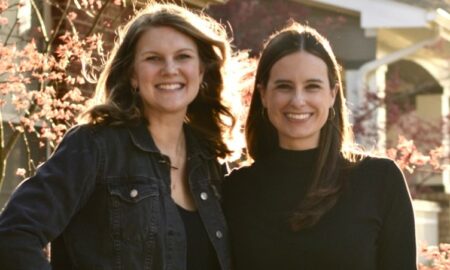
Personal Photo: Hudson Ingram
Getting in touch: VoyageDallas is built on recommendations from the community; it’s how we uncover hidden gems, so if you know someone who deserves recognition please let us know here.