



Today we’d like to introduce you to Ethan Ith.
Hi Ethan, can you start by introducing yourself? We’d love to learn more about how you got to where you are today?
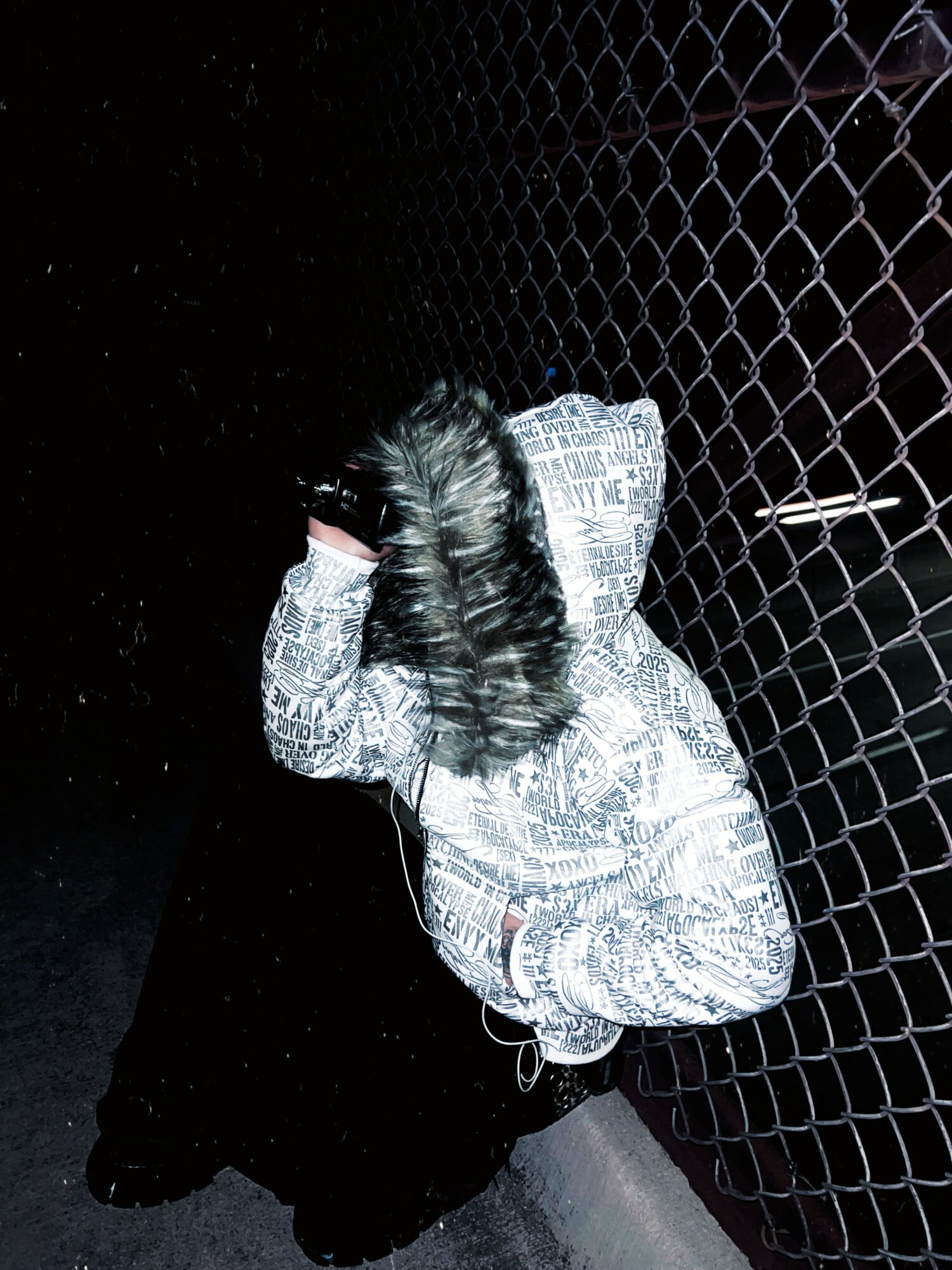
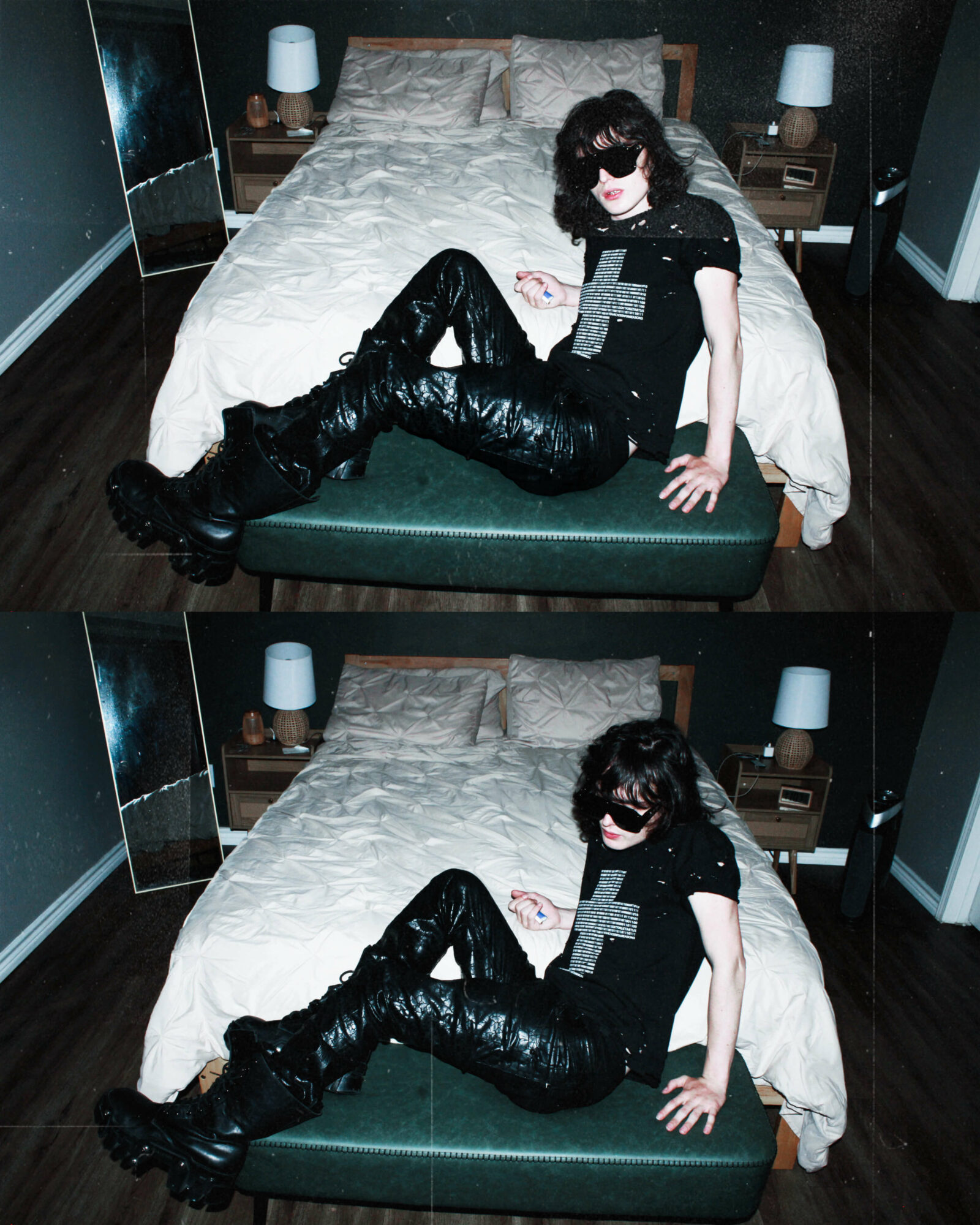
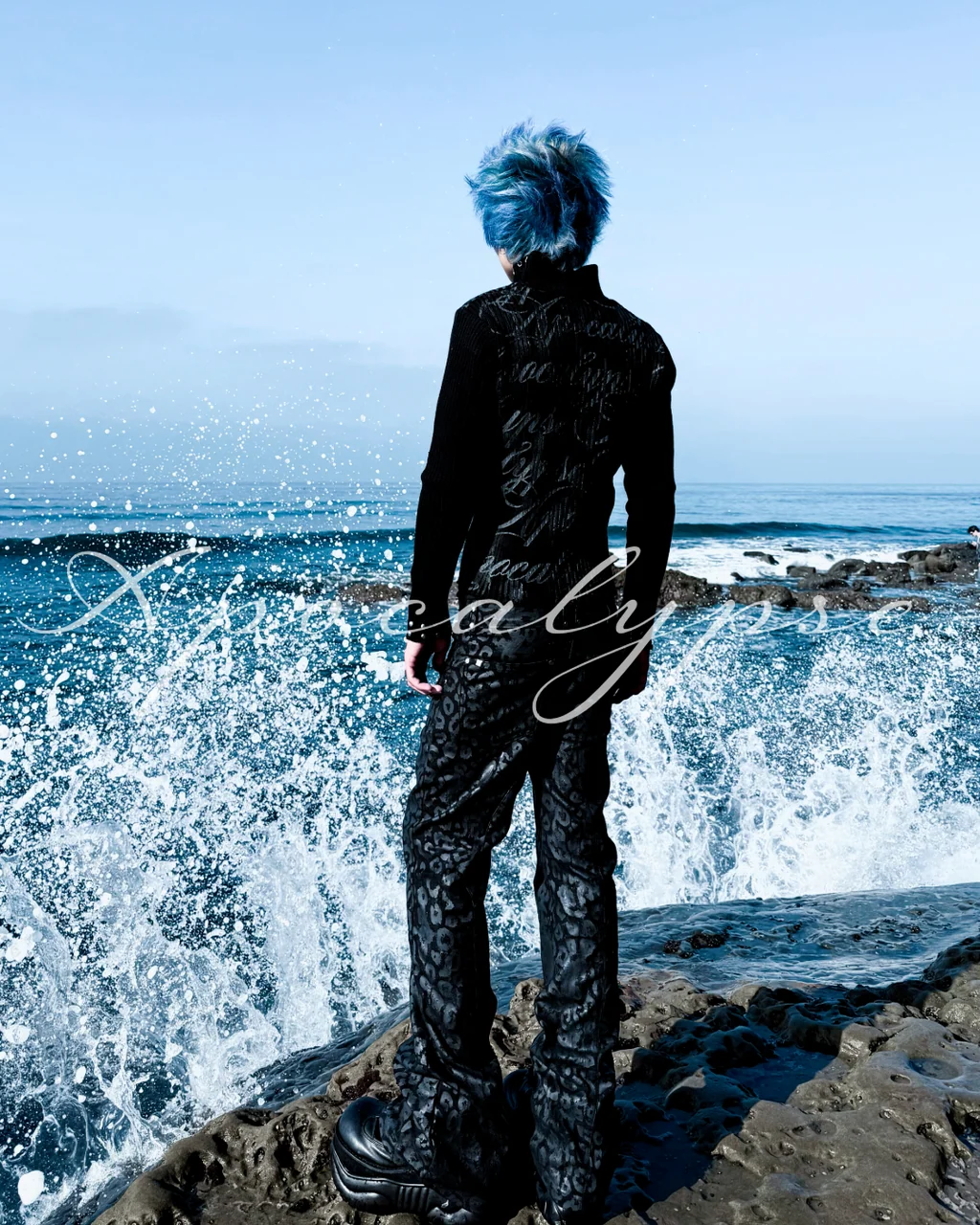
Apocalypse started in 2021, right after I graduated high school. At that point in my life, I had a lot of ambition and belief in myself, but I was also lost. I knew I wanted to put my energy into something meaningful, but I didn’t fully know what I was passionate about yet or where I wanted that ambition to go. Around that time, I was doing commissions on Depop, hand-painting custom anime jeans for people. As I kept doing that, I started realizing how much I genuinely loved clothing, design, and being able to take an idea in my head and turn it into something physical. That was really what pushed me toward the idea of starting my own brand. I wanted a bigger outlet for all of the creative ideas I had, and clothing became that outlet for me.
One of the biggest reasons I fell in love with running a brand was actually because of something I used to struggle with. Growing up, I was always the type of person to become interested in something, dive completely into it, and then eventually find something new and change direction. I was constantly finding new hobbies and new skills that interested me. With a clothing brand, I realized I didn’t have to fight that part of myself. There are so many different avenues involved in running a brand. There’s design, garment construction, fabrics, photography, videography, marketing, business, branding, production, e-commerce, storytelling, and so much more. If I ever became bored with one part of the process, I could learn another skill and still be working toward the exact same goal. That’s something I still love about it today. I can constantly evolve without having to abandon what I’m building.
When I first started Apocalypse, the biggest thing I had was hunger. I was obsessed with the idea of becoming successful and creating something for myself. For roughly the first two and a half years, almost everything in my life revolved around the brand. It was work, work, work. The decisions I made, the people I surrounded myself with, how I spent my time, and where I put my money were all centered around building my future. If something wasn’t helping me move forward, I usually wasn’t interested in putting much energy into it. Looking back, I almost rewired the way I thought. That period of my life was especially interesting because I had just graduated high school and I was watching a lot of people around me go off and have the traditional college experience. People were partying, drinking, going to clubs, and enjoying that stage of their lives. There’s nothing wrong with that, but at the time, I genuinely didn’t care about any of it. My vision felt extremely clear to me. I knew there was something I wanted to build, and I was willing to sacrifice a lot of short-term experiences to give myself a chance at creating the life I wanted later.
During that time, I was working at a paintball place called Gatsplat Paintball. Looking back, that job was honestly a blessing in a strange way. It was a very laid-back workplace, and because business could be slow, there were times when we had a lot of downtime. Whenever I could, I would use that downtime to work on Apocalypse. While other coworkers would be playing Xbox, watching something on their phones, or scrolling through TikTok, I would usually have my laptop open designing clothes, researching, or teaching myself something that could improve the business. At the same time, that environment became one of my biggest sources of motivation. I had a manager there who would constantly joke about my brand, make comments about me wasting my time, criticize my ideas, and make fun of the vision I had for myself. At the time it was frustrating, but looking back, he became one of the biggest motivators I ever had. I saw a version of life that I knew I didn’t want for myself.
There were also situations where management would tell me they didn’t want me working on my business during downtime. My response was always basically, “What is the difference between me using this time to work toward my future and someone else using that same downtime to play Xbox or watch movies?” I understood that I was still at work and that the company had every right to set rules about what employees could do. What bothered me was the feeling that being productive toward something outside of the job was somehow treated differently than simply wasting the downtime. That stuck with me. Instead of letting it discourage me, I used it as motivation. I kept thinking to myself that I never wanted to become someone who gave up on their own ambitions and then became uncomfortable seeing someone else chase theirs.
Almost everything involved in Apocalypse has been self-taught. I couldn’t even count the number of nights I spent watching YouTube videos, researching, taking notes, studying clothing, and trying to understand how things were actually made. At first, I was learning how to design. Then I started learning about fabrics, garment construction, measurements, production, printing, and manufacturing. Then I had to learn the business side—marketing, e-commerce, customer service, finances, fulfillment, inventory, and everything else that comes with actually operating a brand. I taught myself photography and videography because I wanted to present the clothes the way I saw them in my head. One of the things I’m most proud of today is being able to look at Apocalypse and know how much of it came directly from skills I took the time to learn myself.
That experience also taught me something I believe strongly as a business owner: before you completely hand something off to someone else, you should understand the skill yourself. There’s nothing wrong with hiring talented people. As the brand grows, delegation becomes necessary. But I believe learning the fundamentals first makes you a much stronger owner. It allows you to recognize quality, communicate your vision better, know when something is being done incorrectly, and understand what you’re actually paying someone to do.
As the brand started growing, Apocalypse began reaching places I honestly couldn’t have imagined when I first started. And one of the biggest things the brand gave me had nothing to do with money. Growing up, I dealt with a lot of self-doubt. I didn’t always value myself very highly, and I spent a lot of time being scared to put myself out there. Apocalypse changed that. Creating something from my imagination and seeing other people genuinely appreciate it gave me a feeling that was hard to explain. Knowing that somebody somewhere could connect with something I created made me feel whole in a way. I think one of the greatest feelings as a creative person is realizing that something that existed only in your head can eventually mean something to somebody else.
The brand also forced me out of my comfort zone. Because of Apocalypse, I’ve met so many people, made friendships, traveled, collaborated with other creatives, and experienced things I probably never would have experienced otherwise. It gave me confidence not only as a designer or business owner, but as a person. Of course, there was also a lot of sacrifice behind it. For the first couple of years, almost every dollar I made went directly back into the business. Paychecks from my jobs would go into samples, production, marketing, websites, equipment, or whatever else Apocalypse needed at the time. There were periods where I basically stopped buying things for myself because I felt like the brand needed the money more than I did.
Financial management has probably been one of the biggest struggles throughout my journey. It’s something I’ve gotten much better at over time, and it’s something I’m still actively improving today. Running a business forces you to learn very quickly that making money and managing money are two completely different skills. There have also been a lot of failures behind the scenes that people don’t necessarily see. There have been countless nights where I’ve been frustrated, overwhelmed, or even crying because something went wrong with the business. There have been production issues, financial setbacks, ideas that didn’t work, mistakes I made myself, and plenty of moments where continuing felt extremely difficult. But the one thing that has always stayed consistent is that I can still see the vision. That’s probably the biggest reason I’m still here.
If I had to explain how I got to the position I’m in today, I would say it came down to consistency and passion more than anything else. I genuinely believe a lot of people stop before they ever get the opportunity to see what their work could become. Success almost never happens in a straight line. Something goes wrong, you adapt. You lose money, you learn from it. A product fails, you improve the next one. Something that worked before stops working, so you change direction. You have to be willing to constantly adapt without losing sight of the bigger goal. Consistency keeps you moving when motivation disappears, but passion is what keeps that consistency alive. For me, that passion has never gone away.
Today, my focus with Apocalypse is continuing to elevate the product itself. Earlier in the brand, a lot of my creativity was expressed through graphics and artwork. Now I’m becoming much more interested in the garment itself being the statement. I’m focused on better fabrics, stronger construction, more thoughtful details, unique silhouettes, washes, textures, cuts, and pieces where the actual shape and quality of the garment speak louder than a graphic printed on top of it. Eventually, I want Apocalypse to reach a point where I can make extremely strong garments with little to no graphics at all and the piece still immediately feels recognizable.
I also want to build a more specific community around the brand—people who genuinely appreciate clothing. I want customers who notice the stitching. People who care about the weight and texture of a fabric. People who look at the silhouette, construction, hardware, wash, and small decisions that most people might overlook. That’s where I see Apocalypse evolving.
When I look back at the person I was in 2021—fresh out of high school, ambitious but unsure where to direct that energy—I think the brand gave that ambition somewhere to live. Apocalypse started as a creative outlet, but over time it became much bigger than that for me. It taught me how to create, how to run a business, how to deal with failure, how to believe in myself, and how to keep moving when things don’t go according to plan. And I still feel like I’m only at the beginning of what I want it to become.
Alright, so let’s dig a little deeper into the story – has it been an easy path overall and if not, what were the challenges you’ve had to overcome?
It definitely hasn’t been a smooth road. One of the biggest challenges has been learning how to operate a business while it was actively growing and changing. A lot of problems came up in real time, and I had to figure out solutions while still keeping everything moving. Finances have probably been one of my biggest struggles throughout the entire journey. Especially in the beginning, almost every dollar I made from working went directly back into the brand. There were times where I would stop buying things for myself because I felt like the business needed the money more than I did. As the brand grew, I also had to learn that making money and managing money are two completely different skills. You can have a successful release and still make poor financial decisions afterward if you don’t understand cash flow, expenses, production costs, inventory, and how much money actually needs to stay inside the business. That is something I’ve gotten much better at, but it’s also something I’m still actively working on today. Production has also brought a lot of challenges. Clothing looks simple from the outside, but there are so many moving parts behind one garment. You’re dealing with fabrics, measurements, construction, manufacturers, samples, revisions, shipping, quality control, timelines, and eventually getting the product into the customer’s hands. There have been production delays, products that didn’t come out exactly how I envisioned them, money lost from mistakes, and situations where I had to figure things out very quickly because customers were depending on me. A lot of the hardest moments happened behind the scenes. There have been countless nights where I’ve been extremely frustrated, overwhelmed, or even crying because something went wrong with the business. Sometimes it was financial, sometimes it was production, sometimes an idea didn’t perform the way I expected, and sometimes I simply made the wrong decision. Another major challenge has been understanding that every mistake has consequences when you’re the one responsible for the entire business. When something goes wrong, there isn’t always someone else to fix it for you. You have to take accountability, figure out what caused the problem, and make sure you don’t repeat it. There are also challenges that come with growth itself. As more people become aware of the brand and more orders come in, the expectations become higher. You have to improve your systems, communication, production, fulfillment, and overall organization because the same methods that work when you’re small don’t always work once the business starts getting bigger. I’ve also had to learn how to separate emotion from certain business decisions. When you care deeply about something you created, it can be difficult not to take every setback personally. Over time I’ve had to become better at looking at problems more objectively and asking myself what actually needs to change instead of just being frustrated that something went wrong. Even now, I wouldn’t say I’ve figured everything out. There are still areas I’m improving, especially financially and operationally, but every challenge has made me more aware of what it actually takes to build something sustainable. A lot of the struggles I’ve dealt with have forced me to become more disciplined, more organized, and more intentional with how I run Apocalypse.
As you know, we’re big fans of you and your work. For our readers who might not be as familiar what can you tell them about what you do?
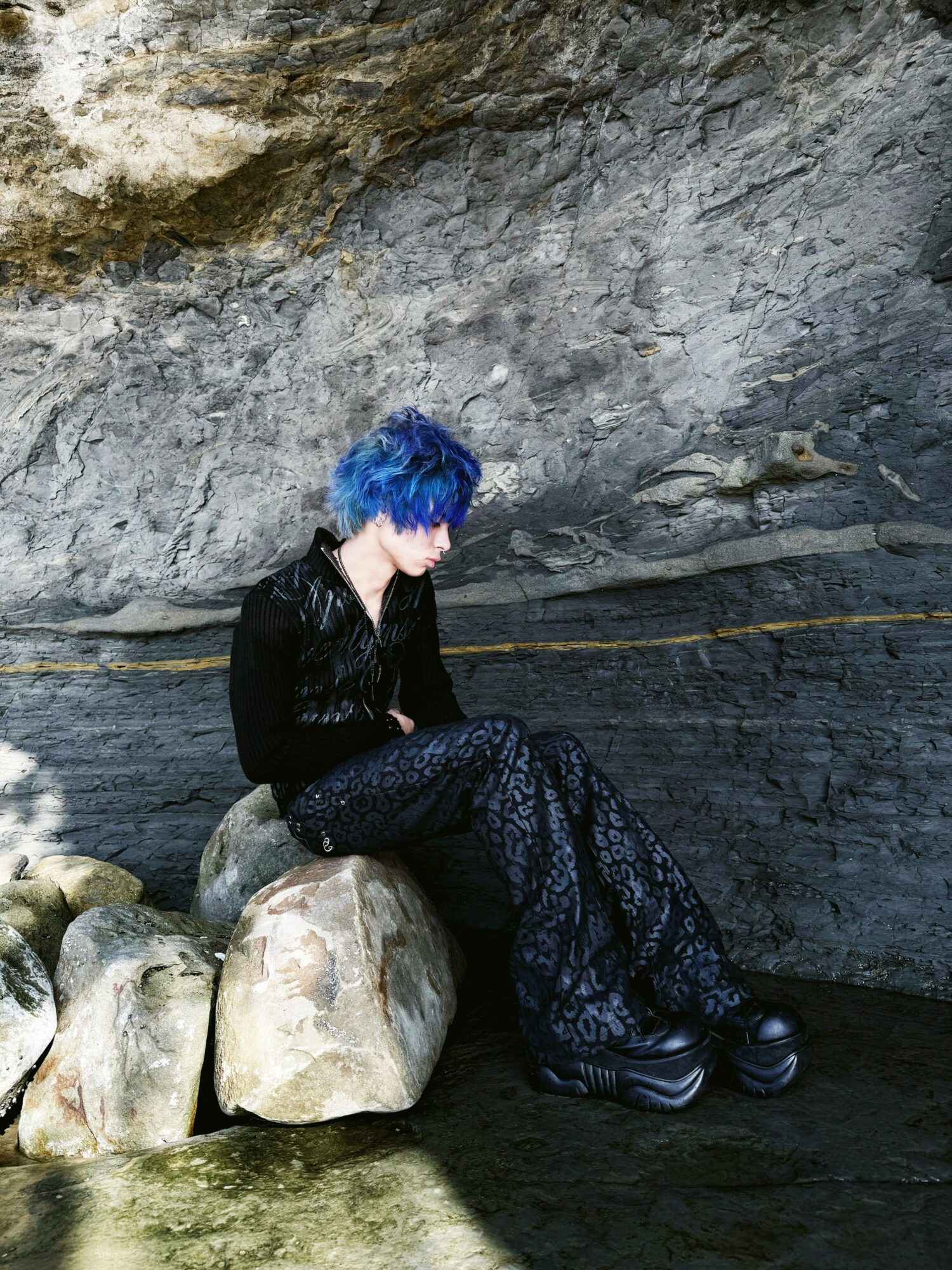
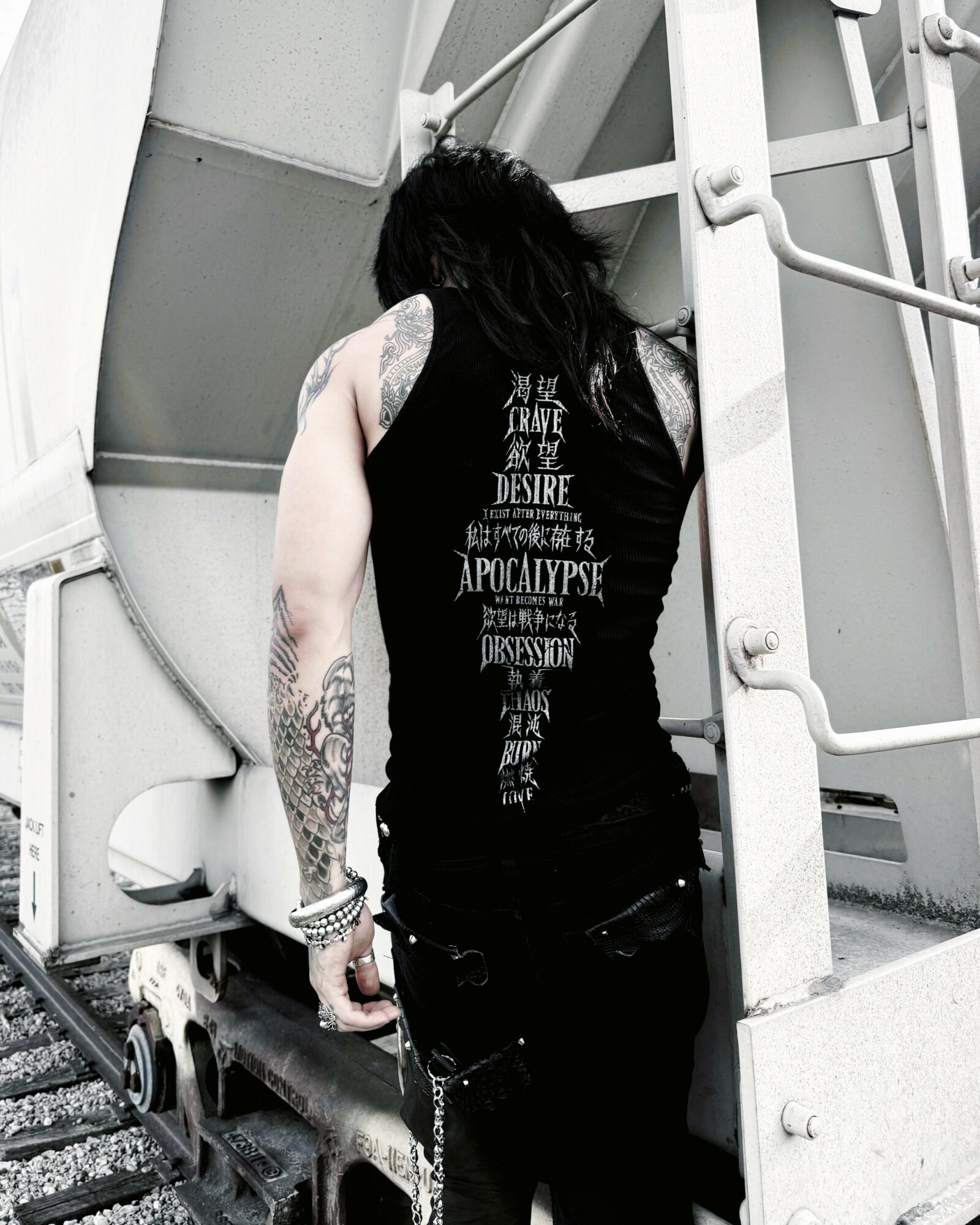
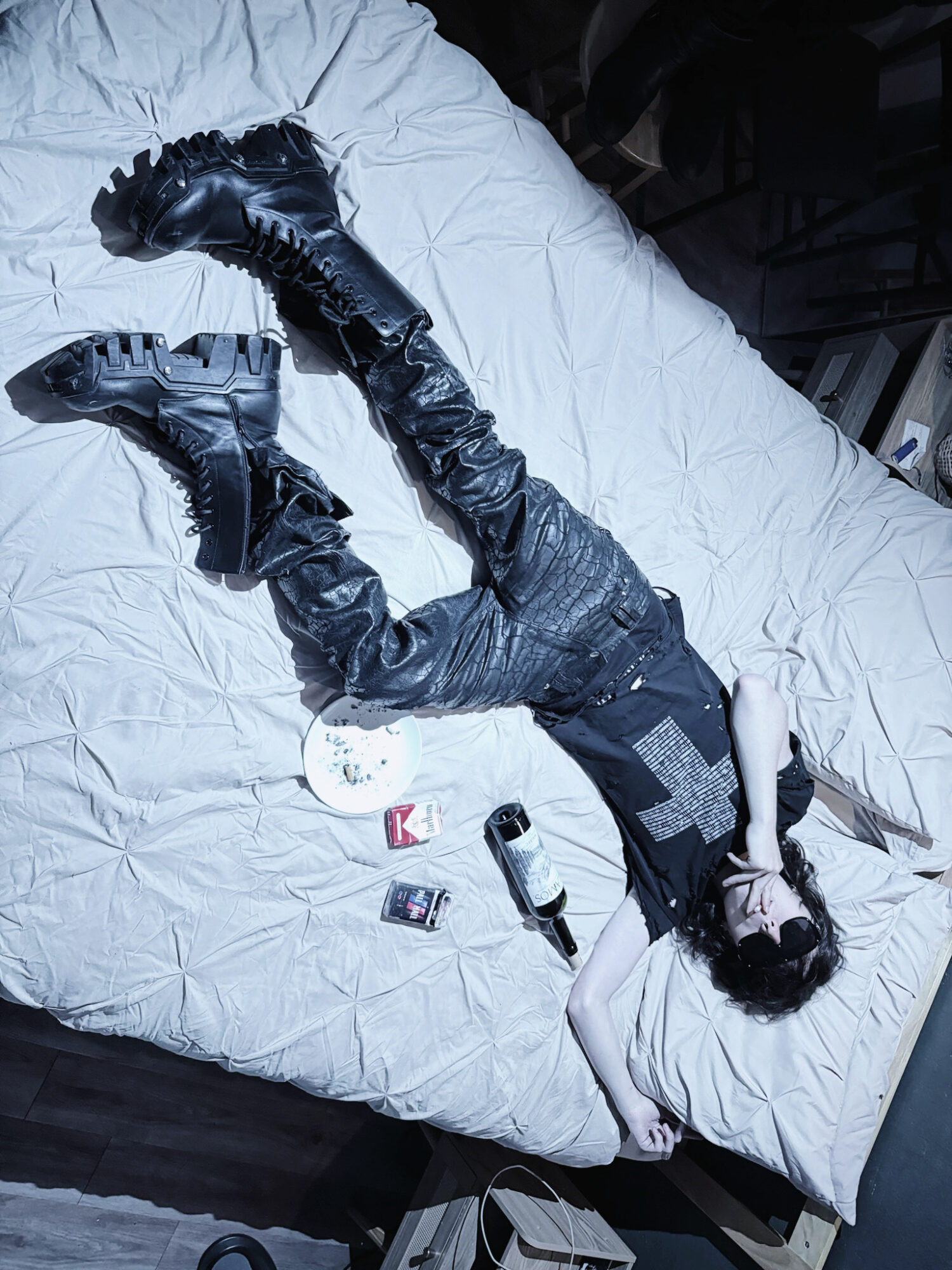
My work is centered around Apocalypse, but I would describe what I do as more than just designing clothes. A lot of my creativity comes from trying to translate a feeling into something physical, whether that becomes a garment, a photograph, a short film, an edit, or an entire campaign. Music plays a huge role in almost everything I create. A lot of my designs, photography, short films, and edits revolve around specific songs and the way they make me feel. Sometimes I’ll hear a song and immediately start seeing colors, environments, silhouettes, camera movements, or an entire visual in my head. A lot of my best ideas come from just sitting with my headphones in, closing my eyes, and letting the music take my mind wherever it wants to go. That’s also how I approach clothing. I genuinely want to make garments that evoke a feeling when someone puts them on. I don’t want someone to only think, “This looks good.” I want the clothing to make them feel different when they wear it. Whether that feeling is confidence, mystery, aggression, vulnerability, or something harder to put into words, I want there to be emotion behind the piece. As I’ve grown creatively, I’ve become much more interested in the garment itself rather than relying so heavily on graphics. Earlier in Apocalypse, a lot of my creativity was expressed through artwork and graphic design. Now I find myself studying silhouettes, proportions, fabrics, construction, washes, textures, hardware, and the way a garment can change someone’s entire presence when they put it on. A lot of that evolution has also come from the people closest to me. Two of my closest friends have amazing personal style, and I take a lot of inspiration from the outfits they put together. I pay attention to their proportions, silhouettes, layering, the way certain pants sit over a shoe, the shape of a jacket, and how one garment can completely change an outfit. Their style, along with my own personal style, has played a big role in where I want to take Apocalypse next. I want to push the brand toward clothing that feels like something we would naturally want in our own closets instead of creating something just because I think it will sell. I want the actual cut of the piece to be enough. I want the fabric and construction to matter. Eventually, I want Apocalypse to reach a point where I can create a piece with little to no graphic treatment at all and it still immediately feels like Apocalypse because of the silhouette, fabric, construction, and details. Photography and film are extensions of that same process for me. When I design a garment, I’m already imagining the environment it belongs in, what song would be playing behind the visual, how it should be photographed, and what emotion I want someone to walk away with after seeing it. A good example of that is a short film I made called “Consumed By Love.” There isn’t a single Apocalypse garment in the entire film, and that was intentional. I didn’t make it to directly advertise a product. I made it purely to evoke a feeling that I wanted connected to the brand. To me, one of the strongest emotions someone can experience is love, so I created the film from my own perspective of what it feels like to be completely consumed by it—when every thought, every action, and every part of your day somehow revolves around that person. I wanted to capture that feeling of love becoming almost all-consuming. Even without showing clothing, it still felt like an Apocalypse piece because it communicated an emotion and a world I wanted the brand to exist within. The film can be found on our website and Instagram. That’s one of my favorite things about being a creative—one idea can turn into so many different things. A song can become a garment, a garment can become a photograph, and a photograph can turn into an entire campaign or short film. Everything feeds into everything else. What I’m most proud of is that I’m starting to understand my own creative language more. I’m becoming much more intentional about understanding why something inspires me, why a certain silhouette looks good to me, why a specific song creates a certain feeling, and how I can turn those things into work that feels like it came from me. For me, the goal isn’t just to make clothes that look good. I want to make clothes that make you feel something.
So, before we go, how can our readers or others connect or collaborate with you? How can they support you?
I’m always open to working with other creatives, whether that’s photographers, filmmakers, models, stylists, designers, musicians, or anyone who genuinely connects with the world I’m building through Apocalypse. The best way to collaborate or support is to reach out through our Instagram or website, share the work, wear the pieces, and engage with what we’re creating. I’m especially interested in working with people who bring their own perspective and want to create something that feels intentional rather than just promotional.
Contact Info:
- Website: https://ap0calypsebrand.com/
- Instagram: https://www.instagram.com/ap0calypse_brand/