



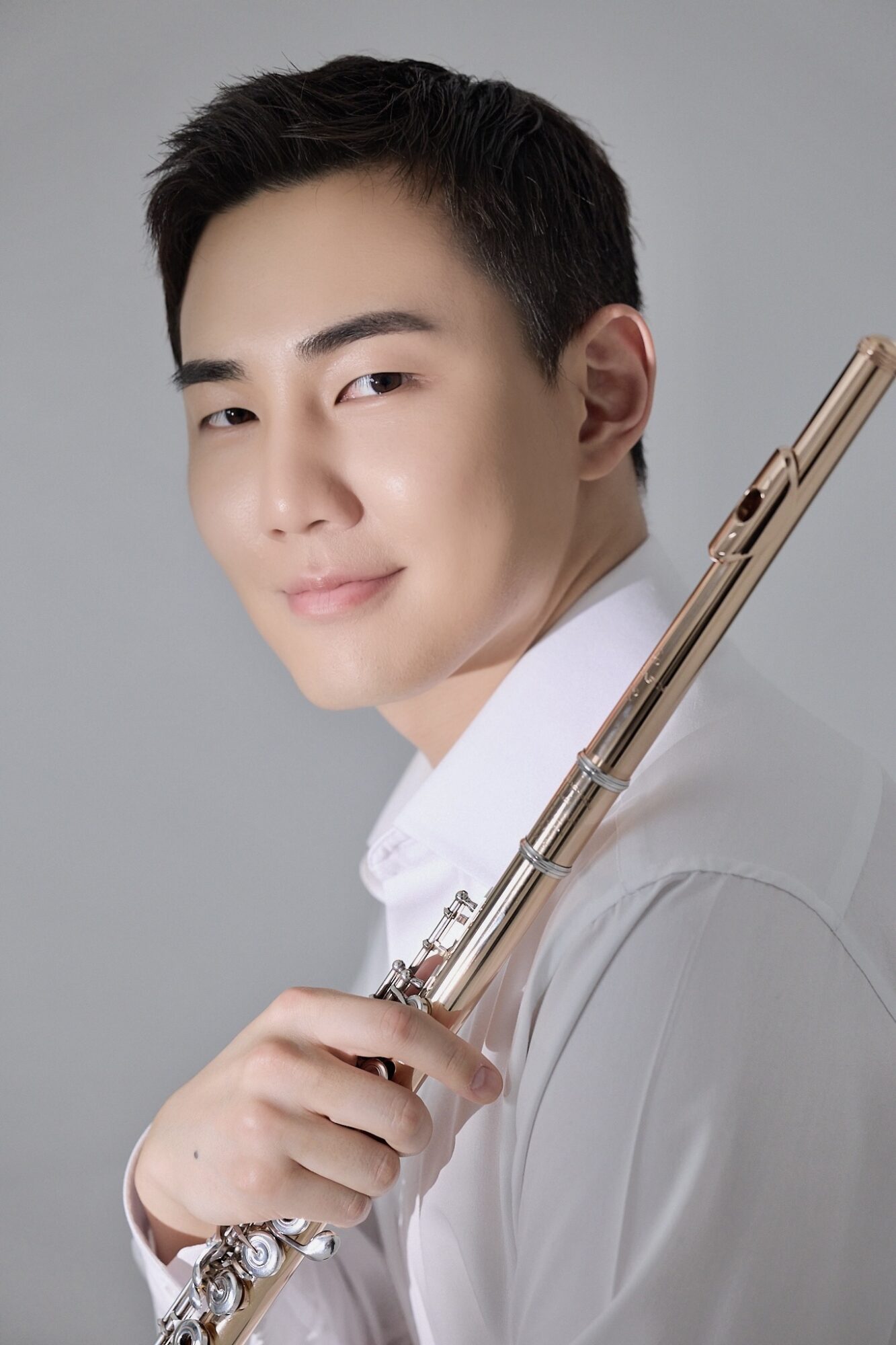
Today we’d like to introduce you to Jihyuk Park.
Hi Jihyuk , we’re thrilled to have a chance to learn your story today. So, before we get into specifics, maybe you can briefly walk us through how you got to where you are today?
My journey with the flute began a little later than many classical musicians. I started playing in middle school at 7th grade, and I certainly did not grow up following a perfectly mapped-out path toward becoming a professional musician. What I did have, however, was a deep curiosity about sound and a strong desire to understand how far flute could take me.
That curiosity eventually led me to the United States, where I studied at The Juilliard School, first through its Pre-College Division and later in the Bachelor of Music program. I spent nearly a decade in the U.S., and those years completely shaped the way I think about music, education, and personal growth. Juilliard gave me rigorous musical training, but perhaps more importantly, it placed me in an environment where individuality mattered. I learned that becoming a strong musician was not simply about playing more accurately, but about developing a voice, a point of view, and the courage to communicate something meaningful.
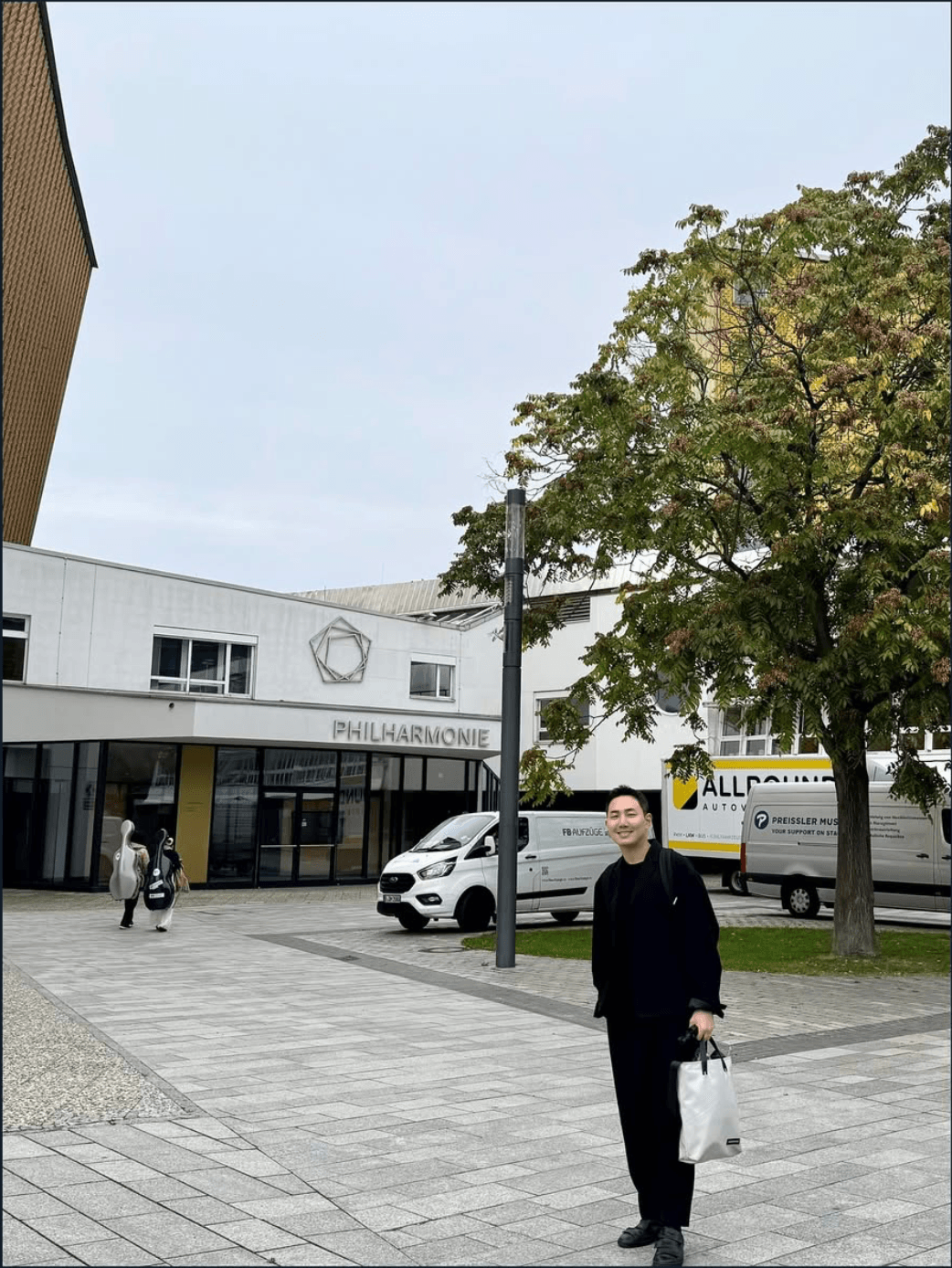
After New York, I continued my studies in Paris at the Conservatoire à Rayonnement Régional de Paris, where I completed the Cycle Concertiste program. Living and studying in both the United States and France exposed me to very different musical traditions. The American environment encouraged individuality and initiative, while my time in Paris deepened my sensitivity to color, phrasing, and musical refinement. Over time, I began to realize that my identity as a musician was being formed somewhere between those worlds rather than belonging entirely to one tradition.
Since returning to Korea, my career has continued to evolve in ways I did not initially expect. I have performed as a soloist and chamber musician, worked with orchestras, reached the final round of the Seoul Philharmonic Orchestra’s Associate Principal Flute audition, and performed internationally, including recent cultural projects in Brunei. I am also a member of the IIIROOM Trio, a chamber ensemble for two flutes and piano, through which I have been able to explore a broader range of sounds, including the alto flute.
At the same time, teaching gradually became just as meaningful to me as performing. I noticed that many talented musicians were struggling not because they lacked ability, but because they lacked clarity. They did not always understand why their sound was not developing, why their practice was ineffective, or why they lost confidence when stepping onto a stage.
That realization eventually led me to establish Arts by H, a flute consulting and education agency. Rather than focusing only on traditional lessons, I wanted to build a system that looks at the whole musician: sound, technique, practice habits, mindset, artistic identity, and long-term direction. My role has increasingly become less about simply telling students what to do and more about helping them understand themselves well enough to make better artistic decisions.
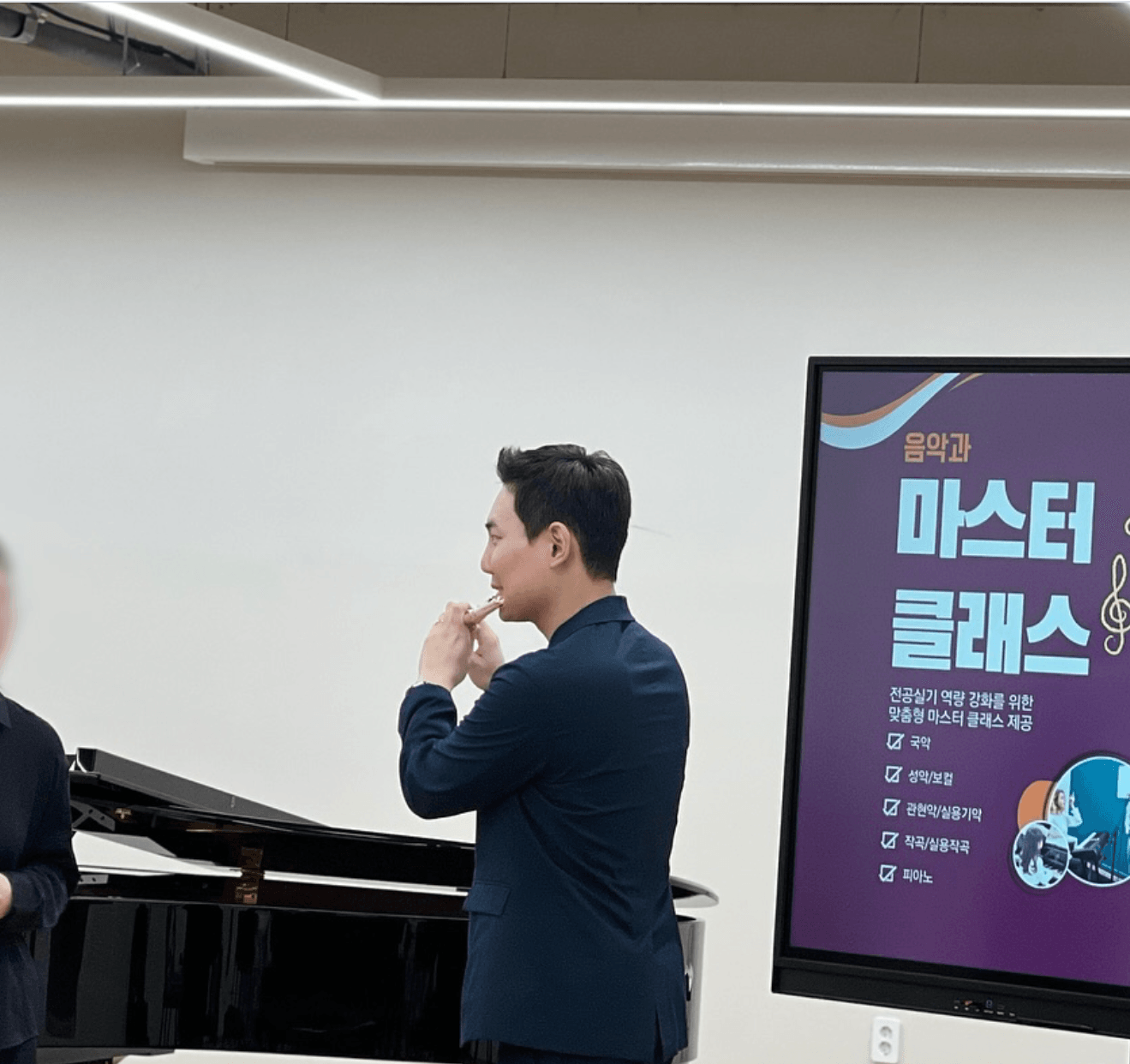
Today, I work as a flutist, educator, and consultant, and I also teach flute at Seokyeong University in Seoul as a Special Appointment Professor. These roles may appear different on paper, but to me they are all connected by the same question: how can we help a person discover and communicate something that is uniquely their own?
I still consider my career very much in progress. I continue to perform, teach, develop international projects, and explore new ways of connecting classical music with education and cultural exchange. Looking back, my path has been far from linear, but I think that has become one of its greatest strengths. Every city, teacher, stage, student, and challenge has added another layer to the way I understand music and the kind of artist I hope to become.
Can you talk to us a bit about the challenges and lessons you’ve learned along the way. Looking back would you say it’s been easy or smooth in retrospect?
It definitely has not been a smooth road.
One of the biggest turning points in my life happened during my freshman year of college. In my second semester, I was preparing for an international competition in Prague and pushed myself far beyond what my body could handle. I developed severe inflammation in several important joints in my hand from over-practicing.
I took some time off, but because I was so determined to return, I began preparing intensely again, focusing only on getting through the first round of the competition. Eventually, my hand reached a point where I could barely use it at all.
That became the first major crisis of my life.
I had to take a full year away from school, and the rehabilitation process ultimately lasted about four and a half years. For a young musician whose entire identity was built around playing the flute, suddenly being unable to rely on my hands was extremely difficult. It was not only a physical challenge. It forced me to confront questions about who I was without my instrument and whether I would ever be able to play at the level I had imagined for myself.
In retrospect, however, that experience completely changed the way I understand musicianship.
Before the injury, I believed that improvement was often a matter of working harder and practicing more. Rehabilitation taught me that progress is much more complex. The body has limits, efficiency matters, and discipline does not always mean pushing through pain. Sometimes discipline means knowing when to stop, when to listen, and when to rebuild from the foundation.
That period also made me much more sensitive to the struggles of other musicians. Today, when I work with students, I pay close attention not only to technique but also to how they practice, how they use their bodies, how they respond to pressure, and how they think about progress.
At the time, losing the ability to play felt like everything had stopped. Looking back now, I realize that those four and a half years became an unexpected part of my education. They taught me patience, resilience, and a much deeper understanding of what it actually means to build a sustainable life in music.
Alright, so let’s switch gears a bit and talk business. What should we know about your work?
My work today sits somewhere between performance, education, and consulting.
I am a professional flutist, a Special Appointment Professor of Flute at Seokyeong University in Seoul, and the founder of Arts by H, a flute consulting and education agency that I created to rethink what music education can look like.
What I specialize in is not simply teaching someone how to play the flute better. I work with musicians on sound, technique, practice strategy, performance psychology, artistic identity, and the way they understand themselves as artists.
In Korea, music education can be extremely competitive. There are many extraordinary and highly individual artists here, but the educational environment itself often places enormous emphasis on achievement: competitions, auditions, entrance examinations, rankings, and getting into the right school. In that kind of environment, young musicians can become very skilled at following instructions while never really learning how to listen to or trust their own artistic voice.
What I learned from studying in the United States and Europe was something different: music ultimately comes from the inner life of the person creating it.
Technique matters enormously, but technique is only the tool to deliver. You still need something to say.
And for a young artist to discover what they truly want to say, they need an environment where they are allowed to experiment, fail, take risks, and try again. They need teachers who do not immediately correct every unusual idea, but sometimes have the courage to ask, “Why did you choose that?” and help the student go deeper.
That philosophy became the foundation of Arts by H.
Many problems that appear to be purely instrumental are connected to something deeper. A student may say, “I cannot project my sound,” but underneath that may be fear of being too expressive. Another may constantly hesitate before difficult passages because they do not trust their own preparation. Someone else may practice for many hours without improving because they have learned to equate effort with progress.
These patterns can become almost unconscious.
So rather than correcting only what I hear on the surface, I try to understand where the pattern is coming from. Sometimes we change the physical technique. Sometimes we redesign the practice method. Sometimes the real work is helping the student recognize fear, perfectionism, or a lack of self-trust that has been shaping the way they play.
The goal is not simply to make them better flutists. I want them to become musicians who understand themselves, trust their decisions, and eventually live more confidently and authentically as people.
That is probably what I am most proud of.
Of course, I care deeply when a student succeeds in an audition, enters a great school, wins a competition, or achieves a technical breakthrough. But the moments that stay with me are often quieter: when someone who constantly doubted themselves begins making musical decisions without asking for permission, or when a student finally realizes that their individuality is not something they need to hide.
To me, music is storytelling. Every person has lived a different life, experienced different emotions, and developed a different way of seeing the world. Those experiences become part of the sound.
If everyone is trained simply to produce the same “correct” interpretation, we lose one of the most beautiful reasons music exists in the first place.
I believe that developing an artistic identity has to begin long before someone becomes a professional musician. Young musicians need to practice listening to themselves, taking risks, making choices, and understanding why they make those choices.
Arts by H is my attempt to create a small space where that kind of education can begin.
What sets my work apart is that I do not separate the instrument from the person holding it. I see technique, psychology, identity, and artistry as parts of the same system. When you help the person grow, the music often begins to change with them.
Can you talk to us about how you think about risk?
The biggest risk I have taken in my life has been trusting my own inner voice.
I believe that somewhere inside us, we often already know which direction we want to go. The difficulty is that this voice is usually very quiet. Once fear, logic, expectations, and other people’s opinions become louder, it becomes surprisingly easy to rationalize ourselves out of what we actually want.
For me, risk-taking has therefore never been primarily about doing something reckless. It has been about having the courage to listen to that quiet voice even when the decision does not make complete sense to everyone around me.
One of the earliest examples came when I had only been playing the flute for about two years and began dreaming of studying at The Juilliard School’s Pre-College Division. From the outside, it probably seemed unrealistic. I had started much later than many young musicians pursuing that path, but something in me strongly believed that I needed to try.
That decision eventually led me to spend almost nine years studying and living in the United States.
Later, after building my musical life there, I made another decision that felt risky in a completely different way. I moved to Paris and essentially became a beginner again in many areas of my life. I had to learn a new language, adapt to a very different culture, and understand a different tradition of flute playing and musical interpretation. It would have been much easier to remain in an environment I already understood, but I felt that there was something I still needed to discover.
More recently, I took a similar risk when I created Arts by H.
Flute consulting was not really an established category around me. Traditional music education is usually structured around lessons, auditions, competitions, and schools. I wanted to create something that connected all of those things with artistic identity, psychology, practice strategy, and long-term personal development.
There was no clear model to follow, which meant there was also no guarantee that people would understand what I was trying to build.
But it was something I deeply believed should exist.
Looking back, many of the most meaningful chapters of my life began with decisions that initially felt uncertain: dreaming of Juilliard after only two years of playing, leaving the United States for Paris after nearly a decade, and creating a new kind of educational work that did not yet have an obvious place in the music industry.
Those choices brought opportunities, relationships, and experiences that I could never have planned in advance, and they eventually shaped the person and musician I am today.
So my relationship with risk is quite simple. I do not believe we should take risks simply for the sake of being bold. But when the same quiet idea keeps returning from somewhere deep inside you, I think it deserves your attention.
For me, the greatest risk would not have been failing at those things.
It would have been ignoring that voice and spending my life wondering what might have happened if I had listened.
Contact Info:
- Instagram: https://www.instagram.com/ji.hyuk.park/
- Youtube: https://www.youtube.com/@jhp_official