






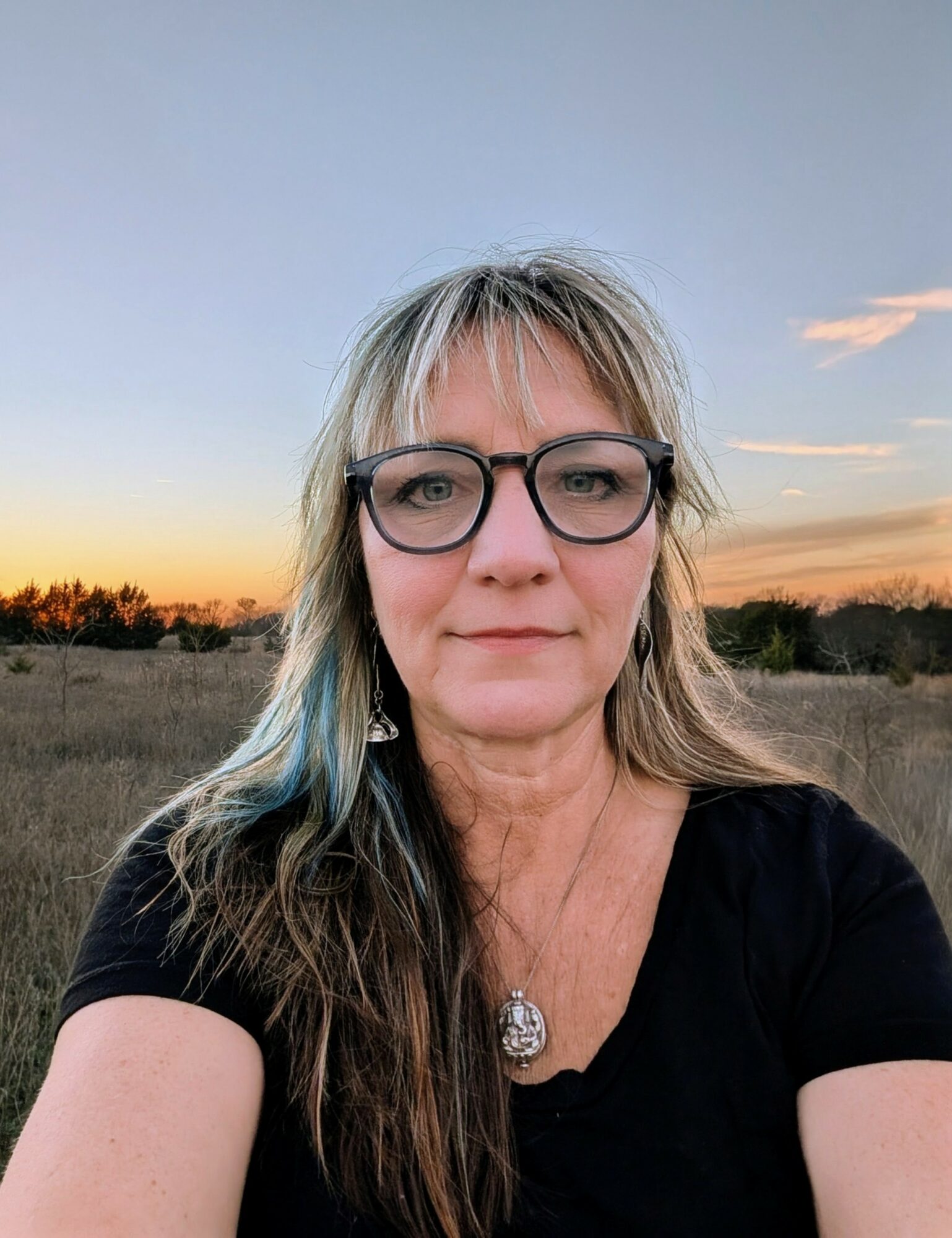
Today we’d like to introduce you to Michelle Haynes.
Alright, so thank you so much for sharing your story and insight with our readers. To kick things off, can you tell us a bit about how you got started?
Like so many other people, I got laid off from my tech job in early 2025. The cybersecurity business unit I supported was sold off and the company laid off the entire integrated marketing team. I’ve never been through a layoff. I just assumed my colleagues and I would quickly reclaim our roles at similar firms.
But, we all know that the crowded job market is filled with thousands (thousands!) of really great, qualified people. Add to that a mix of companies that are down-sizing and hesitating while they figure out how many humans and how many AI tools they actually need. I’d see job postings that ask for “AI-forward” candidates (me! me!), but when you actually have those skills, there’s no clear path to proving it.
As months of job searching ticked by, I gauged my progress against the hiring updates from my former coworkers. I have a broad skillset across teaching, data analysis, writing, and AI. My specialized colleagues had clearer job titles to search for, but even they struggled — which told me the problem wasn’t just my resume, it was the market.
I was applying for roles in the content management space, a space that is really undergoing not only massive shifts in tools, but shifts in attitude. We are in a funny space where AI can write everything, but nobody likes it when AI writes it all. Tools like ChatGPT have given everyone access to advanced writing capability, but editing is still editing and not everyone enjoys that part.
I remember calling one Texoma hiring agency and asking if they had any roles for content marketing managers. There was an awkward silence on their end, like I had asked about giraffe grooming services. So I couldn’t get hired through the regular channels with my job description, and I couldn’t get hired locally with that title. The gap between “qualified professional” and “hired professional” turned out to be wider than my resume could bridge.
Tailoring my resume for keywords and pondering the “to be or not to be” of cover letters filled my days and drained my hope. Then, somewhere between Reddit and LinkedIn, I saw an article about someone who sent out 260 resumes without any responses. I estimated that was 1900 hours of crafting resumes and cover letters. I could not, would not, gift 1900 hours of my life to the hiring void. That resolve was the fuel I needed to continue my job search but also expand my skills, build a portfolio, and create a website. I also rejoined Toastmasters (my go-to group during life transitions) to shake off the professional isolation and access a weekly community.
By September, severance was depleted and unemployment benefits were running out. I stopped waiting and started building. I stopped asking “What job can I apply for?” and started asking “What am I actually good at? Just innately good at?”
I’m a writer and a teacher at heart. I spent 10 years running my own tutoring business before my corporate career. I’ve taught art classes. I’m a Toastmasters mentor. The through-line: I can see where people are, what ideas are swirling in their head, and I can draw those ideas out, anchor them, make connections between what they know and what they’re trying to say.
I’ve also worked with data pipelines — getting information from where it lives to where it needs to be. I can envision and build the process that needs to happen to get data from here to there.
Content is the same way. Words are everywhere, but they aren’t always where you need them to be. Customer insights are scattered across sales notes. Company knowledge lives in email threads and old PDFs where employees can’t find it. Product descriptions sit in manuals instead of on your website where customers and AI can discover them.
I looked at these gaps across organizations of all sizes and realized: I know how to fix this. I have the thought processes, writing skills, and efficient AI tools to corral those scattered words into usable case studies, articles, employee manuals, report templates. And that’s what I do now through Michelle Haynes Content Solutions: I extract tacit knowledge and structure it for different uses — human consumption, AI systems, regulatory requirements, sales enablement.
We all face challenges, but looking back would you describe it as a relatively smooth road?
The business is only a few months old, so “smooth” feels premature. More like “navigating while building the road I’m driving on.”
In addition to all the normal challenges of a new business, it can be tough to concisely explain what I do. I help with a broad range of content projects, using traditional and emerging tools, in a field that is changing. When I say “content,” some people strictly think of social media content. When I talk about writing articles, I know someone is mentally calculating whether ChatGPT could do it for free in 7.2 seconds.
When I use the phrase “AI-augmented,” it’s reasonable for people to imagine a Boston Dynamics robot sorting parts for an Audi. “Structured content” is a real winner at networking events!
At a recent networking event, I tried to tame those phrases and gave my “words are everywhere, but are they where you need them to be?” pitch. One gentleman introduced himself later and then said, “But I still don’t understand what you do.” I actually appreciated his honesty! I’m working on this and learning to tailor my pitch and give relevant, concrete examples of what I offer.
As you know, we’re big fans of Michelle Haynes Content Solutions. For our readers who might not be as familiar what can you tell them about the brand?
Michelle Haynes Content Solutions helps organizations turn scattered information into structured, usable content. I work on projects where critical knowledge exists — in people’s heads, in email threads, in disconnected files — but there’s no process to capture it and put it in finished form.
What sets my work apart is range combined with process. I can handle content types that don’t usually live in the same skillset, such as marketing collateral, operations documentation, structured data templates, and thought leadership articles.
For example, one client needed case studies for marketing, then audit report templates with mail merge automation, and now SOP standardization across multiple managers. Three different content challenges that all required the same underlying capability: seeing how information needs to move and building the process to make it happen.
I’ve also launched my Collaborative Writing Sessions as a newer, à la carte service. These are facilitated sessions where I work directly with professionals who have expertise but not the time or process to turn it into publishable content. I love starting with someone’s basic idea, then using my AI-guided process to help them dig into their own knowledge so it can be authentically shared. It’s the same principle that runs through all my work: building the missing mechanism between knowing and documenting.
Finally, I genuinely enjoy the craft of writing, even as a hobby. I volunteer with the Creative Arts Center in Bonham, writing artist profiles to capture their insights. And since I work with AI so much professionally, I maintain a personal blog called “Meanwhile, In Real Life” — some posts are quick moments in time, others are long-form reflective essays. The puzzle of structure, the editing and re-editing until words say exactly what they mean. That’s the part I love.
Any big plans?
As things get more technical and automated, I think there will also be a growing demand for authentic service from knowledgeable shop owners. I look forward to helping smaller businesses adapt to a challenge most don’t see coming yet. Their websites are wordy and outdated. Their product information lives in old PDFs. Their owner’s expertise is locked in their head instead of available to employees or customers.
That worked fine when “search” meant Google was indexing keywords. But AI-powered search is different — it needs structured, specific information to surface your business as an answer. The small engine repair shop in Princeton might have every part in stock, but if that information isn’t findable in a web query, if ChatGPT or Gemini or Perplexity can’t find and return that info, customers won’t know to call. They’ll end up calling some other business that already made this content transition.
I’m looking forward to designing affordable, efficient ways to help smaller businesses make that transition. Not massive website overhauls — practical updates that get the right information into the right places. Taking what they already know and making it work harder for them so they can serve their own customers.
Contact Info:
- Website: https://www.michellehaynes.com
- Facebook: https://www.facebook.com/MHContentSolutions
- LinkedIn: https://www.linkedin.com/in/michelledeetshaynes/
- Youtube: https://www.youtube.com/@MHContentSolutions

Image Credits
Michelle Haynes