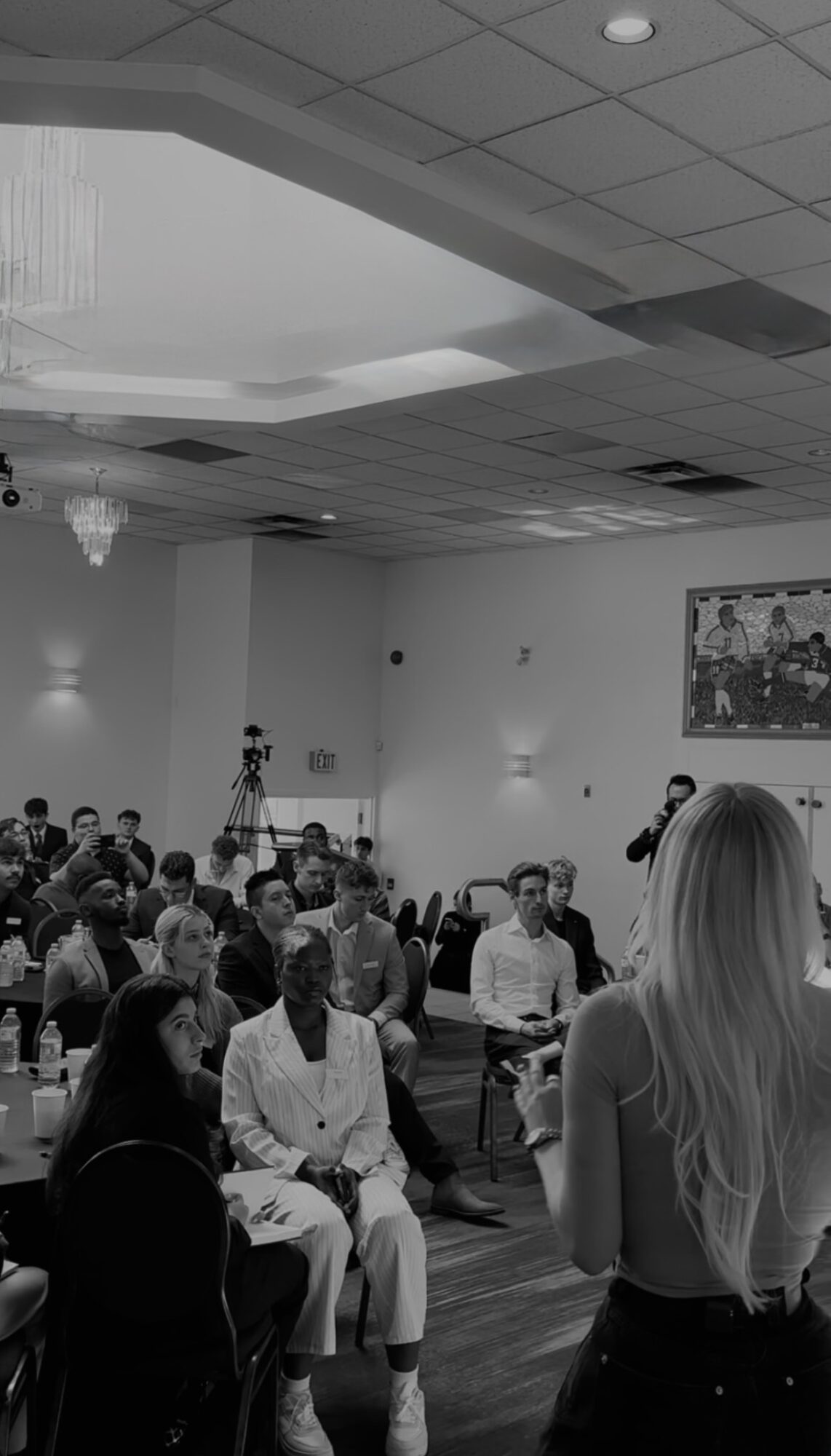






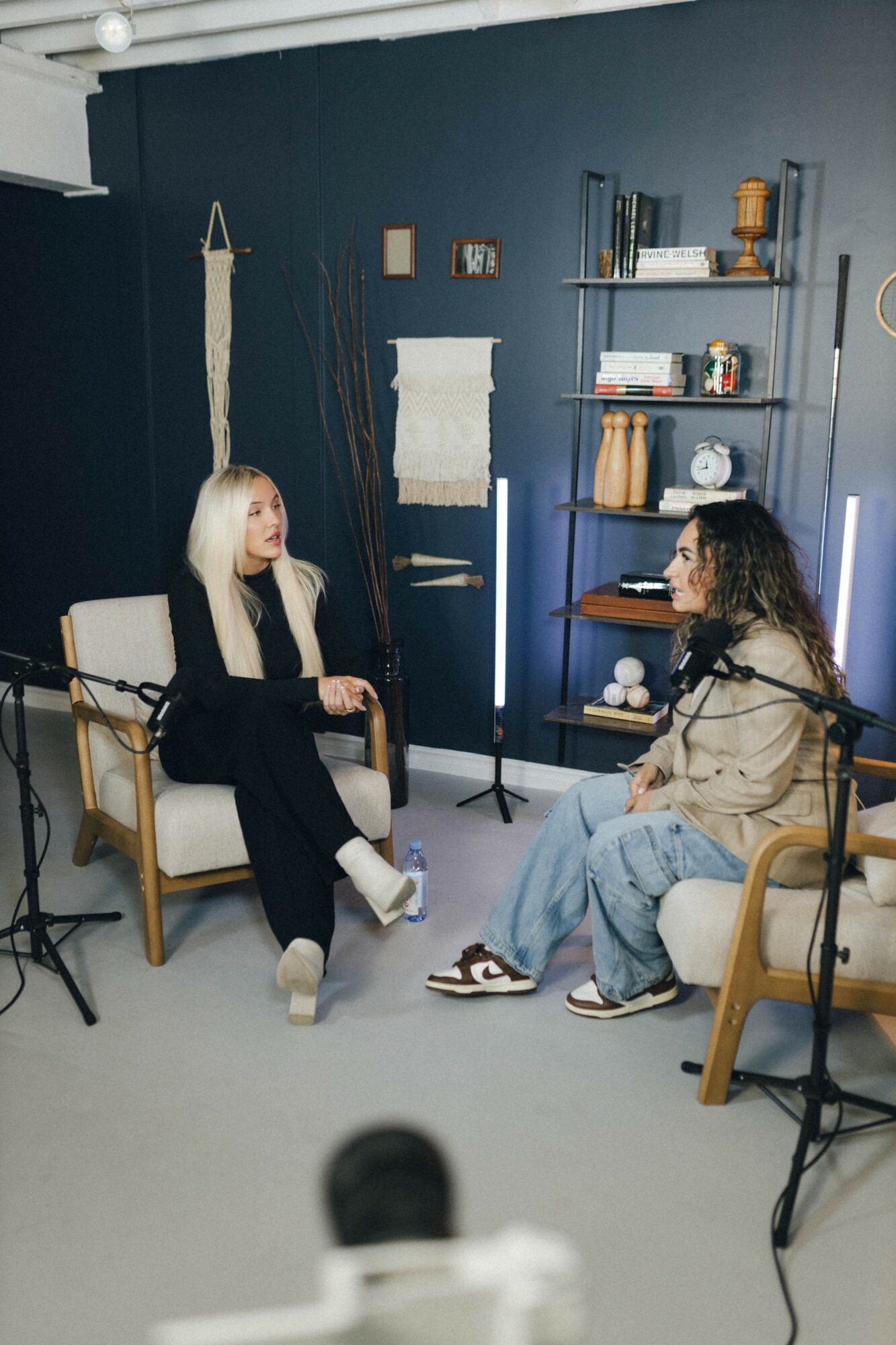
Today we’d like to introduce you to Natasha Zoryk.
Hi Natasha, it’s an honor to have you on the platform. Thanks for taking the time to share your story with us – to start maybe you can share some of your backstory with our readers?
I started my career with what we jokingly call “The Ottawa Dream”: a secure Government of Canada job, a $61K salary lined up before I had even graduated university, and a very sensible career ahead of me.
The only problem? I was 21 and already knew it wasn’t the life I wanted.
A friend asked me to design a website for her business, and what began as a creative side project quickly became something much bigger. Within three months, I left my government career and went all-in. That small design business grew into a six-figure digital marketing agency within six months.
But one of the biggest lessons of my career has been learning not to confuse something working with something being right.
I eventually walked away from design too, moving into business education, sales psychology and mentorship. That next chapter grew into a seven-figure brand, allowed me to mentor thousands of women and businesses, and took me from being terrified of public speaking to speaking internationally. Along the way, I became known for challenging many of the “rules” of online business—including conducting a year-long experiment where I stepped away from traditional social-media marketing and watched the business grow instead.
Today, I’m a three-time founder. My newest chapter took me somewhere I never expected: tech. I built Azura, a communication platform born from my own frustration with the tools available to modern founders.
Looking back, the businesses have changed dramatically, but the thread hasn’t: I’ve built my career by questioning the obvious path, listening when I’ve outgrown something—even when it’s successful—and having the nerve to build what I think should exist next.
Can you talk to us a bit about the challenges and lessons you’ve learned along the way. Looking back would you say it’s been easy or smooth in retrospect?
For the most part, I actually feel incredibly fortunate that my story has been filled with far more wins than losses. Entrepreneurship loves a rock-bottom origin story—and those stories are incredibly powerful—but mine didn’t start there.
Mine started when everything was technically fine.
I was 21, had a secure career with the Government of Canada ahead of me, and was following a path that made perfect sense on paper. I just knew I wanted something different. Walking away that young, without some dramatic reason forcing me to, was probably my first real lesson in betting on myself.
Of course, the years since haven’t been one uninterrupted highlight reel. I’ve had launches flop, offers nobody bought, ideas I was convinced were brilliant that the market very quickly informed me were not, and plenty of moments where I’ve had to question my own decisions.
But the scariest bet came after I’d already become successful.
By 2023, my education and mentorship company had grown into a seven-figure business. I had built the thing younger me had dreamed about—and then I decided to step away from it for more than a year to build a tech company, Azura.
I self-funded the company, stopped actively mentoring, and went from knowing exactly how to generate revenue in an industry I’d mastered to becoming a beginner again in an industry I knew almost nothing about. There were lower-income months, enormous development bills, mistakes that were expensive in every sense of the word, and plenty of moments where the safer decision would have been to return to what I already knew worked.
Azura has continued to grow organically since launching, but that chapter fundamentally changed my relationship with entrepreneurship.
I’ve learned that sometimes the hardest risks aren’t the ones you take when you have nothing to lose. They’re the ones you take when you’ve finally built something worth losing.
I think that’s been the recurring challenge, and gift of my career: becoming comfortable with being uncomfortable. Leaving security before I had proof. Becoming a beginner after becoming an expert. Funding the vision before anyone else could see it. And learning, over and over again, that betting on yourself doesn’t always look glamorous while you’re in the middle of the bet.
Appreciate you sharing that. What should we know about Natasha Zoryk Inc & Azura Inc?
I run two companies today, but there’s really one philosophy connecting both of them: I don’t believe building a successful business should require you to become a full-time employee of your own business.
Through Natasha Zoryk Inc., I mentor female founders in sales psychology, sustainable scaling, client experience, positioning and what I’ve come to call untraditional marketing.
I think entrepreneurship is living through an interesting era of instant gratification. Somewhere along the way, we started treating visibility as a business model. If you own a company, you’re told you also need to be a full-time content creator—posting every day, chasing algorithms, launching constantly, adding another platform, another funnel, another offer.
I’ve done those seasons. I’ve been the content machine. And I’ve also conducted my own year-long experiment where I stepped away from traditional content marketing while building toward seven figures. It fundamentally changed the way I looked at growth.
Today, I’m much more interested in quality over quantity and depth over noise.
My work is rooted heavily in buyer and sales psychology, but without the pressure tactics that have become so normalized online. I teach founders how people actually make buying decisions, how to communicate to different buyer types, how to position and price intelligently, and how to build an exceptional client experience after someone says yes. Because getting the sale is only one part of building a great company.
And underneath all of that is something I’m probably most passionate about: lifestyle-first entrepreneurship.
I don’t want women building businesses that look wildly successful online while privately consuming every hour of their lives. More revenue shouldn’t automatically require more content, more calls, more employees or more complexity. The goal is to build something profitable enough to create wealth and structured well enough to give you your life back. That philosophy now sits at the center of my private mentorship and intensives.
After years of running masterminds and programs—some with investments reaching $25,000—I also wanted to make that body of work accessible without recreating the endless-launch cycle I teach against. So I built The VIP Atelier, a curated membership housing years of my programs, trainings, templates, digital products and frameworks in one elevated, self-paced experience. Rather than constantly manufacturing something new, I took years of proven intellectual property and built one beautiful home for it.
For founders who aren’t ready for that, The CEO Atelier is my completely free resource library, with trainings and tools around sales, buyer psychology, passive revenue, business models and more.
And then there’s my second company, Azura.
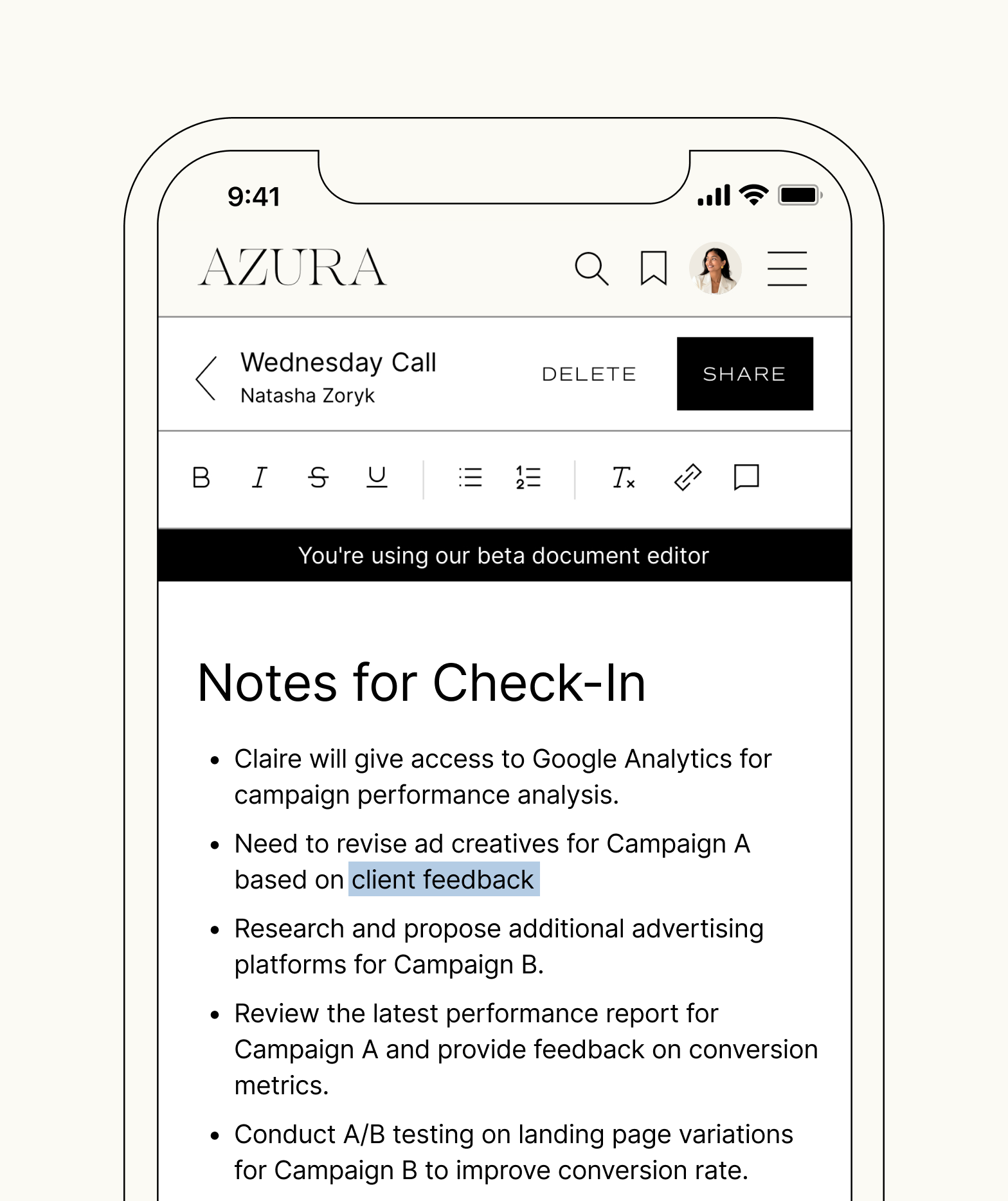
Azura started because I became frustrated with the communication tools I was using to serve my own clients. I cared deeply about experience, organization, beautiful branding and high-touch communication, yet delivering that experience meant piecing together chats, emails, documents, links and multiple pieces of software.
Eventually I stopped asking why there wasn’t something better and decided to build it.
I self-funded Azura and spent 2024 deeply focused on bringing it to market. Today, I use the platform inside my own mentorship business as well—so in a very full-circle way, one company teaches the philosophy and the other helps me actually deliver it. My private clients have their communication, resources, files, feedback and strategy housed inside their own Azura spaces rather than scattered across endless email chains and disconnected tools.
I think what ultimately sets my work apart is that I’m not particularly interested in teaching founders how to become better at keeping up.
I want to help them build businesses they no longer have to keep up with.
Less noise. better psychology, exceptional client experiences, smarter systems, more intentional revenue, and enough space left over to actually enjoy the life the business was supposed to create in the first place.
In terms of your work and the industry, what are some of the changes you are expecting to see over the next five to ten years?
Ironically, when I started my tech company, I thought I might be closing the chapter on mentorship.
Stepping away for more than a year proved the opposite.
Building Azura gave me the opportunity to become a beginner again, learn an entirely different business model and take the company to well over six figures organically within its first couple of years. But somewhere in that process, I realized how much I genuinely missed being inside other founders’ businesses—not necessarily as a traditional “coach,” but almost as a silent partner. Someone who can come in, see what they’re too close to see, challenge the strategy, understand the psychology behind the customer, and help make the decisions that actually move the company forward.
So I don’t think mentorship is disappearing. I think generic mentorship is going to have a much harder time surviving.
We’re entering an era where information is nearly free. AI can give you a marketing plan, write your emails, analyze data and teach you almost anything in seconds. I think that makes courses built primarily around information less valuable, but makes access to experienced human judgment, nuance and proximity significantly more valuable.
That’s actually why I’ve intentionally brought my mentorship business back smaller. I’m less interested in mentoring hundreds of people simultaneously and much more interested in having a select group of founders where I can know their businesses intimately. I think we’ll see more sophisticated consumers seeking that kind of depth rather than simply buying more information.
I also think we’re going to see a correction in the creator economy. We’ve spent years rewarding more: more content, more platforms, more visibility, more launches. AI is about to make the amount of content in the world almost infinite. When quantity becomes infinite, quality, trust, taste and reputation become the differentiators. I think that’s going to be incredibly good for businesses built around real expertise.
On the technology side, my plans are almost the inverse. I never built Azura because I dreamed of running a massive technology company forever. The vision from the beginning was to identify a problem, build something valuable, grow it organically, and eventually hand it to someone who can take it into its next era.
I’m already thinking seriously about what that exit could look like over the next few years. I’m not ready to let it go yet—there are still things I want to build, prove and accomplish with Azura—but creating something with the intention of eventually selling it has taught me to think differently about business. A great company shouldn’t require its founder forever.
If I look five to ten years ahead, I actually see my own career becoming smaller in some ways and much bigger in others: fewer things that require my constant presence, deeper work with the people I choose to work with, more assets that can exist beyond me, and eventually another founder or company taking Azura further than I personally want to take it.
I think that’s where entrepreneurship itself is heading too. We’ve spent a decade glorifying scale for the sake of scale. I’m much more interested in intentional scale—using technology to remove unnecessary work while keeping the human judgment, relationships and experiences that technology can’t replicate.
The future, to me, isn’t about doing more.
It’s about becoming increasingly difficult to replace while building businesses that don’t depend on you.
Pricing:
- azura ranges from free499/month
- vip atelier $149/month
- intensives $1497-2997
- mentoring $18K-$40K
Contact Info:
- Website: https://www.natashazoryk.com
- Instagram: https://www.instagram.com/natasha.zoryk/
- Other: https://www.weareazura.com