





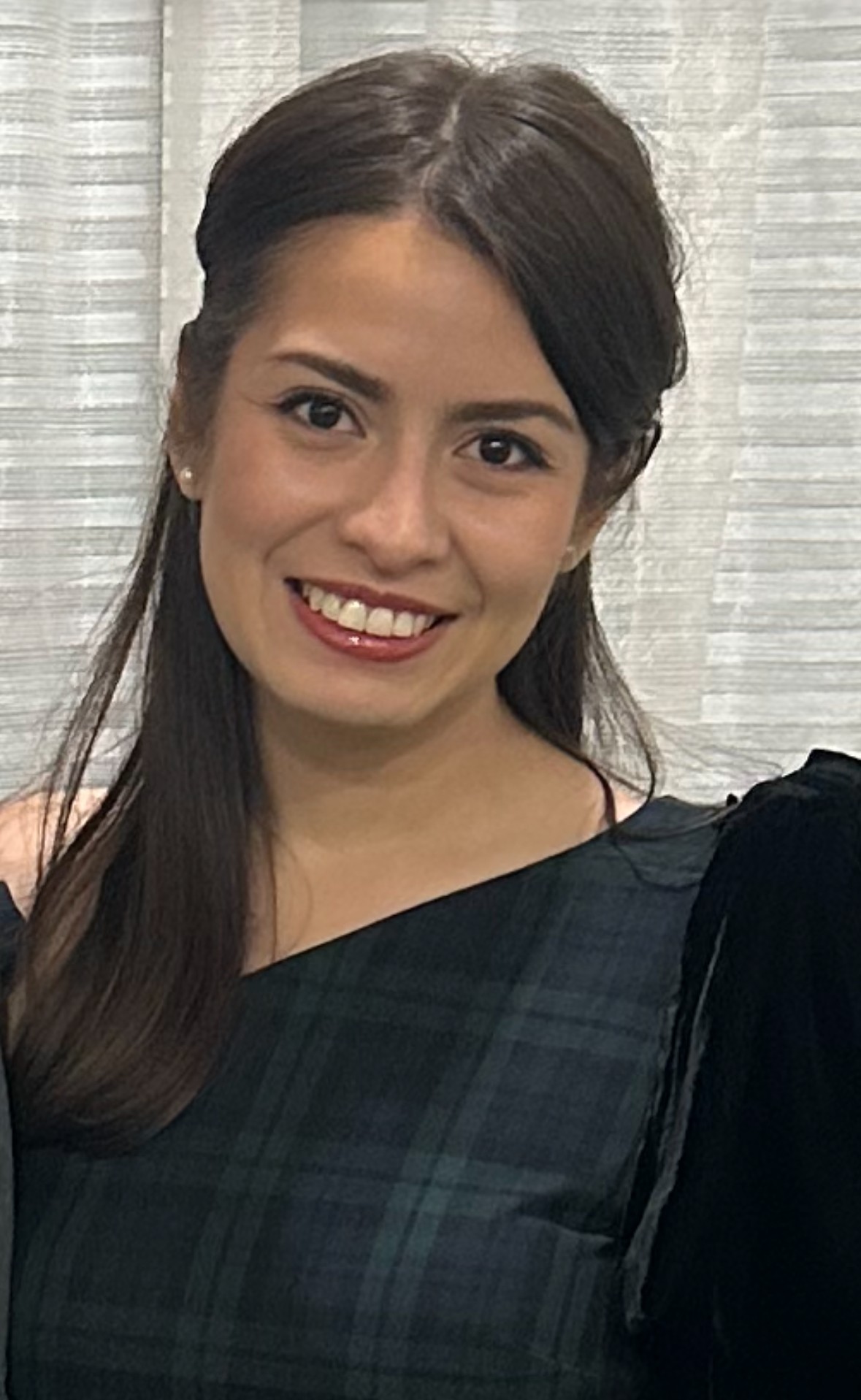
Today we’d like to introduce you to Nallely Miranda.
Alright, so thank you so much for sharing your story and insight with our readers. To kick things off, can you tell us a bit about how you got started?
We began by listening. In April 2021, we conducted focus groups in Pleasant Grove to ask families what they felt was the most urgent public health need they were facing. Again and again, parents shared that they felt helpless when it came to supporting their children’s mental health. They knew something was wrong but didn’t know where to go, how to help, or who to trust. When we paired their lived experiences with data, the inequity was undeniable: the 75217 zip code had the longest drive to routine mental health services in Dallas, despite having one of the highest rates of behavioral health admissions at Parkland Hospital.
Families were frustrated and ready for change. They didn’t just want counseling; they wanted culturally competent services in Spanish, tools to support their children at home, and guidance on how to access resources that felt out of reach. From that community-driven vision, Community Does It was born, founded by Christine Roman, former principal of Cristo Rey Dallas; Prisma Garcia, a business professional and Dallas ISD Board of Trustees member; and Raul Estrada, owner of Marcer Construction and Dallas mainstay restaurants Las Ranitas and Los Sapitos. Together, they shared a belief that sustainable solutions must be built with the community, not for it.
Our work began before we ever opened a center. After the focus groups, families asked first for education and practical tools, so we launched psychoeducational workshops focused on self-esteem, communication, and reminding the community of its strengths. We intentionally held these workshops in trusted, accessible spaces like churches, community centers, and the Buckner Bazaar. The space we eventually secured inside the Bazaar was a former billiards bar and grill, which we set out to transform into a welcoming mental health center with the community’s vision at the forefront.
While renovations were underway, our workshops and family education programming continued to grow, reaching parents eager to support their children and break stigma at home. During this time, we received transformative support from Dwell with Dignity. What began as an offer to furnish one room grew into a commitment to furnish the entire center, with additional support from Amazon and volunteer architects from Yucatán who donated their time. The space was intentionally designed to reflect what families asked for: a place that felt colorful, warm, inviting, and safe.
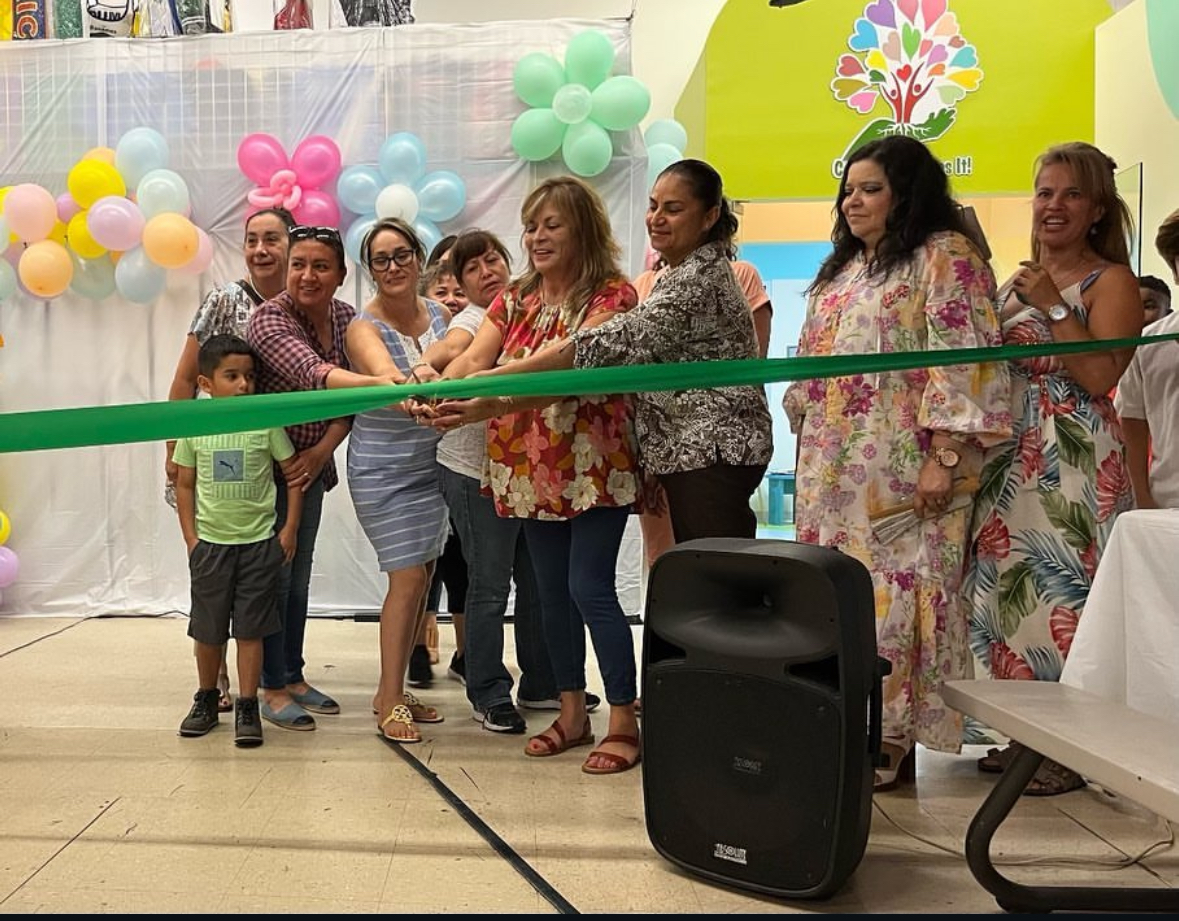
In August 2022, we opened the doors to our newly renovated center. Two months later, in October 2022, we officially launched counseling services, completing the vision families first shared with us in 2021. When families walked in, many said, “You truly listened to us.”
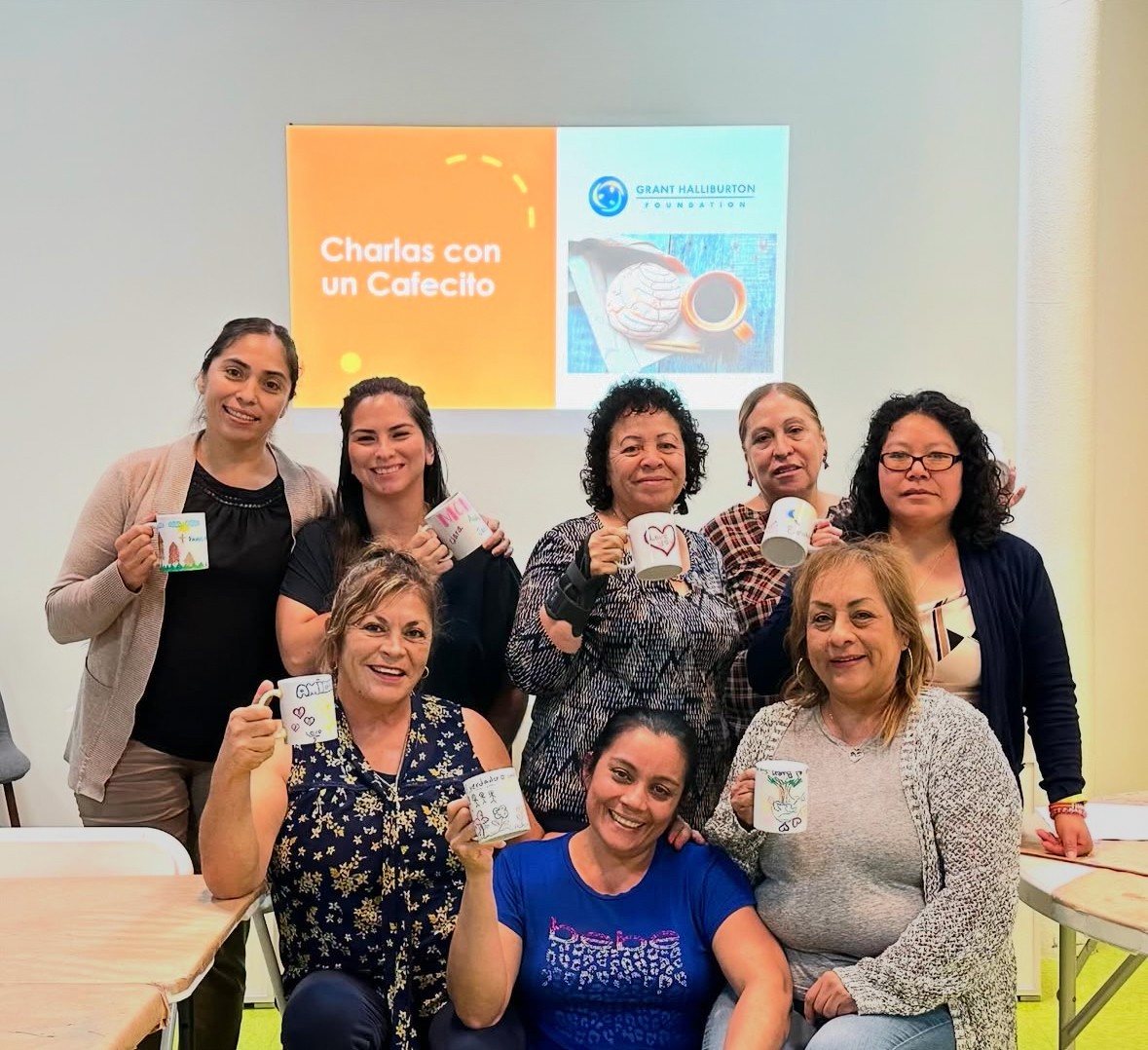
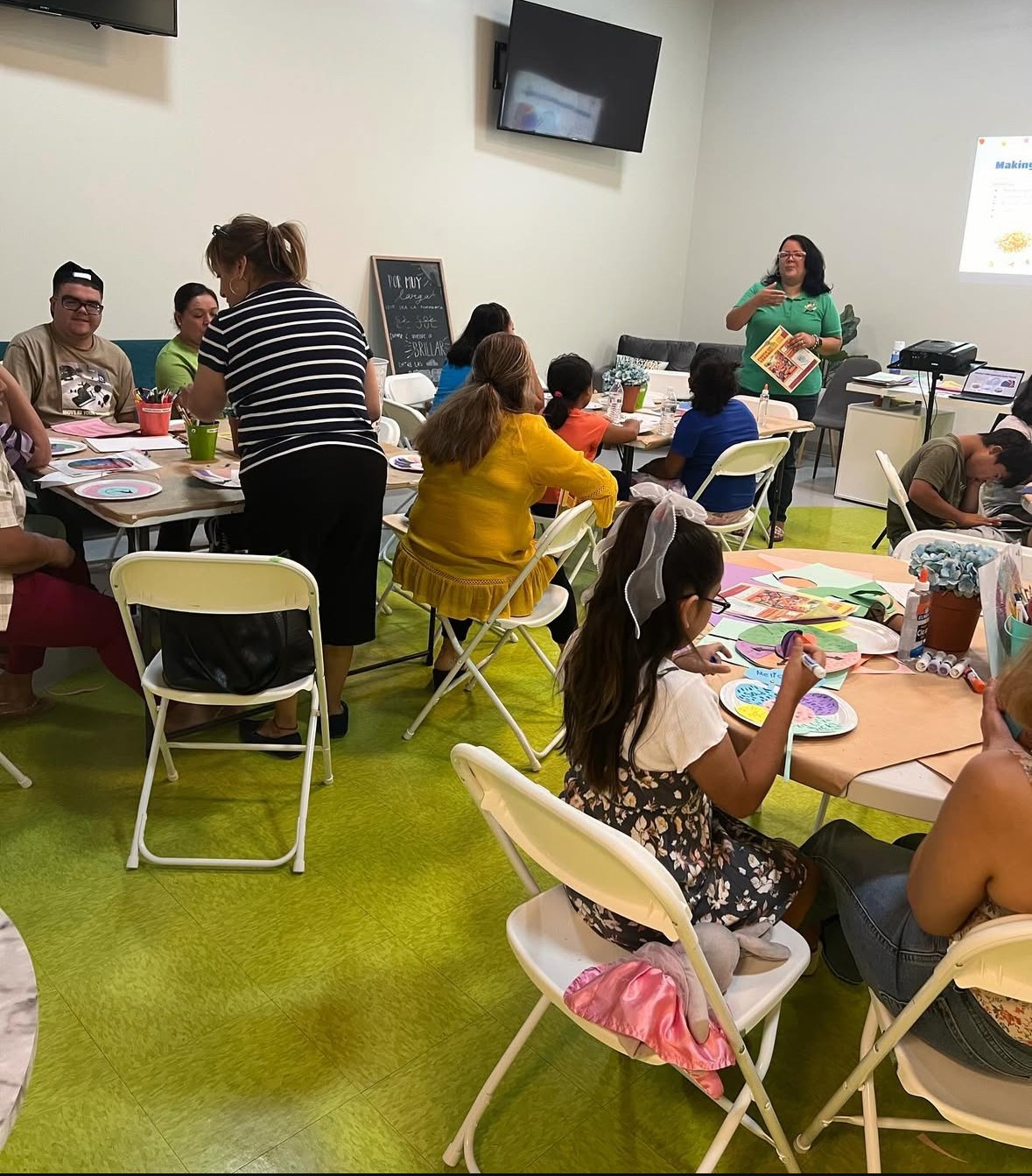
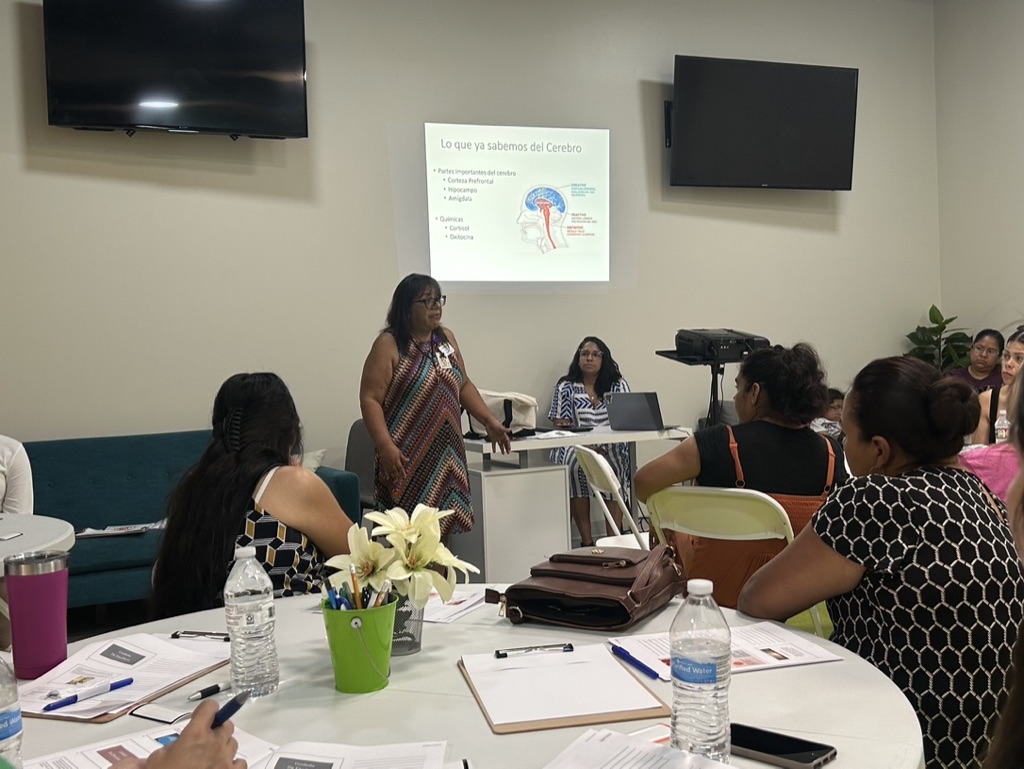
Today, our work is rooted in a whole-family, preventative, and intergenerational approach to mental health. We provide affordable psychotherapy for children, adolescents, and families regardless of insurance status, delivered by bilingual therapists who reflect the community and understand its cultural values. We also offer free family education and emotional support workshops focused on brain science, emotional regulation, stress, and practical, science-backed strategies parents can use daily, services that many families on our counseling waitlist describe as therapeutic on their own.
As our work grew, families and youth expressed the need for programming designed specifically for young people. After two years of operation, we launched youth-focused initiatives in partnership with Primos Dallas, offering opportunities to explore new hobbies, build leadership skills, access college and career resources, and engage in culturally affirming experiences such as college visits, financial literacy workshops, hiking, art classes, and museum tours. These services are available to all families, whether or not they are receiving counseling, because prevention requires addressing the full context of family life.
What makes Community Does It truly distinct is our whole-family, intergenerational approach. In a community where familismo is central, supporting parents, caregivers, and extended family is essential to supporting children. By educating families, breaking stigma, and equipping parents to advocate for their children at home, in schools, and in the community, we create environments where healing can take root.
We started with focus groups and folding chairs in trusted community spaces. Today, we are a vibrant, trusted center where families feel seen, heard, and empowered to take the reins of their mental health, together.
I’m sure it wasn’t obstacle-free, but would you say the journey has been fairly smooth so far?
One of our biggest struggles has been funding. As a young nonprofit, we weren’t eligible for many of the larger grants, so we had to work hard to secure early support and prove that what we were building was sustainable long term. We had to show funders that this wasn’t just a good idea, but something that could truly last.
Another challenge was staying true to our values around taking care of our staff. We made the intentional decision to pay our team well, even though that’s not always typical in the nonprofit world. The work our therapists and staff do is emotionally demanding, and we believe the community thrives when staff aren’t burned out. That choice added financial pressure, but it was never something we were willing to compromise on.
We also had to secure and build out the right space. Early on, many families were already asking for therapy and we had a waitlist before we ever opened counseling services. But we couldn’t move forward until we found a space that was accessible, private, and appropriate for therapy, and then remodel it to meet those needs. Balancing the urgency from families with the time and resources required to renovate the space was incredibly challenging.
Finding therapists was another hurdle. Many clinicians are already burned out by the time they consider nonprofit work, especially in community mental health. We had to find therapists who believed in our mission, trusted a new organization, and wanted to do this work differently.
Because we don’t take insurance, we rely heavily on private donations and philanthropic support to keep services affordable. That meant asking people to take a chance on a young organization with a big vision. Thankfully, many did, and it paid off. Each year we continue to serve more and more people, and our outcomes are beyond industry standards. Today, 86% of the people we serve report improved symptoms and overall wellness. That’s how we know the struggle was worth it and that this model truly works.
Appreciate you sharing that. What else should we know about what you do?
I’m Nallely Miranda, a Licensed Professional Counselor (LPC) and the Center Director for Community Does It. I grew up in Oak Cliff, Dallas, and I’ve spent my career in the nonprofit space serving at-risk youth and families, first with homeless youth, then with young people struggling with substance use, and now with families in the Pleasant Grove community. Those experiences shaped my approach and deepened my commitment to supporting children, teens, and families navigating complex challenges.
I still see clients regularly, which keeps me grounded and connected to the real needs of the families we serve. I’m passionate about helping people remember their strengths and guiding them in therapy. I bring that same approach to my team. None of this work happens without people, and supporting and empowering our staff is just as important as supporting clients. Together, we’ve built systems that are efficient, holistic, and creative. When capacity is stretched, we’ve run EMDR groups to address waitlists, created curricula to support families while they wait, and launched summer programs for youth, with many of these ideas come directly from our team. I’m proud that we’re willing to try new things and adapt when it helps us better serve our community.
Trauma-informed care is at the heart of my work. I have advanced EMDR training and am working toward certification & consultation to eventually train others, with a focus on somatic techniques and building bridges between generations, especially parents and men, who play a key role in family healing. Generational trauma and family patterns often contribute to mental health challenges, which is why our team is trained to address root causes. We’ve also built an internship program to prepare the next generation of therapists with these tools.
What really sets us apart is our focus on the body and nervous system regulation. Many people come to therapy thinking it’s just talking, and while talk therapy is important, it’s not the only way to heal. We start by creating real safety, beginning in the body, and meet people where they are. In a community that has gone through many hardships, this approach matters. We stay curious about resistance rather than labeling someone as unmotivated. By helping regulate the nervous system first, we create a foundation where trust, dialogue, and deeper therapeutic work can happen naturally.
Data is also central to how we work. We collect robust information, both numbers and qualitative experiences, because it helps us understand what’s working, where we’ve miscalculated, and how we can pivot to better meet the community’s needs. I approach program management much like therapy: you have to meet the community where it is. Sometimes that means adjusting, iterating, and trying new approaches, guided by both feedback and evidence. Even data that might not seem immediately necessary often reveals insights we wouldn’t have otherwise noticed.
I’m known for being solutions-oriented and data-driven, and I take pride that our outcomes are above industry standards. Families continue to refer others because of the positive experiences and real impact they’ve had with us. But what I’m most proud of is the work we’ve done together as a team. At Community Does It, we’re healing families, creating long-lasting change, and making sure the community has access to mental health services that are culturally responsive, innovative, and truly meaningful.
Do you any memories from childhood that you can share with us?
One of my favorite childhood memories is spending summers in Mexico with my family, both in Monterrey and San Luis Potosí. My absolute favorite part was hanging out with my cousins. My mom didn’t let my sister and me play video games at home, but during those summer months, it was a different story. We’d walk from my grandmother’s house, where we were staying, and make a pit stop at the local bodega for a backpack full of snacks. The owner affectionately called us “las gueras”, the blondes, because my sister and I both had a mix of light brown and reddish hair that sometimes looked blonde in the sun.
From there, we’d walk a couple of blocks to my aunt’s house, where we’d play Nintendo 64 from sunrise to sunset. All six of us would cram onto the couch, shouting at the TV during Smash Bros, blowing on the cartridges to make them work, or playing Super Mario, trying to collect every star by the end of the summer.
I also loved going in January for the annual feast of the Virgin of the Candle. Each town tried to outdo the other with nightly fireworks, and we’d stay up until 4 a.m. in the city plaza, playing carnival games, learning to dance norteñas from my cousins when the band played, and then piling into the back of the truck for the 30-minute uphill ride home to my dad’s little town. We’d sleep until noon and do it all over again, sometimes squeezing in a little hike to the mountain behind the house in between. Memories in Mexico are always full of laughter, games, and family connection.
Pricing:
- $40 individual session
- $20 group session
Contact Info:
- Website: https://communitydoesit.org/
- Instagram: https://www.instagram.com/communitydoesit/
- Facebook: https://www.facebook.com/communitydoesit/