






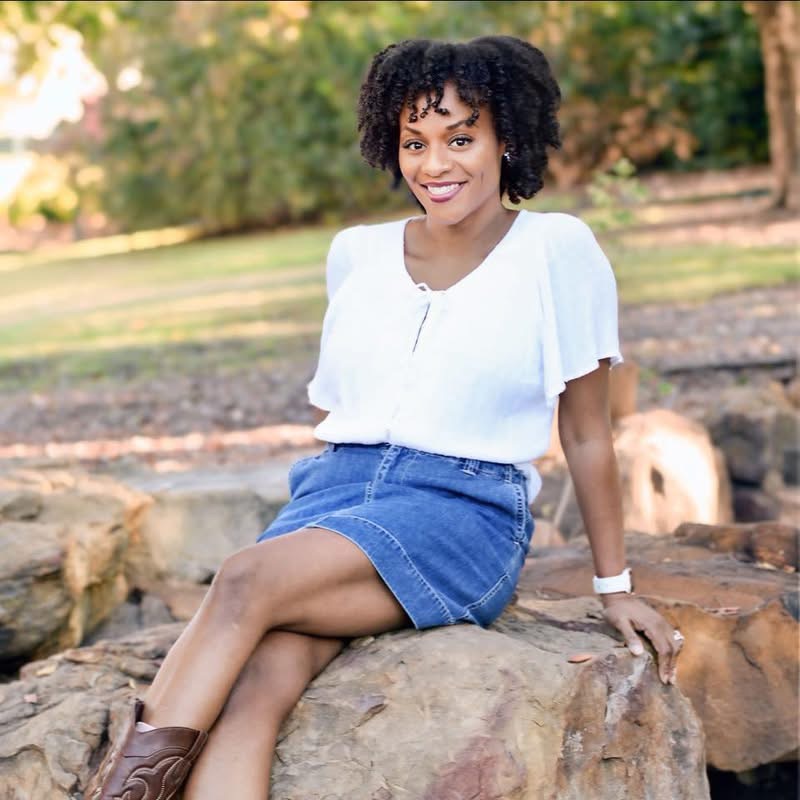
Today we’d like to introduce you to Steph Weaver.
Hi Steph , we’re thrilled to have a chance to learn your story today. So, before we get into specifics, maybe you can briefly walk us through how you got to where you are today?
Murder in the Black began with a shared passion for true crime and a desire to bring greater attention to stories that weren’t always receiving the coverage they deserved. My sister, MD, and I co-founded the podcast with the intention of creating a space where we could explore true crime through a different lens, particularly cases involving Black victims and perpetrators whose stories are often overlooked, misrepresented, or left out of mainstream conversations.
What started as two sisters having conversations about true crime gradually evolved into something much bigger. We wanted to do more than recount the details of a case. We wanted to examine the people involved, the circumstances surrounding their lives, and the social and historical factors that sometimes influence how crimes are investigated, reported, and remembered.
As the podcast grew, so did my understanding of what I wanted Murder in the Black to become. While my sister remains an important part of the show’s foundation as co-founder, I’ve taken on the role of primary host, continuing to develop our storytelling approach and expand the conversations we’re having with our audience.
Over time, we’ve introduced different series, explored historical cases alongside contemporary ones, and expanded our presence across multiple platforms. One of the most rewarding aspects of this journey has been building a community of listeners who are genuinely invested in these stories and aren’t afraid to ask difficult questions.
I’ve also learned a tremendous amount about myself throughout this process. Podcasting has challenged me creatively, strengthened my confidence as a storyteller, and taught me the importance of consistency, adaptability, and trusting my own voice.
Today, Murder in the Black is more than a podcast my sister and I started together. It’s a growing platform that allows me to combine my love of storytelling, research, history, and meaningful conversation. I’m proud of how far we’ve come, but I’m equally excited about where we’re headed. I still approach each episode with the same curiosity that inspired us to begin, and I think that’s what keeps the work fulfilling.
Can you talk to us a bit about the challenges and lessons you’ve learned along the way. Looking back would you say it’s been easy or smooth in retrospect?
It definitely hasn’t been a smooth road, and I think that’s one of the things I’ve come to appreciate most about this journey. When my sister and I started Murder in the Black, we had a vision for what we wanted to create, but I don’t think either of us fully understood everything that would come with building a podcast from the ground up.
One of my biggest struggles has been finding my rhythm and being okay with the fact that growth doesn’t always happen as quickly as I’d like. There have been moments when I felt like I was putting so much time, energy, and creativity into something and wondering if it was actually reaching people. It’s hard not to question yourself sometimes, especially when you’re passionate about what you’re creating.
Another struggle has been figuring out where Murder in the Black fits in a world where there are so many true crime podcasts. I’ve had moments where I’ve compared our show to others or wondered if I needed to change the way I tell stories to attract a bigger audience. But the more I’ve grown, the more I’ve realized that the way I tell stories is actually what makes MIB special. I love going beyond the crime itself. I love the history, the details, the human side of the story, and sometimes even the uncomfortable conversations that come with it. That’s just who I am, and I’ve had to learn to trust that.
I think the hardest part has been learning to give myself grace while still pushing myself to be better. I’m naturally someone who has a vision for how I want things to look and feel, and when reality doesn’t match that vision right away, it can be frustrating.
But I can genuinely say that every struggle has shaped MIB for the better. The slow seasons taught me patience. The uncertainty taught me to trust myself. And trying to find our place among other podcasts helped me realize that we don’t have to sound like anyone else to be successful.
I’m still learning, still growing, and still figuring some things out. But I’m proud that through all of it, I’ve stayed connected to why my sister and I started this in the first place. More than anything, I want Murder in the Black to feel authentic. I want people to hear an episode and know that there’s thought, care, and a piece of me in every story I tell. And if this journey has taught me anything, it’s that sometimes the things that challenge you the most are the very things that help you find your voice.
Thanks for sharing that. So, maybe next you can tell us a bit more about your work?
I get to do something I genuinely love: research, tell stories, and explore the circumstances that make each case unique. We cover cases involving Black victims and perpetrators, but I like to think we bring a little more to the conversation than just the crime itself.
I’ve always loved history and understanding how things connect. When I’m researching a case, I’m interested in more than just what happened. I want to know who the people were, what was happening in their lives, and what circumstances may have played a role. And I’ll admit, I can go down a pretty good rabbit hole when something catches my attention!
I think that’s part of what makes MIB different. I’m not necessarily trying to tell stories the way everyone else does. I have my own way of putting things together, and I’ve learned to embrace that. I want listeners to feel like we’re sitting together having a conversation about a case rather than just listening to someone read a report. I like leaving room for questions, different perspectives, and those moments when you’re thinking, “Wait a minute, something about this doesn’t make sense.”
One of my favorite parts of creating MIB has been developing different series that allow me to explore true crime in ways that feel interesting and fresh. Our current series include Music & Murder, which looks at cases connected to the music industry, and Murder & Sports, which explores crime involving athletes and the sports world. I love being able to connect true crime with other areas of culture because there’s often so much more to these stories than what makes the headlines.
We also have If This Happened Now, a series where I revisit older cases and explore how things might have unfolded with today’s technology, investigative tools, and social media. It’s a fun way for me to combine my love of history with a little creative thinking while still being thoughtful about the cases themselves.
What I’m most proud of is the fact that I’ve continued to grow with MIB. Building something from the ground up isn’t easy, and there have definitely been moments when I’ve questioned myself or wondered if I was doing enough. But I’ve learned to trust my creative voice and give myself room to evolve. I’m proud that I’ve stayed committed to creating something that feels like me, even when the easier thing might have been to follow what everyone else was doing.
I’m also grateful for the community we’ve built. Knowing that people choose to spend their time listening to stories I’ve spent hours researching, writing, and producing means a lot. I never take that for granted.
At the end of the day, I think what sets MIB apart is the way I approach storytelling. I bring my personality, my perspective, and my own style into every episode. I don’t want to just tell people what happened; I want to give them something to think about afterward.
More than anything, I want Murder in the Black to be a podcast people return to because they genuinely enjoy how the stories are told. If they walk away having learned something new, considered a different perspective, or found themselves thinking about a case long after the episode ends, then I feel like I’ve done my job.
We’d love to hear about any fond memories you have from when you were growing up?
One of my favorite childhood memories would definitely be our trips to Flint, Michigan, where both of my parents are from. My mom, dad, brother, sister, and I would travel there to visit relatives on both sides, including my grandparents.
I loved the road trips just as much as the destination. We’d listen to books together, laugh, and have conversations that made the time fly by. Once we arrived, there were always stories to hear, people to catch up with, and memories to make.
Looking back, I appreciate how simple and special those moments were. I didn’t realize it then, but those experiences helped shape my love for conversation and storytelling.
Flint will always hold a special place in my heart. When I think about those trips, I remember the laughter, the time spent with my grandparents, and the joy of simply being together. I wouldn’t trade those memories for anything.
Contact Info:
- Website: https://www.murderintheblackpodcast.com
- Instagram: https://www.instagram.com/murderintheblack/
- Facebook: https://www.facebook.com/p/Murder-In-The-Black-Podcast-100088434791438/
- Youtube: https://www.youtube.com/@murderintheblack