





Today we’d like to introduce you to Susan Clark Abuk Makuac.
Hi Susan Clark, can you start by introducing yourself? We’d love to learn more about how you got to where you are today?
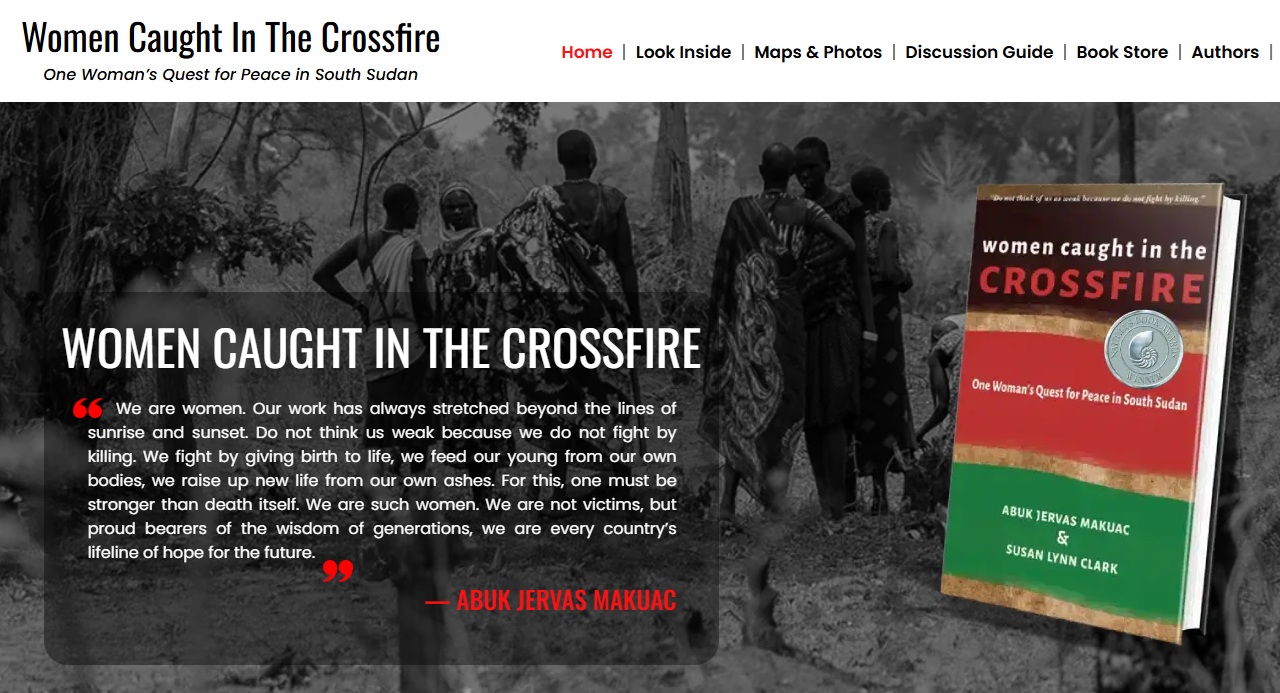
There is a robust South Sudanese refugee population in the Dallas area. Our book tells the story of a young woman and her young children who survive exile, build community in a flooded refugee camp, and grow to become peace activists here and abroad. This is from the afterward of Women Caught in the Crossfire: One woman’s quest for peace in South Sudan. It explains how the book came about:
“HOW ABUK AND I MET AND WORKED TOGETHER
One night in 1999, While I was helping at a class for Catholic
Charities on Life Skills for the US, the leader split us into groups and
placed me with Abuk and her son David, then 16 years old. As we
went over the basic skills needed in retail positions, I asked her if she
could read and write. At that point David stepped in and said I needed
to know who I was talking to, who his mom was and all she had done
in her life. The leader overheard and repeated to me what he had said
and asked Abuk to confirm this, because the leader knew her. Abuk
nodded. “I keep telling her she needs to write a book,” her son said.
But she scolded him, “I do not write well in English.” At that point I
said, “That doesn’t matter. You talk. I’ll type.” And so it began.
We decided to meet at Abuk’s apartment so I could tape her story.
The first afternoon I was welcomed by her and her three teenage children,
who greeted me with much kindness. Though it was light
outside, her third-floor apartment patio was closed off by heavy floral
curtains, making the apartment dark. Only later did I understand the
great meaning and value of shade in Abuk’s life. Large, well-used
furniture overfilled the living room, which also served as a dining
area, where a heavy wooden table and chair set stood. After a few
hours of taping the first night, we had only scratched the surface.
We began to meet weekly as her story unfolded with so many
twists and turns and so much beauty. Sometimes I brought fruit.
Sometimes there was a meal prepared. As Abuk described to me the
foods of Sudan, I ate them with her at the large table and learned how
it was to share a meal in the Sudanese way. Sometimes old friends
from the refugee camp would drop by and I watched how they talked
and laughed together about the life they had in the camp. They asked
me to write their books too. Abuk invited me to her church, where we
danced while they sang and clapped and laughed more. We went to
serious meetings together where the women lamented the economic
and emotional state of their people back home and of the refugees
here. For a time, Abuk and some of those women met regularly in my
home to discuss leadership and democracy. Once I went with her to
Kansas City to meet with 400 women to discuss the same. A few
times some of the young men who had also lived in the camp visited
Abuk while we were taping. They recounted their stories as well.
Some of those stories are included in the book as scenes that mirror
our gatherings on those nights. A few times I also met with some of
the men who had fought in the war, who had been leaders in the fight.
They were cordial, but in those meetings, I felt what it was to have
the air sucked out of me, to touch the death they carried with them.
Over the course of our twenty-year interaction Abuk’s children
graduated from high school, attended college, married, had children.
Abuk herself periodically returned to Sudan to care for her mother
and to meet with women there. During those times we would lose
touch and our work would be suspended. Eventually, as technology
advanced to the point where it is today, we were better able to find
each other.
Over the last few years, I’ve witnessed her live-streaming
over Facebook and interacting with expatriates from all over the
world, trying to persuade others of the value of dialogue and of peace.
One night as I watched her live stream in Arabic internationally over
the small phone in her hand, passionately speaking and debating for
over an hour and patiently listening as a man disagreed with her, her
son said to me, “You don’t know my mom like I do. In Arabic she is
eloquent and powerful. In English…” he shrugged his shoulders.
In 2019 we met to read the finished chapters together over tea and
rice in her youngest daughter’s apartment in Dallas. Abuk herself no
longer has a fixed home. Those evenings sometimes I read out loud.
Sometimes her son did, checking every scene and word for truthfulness
and tone.
And now finally, in 2022, we have finished the last
chapter over the internet while Abuk is in Juba with her oldest daughter.
She returns to the US in August. Now we hope the book will be
published and be able to do its work in the world.
—SUSAN LYNN CLARK
Dallas, Texas, 2022
Alright, so let’s dig a little deeper into the story – has it been an easy path overall and if not, what were the challenges you’ve had to overcome?
Working together while living in two separate continents has been a bit of a challenge. Since the book’s publication, there have been celebrations in the South Sundanese community here and abroad spreading the word for peace. It caught the attention of the African Studies Department at University of Michigan, where Abuk Makuac’s story was presented at the 2024 Sudan symposium. One challenge to overcome is the general impression that refugees are broken, desperate people who need our pity and our money. This book lets us into the incredible daily life in a flooded, overcrowded refugee camp, where community is built from nothing – it is a veritable handbook in the birth of community and effective grassroots activism written in the form of a memoir.
As you know, we’re big fans of you and your work. For our readers who might not be as familiar what can you tell them about what you do?
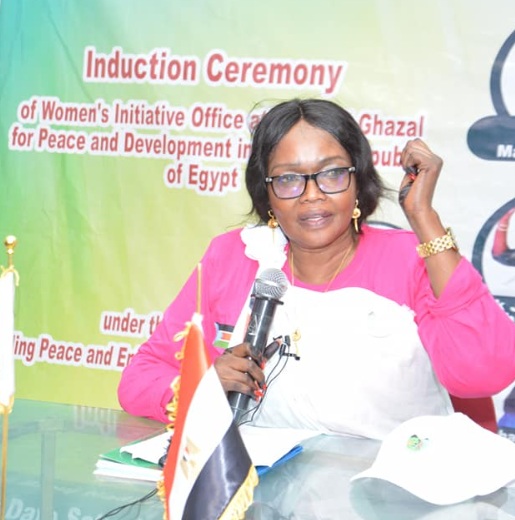
Abuk Jervas Makuac has occupied positions of leadership in a number of peace and women’s advocacy groups here and in South Sudan. Her time in the refugee camp and in exile formed her into the strong, quiet leader she is. A peacemaker by birth, all her life she has brought people together, naturally seeing all as worthy. She has often advocated for women-owned small farms and businesses, knowing that economic sufficiency and stability is a key to political peace.
ABOUT THE AUTHORS:
ABUK JERVAS MAKUAC was forced to flee her homeland of South Sudan soon after civil war ignited in 1983. Women Caught in the Crossfire traces her perilous flight with her husband and children, surviving in an overcrowded refugee camp in Ethiopia, living in hiding in Kenya, and eventually resettling in the United States.
SUSAN LYNN CLARK is a licensed psychotherapist currently working in an outreach clinic for underserved populations in Fort Worth, Texas. Dr. Clark has worked with immigrants and refugees in the US since 1984.
Let’s talk about our city – what do you love? What do you not love?
Dallas is a progressive city, accustomed to and comfortable with diversity. It has welcomed people from all over the globe and is a thriving international center. Plus it has the best food.
Pricing:
- https://womencaughtinthecrossfire.com/
- Available in audio, e-book, paperback, hardback
Contact Info:
- Website: https://womencaughtinthecrossfire.com/
- Facebook: https://www.facebook.com/Peaceinsouthsudan01