




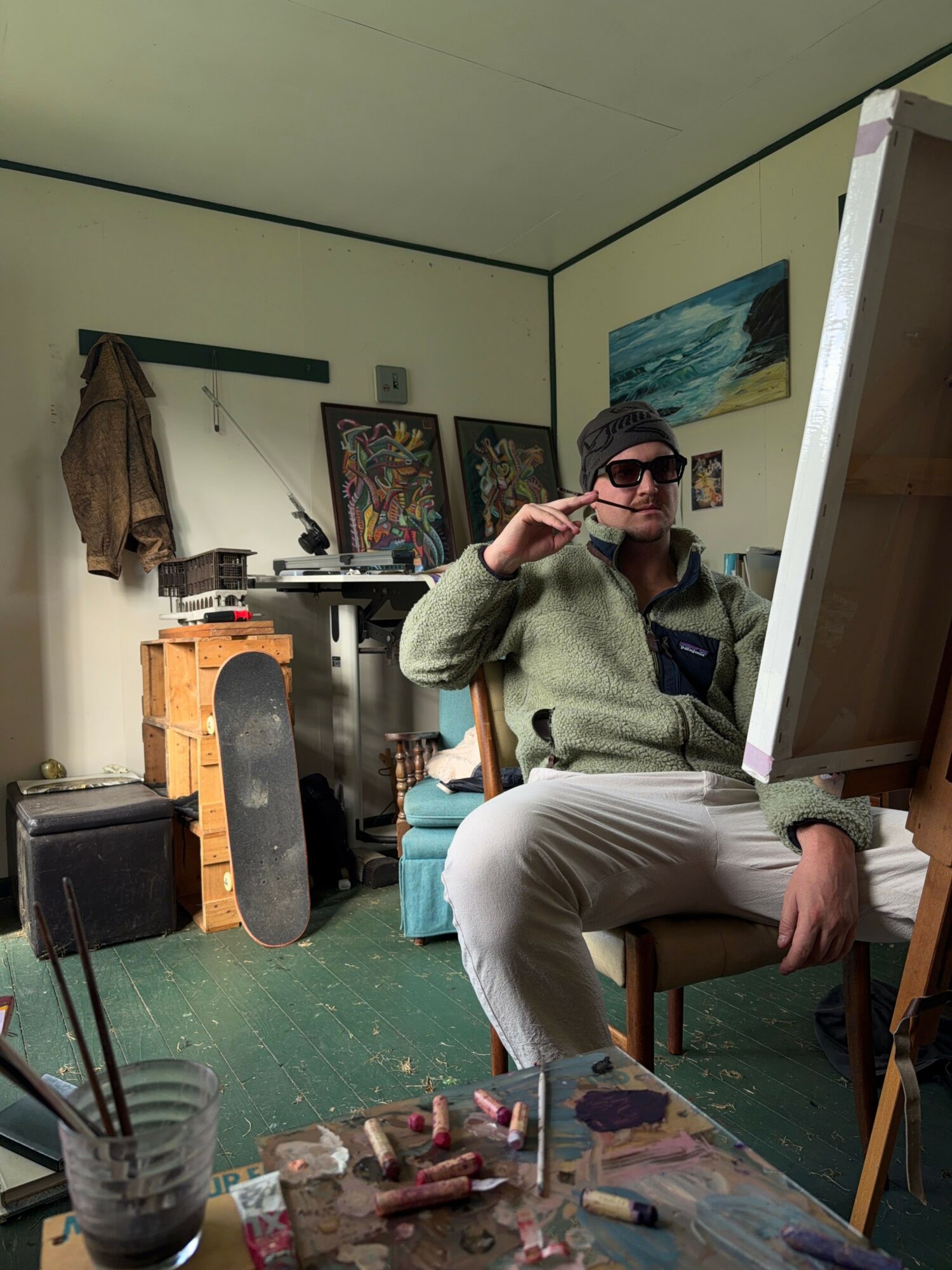
Today we’d like to introduce you to Karl Hoffmann.
Hi Karl, we’d love for you to start by introducing yourself.
My journey into art has been a bit unconventional. I originally studied architecture and went on to complete a Master’s in Architecture, so for a long time my creative practice was centred around design, structure and the built environment. Art was always something I did alongside that, but over time it became much more than a side project.
I’ve always been fascinated by the relationship between order and chaos and the way we try to impose structure on things that are inherently messy, unpredictable and emotional. That idea eventually became the foundation of my artistic practice, which I call “Rational Chaoticism”.
My work explores the relationship between the rational and irrational, often taking familiar imagery, symbols or ideas and distorting them into something more unsettling or ambiguous. I’m interested in that point where something can feel both beautiful and uncomfortable at the same time.
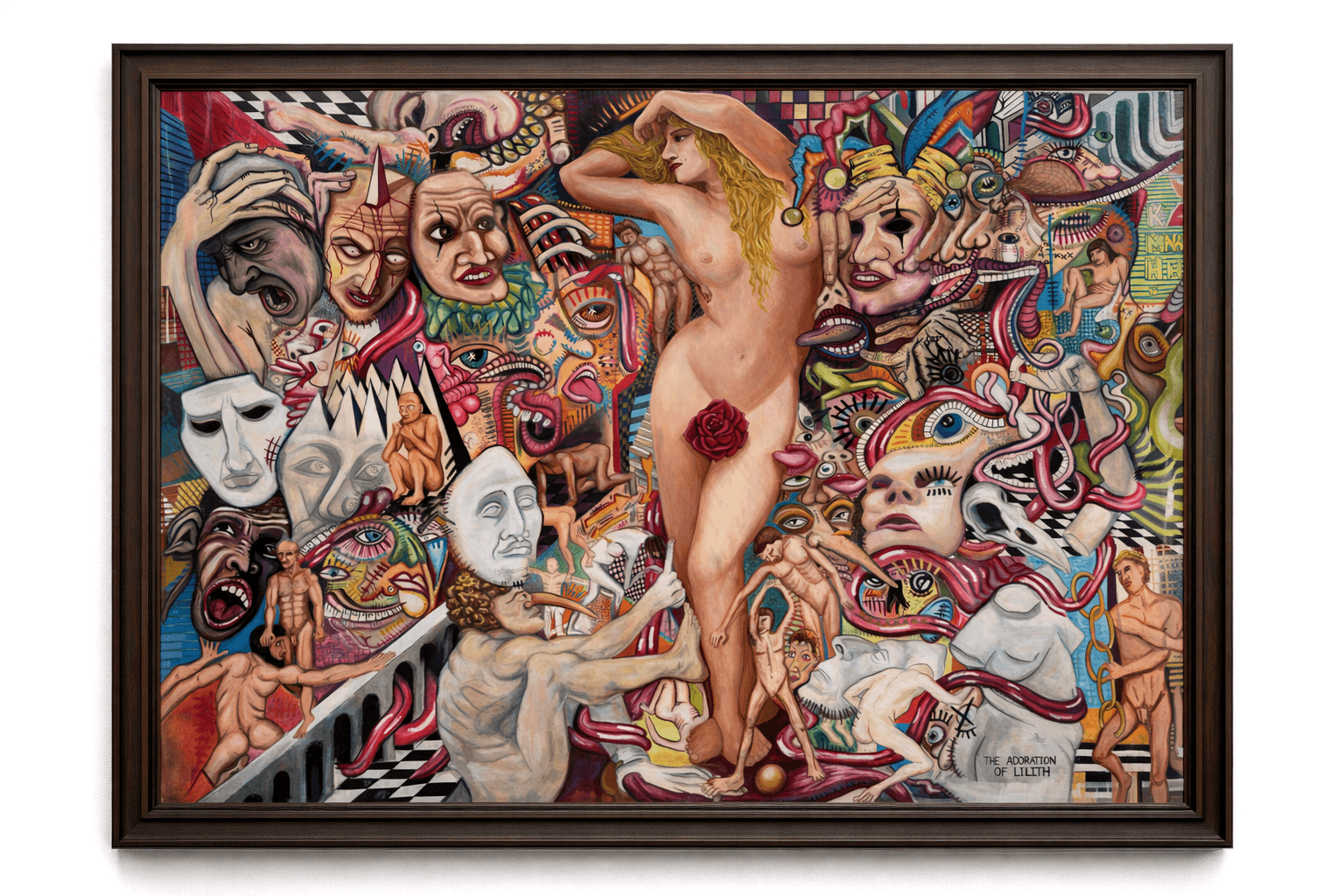
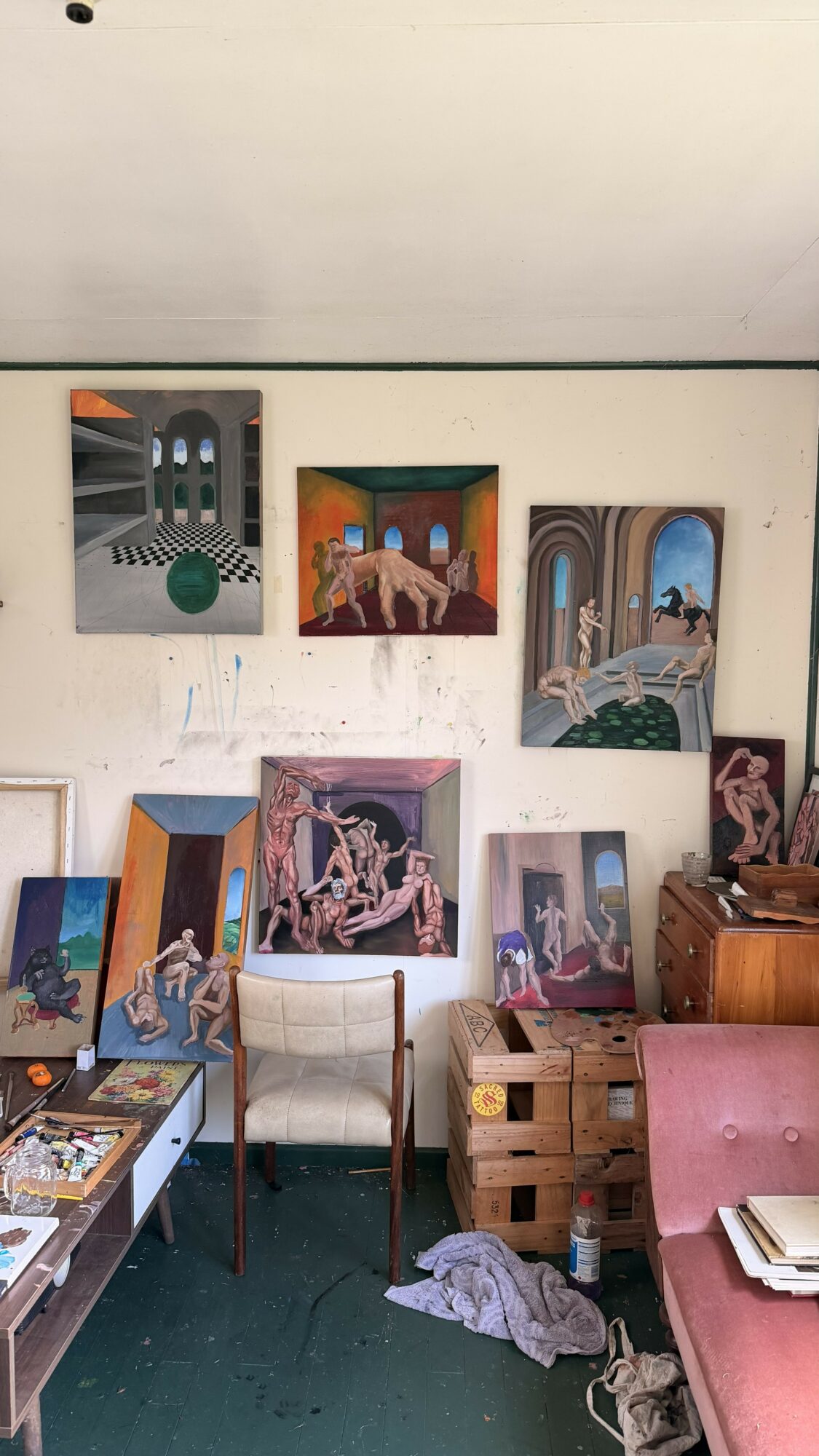
Over the last few years, I’ve gradually moved from creating art privately to exhibiting and selling my work, developing series such as “Domestication” and “The Adoration of Lilith”, I am currently working on a series titles “Confined Spaces” which is a mix of contemporary and historical influences and tensions between different characters on the canvas. Having work collected and seeing people connect with something that started as a very personal creative outlet has been incredibly rewarding.
I think my background in architecture still has a huge influence on how I work. I’m very interested in composition, geometry, structure and detail, but I also like deliberately disrupting those things. Ultimately, I’m still figuring out where the practice will take me, which is probably one of the things I enjoy most about it.
We all face challenges, but looking back would you describe it as a relatively smooth road?
No, definitely not. I think one of the hardest parts has been allowing myself to take the art seriously. For a long time, I saw it as something I did alongside my “real” career in architecture and design, and there was always a feeling that I needed to justify spending time on it.
There’s also the challenge of finding your own voice. When you’re surrounded by so much incredible art, it’s very easy to compare yourself to other artists or question whether what you’re making is good enough, original enough, or even worth pursuing. I’ve definitely had periods where I’ve doubted the direction I was going in.
Financially, it hasn’t always been straightforward either. Creating art is a huge investment of time and materials, and there’s no guarantee that anything you create will sell. Learning how to balance the creative side with the business side of being an artist has been a completely different skill set and not something I’ve always been good at.
I think the biggest struggle, though, has ultimately been learning to trust my own instincts. A lot of my work comes from ideas that aren’t necessarily designed to be immediately understood or comfortable, so there’s always a temptation to make something more accessible or conventional. I’ve had to learn that the things that initially make me question a work are often the things that make it interesting.
So no, it hasn’t been a smooth road, but I think those difficulties have actually been essential to developing the work. They’ve forced me to become more confident in what I’m trying to say and, more importantly, why I’m making it.
Can you tell our readers more about what you do and what you think sets you apart from others?
My work sits somewhere between fine art, design and psychological exploration. I work primarily through painting and mixed media, creating pieces that explore the relationship between order and chaos, beauty and discomfort, realism, abstract and surrealism, and the things we consciously construct versus the things that exist underneath the surface.
A lot of my work falls under the philosophy of “Rational Chaoticism”. At its core, it’s about the contradiction between our desire to rationalise and control the world around us, while simultaneously being driven by instinct, emotion and irrationality. I’m interested in taking recognisable imagery or ideas and pushing them into something that feels slightly unfamiliar or unsettling.
I think my architectural background has had a big influence on this. I naturally think about composition, structure, proportion and spatial relationships, but I also enjoy deliberately breaking those rules. There’s a constant push and pull between precision and messiness in my work.
I’m particularly proud of developing that visual language into bodies of work rather than simply creating individual paintings. “Domestication”, for example, allowed me to explore a much broader idea across a series, while “The Adoration of Lilith” was a particularly significant piece for me, both creatively and personally. I completed the initial base layer over the course of 4 months while travelling Europe and then, once purchased by an art collector in Scotland, refined and edited for a further 3 months early last year. This piece travelled through 6 countries with me during its making and found its home in Glasgow. There is a lot of hidden meaning in it through the use of allegory and symbolism, much of it taken from art pieces I have seen through my years of travel and collaged together to create a new piece altogether. Seeing that work connect with someone enough that they wanted to make it part of their own collection was an incredible moment.
What I think sets my work apart is that I’m not particularly interested in making art that simply looks nice. I want there to be something underneath it, whether its an idea, contradiction or question that stays with you after you’ve looked away. At the same time, I still care deeply about the visual and material qualities of the work. Ideally, the piece draws you in because it’s visually compelling, and then gives you a reason to keep looking.
How do you think about happiness?
I think a lot of what makes me happy comes from simply feeling like I’m moving forward in life. I love having goals and seeing them slowly become reality, whether that’s through my art, my career, travelling somewhere new, or simply making progress on something I’ve been working towards for a long time.
My family and friends are incredibly important to me, and I especially love spending time with my nieces and nephew. There’s something really grounding about being around people you love and being able to switch off from everything else for a while.
I’m also happiest when I’m exploring. I love travelling, seeing new parts of the world, being in nature, and having those moments where you suddenly realise how big and interesting the world is. Waking up to a beautiful sunny day always puts me in a good mood.
And, of course, a huge part of my happiness is my partner, Todor. We’ve been through a lot of different chapters of life together, and having someone to share all of these experiences, adventures and ambitions with makes everything feel that much more meaningful.
Ultimately, I think I’m happiest when I feel connected. To the people I love, to the world around me, and to the things I’m passionate about.
Contact Info:
- Website: https://www.kmhoffmann.com/
- Instagram: https://www.instagram.com/karlmarlowhoffmann/?hl=en