

Today we’d like to introduce you to Phoebe Omonira.
Hi Phoebe, it’s an honor to have you on the platform. Thanks for taking the time to share your story with us – to start maybe you can share some of your backstory with our readers?
It started from love—or rather, the search for it.
Growing up Nigerian American, there were so many things that divided my parents and me, both culturally and emotionally. There was a language barrier even Duolingo couldn’t fix—one not based in syntax, but in understanding. That gap became the birthplace of my life’s work. As a child with the desire to bridge the divide, I found myself clinging to a simple framework: who, what, why, and how. When my parents made decisions I didn’t agree with, instead of reacting, I’d ask: “What made you feel this way? Why does this matter to you? How did you come to this conclusion?” I wasn’t trying to make their understanding mine—I was trying to hold space for their logic so I could walk with them in harmony. It was deeper than love. It was empathy. And it became the lens through which I saw the world.
That framework quietly shaped how I moved through the world until a pivotal moment brought it into sharp focus. It was my senior year and I was a member of the Trinity High School Junior World Affairs Council, I had the privilege of hearing from neuroscientist and brain health expert Dr. Julie Frattoni. She shared the intricacies of empathy and compassion from a science-based perspective, and honestly, it rocked my world. I was obsessed. A few cold emails and Zoom calls later, Dr. Julie became a mentor and lifelong friend who deepened my understanding of empathy—not just as a feeling, but as a skill that could be taught, practiced, and scaled. With her guidance and resources from the University of Texas at Dallas Center for Brainhealth, I dove into my own research on how children understand empathy on a neurological level and what best practices existed for parents and educators to reinforce this practice. I was shocked and honored when that commitment to Empathy education allowed me to co-host a Solution Session at the 2021 Nobel Prize Summit, our session focused on “Empathy as a Global Responsibility” focusing on foreign and domestic policy. But at the same time, I was watching my country being torn apart by a lack of it. It was 2021. Nuance and media literacy where being replaced by clip-farming and catchy headlines. People weren’t listening to understand—they were listening to respond, to attack, to win. And I kept thinking about those early conversations with my parents, about how asking better questions had built bridges where walls seemed inevitable.
So I did what I’ve always done: I reached out to those making a difference and found where I fit to help.
Volunteering had been woven into my education from homeschool through becoming an International Baccalaureate Diploma recipient, but this, I knew needed to be different. While important, it wasn’t enough for me to volunteer at the polls and phone bank for policies I believed in anymore. I knew deep in my spirit that utilizing empathy was a key component to reducing inequality but lacked the know how and resources to make change on an institutional level. I was accepted into the Civics Unplugged (CU) Fellowship, an 8-week virtual program for high school students focused on civic leadership and social impact. It provided mentorship and tools to address challenges like AI, climate, and policy through project-based solutions—where for the first time, my age didn’t matter, my thoughts did. The Trek, a CU think tank of young changemakers, gave me a community that taught me my perspective alone was an act of resistance and inherently held value. That confidence propelled me forward. I joined GenZ Girl Gang, a virtual community of over 18,000 women, femmes, and nonbinary folks committed to leveraging social media for social change, eventually becoming Director of Nonprofit Partnerships and Community. My team and I partnered with companies like Microsoft and Samsung to co-create social impact projects such as our tech access initiative. We also launched a Queer Joy Fund, partnered with Instagram on a clothing line investing proceeds back into our community, and so much more.
But through it all, I never forgot my first love: empathy. I used what I learned with my parents as a framework for changemaking within organizations. When Youth to the People needed commentary on Ketanji Brown Jackson’s swearing into the Supreme Court, I had the privilege of writing it—using empathy as the foundation for understanding the historical weight and cultural significance of that moment. I am full of ideas on how to change the world, but I realize I needed to start with my own community. This is why I founded The Soft Skills Co., an organization devoted to working with parents and teachers to bring empathy education to kids through workshops and short stories. Because if empathy could bridge the gap between my parents and me across cultures and generations, imagine what it could do in classrooms, in communities, in a world that desperately needs it.
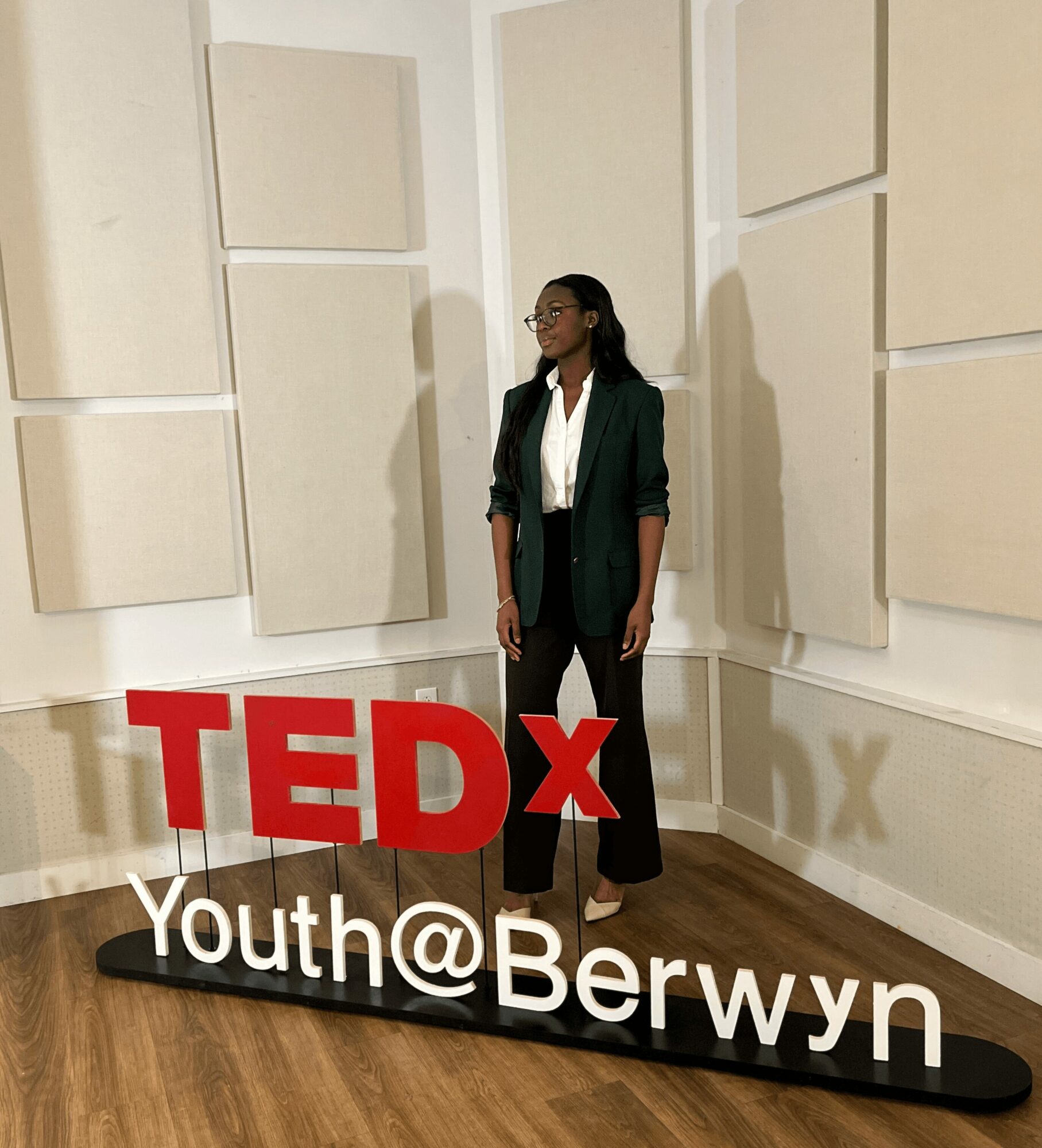
A lifelong goal of mine was to give a TEDx talk before I turned 20, and with the support of my community, I was able to speak at a TEDxYouth in Berwyn, Pennsylvania about the power of purpose. I started again with the framework my parents gave me indirectly—that spark that created a lifelong love of learning about people in order to better serve them. This March I will be attending the 70th Session of the Commission on the Status of Women (CSW70) as an empathy advocate in Consultative Status with the United Nations Economic and Social Council. Today, empathy isn’t just something I believe in—it’s what I advocate for, teach, and build systems around. It’s the curriculum I design for children learning to ask better questions. It’s the framework I bring to organizations navigating conflict. It’s the foundation of every workshop, every partnership, every story I write. Empathy is my methodology for changemaking and my answer to division. Finding light in darkness grounds me and transcends everything. In this world, we need to carry the torch for others—empathy doesn’t just change minds, it lights the way forward, together.
Would you say it’s been a smooth road, and if not what are some of the biggest challenges you’ve faced along the way?
Yes, there were external challenges—securing funding, managing time, and maintaining relationships. But the real work was internal: I found myself diminishing parts of who I was to achieve belonging, going on side quests not aligned with my purpose. I took chances, said yes to experiences, and stepped into the world without letting fear control me. Starting The Soft Skills Co. without funding meant scraping together resources, constantly pitching empathy education to skeptical stakeholders who didn’t see “soft skills” as essential. Balancing leadership roles on campus and remotely while building my own organization meant late nights, burnout, and the persistent feeling that I was spreading myself too thin. The irony wasn’t lost on me—I was so focused on teaching empathy to the world that I neglected to extend it to myself.
But the deepest struggle emerged when I entered a relationship that fundamentally challenged my worldview. I questioned whether empathy—the very foundation of my life’s work—was truly effective, or if a more protectionist approach would better serve my goals. I walked away reconsidering everything I believed about vulnerability, trust, and the risks of remaining open. I discovered that boundaries created a safety net for vulnerability. For someone who had built an entire framework around understanding others, realizing that true love means accepting someone as they are—using that understanding only to support and love, whether from a distance or up close—allows for one to truly lean into community. Because the amount of grace you extend to others can only amount to that which you’ve extended to yourself.
That disconnect forced a reckoning. I had centered my identity on empathy and service while simultaneously struggling with pride—believing my own efforts, rather than faith in God and reliance on community, were sufficient to create meaningful change. I had positioned myself as the solver, the teacher, the one who held space for everyone else. When that self-reliance proved inadequate, when I found myself emotionally depleted and spiritually hollow, I had to acknowledge the limitations of a framework built on individual capacity. I learned humility—that I’m not the source of my own strength, that community is the heart and soul of this work, and that faith isn’t weakness but the recognition that the best things are beyond my control. There were moments I questioned everything. These ideas were born during summer 2021—the country felt more divided than ever. People seemed more interested in being right than being kind. I watched empathy get weaponized, performative compassion replace genuine care, and wondered if I was contributing to the problem rather than the solution.
I also struggled with visibility. I kept making new goals and hitting them so young that I didn’t have an answer for what’s next. All I wanted was to have fun and have more friends. So I did. But no matter how much fun I have, there’s a part of me that seeks a deeper manifestation of my calling—to dream things I haven’t seen, which is where I turn to God to reveal them to me. The 2021 Nobel Prize Summit was an honor, but at the height of COVID, it was easy for self-doubt to reduce it to a Zoom call that got me out of my IB Math Studies test. These struggles didn’t derail me—they raised me, creating a more well-rounded person who sees value in everyone and every experience. I learned that empathy without boundaries is unsustainable, that holding space for others requires maintaining your own foundation, and that understanding different worldviews doesn’t mean abandoning your own. My upbringing taught me that autonomy is sacred. My relationship challenges taught me that understanding doesn’t mean accepting harm. My professional setbacks taught me that change requires community, not individual heroism. My spiritual reckoning taught me that humility and faith are empathy’s foundation.
I carry these lessons into everything I create now—into *Ellie the Empathetic Elephant*, into the workshops I facilitate, into the frameworks I teach. The struggles made me someone who doesn’t just talk about empathy as an ideal but lives it as a practice—imperfect, ongoing, and always evolving.
Appreciate you sharing that. What else should we know about what you do?
I specialize in empathy education and community building—teaching empathy as a skill rather than just a feeling. As Director of Nonprofit Partnerships and Community for GenZ Girl Gang, I helped build programming for over 18,000 women, femmes, and nonbinary folks, developing initiatives like the Queer Joy Fund and establishing partnerships with Microsoft, Samsung, and Instagram to expand access for marginalized communities. I founded The Soft Skills Co., bringing empathy education to children in Dallas through workshops and storytelling. I was a panelist at the 2021 Nobel Prize Summit on “Empathy: A Global Responsibility” at 17, and gave a TEDxYouth talk on the Power of Purpose and Empathy-Driven Leadership at 19. I’m also a member of the Dallas United Nations Association and serve with the Walter Bruce Foundation. Currently, I’m working on Ellie the Empathetic Elephant, a children’s book that translates complex emotional intelligence concepts into relatable stories, while facilitating empathy camps at local schools and libraries for children ages 7-12.
What I’m most proud of is my TEDxYouth talk. Standing on that stage at 19 and articulating the framework that had guided my entire journey felt like coming full circle—the culmination of everything I’d learned from early conversations with my Nigerian American parents, research with Dr. Julie Frattoni from the Center for BrainHealth at UT Dallas, and the communities I’d served. What sets me apart is that my approach to empathy is deeply personal and rigorously practical, born from lived experience rather than theory. That experience, combined with research on how children process emotions through a neurological framework, gave me a unique perspective: empathy is a muscle that can be trained. I’ve also developed a framework that teaches people, especially young people, that understanding others and building healthy boundaries aren’t mutually exclusive—they’re complementary. My commitment to starting local distinguishes my work—I came back to Dallas because I believe real change happens in your own community first. I integrate faith and community into the empathy framework, teaching it as a practice grounded in humility, sustained by community, and guided by our interconnectedness. I’m building a body of work that says empathy is essential, it can be taught, and it requires both compassion for others and care for self—modeling how to hold space for difference while honoring your values, build coalitions across divides while maintaining integrity, and lead with kindness while cultivating healthy boundaries.
Any big plans?
Right now, I’m more than happy trying new restaurants with friends, playing with my dog, and writing the day away on my Substack. In the immediate future, I’m gearing up for the 70th Session of the Commission on the Status of Women as a UN delegate—it will be my first time attending the conference and I’m very excited. All glory to God. A side quest or two keeps things interesting, so I’m stepping into my event coordinator bag this galantine for Eryka Lenise Marketing’s conference, “My Business is My Boyfriend”—love a Black woman from infinityyy. I’m honored she trusts me with her vision, and I’m excited to see the impact this will have on women owned small businesses. With Spring Break around the corner, I’ll be working with Dallas libraries to bring empathy education to parents and their kindhearted kids, which I’m really looking forward to. Last but not least, finally publishing Ellie the Empathetic Elephant this year!! A story I love and I hope families will as well.
Contact Info:
- Website: https://www.instagram.com/thesoftskillsco/
- Instagram: https://www.instagram.com/phoebeomonira/
- LinkedIn: https://www.linkedin.com/in/phoebeomonira/
- Youtube: https://www.youtube.com/watch?v=GZkquozfrCw
- Other: https://whenlalatouchedthestars.substack.com/
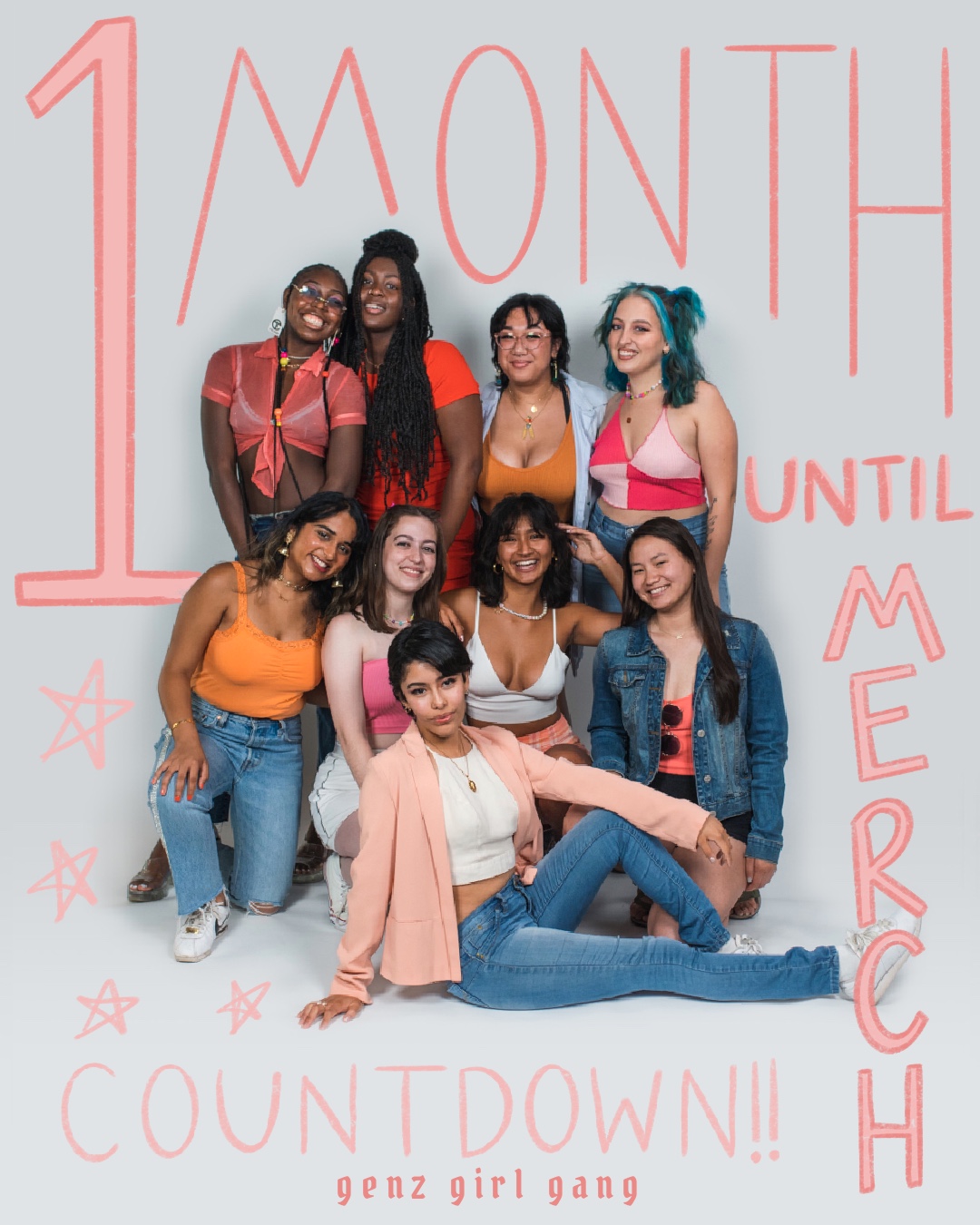
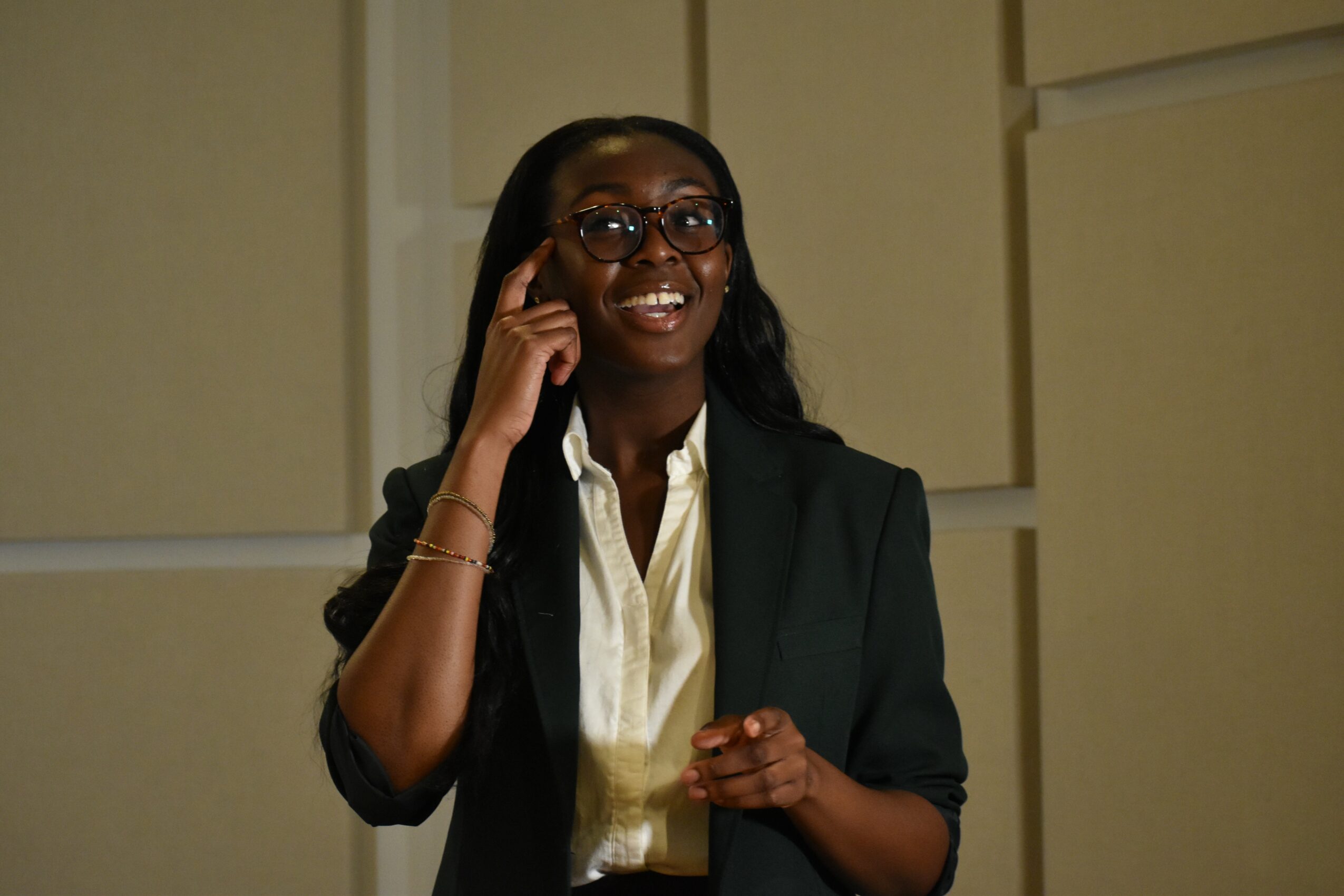
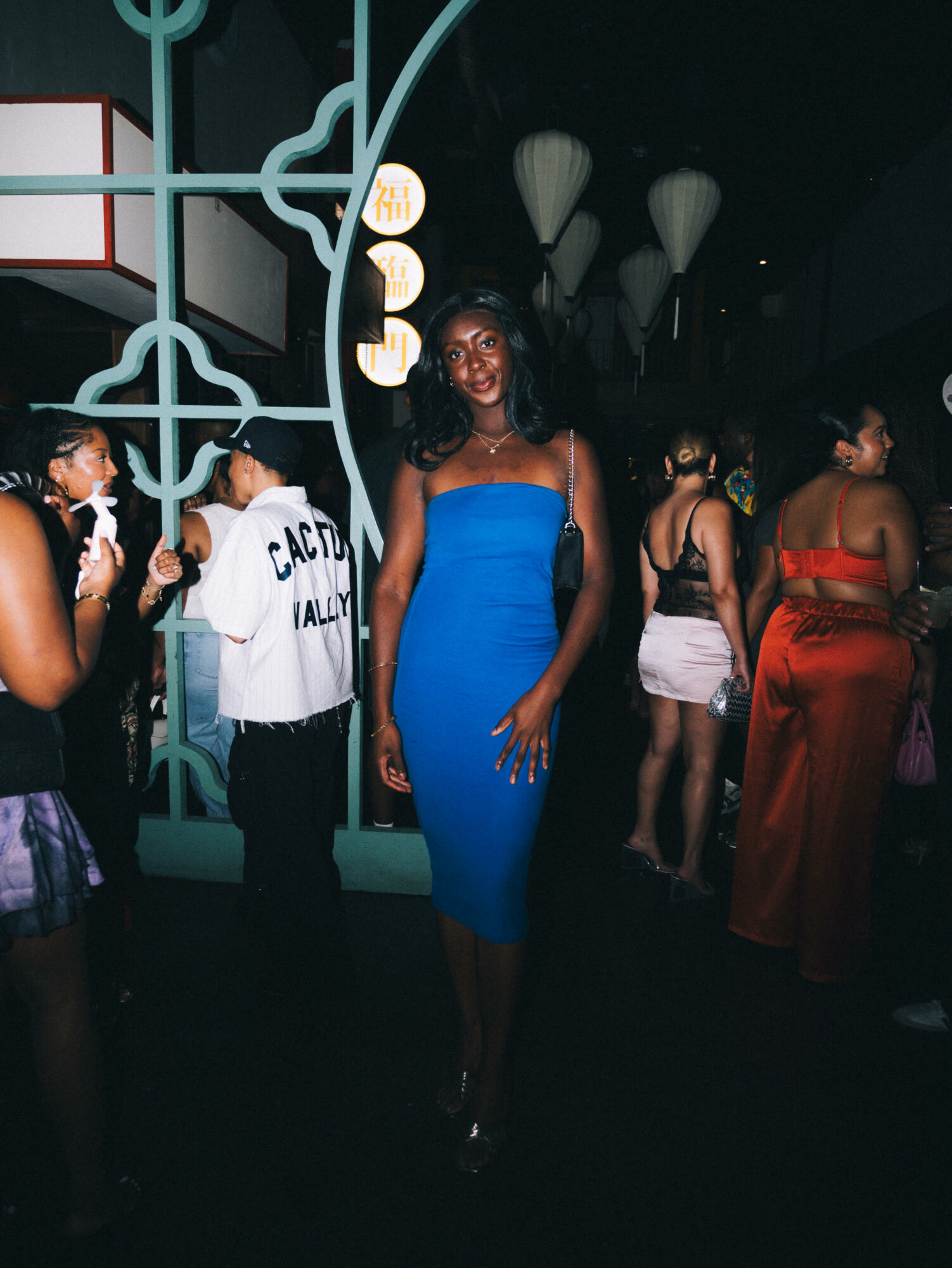
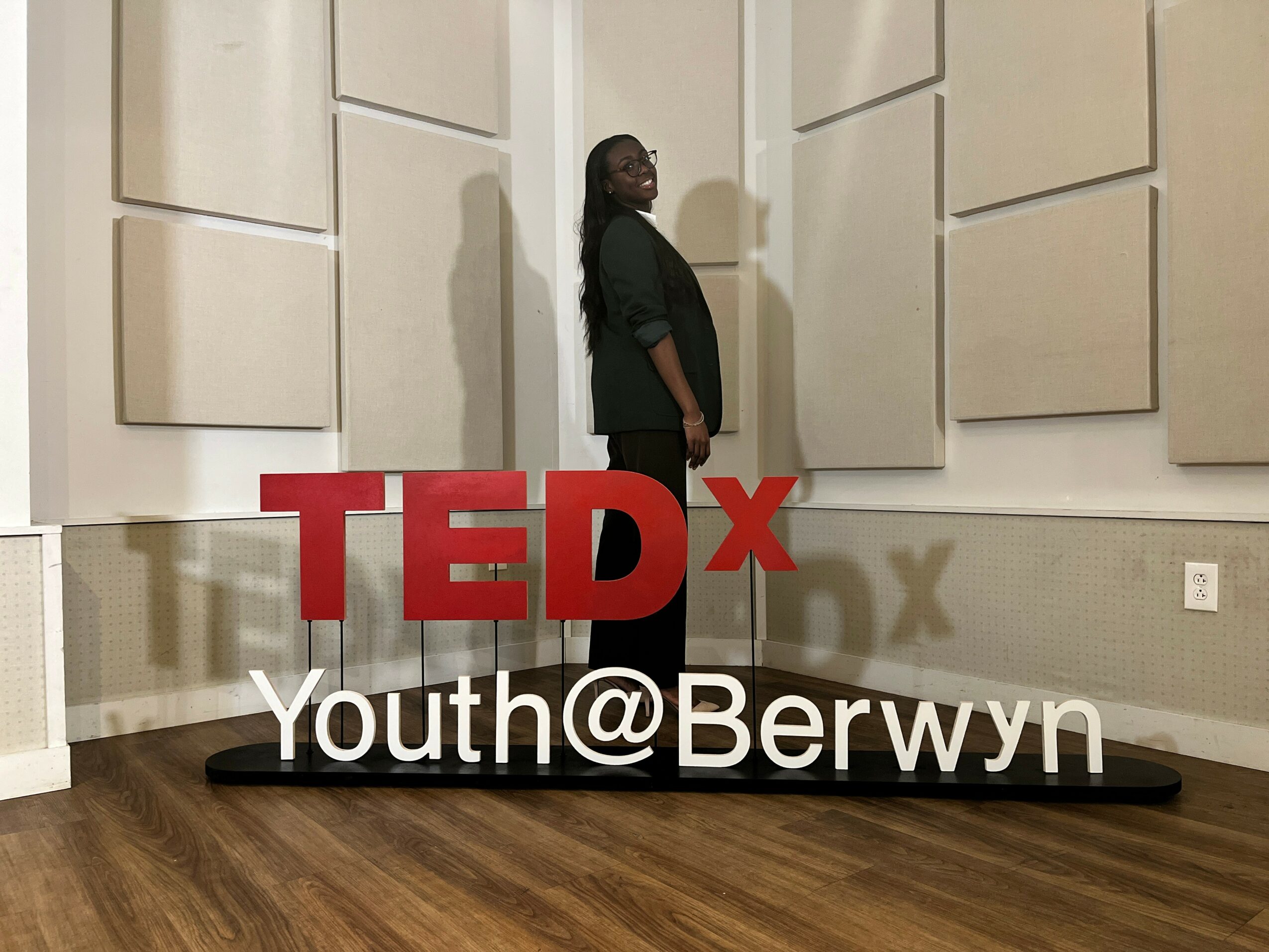
Image Credits
Blue Dress Pic – @emor3mor
Popular
-
Behind the Lens, On the Rise: Julian Bell’s Journey From Local Sets to Network Television
-

Jerry “J‑Man” Joyner Is Creating Space for Honest Conversations That Help People Keep Moving Forward
-
Jordan Smelley Is Reframing Mental Health Care Through Lived Experience and Advocacy
-

The Most Inspiring Stories in Dallas