







Today we’d like to introduce you to Adriana (Adry) Sanders.
Hi Adriana (Adry) , thanks for sharing your story with us. To start, maybe you can tell our readers some of your backstory.
My path into this work was shaped by both lived experience and deep curiosity about how people survive—and eventually heal—within complex systems.
I’m a Licensed Professional Counselor, clinical supervisor, and founder of SanaMente Wellness, a Texas-based virtual practice grounded in culturally responsive, trauma-informed, and mind-body care. I primarily serve adult children of immigrants, first-generation professionals, and high-achieving individuals who have spent much of their lives being “the strong one”—often at the expense of their own emotional needs.
I am a first-generation Mexican American and the eldest daughter of a single parent who deeply valued education and carved a path for me to access opportunities she did not have. Through her self-employed journey, I had my earliest exposure to entrepreneurship—not as a buzzword, but as survival, creativity, and resilience in action. From selling Mexican candy to classmates in grade school to help fund field trips, to later building my own business, entrepreneurship has always been woven into how I understand possibility and self-determination.
Like many eldest daughters and first-generation children, I grew up navigating layered expectations, cultural loyalty, and the pressure to succeed—not just for myself, but as a reflection of my family’s sacrifices. Over time, I learned how to honor my mother’s sacrifices without burdening myself with her choices, and how to define success on my own terms. While she may not have always understood the path I took to get here, she has consistently supported my version of success, and I remain deeply grateful for the foundation she provided that allowed me to find my way.
These experiences shaped not only who I am, but how I practice. Early on, I noticed how often emotional pain—especially within immigrant and high-achieving families—was minimized or intellectualized, while the body quietly carried the cost. That realization became central to my clinical approach and business vision: healing must include the nervous system, not just insight.
I began my career providing therapy within more traditional models, but over time I saw gaps—particularly for clients experiencing burnout, intergenerational trauma, and relational wounds that didn’t fit neatly into diagnostic boxes. This led me to pursue advanced training in trauma-informed care, DBT, attachment-focused therapy, parts work, polyvagal-informed, and sound-based practices. It also pushed me to think beyond one-to-one therapy.
Today, my work has expanded to include clinical supervision and consultation for emerging clinicians, especially BIPOC providers, who want ethical, sustainable, and values-aligned careers. I also created Respiro Sanctuary Circles, a therapy-adjacent sound healing and nervous-system restoration offering designed for people who hold a lot—professionally and personally—and need spaces to exhale without having to perform or explain.
What connects all of my work is a simple but powerful belief: healing doesn’t require perfection, productivity, or permission. It requires safety, attunement, and the courage to choose yourself—sometimes for the first time.
I didn’t get here by following a linear path. I got here by listening—to my clients, my body, and the quiet knowing that our systems need more humane, culturally attuned ways of supporting mental and emotional well-being. And that’s the work I remain committed to building.
Can you talk to us a bit about the challenges and lessons you’ve learned along the way. Looking back would you say it’s been easy or smooth in retrospect?
No, it hasn’t been a smooth road, and I don’t think meaningful work ever is.
One of the biggest challenges has been unlearning the belief that I had to earn rest, certainty, or success through overworking and self-sacrifice. Like many first-generation professionals and helpers, I was taught, explicitly and implicitly, that resilience meant pushing through, not slowing down. That mindset led to periods of burnout early in my career and forced me to confront the cost of being “the strong one” without adequate support.
Professionally, I also had to navigate systems that weren’t built with culturally complex experiences in mind. Traditional clinical models often left little room for intergenerational trauma, legacy burdens, or the nervous system impact of chronic stress and role strain. Learning how to practice ethically within those systems, while also building something more aligned required discernment, additional training, and the willingness to step off well-worn paths.
As a business owner, another challenge has been learning to trust my value. Pricing services sustainably, setting boundaries around availability, and resisting the urge to over-accommodate took time. I had to shift from a scarcity mindset—common in helping professions—to one rooted in sustainability and integrity, understanding that accessibility and longevity are not opposites.
Finally, visibility itself has been a growth edge. Sharing my voice publicly, owning my expertise, and allowing my work to be seen—especially as a Latina founder—meant confronting fear of criticism and the pressure to represent more than just myself.
Each of these struggles clarified my values. They shaped how I practice, how I lead, and how I create spaces that prioritize safety, agency, and humanity. The road hasn’t been smooth—but it’s been intentional, and that has made all the difference.
Great, so let’s talk business. Can you tell our readers more about what you do and what you think sets you apart from others?
SanaMente Wellness is a virtual, Texas-based mental health practice and wellness collective rooted in culturally responsive, trauma-informed, and nervous-system–centered care. At its core, the brand exists to support people who have spent much of their lives holding things together for others—and are ready to build a life that feels more sustainable, embodied, and aligned.
Clinically, I specialize in working with adult children of immigrants, first-generation professionals, high-achieving adults, and individuals raised in emotionally complex or emotionally immature family systems. Much of my work focuses on relational trauma, burnout, grief, identity strain, and the invisible pressure of being “the strong one.” My approach integrates attachment-focused therapy, DBT, parts work, and polyvagal-informed practices to help clients understand not just why they feel the way they do—but how their nervous system learned to survive in the first place.
What sets SanaMente Wellness apart is the intentional integration of mind, body, and culture. Healing here isn’t rushed or reduced to productivity. We slow down enough to create safety, build self-trust, and reconnect clients with their internal cues—often for the first time. Therapy is collaborative, values-aligned, and deeply human.
Beyond therapy, I also provide clinical supervision and professional consultation for emerging and licensed clinicians—particularly BIPOC providers—who want ethical, sustainable careers that don’t require burnout as a rite of passage. This work is about strengthening clinical judgment, confidence, and integrity while challenging systems that normalize overwork and under-support.
Under the SanaMente Healing Collective, I created Respiro Sanctuary Circles, a therapy-adjacent offering focused on nervous system restoration through sound-based practices. In this space, I work as a certified sound practitioner, not in the role of therapist. These experiences intentionally incorporate layered sounds—such as crystal bowls, chimes, drums, and grounding frequencies—to support the vagus nerve in returning to states of safety, regulation, and rest.
Respiro Sanctuary Circles are designed for individuals who hold significant emotional, professional, and generational weight—often caregivers, clinicians, first-generation professionals, and high-achieving adults—who need spaces where rest is not earned through productivity or self-disclosure. The work is rooted in polyvagal-informed principles and focuses on creating safety through rhythm, vibration, and containment, allowing the body to release without requiring words, processing, or performance.
What makes this offering distinct is its ethical clarity and intentionality. Respiro does not replace therapy, nor does it blur clinical boundaries. Instead, it provides a complementary, accessible pathway for nervous system support and collective healing—especially for those who struggle to fully rest in traditional wellness or therapeutic environments.
Brand-wise, what I’m most proud of is that SanaMente Wellness has remained values-led as it’s grown. Every offering—therapy, supervision, sound healing, education—reflects the same belief: healing doesn’t require perfection or permission. It requires safety, attunement, and the courage to choose yourself.
What I want readers to know is this: SanaMente Wellness is not about fixing people. It’s about helping them come home to themselves—with compassion, cultural awareness, and nervous-system care at the center of the work.
Are there any apps, books, podcasts, blogs or other resources you think our readers should check out?
Apps I Use to Support Regulation & Daily Well-Being
Stardust — I use this as a gentle way to stay attuned to my energy, rest cycles, and capacity. It supports reflection and intentional pacing, which is essential in both life and clinical work.
Podcasts That Inspire & Inform My Work
Trauma Rewired — Deep, nervous-system-centered conversations about trauma, resilience, and embodied healing.
Latinx Therapy — Culturally grounded insights that honor identity, community, and therapeutic nuance.
Therapy for Your Money — Practical, trauma-aware perspectives on finances, worth, and emotional patterns around money.
Books I Return To (Especially Related to My Niche & Lens)
These are foundations for understanding trauma, nervous system regulation, identity, and cultural complexity:
The Body Keeps the Score by Bessel van der Kolk — Classic on trauma and somatic memory.
Polyvagal Theory in Therapy (Deb Dana) — Practical application of the nervous system in relational healing.
Attached by Amir Levine & Rachel Heller — Attachment patterns made accessible for clients and clinicians alike.
The Deepest Well by Nadine Burke Harris — Connects childhood adversity with long-term health.
My Grandmother’s Keeper by Resmaa Menakem — Embodied racialized trauma and somatic healing.
No Bad Parts by Richard C. Schwartz, PhD — A foundational text for understanding Internal Family Systems (IFS) and cultivating self-leadership, compassion, and healing without pathologizing survival responses.
The Pain We Carry by Natalie Gutiérrez, LMFT— Exploration of generational and cultural trauma, examining how unprocessed pain is carried across families and communities, and how healing can begin.
Adult Children of Emotionally Immature Parents by Lindsay C. Gibson, PsyD — One of the most impactful books for my niche, offering clarity, language, and validation for individuals navigating emotional neglect, role reversal, boundary repair, and long-term relational patterns.
Pricing:
- Individual Therapy: $140-$160 or accept some insurance plans
- Respiro Sanctuary Experiences: $25-$50
Contact Info:
- Website: https://www.sanamentewellness.com
- Instagram: https://www.instagram.com/sanamentewellness
- LinkedIn: https://www.linkedin.com/in/adriana-sanders-lpc-s-40b92552
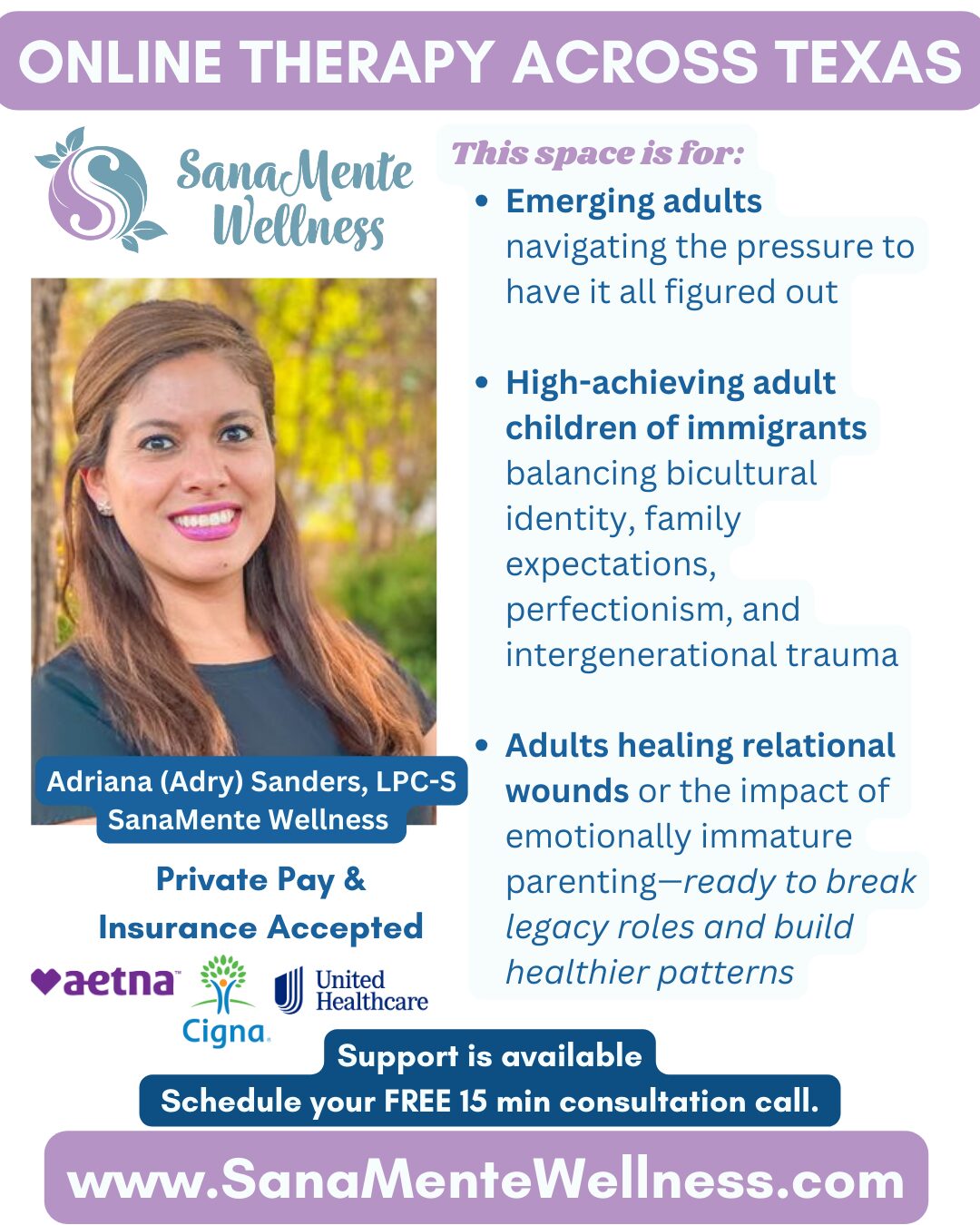

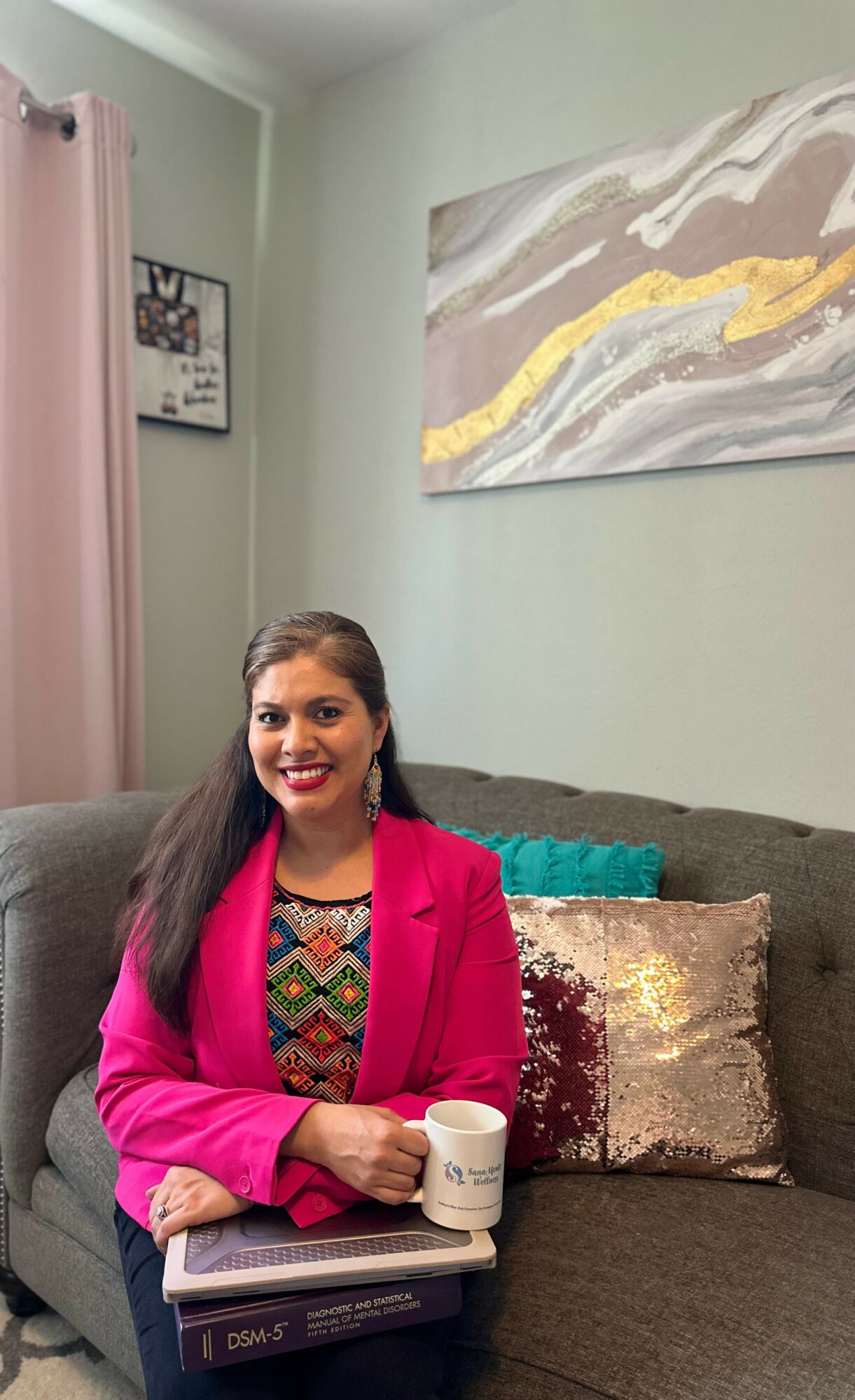
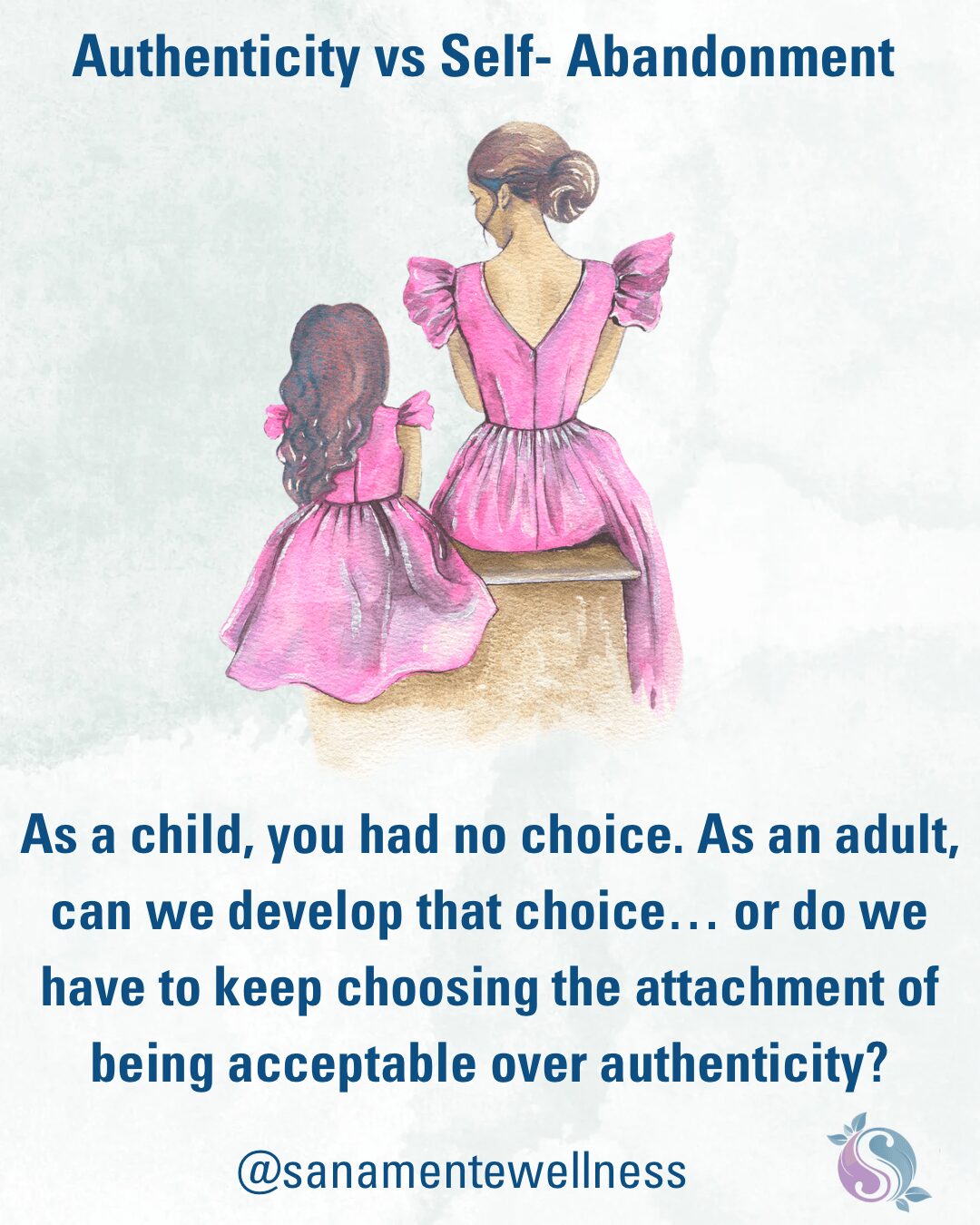
Image Credits
Sound Healing Photos by Christina McDaniel