





Today we’d like to introduce you to Becky Devine.
Hi Becky, so excited to have you on the platform. So before we get into questions about your work-life, maybe you can bring our readers up to speed on your story and how you got to where you are today?
My path into this work wasn’t a straight line. I grew up in a small town in northern Michigan in a family impacted by substance use, so I’ve seen firsthand how addiction doesn’t just affect the individual — it ripples through entire families. Those early experiences shaped me, even when I didn’t realize it.
After college, I worked in jobs that didn’t quite fit — in banking, administration, even the arts — before finding my way into the nonprofit world. When I landed an interview for a position I wasn’t really qualified for, I remember the Executive Director at the time telling me “I can teach someone everything you need to know to do this job, but the one thing I can’t teach someone is passion. You have passion”. She took a chance on me, and that’s really where everything began.
That opportunity led me into community coalition work, where I learned that meaningful change doesn’t happen in isolation, but through collaboration — and that progress is rarely quick or easy, so persistence matters just as much as passion. Real change takes time, trust, and consistency. It’s about finding common ground and building shared purpose. Those lessons have become the foundation for how I approach every partnership and every program I’ve built since.
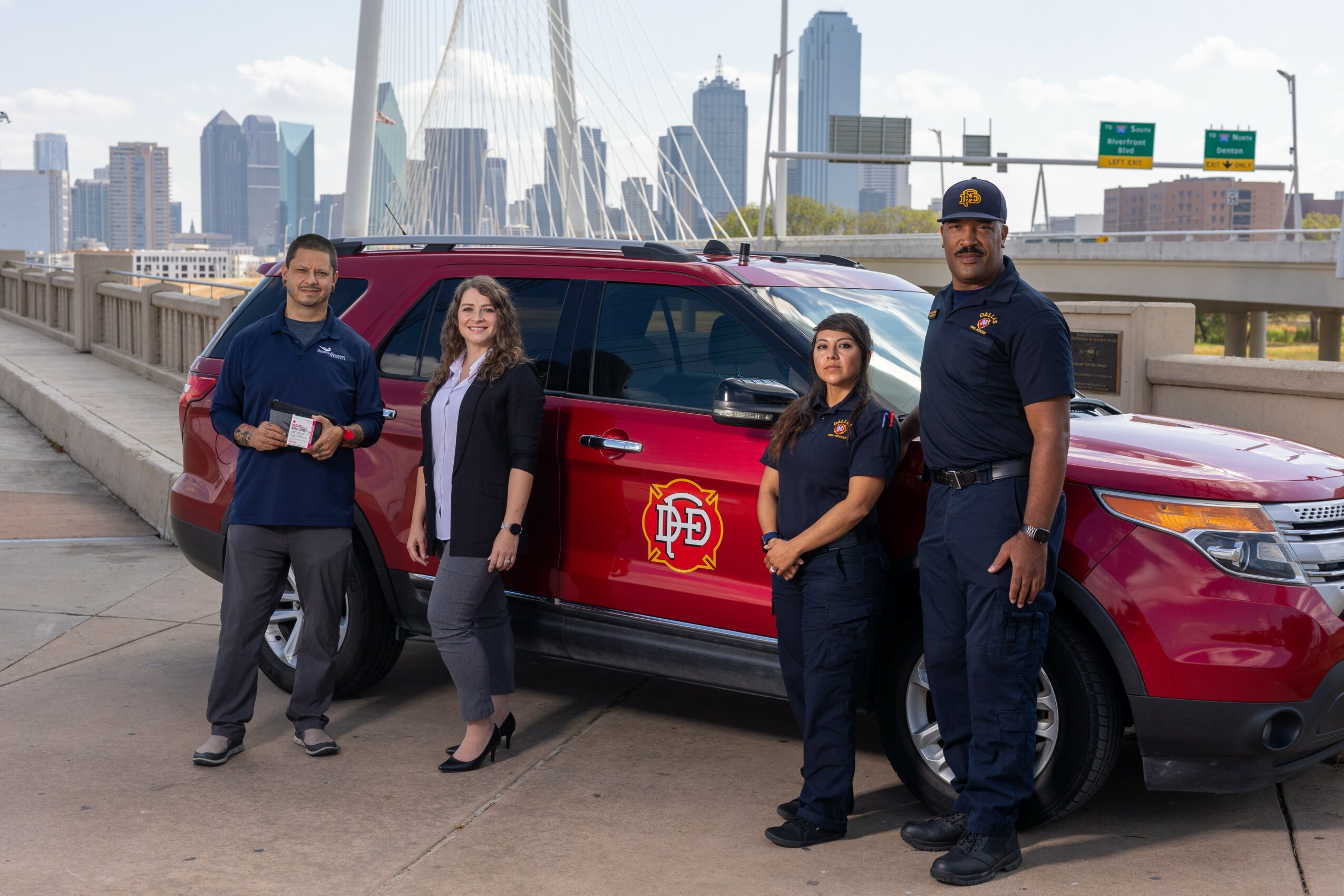
In 2019, I learned about a program in Ohio that sent outreach teams to the homes of overdose survivors. I couldn’t stop thinking about it — about what might have been different for my own family if someone had knocked on our door. That idea became the seed for our Overdose Response Team program. We started with one team, one partnership, and a lot of uncertainty. Today, we’ve expanded into multiple counties and cities, attempting to connect with thousands of people across the region.
At its core, our work is about showing up. Addiction doesn’t destroy all at once — it chips away slowly until a person, a life, a family is unrecognizable. But every person we meet is someone’s parent, sibling, or child. Substance use may cloud their judgment, but it does not erase their worth. Our job is to hold onto hope when they can’t, to see possibility when others don’t — because sometimes, knowing someone still sees your potential is what helps you find it again.
I’m sure it wasn’t obstacle-free, but would you say the journey has been fairly smooth so far?
It definitely hasn’t been a smooth road. When we first launched the program, we were building the plane as we flew it — writing grants with moving targets, navigating city systems, figuring out what “best practice” looked like in real time. There were days it felt like chaos behind the scenes. But I always reminded the team that no matter what was happening internally, the people we serve would only ever see consistency, compassion, and care. Out in the community, what matters is that we show up.
This work also comes with its share of mental and emotional challenges. It asks a lot of your heart and requires resiliency. Some days, we knock on ten doors and no one answers. Other days, we move heaven and earth to get someone into treatment, only to watch them walk out three days later. It can be hard not to take that personally. But then there are moments — like the client who turned us away seven times and finally said yes on the eighth and has remained sober since— that remind us why we keep showing up.
Funding has been a challenge — grants shift, priorities change, and the process is competitive. What keeps it going is that shared purpose we’ve built with our partners (EMS/Law Enforcement). Addiction and mental health challenges are generational, passed down through families. All it takes is one person choosing a different path to change the trajectory of that family — to break the cycle and make change for future generations. Every time a door opens, every time someone decides to accept help, we have an opportunity to be a part of that.
Appreciate you sharing that. What should we know about Recovery Resource Council?
Recovery Resource Council is a nonprofit behavioral health organization serving North Texas through a continuum of prevention, counseling, housing, and recovery programs. We specialize in evidence-based approaches that address substance use, trauma, and mental health disorders for veterans, individuals, youth, and families.
What do you like and dislike about the city?
One of the things I appreciate most is the growing willingness for cross‑sector collaboration—nonprofits, local government, public health, EMS, and law enforcement all coming together around the issue of substance use and overdose. For example, the Overdose Data to Action (OD2A) initiative led by Dallas County Health and Human Services and the Opioid Strike Force led by Dallas City Council members. There are city and county leaders who recognize the challenge and are committing resources. That kind of shared foundation makes our efforts more effective and more sustainable.
If I were to name one area of opportunity, it would be ensuring that every city and jurisdiction in our region recognizes and prioritizes this issue with the same sense of urgency. Addiction and overdoses are affecting communities across the region, and with funding coming into Texas through the Opioid Abatement Fund at both the city and county levels, we have a real opportunity to make a meaningful difference. I hope to see local governments lean more into the expertise of local providers who are already doing great work in this space and support them in a way that allows them to do more great work. Strengthening that collaboration can help ensure resources reach people when and where they need support, and help fully leverage the infrastructure and funding available across our region.
Pricing:
- All Recovery Resource Council services are designed to be low-cost or free, depending on the program, to ensure that care is accessible to everyone in need. For example, our Overdose Response Team and Recovery Support Services are completely free to the community, funded through grants, partnerships, and community support—ensuring that no one is turned away due to inability to pay.
Contact Info:
- Website: https://recoverycouncil.org/
- Instagram: https://www.instagram.com/recoveryresourcecouncil/
- Facebook: https://www.facebook.com/RecoveryResourceCouncil/
- LinkedIn: https://www.linkedin.com/company/recovery-resource-council/
- Youtube: https://www.youtube.com/@recoveryresourcecouncil-dfw