





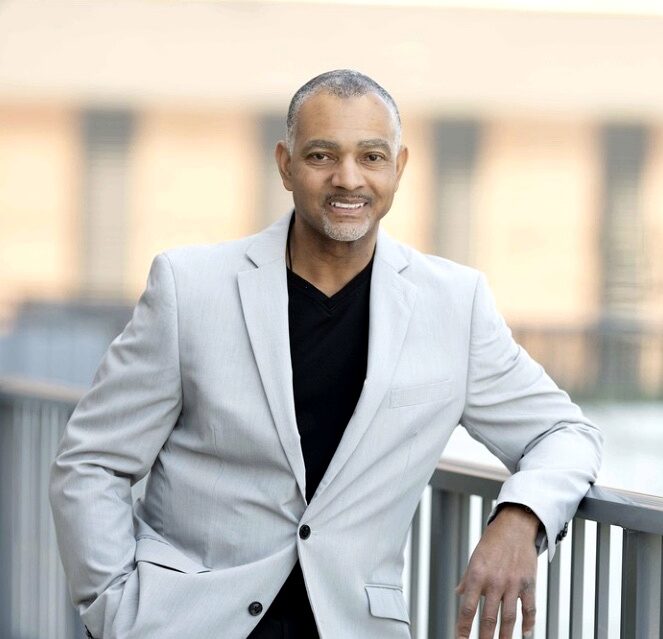
Today we’d like to introduce you to Don Buford, MD.
Don, we appreciate you taking the time to share your story with us today. Where does your story begin?
My path into orthopedics and sports medicine was shaped early. I grew up in a sports family—my father played professional baseball for 10 years in the United States and another 4 years in Japan—so high-level athletics and performance were part of everyday life. I played baseball for four years in the Baltimore Orioles organization, and during that time, I was also in medical school at the University of California, Los Angeles. After retiring from baseball, I returned to UCLA full time to complete my medical degree. My orthopedic residency was from 1993–1998 at UT Southwestern Medical Center, followed by a one-year sports medicine fellowship at the Southern California Orthopedic Institute in Van Nuys, California.
As a board-certified orthopedic surgeon, I’ve spent more than 25 years treating injuries of the joints, tendons, and ligaments. I began in traditional orthopedic surgery, and while surgery can be very effective, I saw that it doesn’t always get patients back to feeling or functioning at their best long term. That experience changed how I approach care—I focus not just on fixing the problem, but on helping your body heal in a stronger, more complete way.
That’s what led me into regenerative medicine, where we use your body’s own biology—like platelet-rich plasma (PRP) and bone marrow–derived cells—to support and enhance healing. I was an early adopter of these treatments and have spent years refining them to ensure they are performed with precision, safety, and a strong foundation in medical science. Many of our nonsurgical options allow us to treat patients when there is still an opportunity to prevent surgery. In some cases, regenerative treatments can also improve surgical outcomes. My goal has never been to replace surgery, but to expand your options and choose the right treatment for each individual.
I founded Texas Orthobiologics in Dallas in 1999 to bring that philosophy to life. It’s a concierge orthopedic practice where we take a more personalized approach, combining advanced nonsurgical treatments with traditional orthopedic care when needed. Some patients can avoid surgery altogether, while others benefit from using biologics to improve surgical outcomes and recovery. The key is matching the right treatment to the right patient at the right time.
In addition to my clinical work, I’m actively involved in advancing the field. I currently serve as President of the Interventional Orthobiologics Foundation, which is the largest U.S.-based member organization focused on teaching regenerative medicine science and procedures to orthopedic physicians. I am also Chairman-Elect of the Biologic Association, an international collaboration of orthopedic and sports medicine societies working to improve and guide the use of advanced biologic treatments like PRP and stem cell–based therapies. I also produce webinars and YouTube videos designed to educate the public. My focus has always been on helping move this field forward in a responsible, evidence-based way and increasing awareness that these options exist.
At the end of the day, my goal is simple: to give patients better options and better outcomes by combining the best of orthopedic surgery with the latest advances in regenerative medicine.
I’m sure it wasn’t obstacle-free, but would you say the journey has been fairly smooth so far?
It has not been a smooth road! Building something new in medicine is never a smooth road, especially when you’re working at the intersection of established surgical practice and a rapidly evolving field like regenerative medicine.
Early on, there was a lot of skepticism. Some of it was warranted—there’s been a wide range of quality and consistency in how these therapies are delivered. I had to be very deliberate about how I approached it: focusing on data, refining technique, and being honest about what works, what doesn’t, and where the limitations are. There’s also the practical side—building a practice model that allows you to spend more time with patients and offer advanced treatments that aren’t always covered by insurance comes with its own set of challenges. There is also the requirement to stay compliant on the regulatory side with the FDA being ultimately responsible for either allowing or restricting access to potential treatments.
I’ve also had to adapt continuously. The science is evolving, technology is improving, and patient expectations are higher than ever. You can’t get comfortable—you have to keep learning, keep questioning, and be willing to adjust.
At the same time, those challenges have been the most valuable part of my journey. They’ve forced me to stay grounded, to stay evidence-based, and to focus on outcomes above all else. And when you see patients get back to activities they thought they had lost, or avoid a surgery they were dreading, it makes the difficult parts worth it.
So no, it hasn’t been smooth—but it’s been meaningful, and I think that’s the better measure.
Alright, so let’s switch gears a bit and talk business. What should we know?
At Texas Orthobiologics, our focus is simple: helping you get back to doing what you enjoy without being limited by pain. Whether that’s staying active, continuing to compete, or just moving comfortably day to day, our goal is to give you the best possible path forward.
What makes our practice different is that you’re not being pushed toward a single solution. As a board-certified orthopedic surgeon, I still perform surgery when it’s truly necessary—but many of our patients come to us looking for alternatives. That’s where regenerative medicine comes in. We specialize in treatments like platelet-rich plasma (PRP) and bone marrow–derived therapies that use your body’s own biology to support healing and restore function.
A big part of what sets us apart is precision. These treatments are not all the same, and outcomes depend heavily on how they’re performed. Every procedure we do is guided by advanced ultrasound, allowing us to target the exact source of your problem. That level of accuracy matters, especially when you’re dealing with complex or long-standing injuries.
We also take a very individualized approach. When you come to our practice, we take the time to understand your specific condition, your goals, and your lifestyle. There’s no one-size-fits-all plan—our patients receive recommendations that are tailored to them, whether that means a regenerative treatment, a structured rehabilitation plan, or, in some cases, surgery.
Many of our patients come to us after they’ve been told they have limited options. What they often find is that there may be another path—one that focuses not just on managing symptoms, but on improving how the tissue actually heals.
What I’m most proud of is that we’ve built our reputation around doing things the right way. Our patients trust us because we’re honest about what will help, what won’t, and what to expect. At the end of the day, you deserve clear answers and the best available options—and that’s exactly what we strive to provide.
Where do you see things going in the next 5-10 years?
Over the next 5 to 10 years, you’re going to see regenerative medicine become much more standardized and evidence-driven. Right now, one of the biggest challenges is variability—how treatments like PRP or bone marrow concentrate are prepared and delivered can differ significantly. That’s starting to change, with more research, better protocols, and clearer guidelines emerging, which should lead to more consistent and predictable outcomes.
You’re also going to see a shift toward more personalized treatments. Instead of a general approach, therapies will be tailored to your specific biology, your injury, and even your genetics. That level of precision is going to improve success rates and reduce guesswork.
On the technology side, there are some exciting developments. Things like advanced cell therapies, improved biologic processing, and even tissue engineering and 3D bioprinting are being actively developed. While some of that is still early, the direction is clear—we’re moving toward actually restoring tissue, not just managing symptoms or replacing joints with implants.
From a patient standpoint, the biggest shift is this: the future of orthopedics is moving away from a “replace it” mindset toward a “restore it” or “prevent it” mindset. Surgery will always have an important role, but more patients will have the option to treat problems earlier, less invasively, and in a way that actually improves how the tissue heals.
Contact Info:
- Website: https://www.texasorthobiologics.com
- Instagram: https://www.instagram.com/texasorthobiologics/
- Facebook: https://www.facebook.com/drdonbuford/
- LinkedIn: https://www.linkedin.com/in/drdonbuford/
- Twitter: https://x.com/drdonbuford
- Youtube: https://www.youtube.com/@drdonbuford