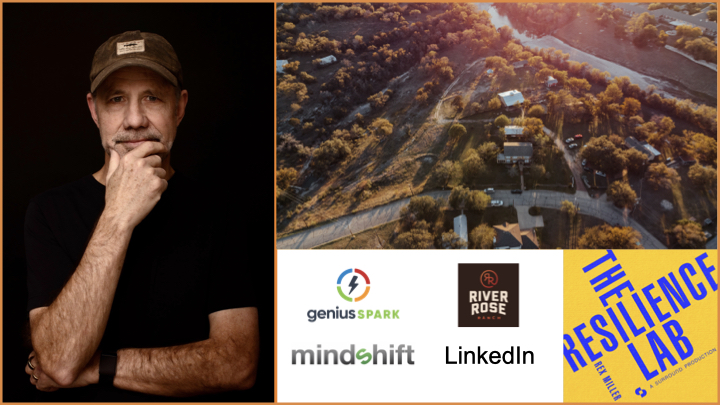







Today we’d like to introduce you to Rex Miller.
Hi Rex, thanks for joining us today. We’d love for you to start by introducing yourself.
My career has unfolded at the intersection of performance, reinvention, and entrepreneurship.
I moved to Dallas in 1977 as a USPTA tennis pro at Brookhaven Country Club. Competitive athletics shaped my early worldview; discipline, resilience, and the belief that performance is trained, not accidental. Wanting to transition into business, I set my sights on Southwestern Bell (now AT&T), where I became the company’s first interior project manager. That role immersed me in complex, high-stakes environments and taught me something lasting: outcomes are rarely limited by strategy or talent, but by how people work together under pressure.
As my career progressed, I saw the same pattern repeat across industries: smart people, capable systems, and unnecessary friction slowing everything down. During the dot-com crash, that realization collided with personal disruption, becoming the catalyst for entrepreneurship. In 2004, I wrote my first book with Wiley, marking my transition from corporate leadership to building intellectual property, frameworks, and businesses designed to help organizations adapt and evolve.
From that work, I developed **MindShift**, a research-driven process to help companies and industries reinvent themselves amid complexity. MindShift ultimately produced five books, earned three international awards, and became the foundation of my consulting company. To formalize and deepen this work, I earned a Master’s degree in Strategic Foresight, codifying my role as a futurist focused on anticipating disruption and designing resilient systems.
After more than 20 years working with CliftonStrengths, I recognized a market gap: leaders valued insight, but struggled to translate it into everyday action. That led to the launch of **Genius Spark**, a process and technology platform designed to make strengths practical for managers and to help teams accelerate their learning curve. Today, that work supports organizations such as Google, PepsiCo, Intuit, Rogers & Morten, DPR Construction, Balfour Beatty, Intel, and Haworth.
In 2021, my wife, Lisa, and I moved to Glen Rose, Texas, and purchased a 19-acre ranch along the Paluxy River. We’ve since developed it into a corporate retreat and leadership space, while also using it to support people in our local community through life-skills development, income opportunities, and transitional housing.
At every stage, entrepreneurship has been my way of solving human problems at scale—by building tools, platforms, and environments that help people and organizations perform better, adapt faster, and grow intentionally.
Alright, so let’s dig a little deeper into the story – has it been an easy path overall and if not, what were the challenges you’ve had to overcome?
It has definitely not been a smooth road.
The most difficult chapter came during the dot-com crash in the early 2000s. At the time, I was demoted from a senior executive role, my income collapsed, and I found myself within weeks of bankruptcy—multiple times. The stress was relentless. By age 45, I was carrying significant credit card debt, working in constant survival mode, and my health was deteriorating. I was overweight, exhausted, and disconnected from the very people and values that mattered most. Looking back, it was a near-death experience, not just financially, but physically and emotionally.
Those years were rock bottom. But they also became the foundation for everything that followed.
What saved me wasn’t a dramatic breakthrough or overnight success. It was a decision to rebuild my life through small, disciplined improvements in a few critical areas—health, mindset, learning, and relationships. I committed to getting just a little better each year. That philosophy was later reinforced by the UK cycling team’s “marginal gains” strategy: the idea that small, consistent improvements compound into extraordinary results.
That approach reshaped everything. It gave me the resilience to rebuild my career, write my first book, and begin the entrepreneurial journey that followed. It also gave me the internal stability to reinvent myself again during the real estate crash—and later during the pandemic, without being knocked off course.
Today, the evidence is tangible. That long-term commitment to marginal gains has led to three companies, a nonprofit, seven books, and work that spans industries and continents. Just as importantly, at age 71, my resting heart rate is 41, and I’m in better physical condition than I was at 45.
The struggles didn’t just toughen me, they clarified me. They taught me that resilience isn’t about grinding harder or avoiding failure. It’s about building personal and professional systems that allow you to absorb shock, adapt, and keep moving forward. That lesson now sits at the heart of everything I teach, build, and share with others.
Appreciate you sharing that. What should we know about MindShift and Genius Spark?
My work centers on two complementary businesses, MindShift and Genius Spark: both focused on helping people and organizations adapt, perform, and grow in complex environments.
MindShift is a consulting and research-driven practice that helps organizations tackle what are often called “wicked problems”, challenges that don’t have simple solutions, clear owners, or linear paths forward. We specialize in leadership alignment, culture change, and large-scale transformation, particularly in industries facing disruption, including real estate, construction, workplace strategy, and technology. What sets MindShift apart is that we don’t lead with best practices or generic change models. Instead, we help leaders reframe the problem, surface hidden assumptions, and design new ways of working that fit their specific context. MindShift has produced five books, won three international awards, and is known for turning complexity into clarity without oversimplifying the human side of change.
Genius Spar* grew out of more than 20 years of working with strengths-based development and seeing the same frustration over and over: great insights that didn’t translate into daily behavior. Genius Spark is both a process and a technology platform designed to close that gap. We help managers and teams quickly understand how people are wired to contribute, where strengths can get in the way under pressure, and how to turn that awareness into practical coaching conversations and habits. What makes Genius Spark different is its focus on speed, simplicity, and application. It reduces the learning curve for teams, helps managers coach with confidence, and creates a shared language for collaboration—without adding complexity or extra work.
Brand-wise, what I’m most proud of is integrity and longevity. Both businesses were built slowly, tested in the real world, and refined through decades of work with organizations such as Google, PepsiCo, Intel, DPR, Balfour Beatty, and Haworth. My goal has never been to chase trends, but to build tools and frameworks that actually help people work better together and sustain performance over time.
What I want readers to know is simple: this work is about unlocking human potential in practical ways. When people understand how they’re designed to do their best work, and are supported in applying that insight, organizations don’t just perform better. They become healthier, more resilient, and more human.
What do you like and dislike about the city?
I like the openness to innovation and the many professional associations people can find support and collegiality. I like the business-friendly marketplace. I like least the lack of mass transit and the gentrification of neighborhoods that have made housing unaffordable for many.
Contact Info:
- Website: https://rexmiller.com/
- LinkedIn: https://www.linkedin.com/in/rexmiller/
- Youtube: https://www.youtube.com/@RexMiller