






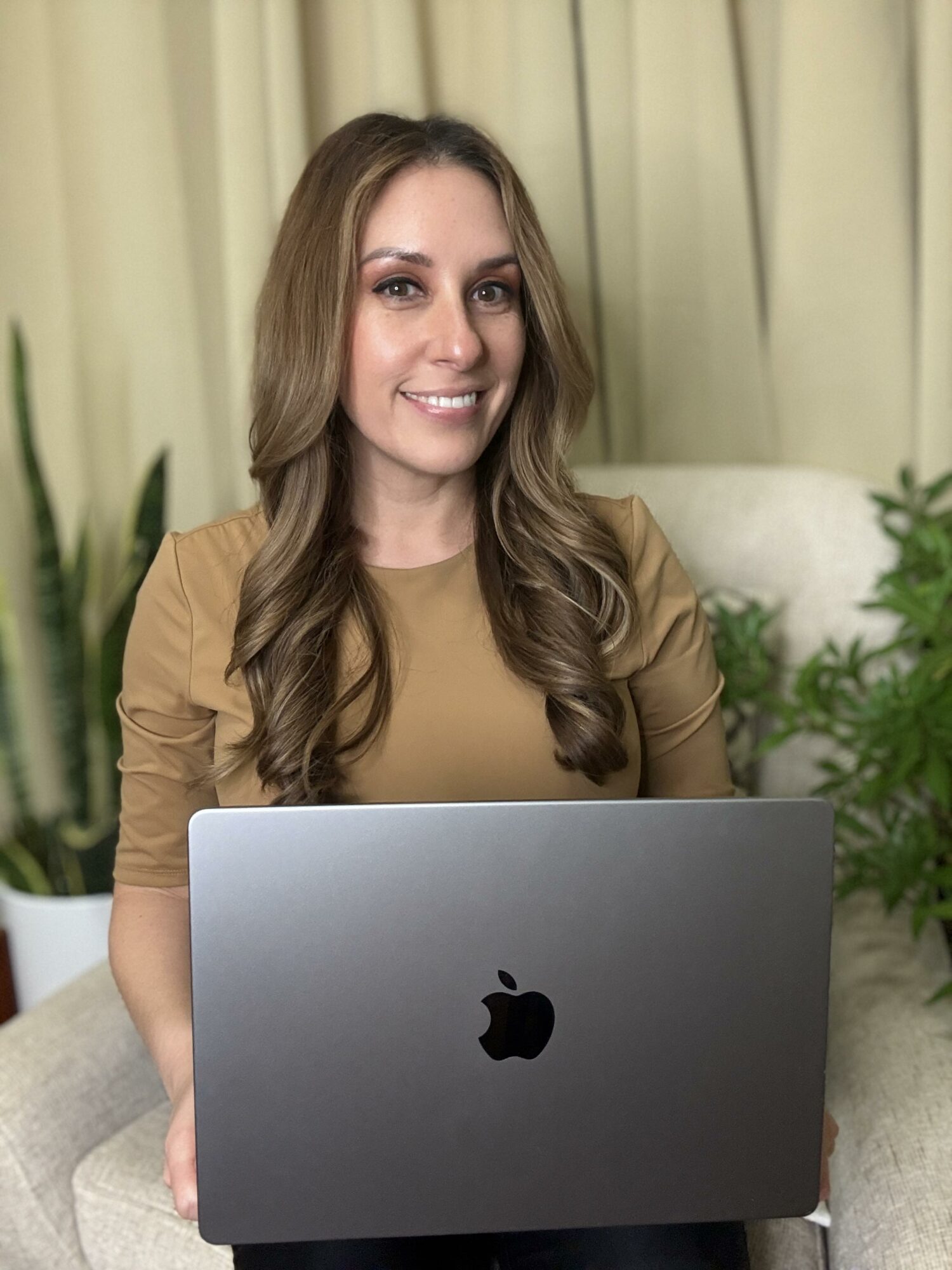
We’re looking forward to introducing you to Michelle Palacios. Check out our conversation below.
Hi Michelle, thank you so much for taking time out of your busy day to share your story, experiences and insights with our readers. Let’s jump right in with an interesting one: What do the first 90 minutes of your day look like?
Great question! As a therapist who supports others, it’s essential that I take care of myself first so I can bring my best self into the therapy room. Every morning I grab a cup of coffee, then spend time meditating, journaling, and reading. Starting my day this way helps me feel centered and keeps my nervous system regulated. It’s one of the ways I fill my own cup, so I can give to others from the overflow without depleting myself.
Can you briefly introduce yourself and share what makes you or your brand unique?
I’m Michelle Palacios, a licensed therapist and founder of Life Revised Therapy, an online practice serving clients across Texas. I help hardworking perfectionists who appear put-together on the outside but feel anxious, overwhelmed, and never quite “enough” on the inside.
What makes my approach unique is that I don’t just help people manage symptoms — I help them understand why they feel the way they do. I teach them how to calm their mind, body, and nervous system so they can finally feel balanced, grounded, and confident again. My clients appreciate that therapy with me is both structured and compassionate. We work together to uncover the patterns that keep them stuck, and I provide practical, evidence-based tools they can start using right away.
The reason I started Life Revised Therapy comes from seeing how many strong, capable people silently carry the weight of anxiety and perfectionism. I wanted to create a space where they could stop trying to be “fine” and start feeling worthy, grounded, and whole — without losing their drive or independence.
Right now, I’m especially focused on helping more people experience the relief that’s possible through Eye Movement Desensitization and Reprocessing (EMDR) along with Cognitive Behavioral Therapy (CBT), Acceptance and Commitment Therapy (ACT), and Exposure and Response Prevention (ERP).
Thanks for sharing that. Would love to go back in time and hear about how your past might have impacted who you are today. What’s a moment that really shaped how you see the world?
Two moments from my childhood shaped how I see the world and ultimately led me to become a therapist.
The first was when I was around ten, I read Chicken Soup for the Soul. Those short, heartfelt stories opened my eyes to something profound — that people often carry pain we know nothing about, and that small moments of kindness can make a real difference. It changed the way I saw people and taught me to look beneath the surface.
The second moment happened in middle school. I had a class period where I assisted the school counselor, Ms. Lemons. I watched students walk into her office in tears and walk out lighter, calmer, and visibly relieved. It was the first time I saw that helping people could be a profession, not just a personality trait.
What I didn’t know then was that Ms. Lemons was battling cancer. She passed away that year, and the school created a scholarship in her honor. They invited me to speak at the ceremony. I remember standing on stage, looking out at hundreds of people whose lives she had touched, and realizing the ripple effect one person can make. In that moment, I knew I wanted to spend my life helping people feel seen, supported, and capable of healing — just like she did.
Today, I get to experience the same transformation I admired in Ms. Lemons’ office all those years ago. My clients often come to me overwhelmed, anxious, or struggling in their relationships with others — and over time, I watch them gain insight, regulate their nervous system, and reclaim a sense of balance and confidence. Seeing someone walk in carrying emotional weight and walk out lighter is still the most meaningful part of my work. It reminds me daily why I chose this path and why I continue to love what I do.
What did suffering teach you that success never could?
Success can make you feel accomplished, but suffering teaches you how to be human. It strips away the illusion that being strong means doing everything perfectly or never struggling.
I have battled an autoimmune and anxiety disorder. As a recovering perfectionist myself, this proved to be a significant challenge. I had knowledge of what I was facing and was very familiar with the treatment because of my education and training, but I did not fully comprehend the gravity or the difficulty of it until I experienced it first hand. Suffering in those ways helped me better understand what my clients feel and how challenging the treatment can feel at times. This helped me to be a more compassionate and successful treatment provider.
Through my own hard seasons, I learned that growth doesn’t come from pushing harder—it comes from slowing down, prioritizing your values, having courage to take meaningful action, asking for help, and learning to be kind to yourself in the process.
Those lessons deeply shape how I show up as a therapist. I understand what it’s like to feel like you “should” have it all together but still feel lost, anxious, or exhausted inside. Suffering taught me that healing isn’t about fixing yourself—it’s about remembering that you were never broken to begin with. It is about improving the relationship you have with yourself and learning to love and care for yourself in the same way you do for others. That truth is at the heart of my work with clients today.
Alright, so if you are open to it, let’s explore some philosophical questions that touch on your values and worldview. Where are smart people getting it totally wrong today?
I think smart people often get it wrong by believing that if they can just think their way through something, they can fix it. They rely on logic, problem-solving, and sheer effort to push past stress or emotions — but that’s not how healing works. You can’t outthink anxiety or overachieve your way to finally feeling enough or worthy.
Smart people are amazing at analyzing, planning, and achieving, but they often ignore the signals their body and emotions are sending until those signals become too loud to ignore. What they miss is that emotional wellbeing isn’t just a mindset problem — it’s a nervous system problem. The real work is learning to slow down, listen inward, and create safety within yourself instead of trying to “figure it out” in your head.
That shift — from overthinking to self-understanding — changes everything.
Thank you so much for all of your openness so far. Maybe we can close with a future oriented question. If you retired tomorrow, what would your customers miss most?
If I retired tomorrow, I think my clients would miss having a space where they can be honest about how they really feel while being truly listened to, seen and understood. So many of the people I work with are used to being the strong one, the problem-solver, the person everyone relies on. In our sessions, they finally get to exhale — to stop holding everything together and start figuring out what they actually need.
My clients often tell me they appreciate that I’m real with them. I don’t just nod and listen — I help them understand what’s really going on underneath the anxiety, perfectionism, and self-doubt, and I teach them practical tools that actually work in real life. They leave our sessions feeling grounded, clear, and capable — not just heard, but changed.
So if I retired tomorrow, I think they’d miss that mix of honesty, safety, and strategy — a space where they can be fully themselves and make real progress toward feeling calm, confident, and enough.
Contact Info:
- Website: https://www.
LifeRevisedTherapy.com - Instagram: https://www.
instagram.com/ liferevisedtherapy/ - Linkedin: https://www.
linkedin.com/in/michelle- palacios/ - Facebook: https://www.
facebook.com/ LifeRevisedTherapy/ - Youtube: https://www.youtube.
com/@LifeRevisedTherapy