




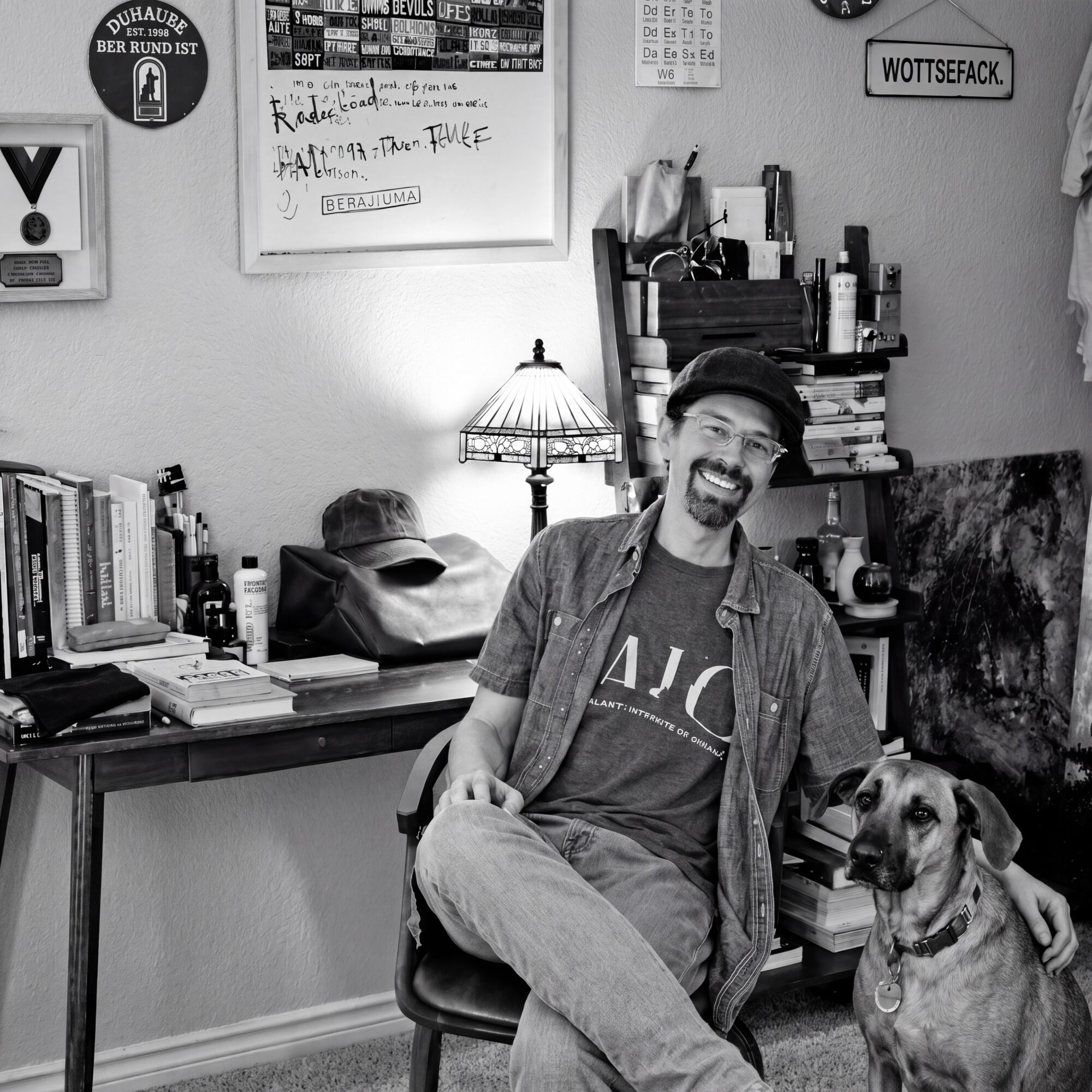
Today we’d like to introduce you to Andrew Wick.
Hi Andrew, we’d love for you to start by introducing yourself.
Thank you for having me. I have long been captivated by the fundamental act of making. My earliest ventures into form began with a curiosity for assembly, fashioning objects, often meaningless, from salvaged construction remnants—a collection my father affectionately termed “buddy wood.” That primal, tactile inquisitiveness ultimately directed me toward a career in the fine arts, precipitating a rigorous period of academic training within the DFW metroplex, where I earned a B.F.A. from Southern Methodist University before earning an M.A. from the University of North Texas. Beyond the technical orthodoxy, those foundational years fostered a cohort of lifelong artist contemporaries whose companionship remains indispensable.
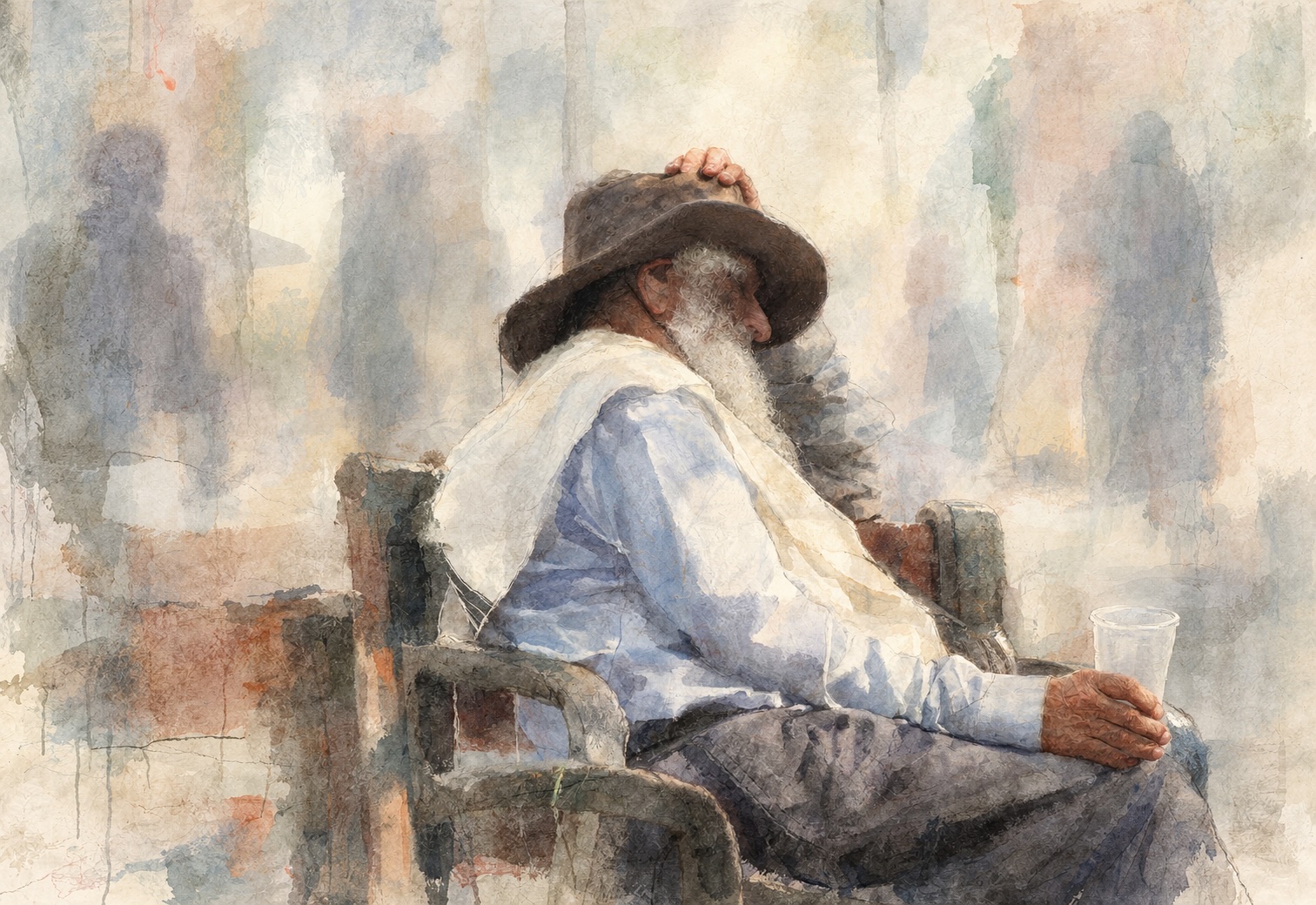
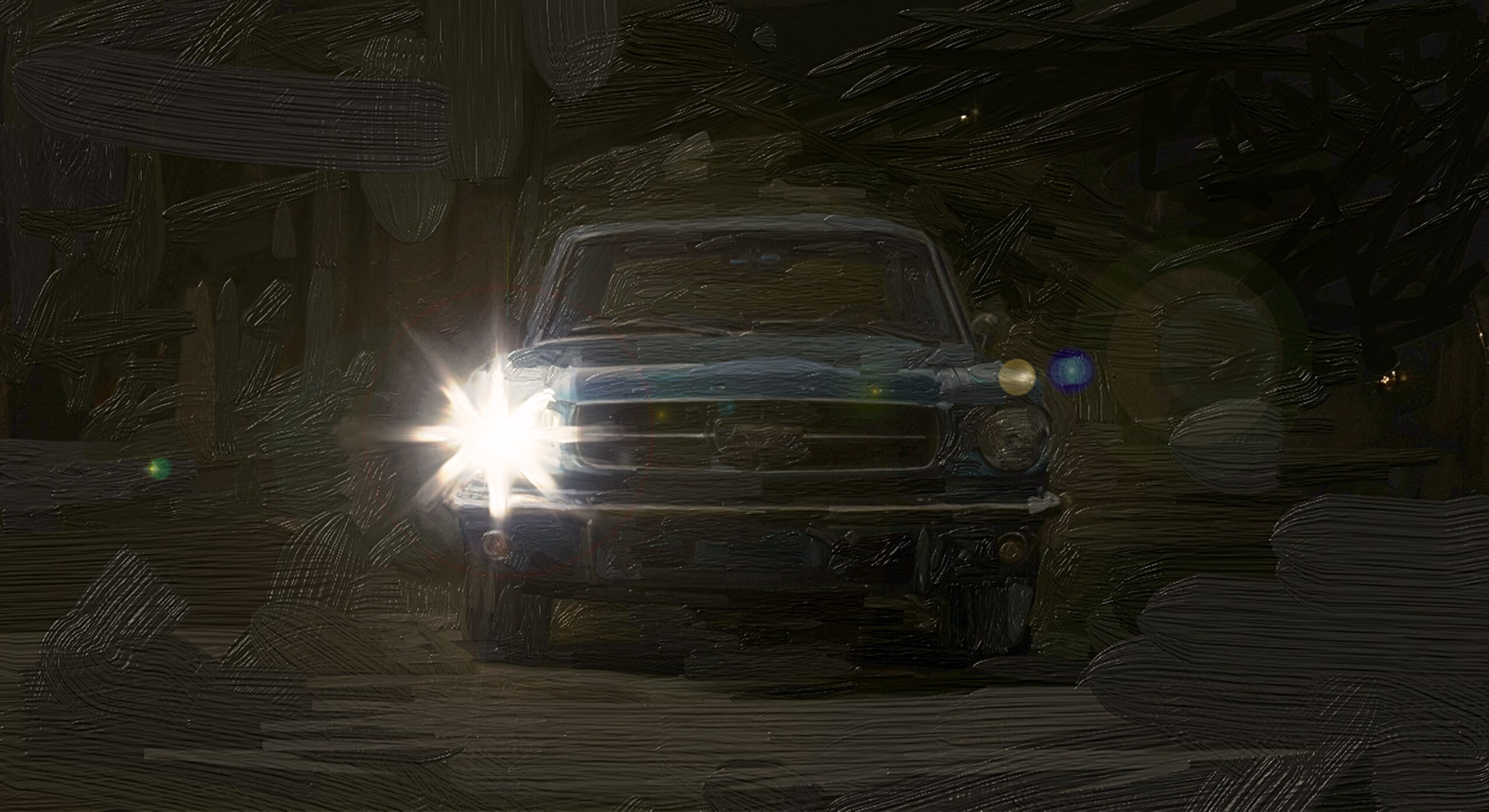
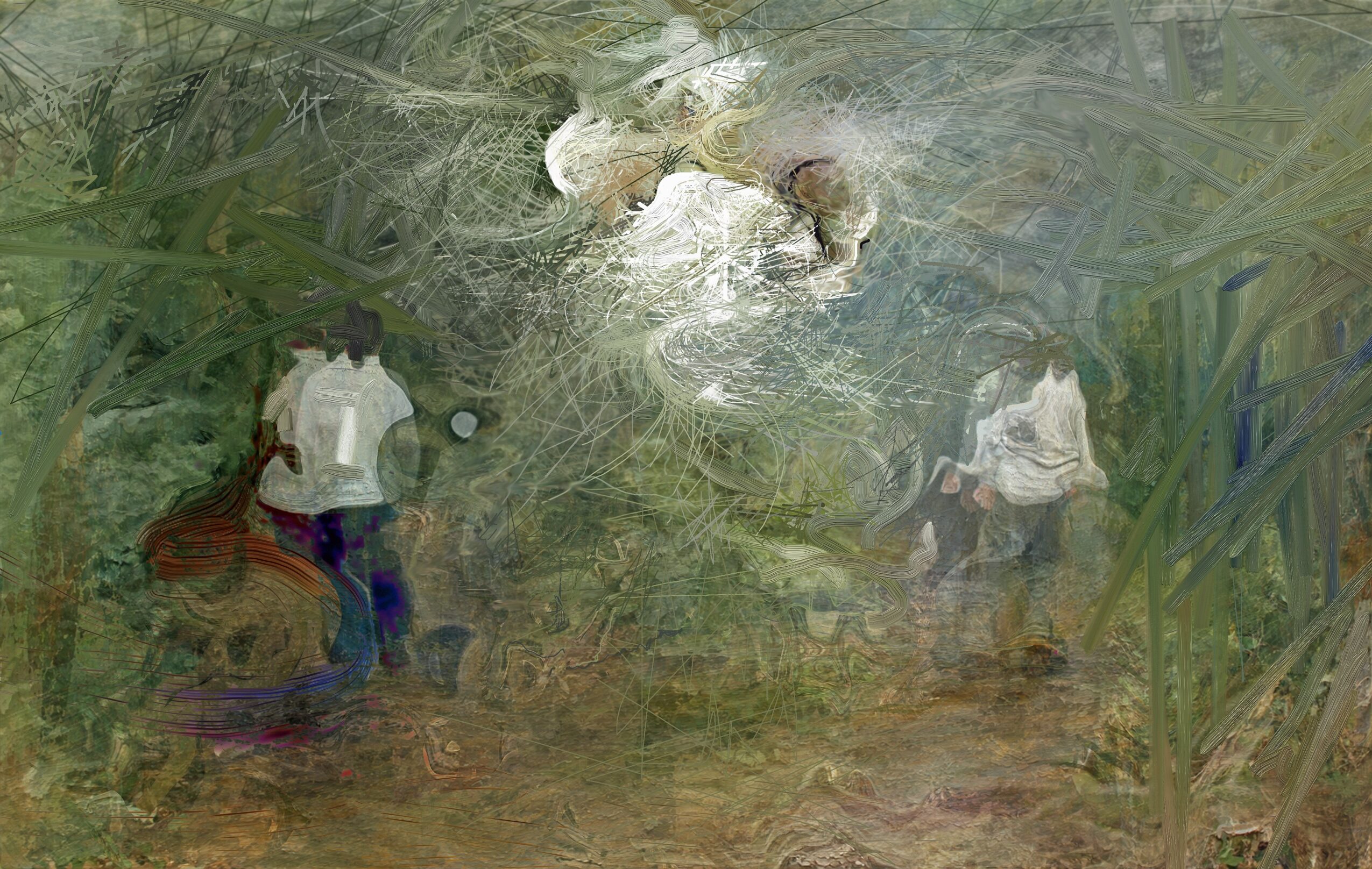
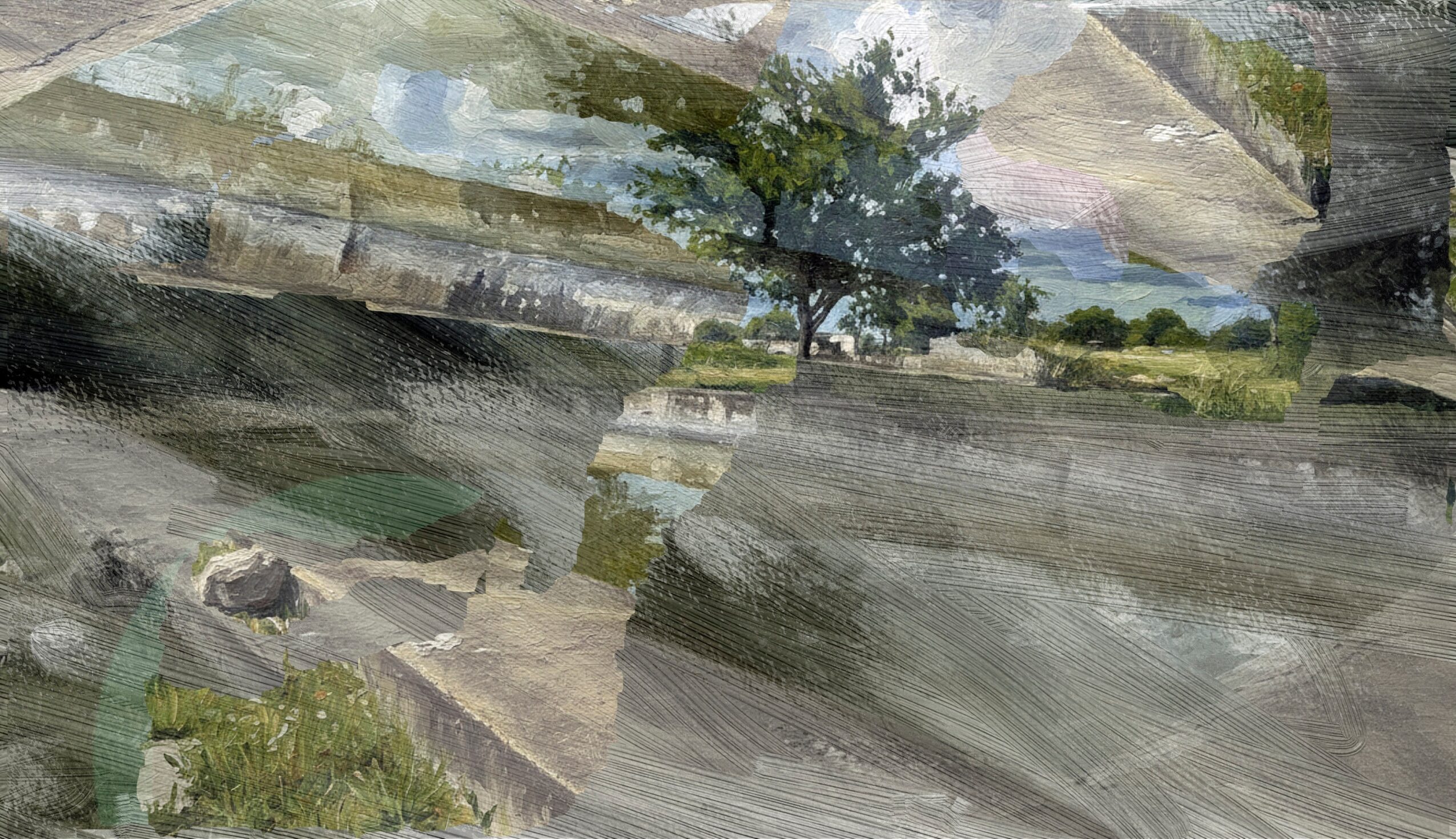
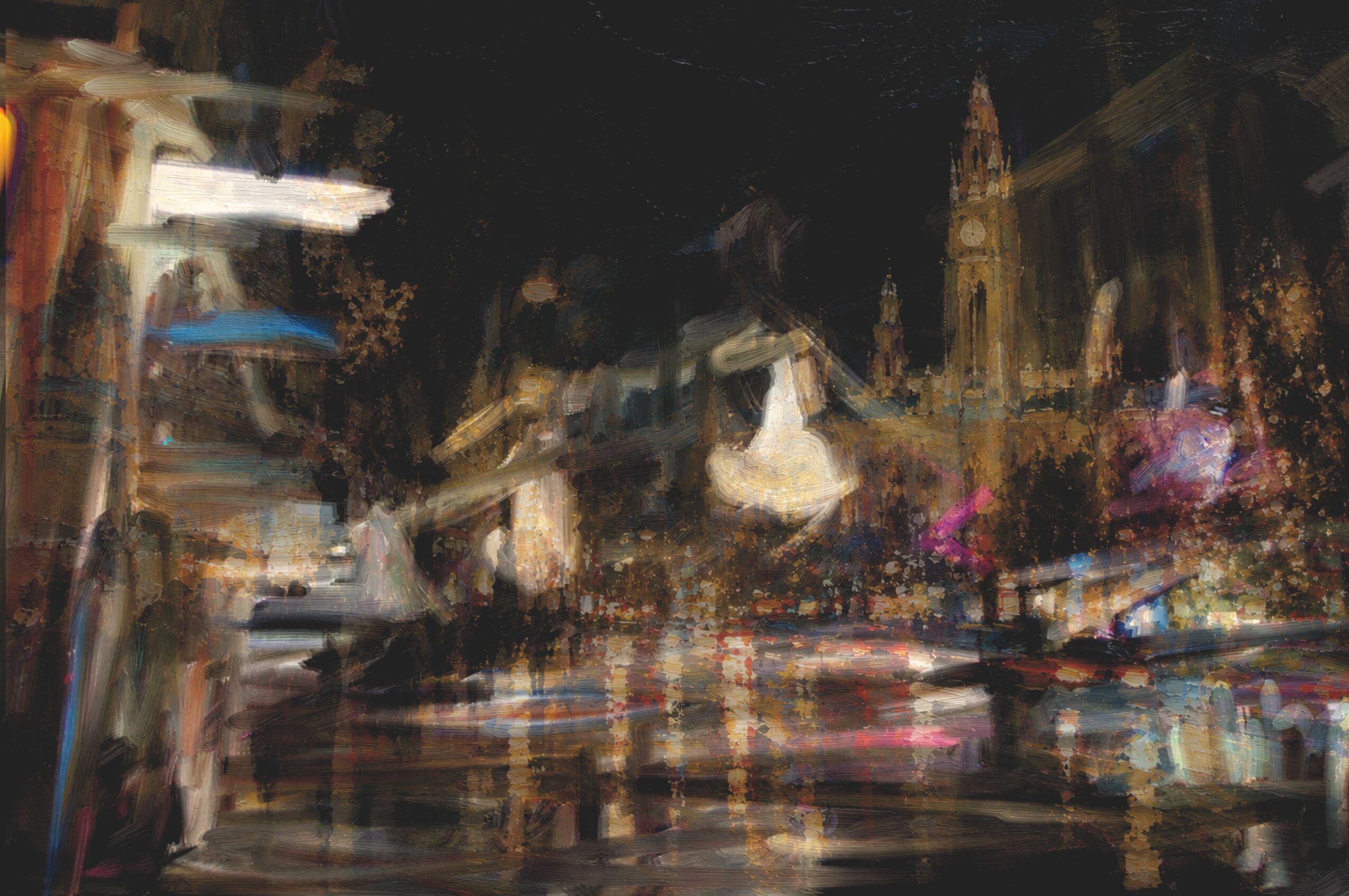
Today, my studio practice operates similarly to the post-industrial era we live in. My anchor is simply my love of traditional classical draftsmanship and the straight up primal act of drawing itself. I have been pairing this angle with contemporary material chemistry recently; interrogating the spatial intersections of structural geometry, temporality, topography, and human memory. I know every material in every painting I’ve made and, even if it does not belong there, I have a pretty good grasp of material chemistry that allows it—really weird things start happening. Fun! I balance my creative inquiry with a rigorous commitment to pedagogy, having instructed within SMU’s community education program for thirteen years while maintaining active representation in commercial galleries and private collections nationwide. It is an exacting, intensely deliberate methodology, yet I consider myself immensely fortunate that these aesthetic experiments continue to find resonance within both the studio and the educational setting.
Can you talk to us a bit about the challenges and lessons you’ve learned along the way. Looking back would you say it’s been easy or smooth in retrospect?
It hasn’t been a smooth road, and many of my deepest struggles lay in finding a visual language that could accurately reflect the friction of our modern experience. I eventually realized that my path to becoming an artist required a massive commitment to time and labor, leading me to develop a methodology I could only explain as synthesizing material architecture.
My creative philosophy manifests through a complex, physical-digital paradox built in distinct material strata—a process that demands a deliberate, time-intensive layering of mediums. I often begin each piece with a highly tactile, historical foundation, like an abrasive slurry of hand-prepared bone ash and hide glue. Upon this ground, I use drawing as my go-to, using a fine silverpoint stylus to blueprint the foundational spatial geometry. While these initial marks are ultimately buried beneath subsequent layers, this permanent infrastructure provides the un-erasable structural strength that dictates the internal gravity, weight, and layout of the final image.
Over this hidden blueprint, I execute an aggressive counter-strike using heavy traditional oils, dense, carbon-rich intaglio printmaking inks, or even acid itself. The materials I use slowly degrade in some ways and literally blossom in others. Finally, I seal the surface with a translucent Rhoplex™ co-polymer glaze. This modern material acts as an interactive screen, trapping those raw, physical textures beneath a slick, reflective lens that almost mimics the gaze of contemporary digital devices, or at least garners a nod to the popular notion of image making.. The true obstacle for me is wrestling with these temperamental, slow-yielding material phases, but that exact friction is what gives the final paintings their shot. And, if I go too far, the piece is ruined.
As you know, we’re big fans of you and your work. For our readers who might not be as familiar what can you tell them about what you do?
I am an American contemporary artist whose practice examines the dialectical friction between analog permanence and digital ephemerality. Rooted in rigorous academic draftsmanship—informed by a B.F.A. from Southern Methodist University (2003) and an M.A. from the University of North Texas (2005)—my work is inextricably linked to a dual career in public and adult art education.
Rather than executing superficial imagery, I employ a methodology I term synthesizing material architecture, constructing paintings through a time-intensive stratigraphy that mirrors the geological compaction of human memory. What distinguishes my practice is this deliberate synthesis of historical precision and contemporary materiality. Building each piece from the foundations upward, I remain deeply influenced by my printmaking origins—specifically the erratic, singular charm of a poorly wiped copper plate retained as a variant edition. My latest work, Spectral Dissent (2026), executed on heavyweight Arches® oil paper, represents a profound evolution in this lineage, reconciling classical structural calculation with the generative beauty of material idiosyncrasy.
Are there any apps, books, podcasts, blogs or other resources you think our readers should check out?
There are many. Like too many. I am a big fan of Kierkegaard, a good one for the novice is likely “Works of Love.” For podcasts, I don’t think there are many episodes of this one, but I loved President Obama’s recent one. I think it’s called “A Great Book.” You’ll also hear me blasting all sorts of random music, generally early blues or rock but, lately, I’ve come to appreciate some excellent post-rock bands. We Lost the Sea is interesting. They are an Australian band and also in their 40;s like me. However, at some point, you will hear Radiohead in my studio if you are around me any length of time. I think Jonny Greenwood is one of the great guitar players of the 21st century, actually, because he has kept the instrument artistically relevant and removed all the glam from the object, focusing instead, on what he can make. I also love pretty much every museum. There was even one in Colorado somewhere I was at and I think it was just someone’s personal things. It was odd. I’ll go to a museum with anyone but can’t guarantee I won’t get lost.
Contact Info:
- Website: https://www.andrewwick.com
- Instagram: https://www.instagram.com/apwickfineart/
- Facebook: https://www.facebook.com/apwick/