




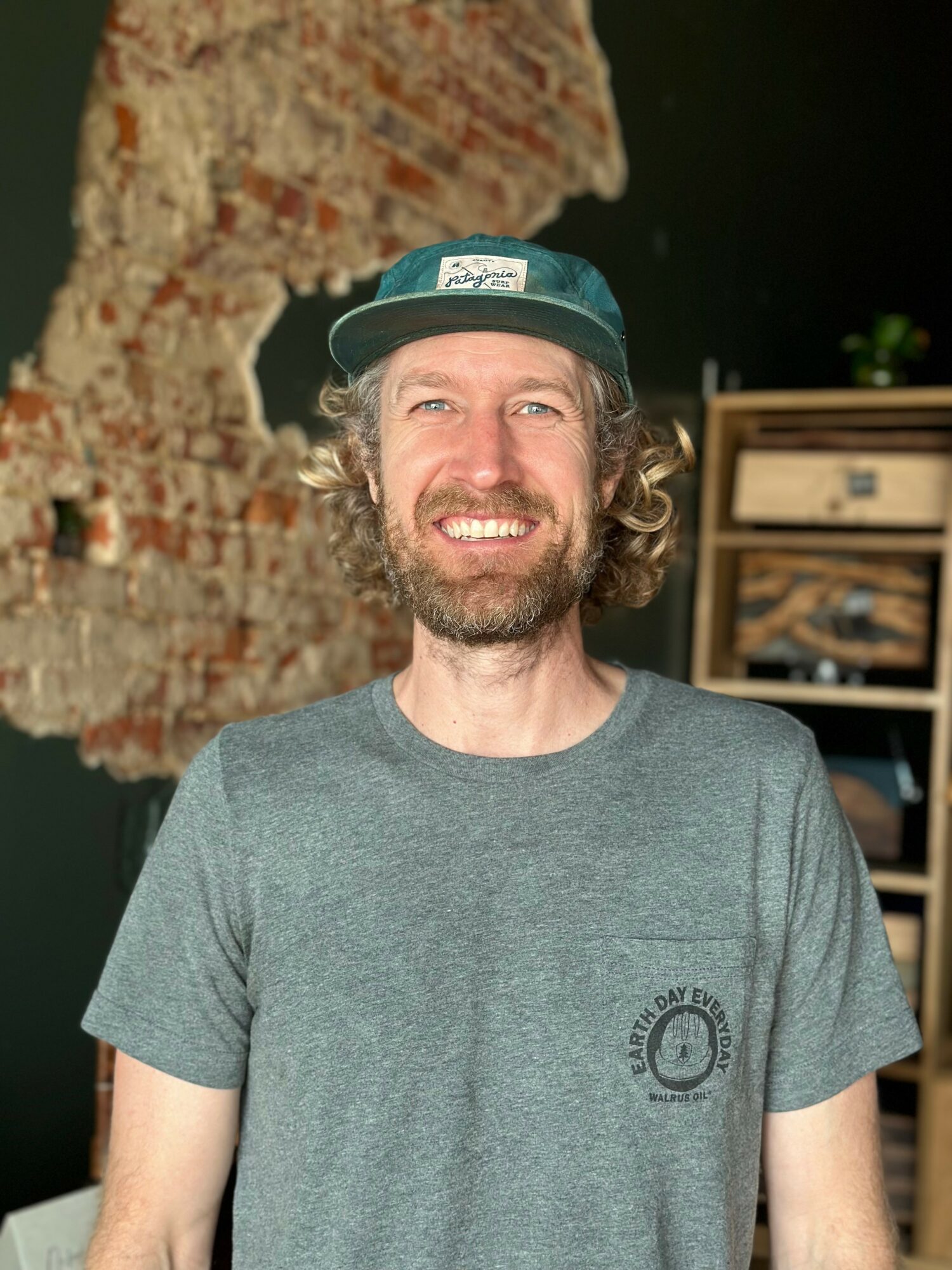
Today we’d like to introduce you to Bud Farmer.
Hi Bud , thanks for sharing your story with us. To start, maybe you can tell our readers some of your backstory.
My dad passed away in 2005, when I was 20 years old. He was a successful home builder, and in the wake of his passing, I stepped in and took over the business at a young age. I felt an immense amount of pressure and quickly realized I wasn’t ready to be locked into a lifelong career. I needed distance—and a chance to figure out who I was outside of his shadow.
My wife and I moved to Fort Collins, Colorado, for a few years, where I completely removed myself from building altogether. It felt like starting over, no longer being known as “the builder,” and that reset was exactly what I needed at the time.
Eventually, we moved back to Texas with no intention of returning to the building industry. What I found instead was that both my reputation—and my dad’s—were still waiting for me. I picked up where I had left off, but along with it came the stress and unresolved trauma I thought I’d left behind.
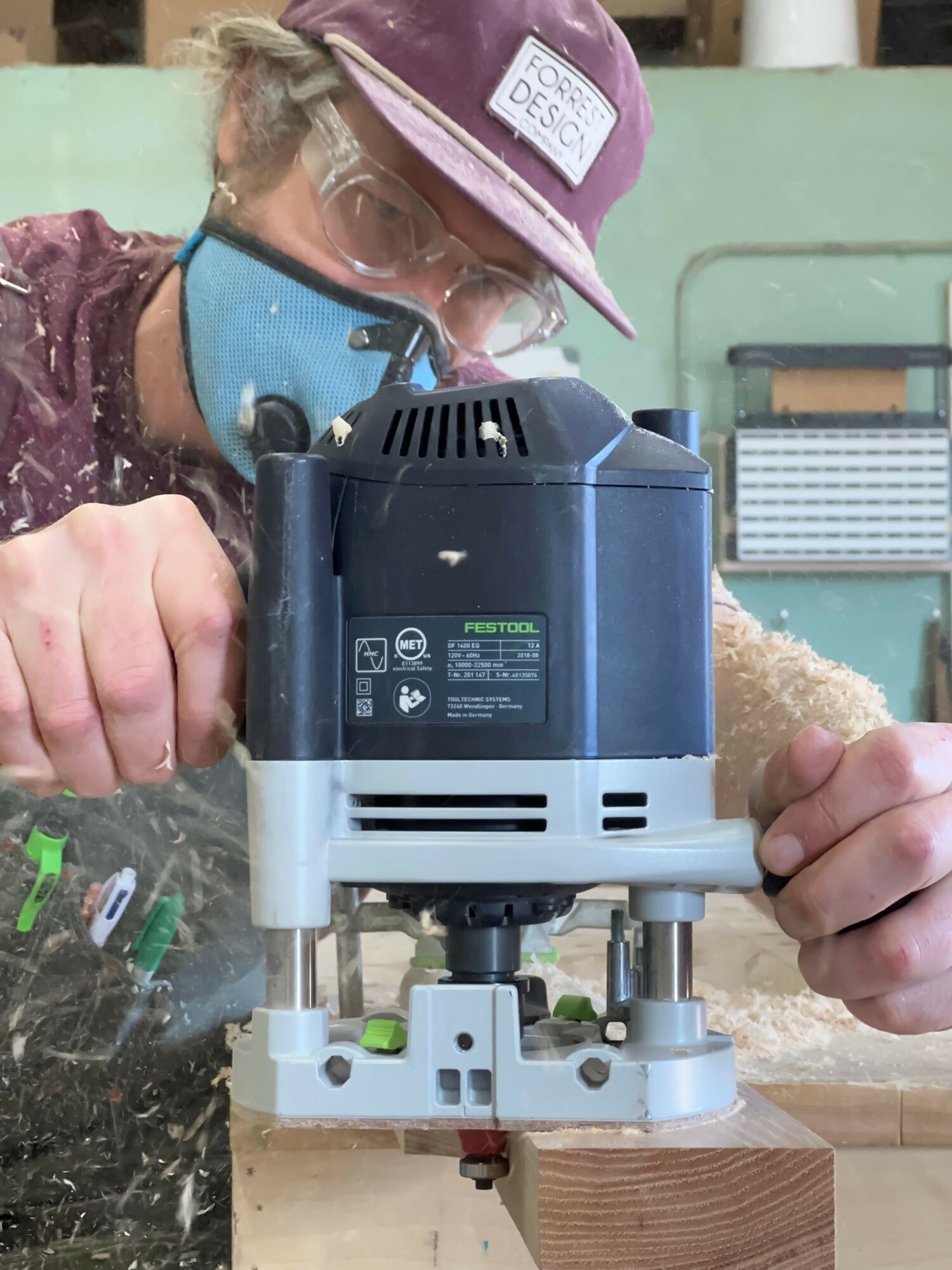
As panic attacks and anxiety began to take hold, I knew something had to change. That’s when I started teaching myself furniture making and woodworking. Pieces began to sell, custom orders followed, and gradually I took on fewer homes each year while taking on more woodworking projects. Slowly but surely, the balance tipped.
I found myself enjoying the work again. The panic attacks didn’t disappear, but they became less frequent. I finally felt like I was on a path that fit me. After four—almost five—years of that transition, I was able to step away from construction entirely and focus fully on Forrest Design Co.
I’m sure it wasn’t obstacle-free, but would you say the journey has been fairly smooth so far?
Like anything worth pursuing, there were plenty of challenges along the way. Early on, the biggest hurdle was balancing two businesses—the construction side and Forrest Design Co. When I eventually decided to go all in on woodworking, a new challenge emerged: the financial reality of having an employee.
I was still learning and refining my process, and every project was custom and unique. That meant designs took time to develop, and execution often took longer than expected. As projects stretched on, I found myself consistently paying my employee out of what should have been my own profit. It became unsustainable.
After wrestling with that reality, I made the decision to go solo—and everything changed for the better. I gained the freedom to spend the time each project deserved, without the constant pressure of working long hours with no return. I became more detail-oriented, more intentional, and most importantly, I started enjoying the process again.
Looking back, choosing to work alone was one of the best decisions I’ve made.
As you know, we’re big fans of you and your work. For our readers who might not be as familiar what can you tell them about what you do?
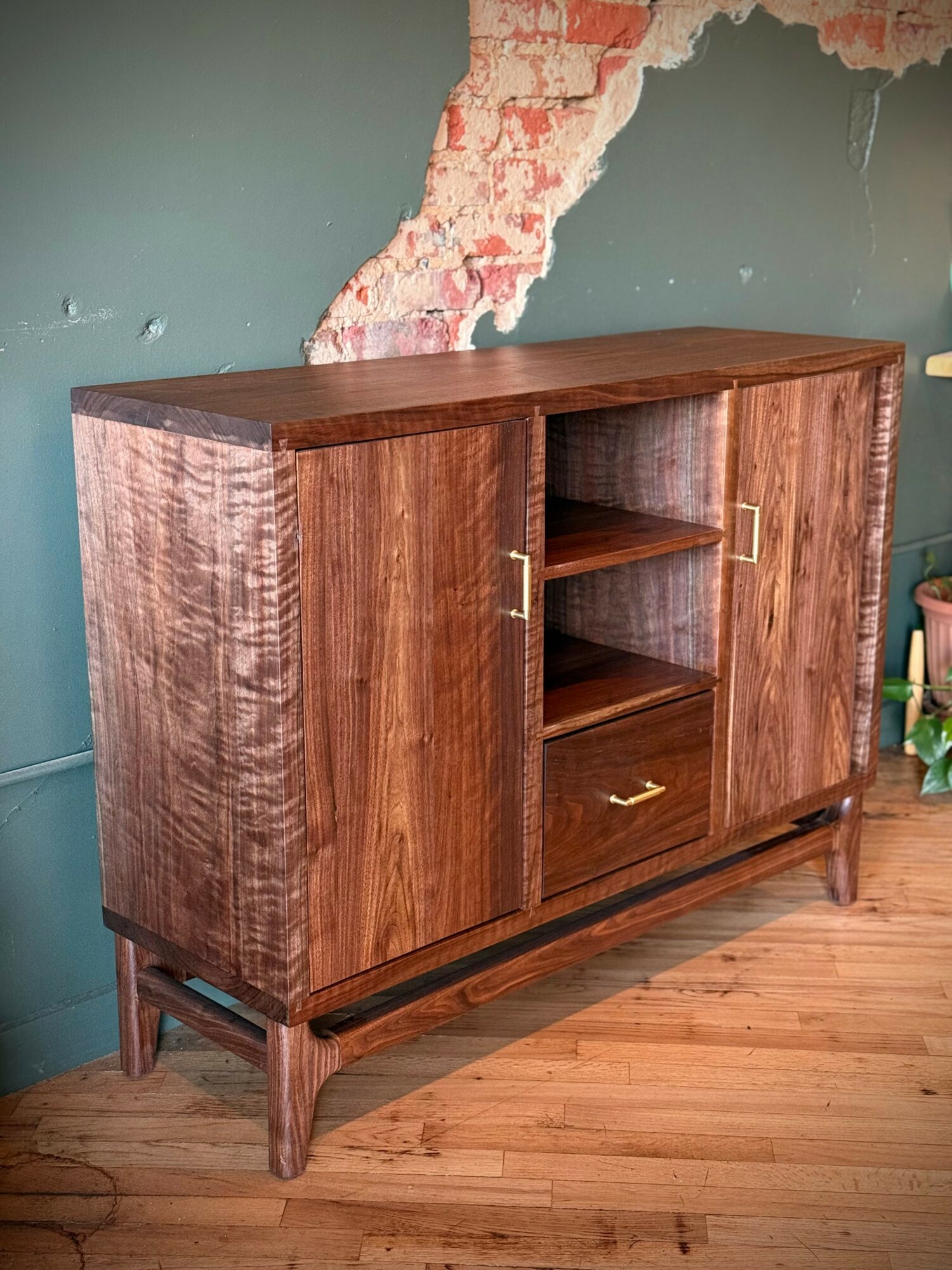
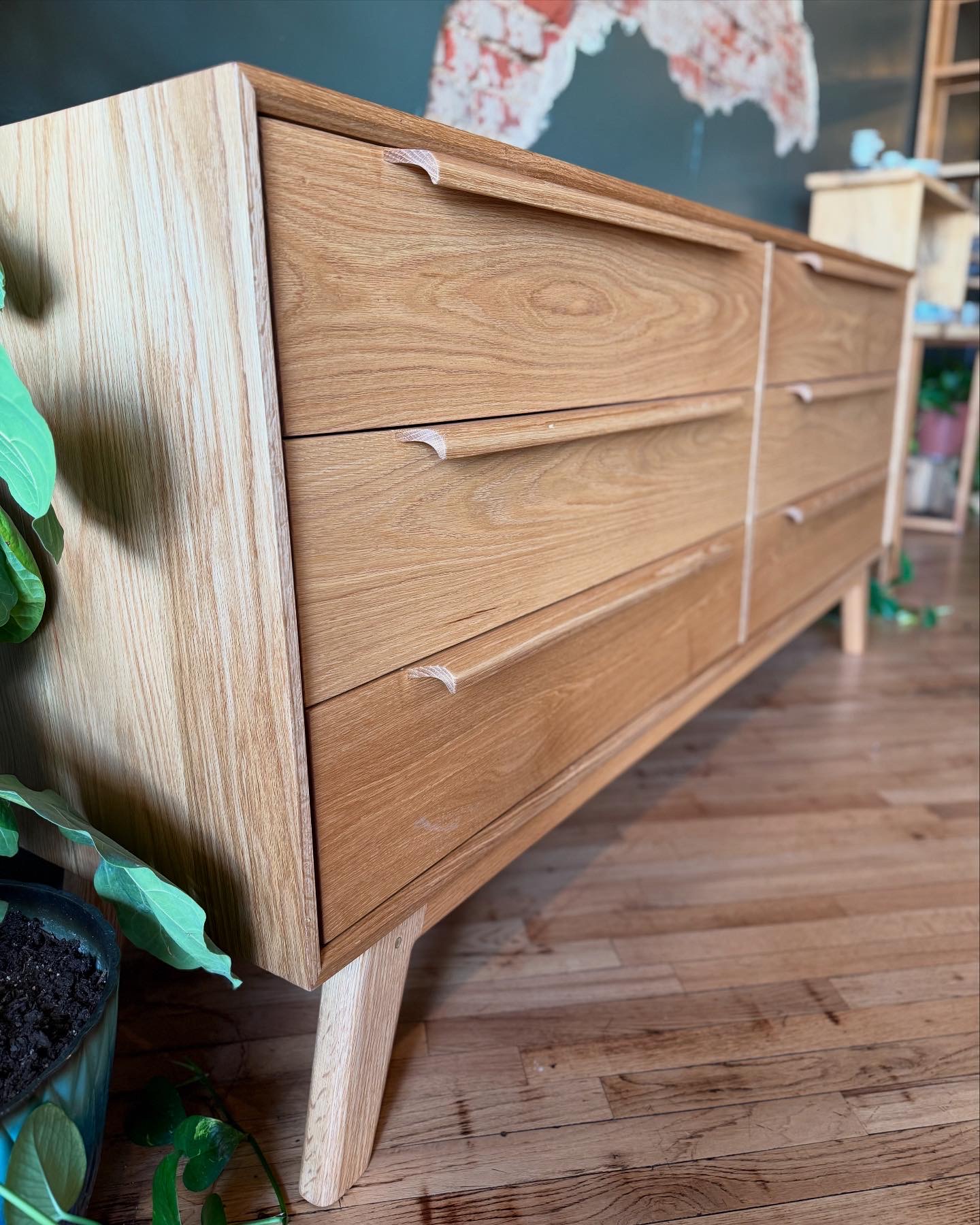
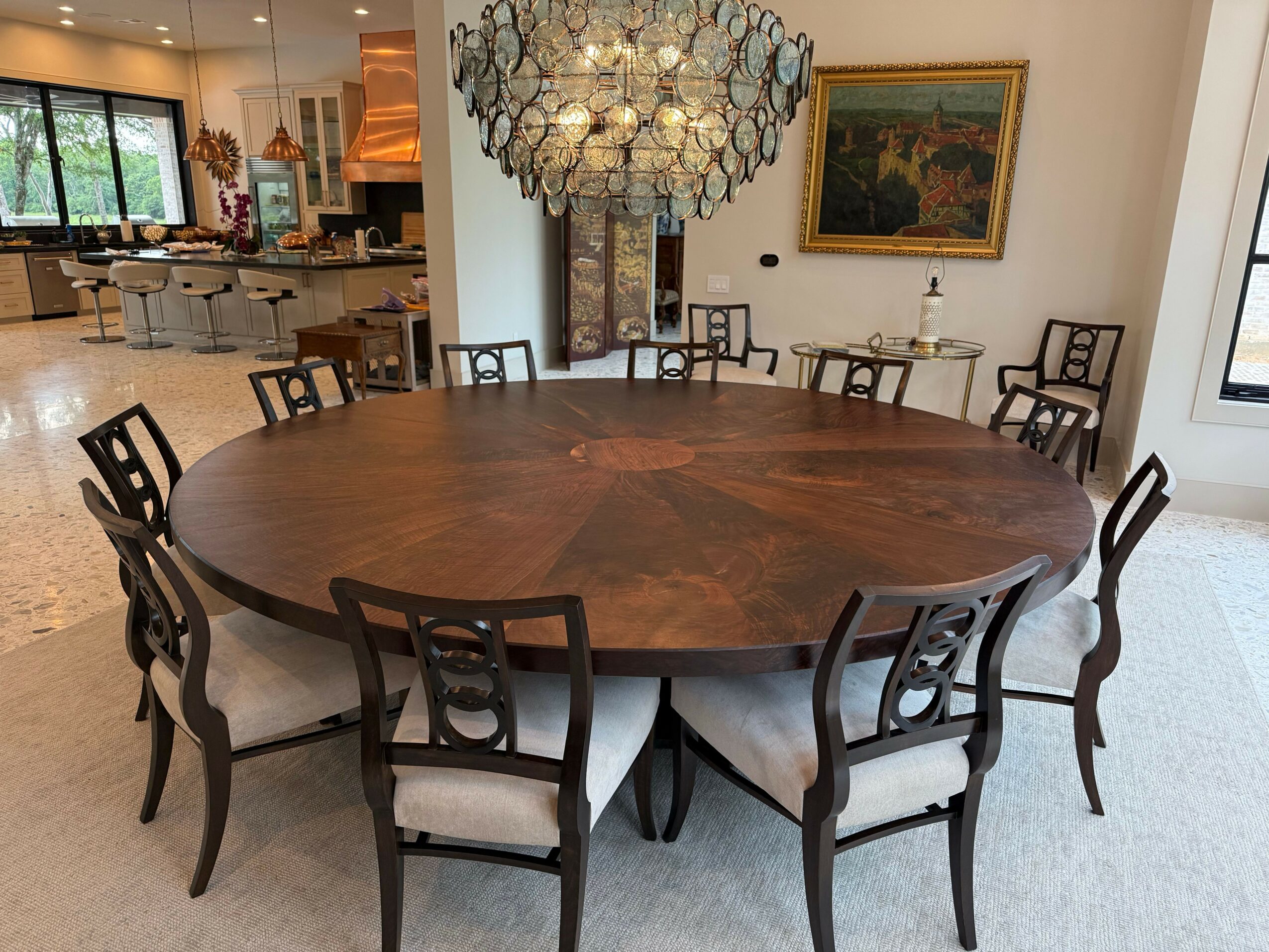
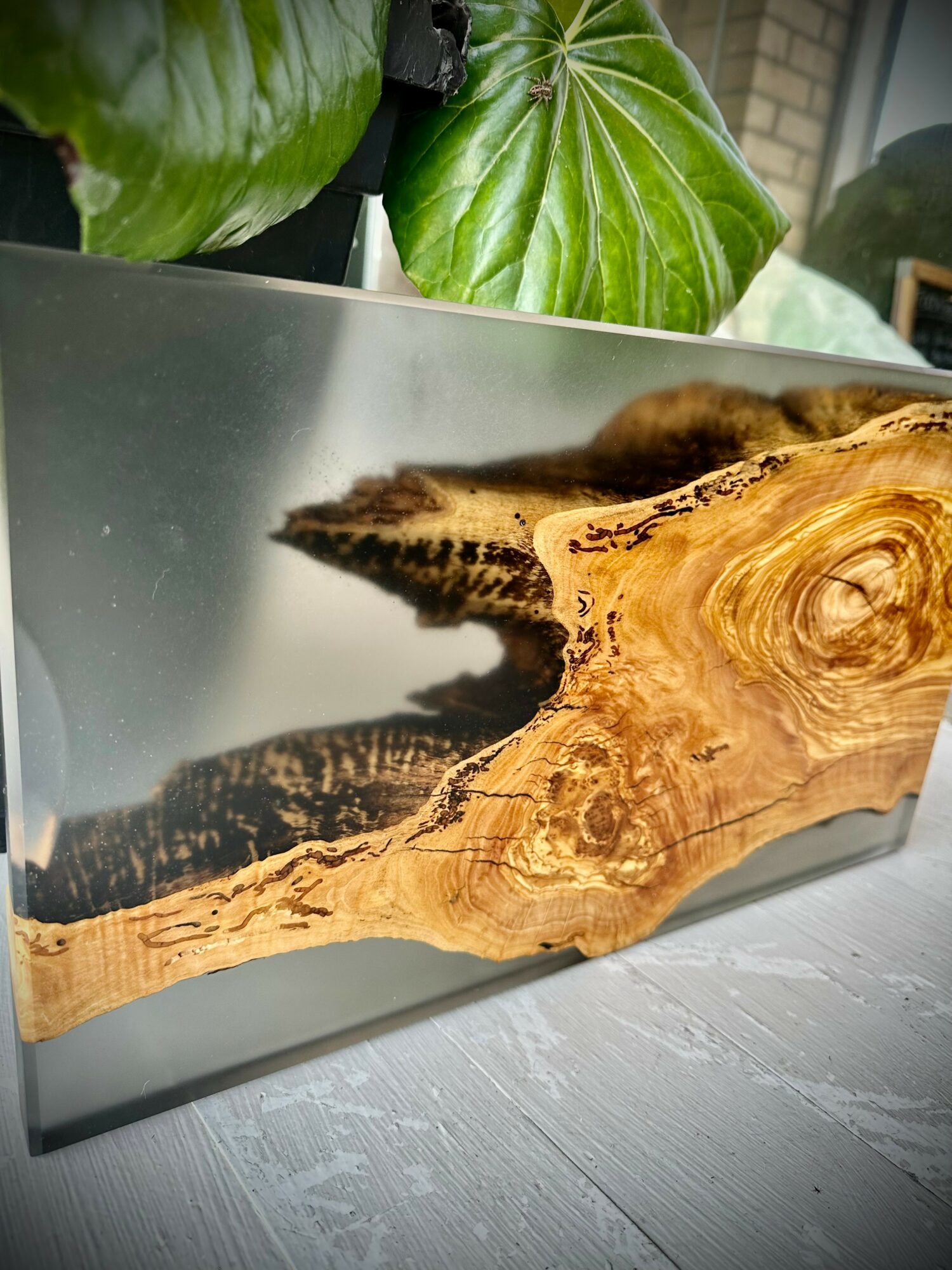
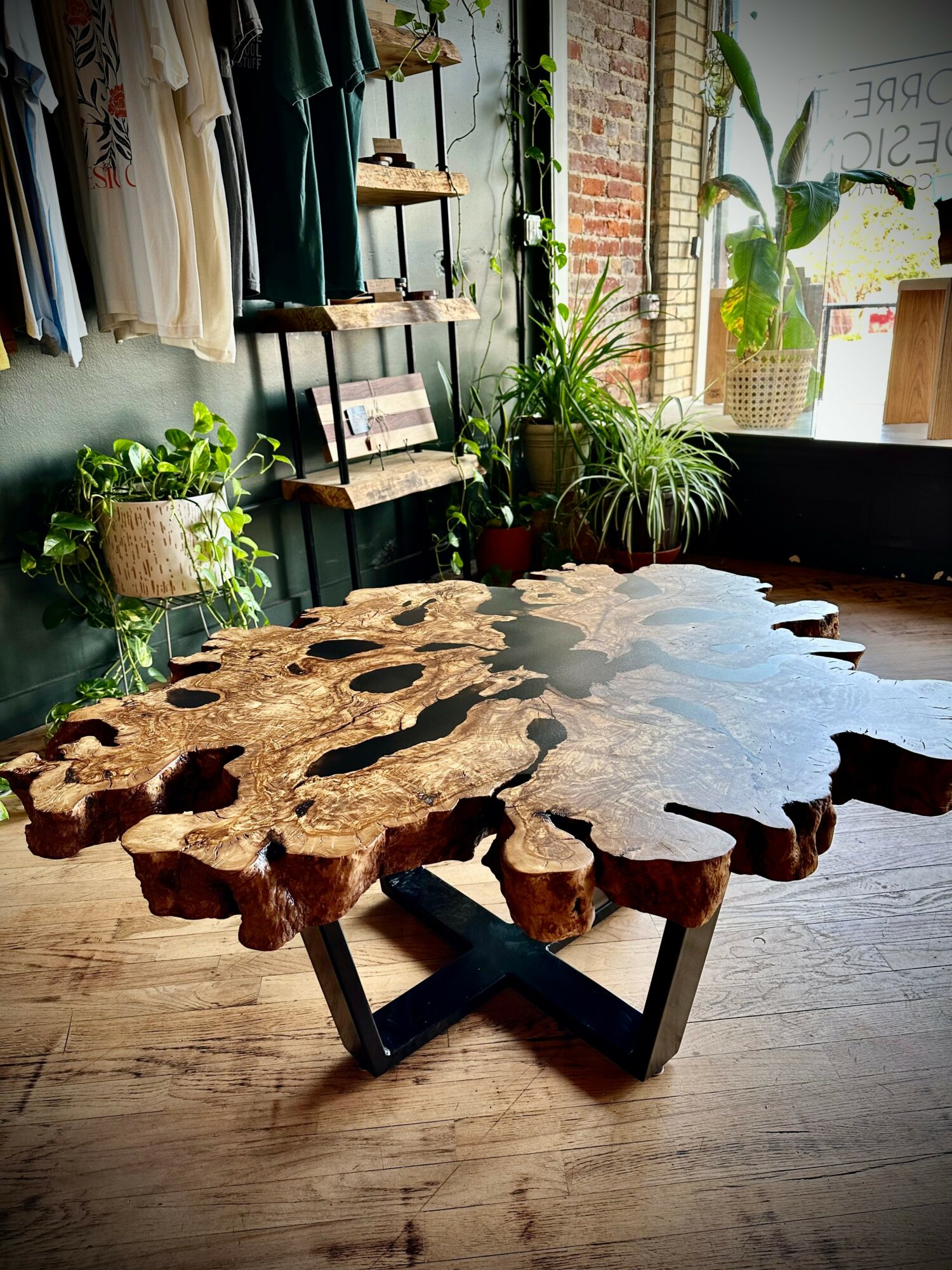
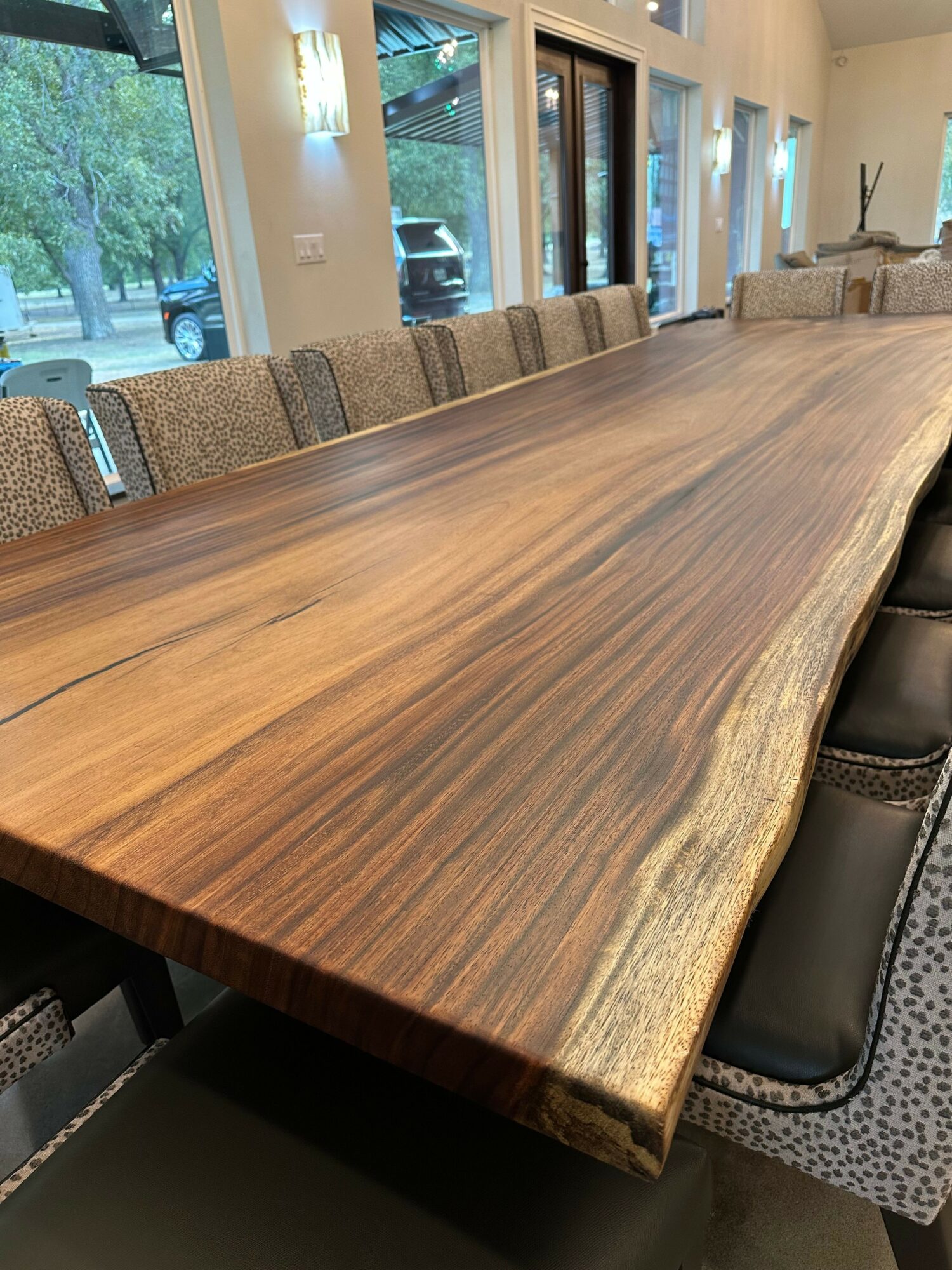
I specialize in designing and building furniture and tables, and my work has evolved significantly over the years. When I first started, much of what I made incorporated epoxy. While I still use it from time to time, it’s no longer my primary focus. Lately, I’ve been especially drawn to traditional joinery and all-wood construction, pushing myself to refine those techniques and let the craftsmanship speak for itself.
What truly sets Forrest Design Co. apart, though, is our space. In 2022, my wife and I, along with one of my closest childhood friends, RJ Moore, purchased a storefront in downtown Jacksonville. RJ had just moved back from California, where he worked as a sushi chef, and together we opened something truly unique—a shared space where my furniture showroom, a restaurant, and a bar seamlessly coexist.
The restaurant, Food & Table, offers lunch and dinner throughout the week, with intimate omakase dinners on Friday and Saturday nights. Everything lives under the same roof, blending craftsmanship, food, and hospitality in a way that creates a truly special atmosphere.
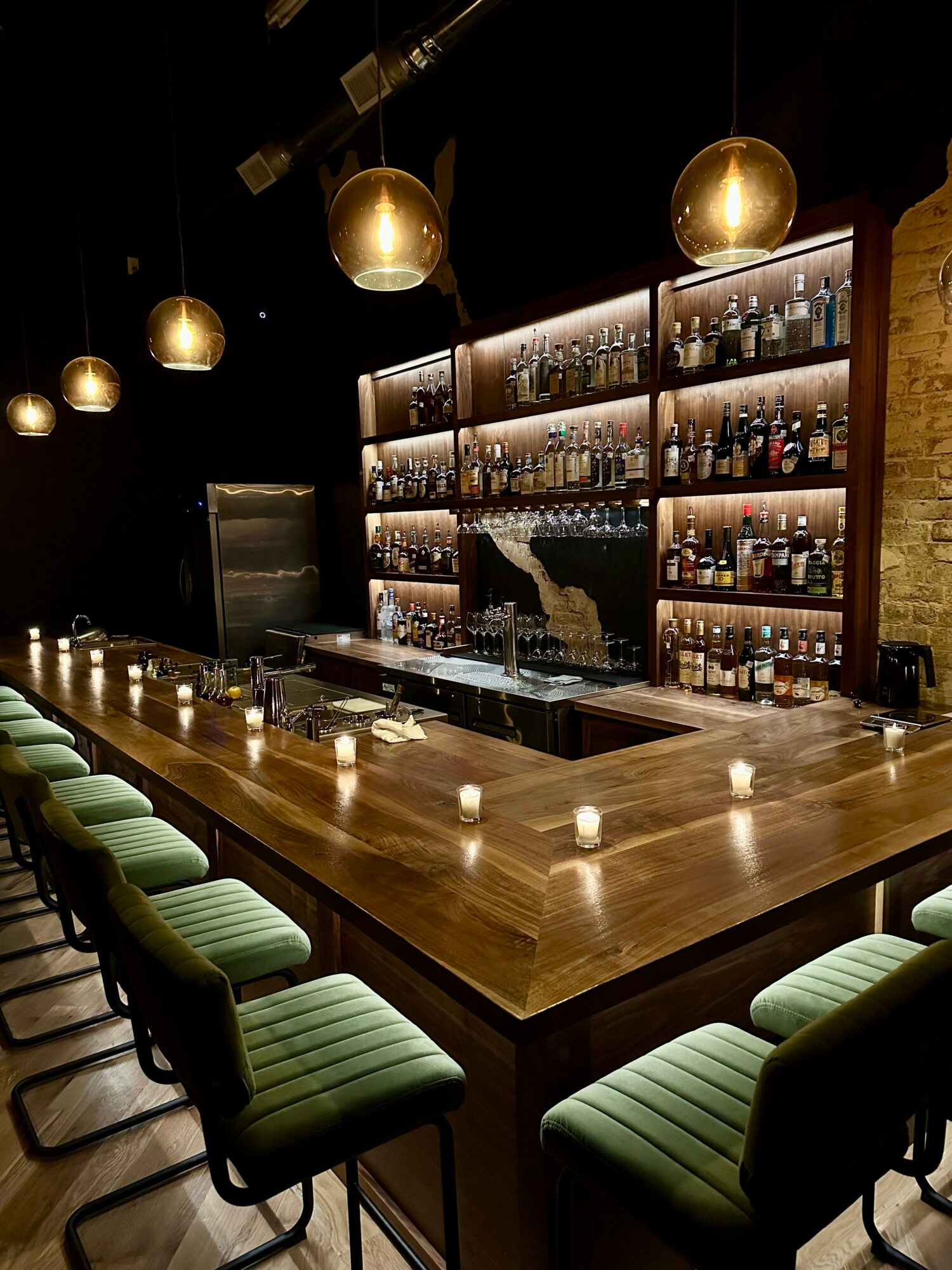
More recently, we opened a small bar accessible from the back of the building called Half Blind. My wife and I run it on Friday nights during omakase service. With just 12 seats, it’s first come, first served, and focused on thoughtfully made cocktails and well-curated spirits.
We’re incredibly proud of what this space has become—it’s a reflection of our work, our passions, and the community we’re building around it.
What has been the most important lesson you’ve learned along your journey?
’ve learned a lot through this process—especially the importance of having clear, non-negotiable values while still allowing a business to evolve. That might sound contradictory, but I’ve learned it’s not only possible, it’s necessary.
For me, those non-negotiables were simple but firm: not letting work take over my home life or the time I have with my kids; giving back to causes that matter deeply to me—which is why I’m a member of One Percent for the Planet and support One Tree Planted; pricing my work appropriately and earning what it’s worth; and being intentional about not morphing into a cabinet shop.
Throughout this journey, I’ve stayed true to those principles. At the same time, I’ve remained open to where the business might lead. Because of that openness, I now have a furniture showroom inside a restaurant and own a bar where I also bartend. None of that is something I could have imagined four years ago.
That willingness to let the concept evolve—without sacrificing what matters most—has allowed us to build a business far beyond anything I could have predicted.
Contact Info:
- Email: bud@forrestdesign.com
- Instagram: https://www.instagram.com/forrestdesignco/
- Facebook: https://m.facebook.com/Forrestdesigncompany/
- Youtube: https://www.youtube.com/@ForrestDesignCompany
- Other: https://halfblindbar.com // foodandtabletx.com