




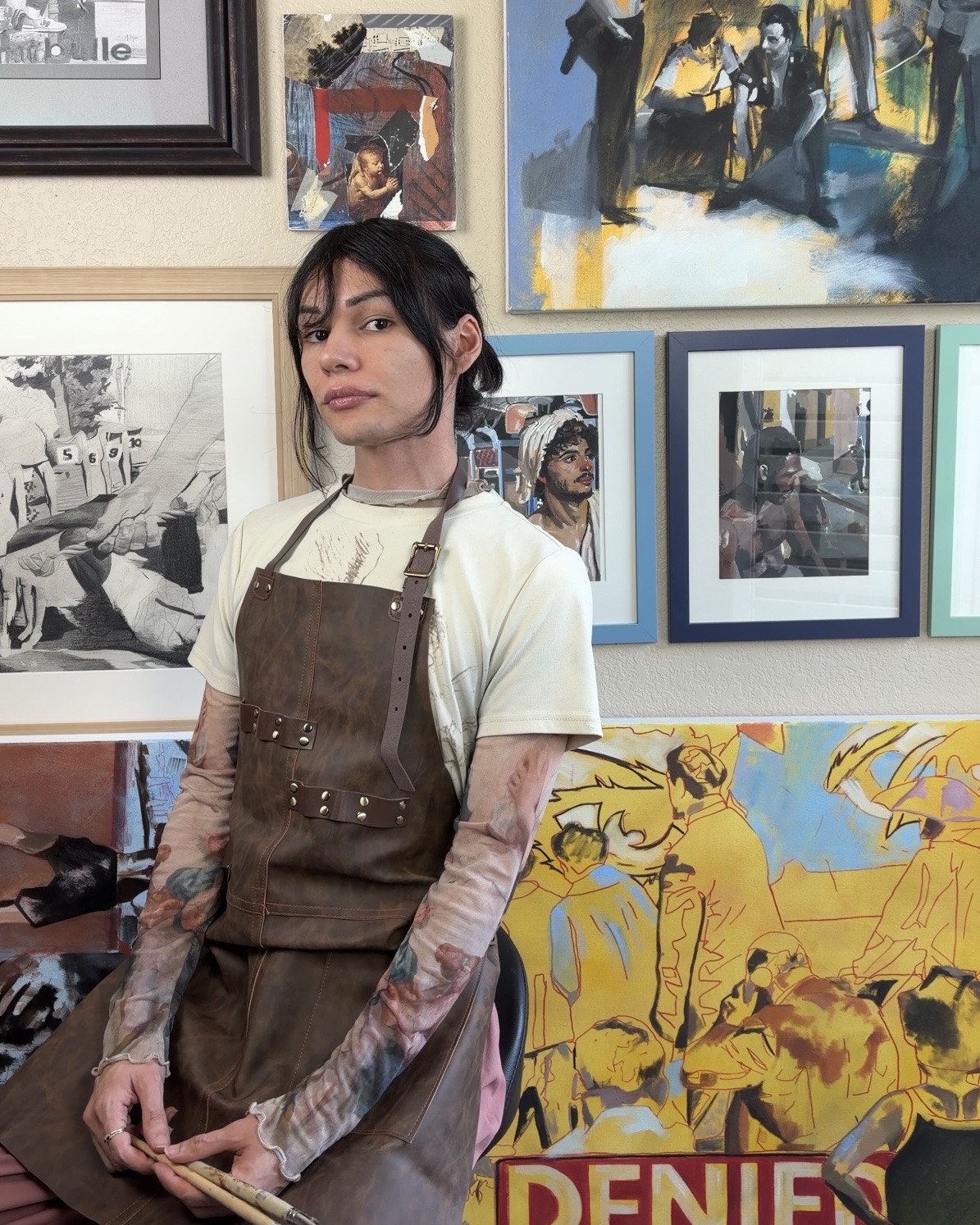
Today we’d like to introduce you to Bryan Holguin.
Hi Bryan, please kick things off for us with an introduction to yourself and your story.
I never expected to be an artist. As with most children, frequent drawing and coloring naturally led to unbridled creative play. For fun, and even out of boredom, I drew the people around me, the cartoons and animations I saw, and the characters I imagined. Lines, shapes, and colors became a youthful language for me that later quietly trailed behind a growing interest in health science and humanities studies.
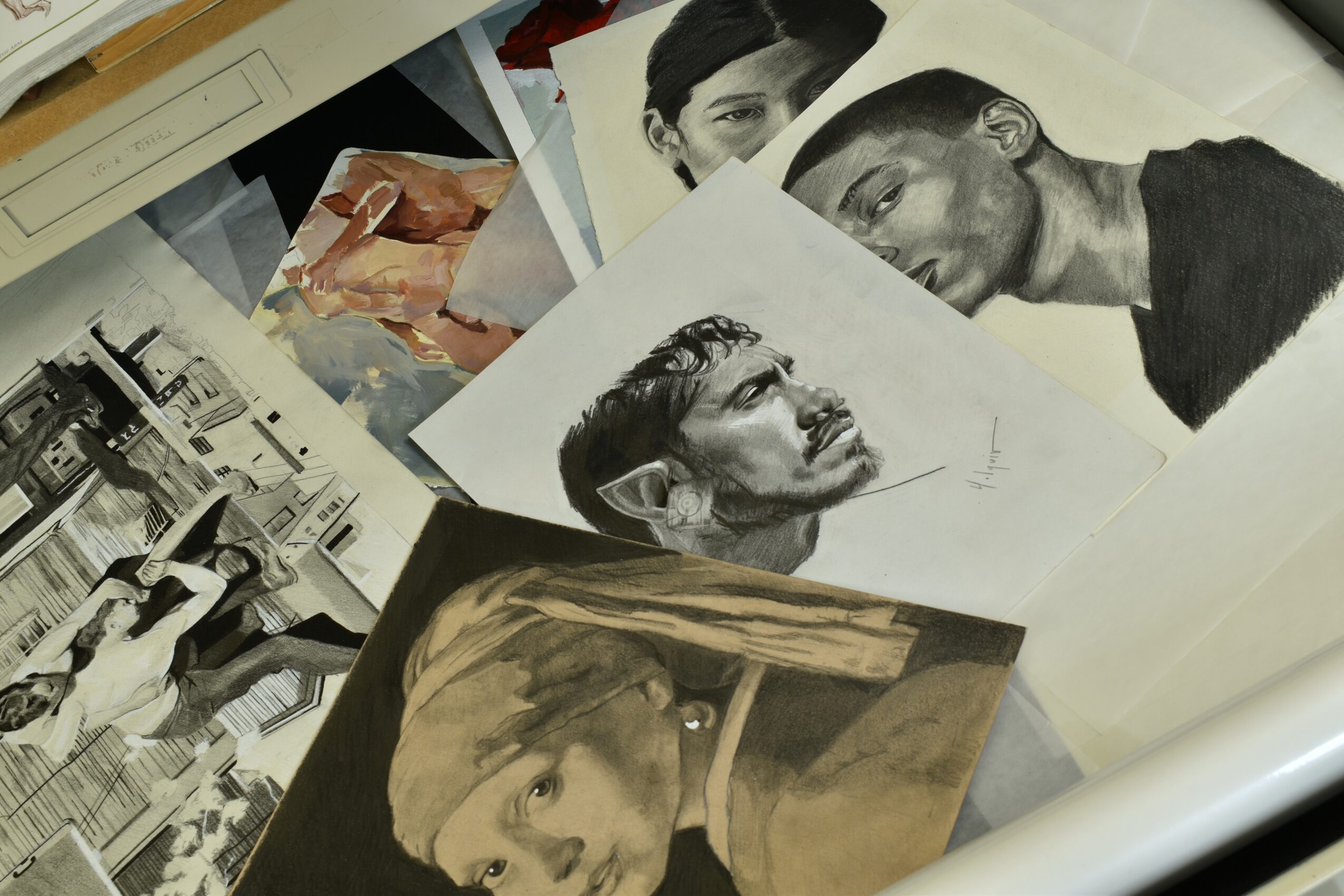
I later operated through my high school academic career with the stern belief that my professional path lay in the realm of anthropology. I focused my studies and electives on coursework involving professional health, natural sciences, and history to help narrow the sector. It wasn’t until senior year of high school that happenstance took place; I found myself as a senior in an introductory Art 1 elective. There I began to work with mediums as charcoal, acrylic, and watercolor paint. The curiosity and experimentation I faced felt like I’d reconnected with a forgotten friend.
In 2018, I officially decided to switch majors and pursue a BFA in Studio Art, minoring in art history and cultural anthropology at the University of North Texas. The early work I created during my undergraduate years was self-explanatory, to say the least. Fueled by newfound anthropological perspectives and young existentialist questions-the adolescent self-portraits I painted became necessary psychological cross-examinations for me. Those four years under the tutelage of fine art instructors like Laura Beard, Matthew Bourbon, and Christian Fagerlund, and through lots of self-driven experimentation, I was able to shape the foundation of what now is my understanding of painting and fine art.
Today, I sit with a more interdisciplinary approach to fine art and have extended past traditional fine art mediums to include digital art as well. I’ve worked and collaborated with various organizations ranging from commercial galleries to local cultural art centers, and even exhibited in city halls. I am currently working toward my first solo show and hoping to collaborate with more artists for future projects.
Alright, so let’s dig a little deeper into the story – has it been an easy path overall and if not, what were the challenges you’ve had to overcome?
I think that, looking past some of my private challenges regarding personal circumstances and identity, there is one obstacle that, for many creatives, persists no matter what, and that is learning to separate one’s role as the artist from that of the art critic. This has been one of the most difficult things for me to discern. What and how do I create? Am I revising my painting based on the needs of the work or to meet public expectation? The times when the answers to these questions become blurred have led to feelings of confusion, doubt, and imposter syndrome. It has taken me a while to understand that I can’t create from a place of genuine perspective if I’m constantly editing or censoring my work.
That also leads to another unfortunate truth I’ve had to own up to: the acceptance of repeated failure. A cliché for a reason, but it does take a lot of “bad art” to create good art. It is a tough challenge to allow for that kind of experimentation without the sentiments of having wasted supplies, time, and effort. It’s an even tougher challenge in today’s age, with the internet and social media constantly demanding your best foot forward, as well as the certainty of digital permanence
Appreciate you sharing that. What else should we know about what you do?
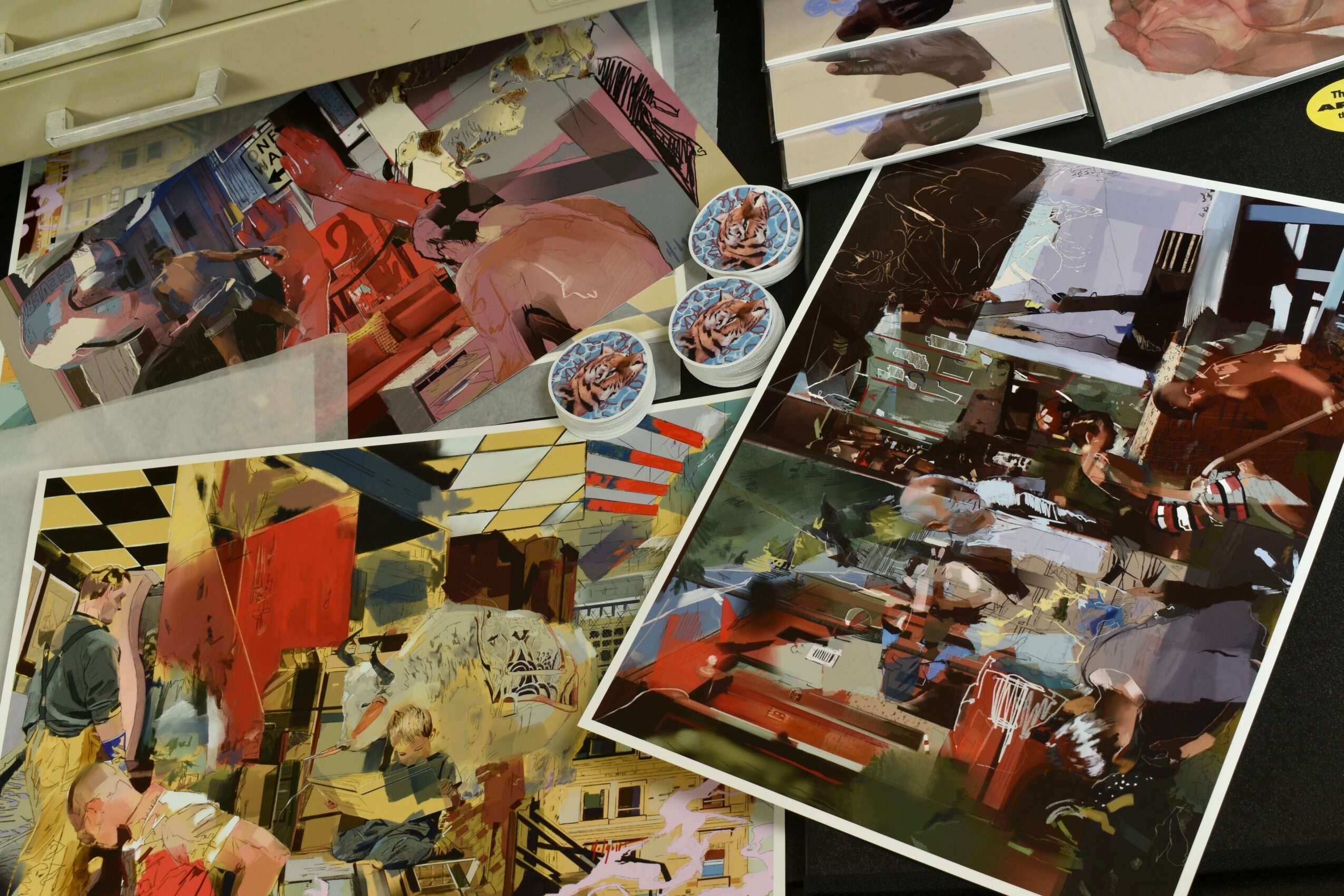
I am primarily an oil painter. My practice draws from historical and sociocultural frameworks to investigate the nuances of human interaction. My work is largely composed of ambiguous imagery that walks the line between absolute narrative coherence and interpretive openness. The scenes that I create sometimes resist definitive storytelling; instead, I prompt viewers to negotiate meaning.
What sets my work apart is my dialogic approach to painting. My paintings are meant to operate as open systems– visual propositions rather than conclusions. My work doesn’t seek to provide answers but instead invites viewers into an active interpretive exchange. It is a visual language that feels both intimate and elusive.
We’d love to hear about how you think about risk taking?
As a fine artist, I view risk-taking as inevitable. This pursuit carries inherent risk. You risk never having another good idea or selling another work. Then, when exhibiting, there are logistical risks of damaged, lost, or stolen artwork both on-site and en route. There are nonfinancial risks, such as your work being misunderstood, harshly critiqued, or worse, ignored. Naturally, I try and mitgate risk wherever I can. All this to say that I wouldn’t have it any other way.
Contact Info:
- Website: https://www.bryanholguin.com
- Instagram: https://www.instagram.com/bayanholguin/