






Today we’d like to introduce you to Nicholas Larsen.
Hi Nicholas, we’re thrilled to have a chance to learn your story today. So, before we get into specifics, maybe you can briefly walk us through how you got to where you are today.
I was born in New Hampshire and raised in a very chilly Rhode Island. Around the age of five, my father moved us to Texas for his job, and we have been here ever since. Early on I was a very anxious little boy and quiet amongst strangers and in public places. Eventually, my parents would separate when I was 11, and my mother and I had to move in with my grandparents, who had followed us here from New Jersey. Around this time, I kept mostly to myself in my room and watched lots of movies, mainly horror, a genre I fell in love with. As a kid, my mom called me the “dark boy” and “dark child” because I was interested in creepy oddities and things that she would have called macabre. When I grew into adolescence, it would really start to grip me. Going into high school, I was in marching band playing the French horn. I started to come out of my shell — for lack of better phrase and come sophomore year, I had discovered photography by joining the yearbook staff, where I photographed sports or whatever else was happening at school. Going into college at UNT, I had not fully realized I wanted to be a photographer for a living, so I went after graphic design. That laughably fell through, so I decided to go back to photography.
Can you talk to us a bit about the challenges and lessons you’ve learned along the way? Looking back, would you say it’s been easy or smooth in retrospect?
My parents’ divorce definitely was a blow to me, as it would to anyone that young, but especially being such an anxious 11-year-old. I struggled in school very soon after they broke it off. On top of that, moving in with my grandparents was also not an ideal situation as they also contributed to my anxieties and declining mental health. I dealt with this unfortunate living situation all the way until about freshman year of high school, where a combination of factors that just seemed unrelenting threw me into fell into a full depression. Thankfully my mother fought tooth and nail to get us a house where we both lived together in Roanoke. Unfortunately, at 15, I had been voluntarily admitted to a Mental Health Facility to learn how to live with my depression and combat it to the best of my ability and be a functioning young adult. This was definitely an experience that was able to give me a lot of perspective because of the people I met and the caretakers who were there to help and advise us on how to live — at least contently.
Can you tell our readers more about what you do and what you think sets you apart from others?
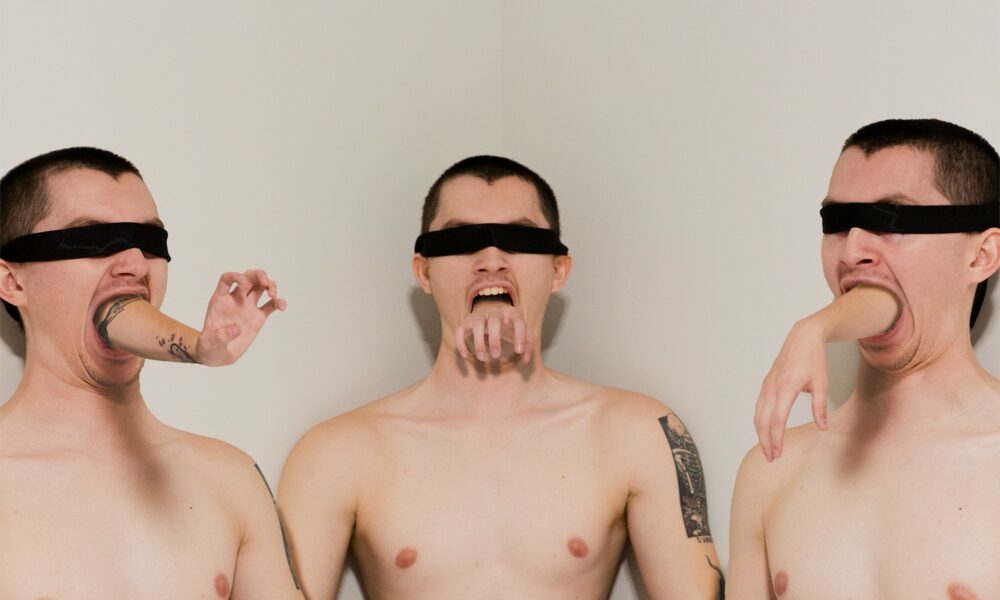
I am primarily a photographer focused in Studio Art. I specialize in making photos with dark and unsettling themes. These photos start out as ideas that play out in my head cinematically and I brainstorm on how to compose all the separate elements I would like to have happen in one frame. It starts out almost as if like I am sketching the photo — literally drawing it out or making mock photos to work from as the project progresses. A typical theme I have explored in making my photos is commenting on mental health, either being my own or trying to relate in a more communal sense to others’ struggles with mental health. Most recently in my Senior year at UNT, I was working on a project that focused on liminal spaces and drawing comparisons from the feelings I would have being in these environments that I found to be both eerie and equally captivating to look at. The concept was to create a surreal liminal narrative from different vignettes of what lost memories feel like. I wanted to make it look like these were plucked out from your head and plopped down into a weird alternate dimensions where memories go to stay once they are forgotten. I imagined these places as empty and barren like a painting with all of the people shaken out of it and discolored from time being unkept.
How can people work with you, collaborate with you, or support you?
They can email me at nicholasnesral@gmail.com or follow me on Instagram @paranoid__polaroid
Contact Info:
- Instagram: https://www.instagram.com/paranoid__polaroid


Image Credits
Nicholas Larsen