





Today we’d like to introduce you to Tyler Choquette.
Tyler, we appreciate you taking the time to share your story with us today. Where does your story begin?
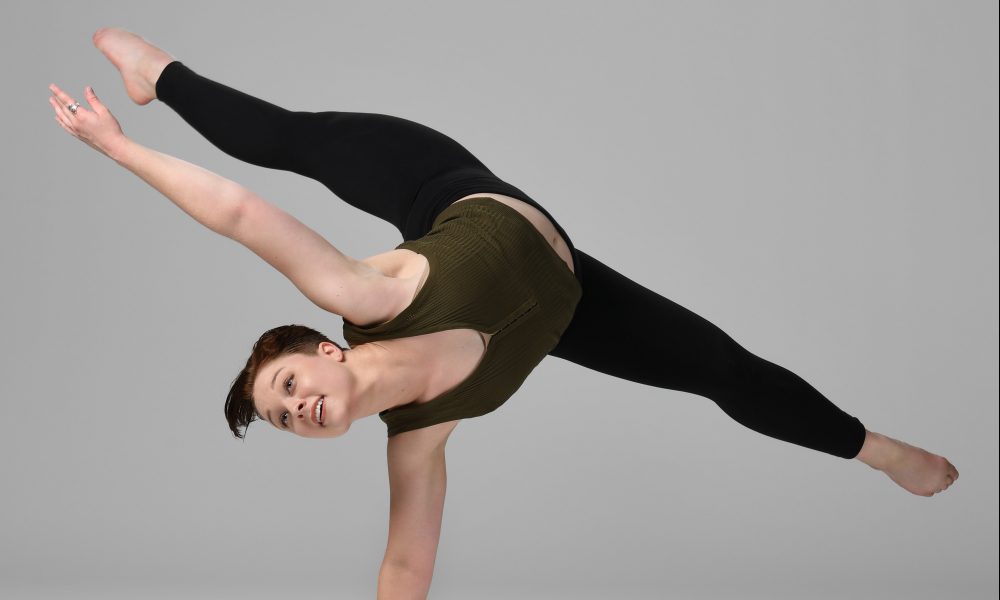
I began dancing at a very young age around the entryway of my home in California in front of my amused family. Music turned on, and there I was, unable to sit still. My parents put me in dance classes, and my deep love for movement began to really flourish. I grew up dancing at various studios and attended Orange County School of the Arts. I later moved to New York City and graduated with a BFA in Dance Performance from The Ailey/Fordham undergraduate program. I am currently a freelance artist working for various contemporary dance companies throughout New York and New Jersey. I feel incredibly lucky to be a part of so many different communities within the larger art scene as a whole. It allows me to be in conversation with more, widening my understanding of my own humanity and others’ thoughts, memories, and nuances. When I am not rehearsing or performing, I am a teaching artist and personal trainer through my own business I started alongside my partner, Chickadee Personal Training. Educating through movement brings me so much joy! My students’ hunger to discover while remaining playful inspires me.
Can you talk to us a bit about the challenges and lessons you’ve learned along the way? Looking back, would you say it’s been easy or smooth in retrospect?
I think with any relationship, this specific relationship being between movement and myself, that lasts decades, there are bound to be difficulties, obstacles, and ebbs and flows of creativity and quietness. Beginning as a teenager all the way until my college years, I struggled with injury after injury after injury. I felt like I just couldn’t heal. I could tell something was off, but nobody I went to could fully put the puzzle together. Around 2017, I was at a breaking point – I either needed to give into the confusion, pain, and depression, or I could fully step back from dance and make learning what was going on and healing my full-time responsibility. I chose the latter. After seeing doctors, getting referral after referral, taking test after test, I found out all of this struggle was a result of untreated PCOS – a hormonal disease that affected my bone density, my mental health and resulted in excessive fatigue, swelling, and unbearable migraines. Finally, I had my answer! I knew where to start and could begin paving my way back to health and back to my love and purpose – dance. This process enlightened me with an incredible sense of gratitude and patience with my body that I carry with me to this day. Injury is an inherent challenge with using my body as my medium to create art, however, I now have the learned grace and fortitude to practice kindness with myself when I am not working at 100%. This proved to be incredibly necessary during the pandemic. I knew how colorless my life felt without dance and had developed the perseverance to return when it was safe enough to do so. Another challenge I encounter when engaging with institutionalized dance spaces is what I want my role to look like as a non-binary trans person so that I can create a safe space for other queer folks to enter the conversation. When I find myself as the first and only trans artist in the room, I choose to use that privilege to attempt to cultivate more understanding and expansiveness within the community processes.
Thanks – so, what else should our readers know about your work and what you’re currently focused on?
I am a freelance artist currently working with Nimbus Dance Works, McKoy Dance Project, Smashworks Dance, and Alma Collective. Additionally, I will be starting a new contract in the Fall. The majority of my work lives within the contemporary, modern concert world. I only choose to work with non-profit companies that focus on making this kind of dance more accessible to audiences through community engagement. It’s very important for me to share how much humility and empowerment movement can shed on our lives as artists and people living on this Earth. It is my hope that by sharing dance with communities who might not have the freedom to experience this kind of raw and uninhibited self-expression through education, guiding free movement, and performance, that they might leave feeling more curious, more understood, and more inspired than before.
Any advice for finding a mentor or networking in general?
Support is so so so important and necessary. I would not be able to move through the world as I do without guidance and care from my partner and mentors. They are people I am eternally grateful for to be on my side because life can be so difficult to navigate on your own. I think it’s important to take notice when someone in your life, whether it be a teacher or choreographer, or another performing artist, begins to check in with you not just as an artist but as a human being too. This is a person who has chosen to open up a line of communication that goes beyond surface level. I think this is an important distinction between a fellow artist and someone who is interested in helping guide you as a mentor. A mentor is someone who wants to tend to you as a person and artist because both need to be nurtured in order to experience success. Also, there have been moments in my life in which other artists have simply just offered their time to answer any questions or concerns I have. Take them up on it! It is easy to talk yourself out of receiving the help and love, but it’s important to remember that they offered to be more a part of your life as a mentor. You are not a burden. They want to be helpful.
As far as networking goes, the first thing I recommend is just take class. The more energy you put into investing in their craft, the more likely you are to receive energy in return, whether that be corrections, mentorship, or a job. I have found that connecting with people on a human level outside of the studio to be incredibly helpful. Do you and this company or person you want to work for connect on more than just your love of dance? Dance is a collaboration between our whole selves and others’ whole selves. Choreographers want to know that their dancers will be able to help fuel their creativity, inspire them, and maybe even teach them new things along the way. Additionally, a lot of information is passed around and observed on social media. I have found Instagram specifically to be a helpful tool in gathering information about job opportunities and workshops, and potential employers may use your page as part of their decision-making process. I am still learning the balance between being authentic to myself on social media and also providing enough information for other artists to see me. For some people, having separate pages for their artist self and everything else feels most rewarding and safe. I would keep checking in with yourself in regards to your social media presence. It’s important to continue emphasizing bravery while still maintaining truthfulness.
Contact Info:
- Website: Personal Training Website: https://www.chickadeepersonaltraining.com/
- Instagram: https://www.instagram.com/tyler.b.choquette/
- Other: https://www.nimbusdance.org/company/
https://mckoydanceproject.org/
https://smashworksdance.com/
https://www.instagram.com/_almacollective_/


Image Credits
Nir Arieli
Morgen Purcell
Elyse Mertz
Manu Roy