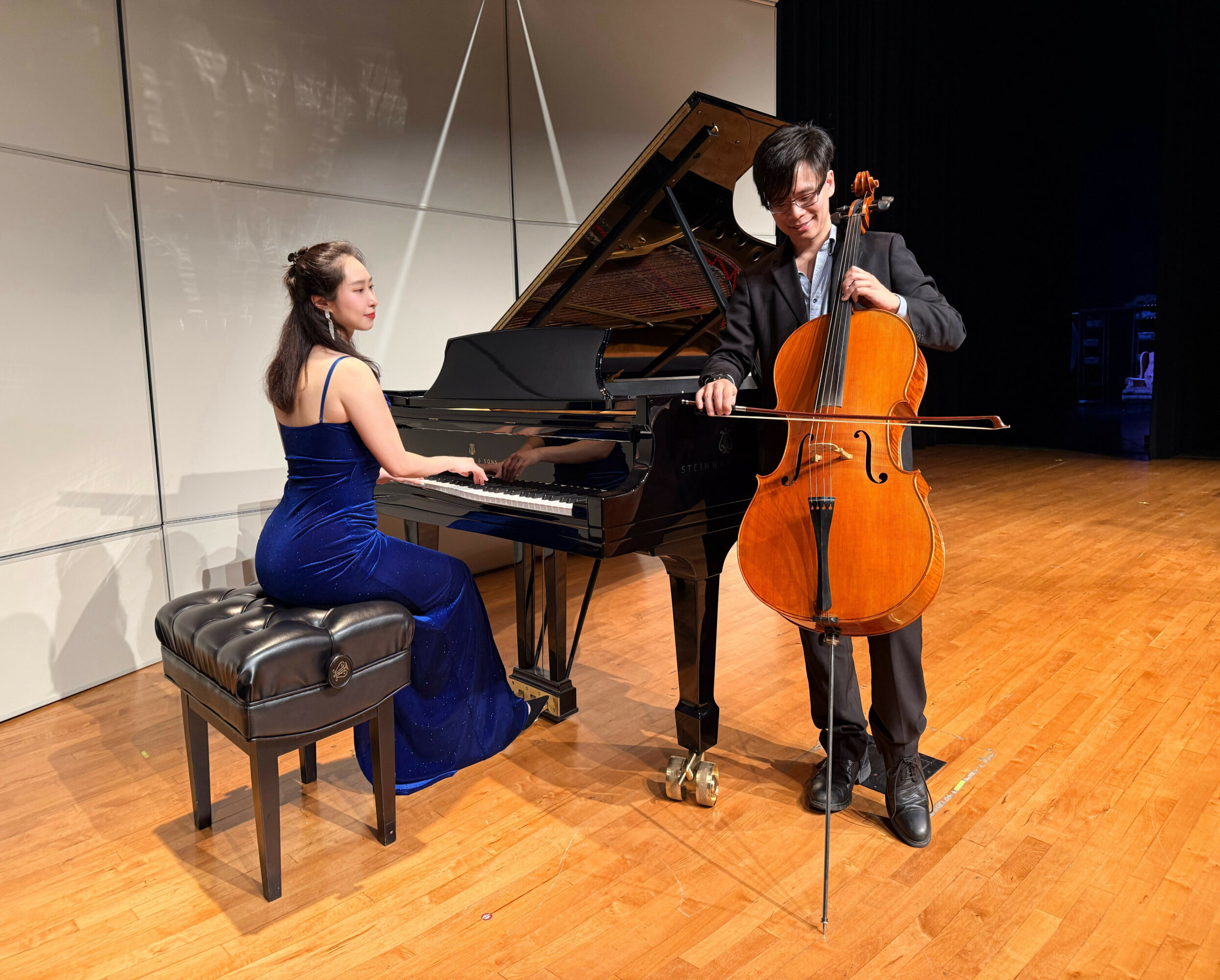
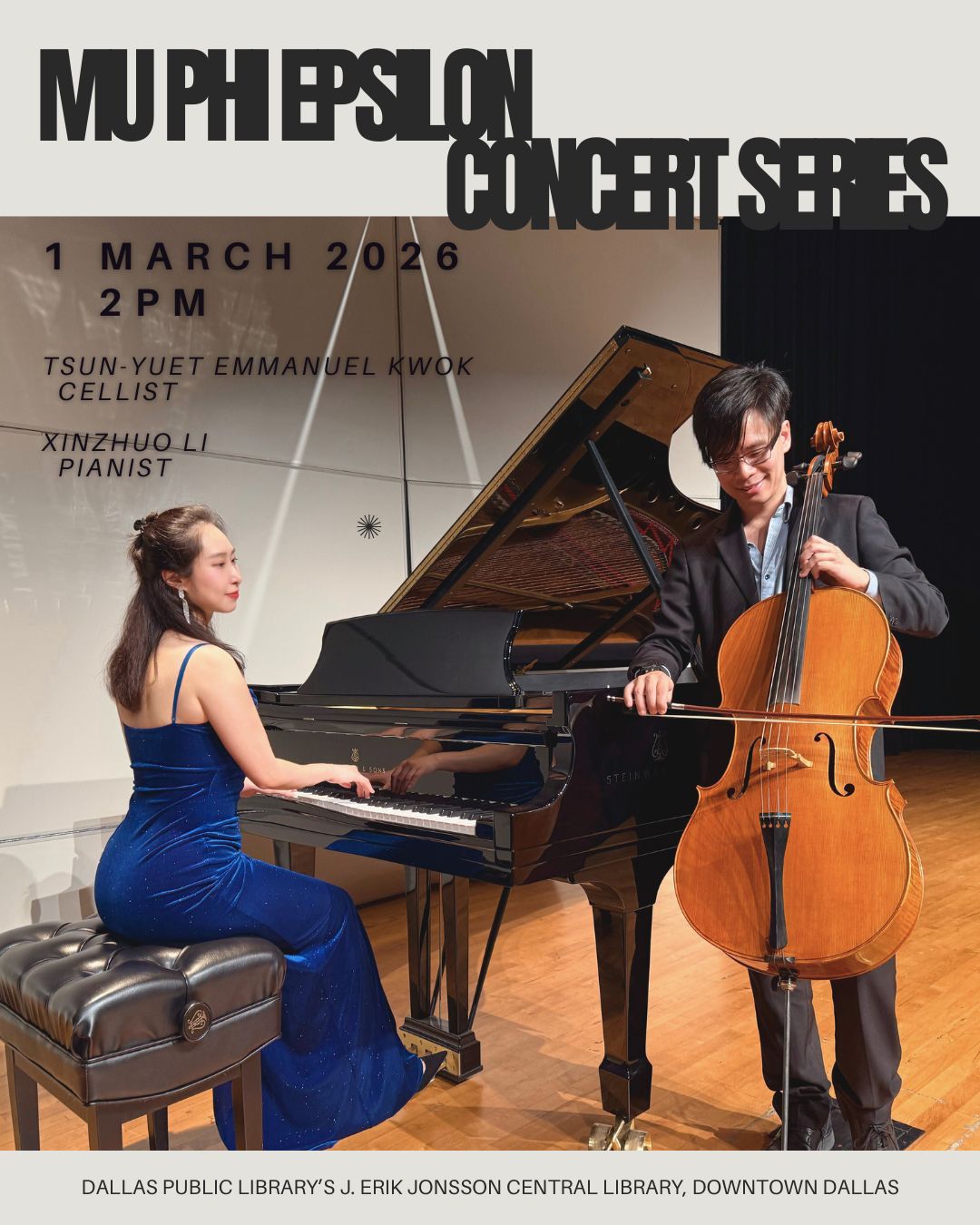
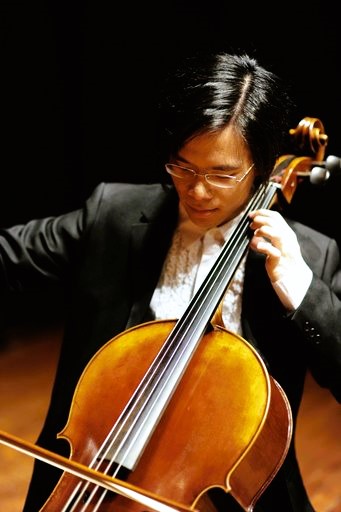
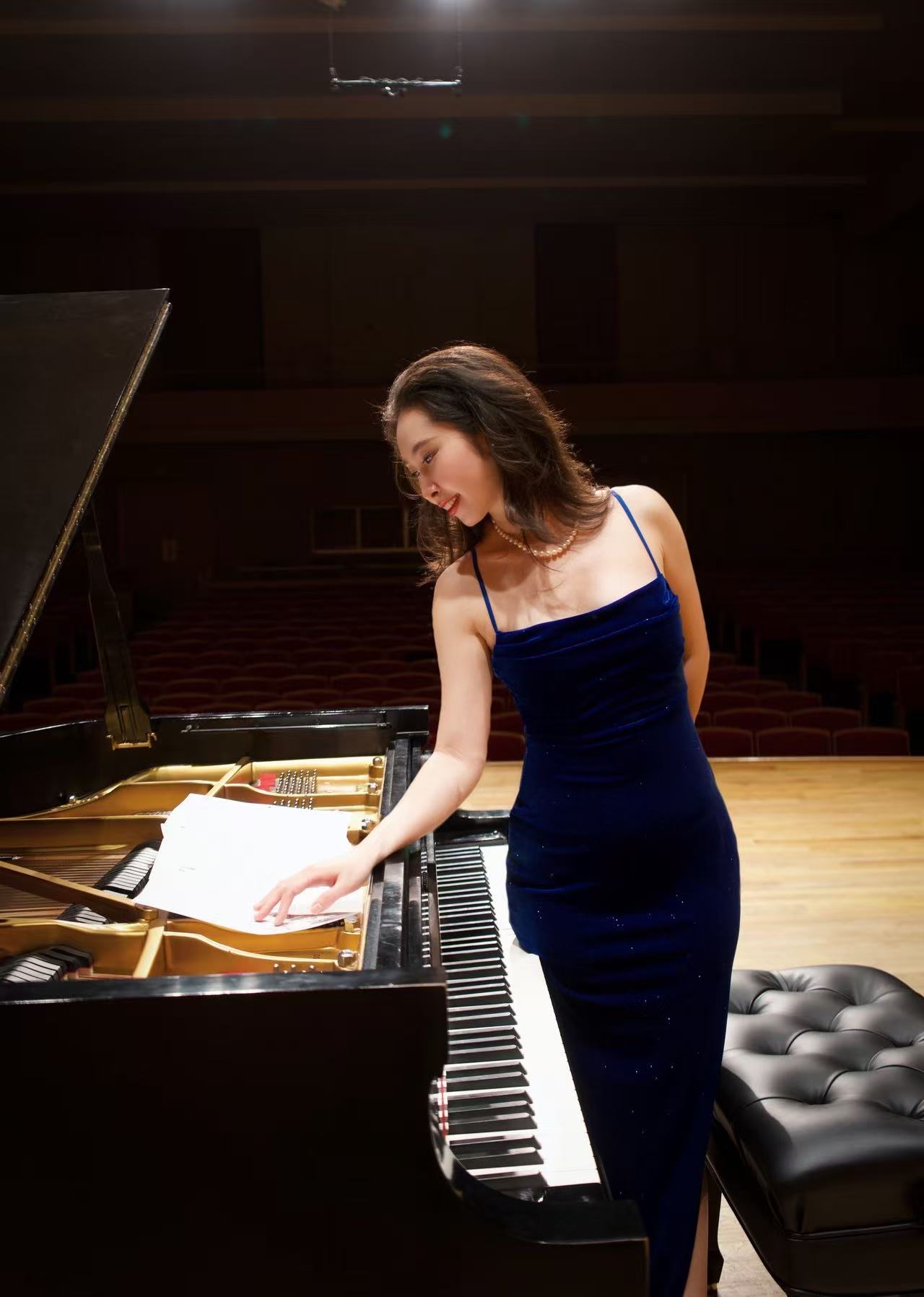
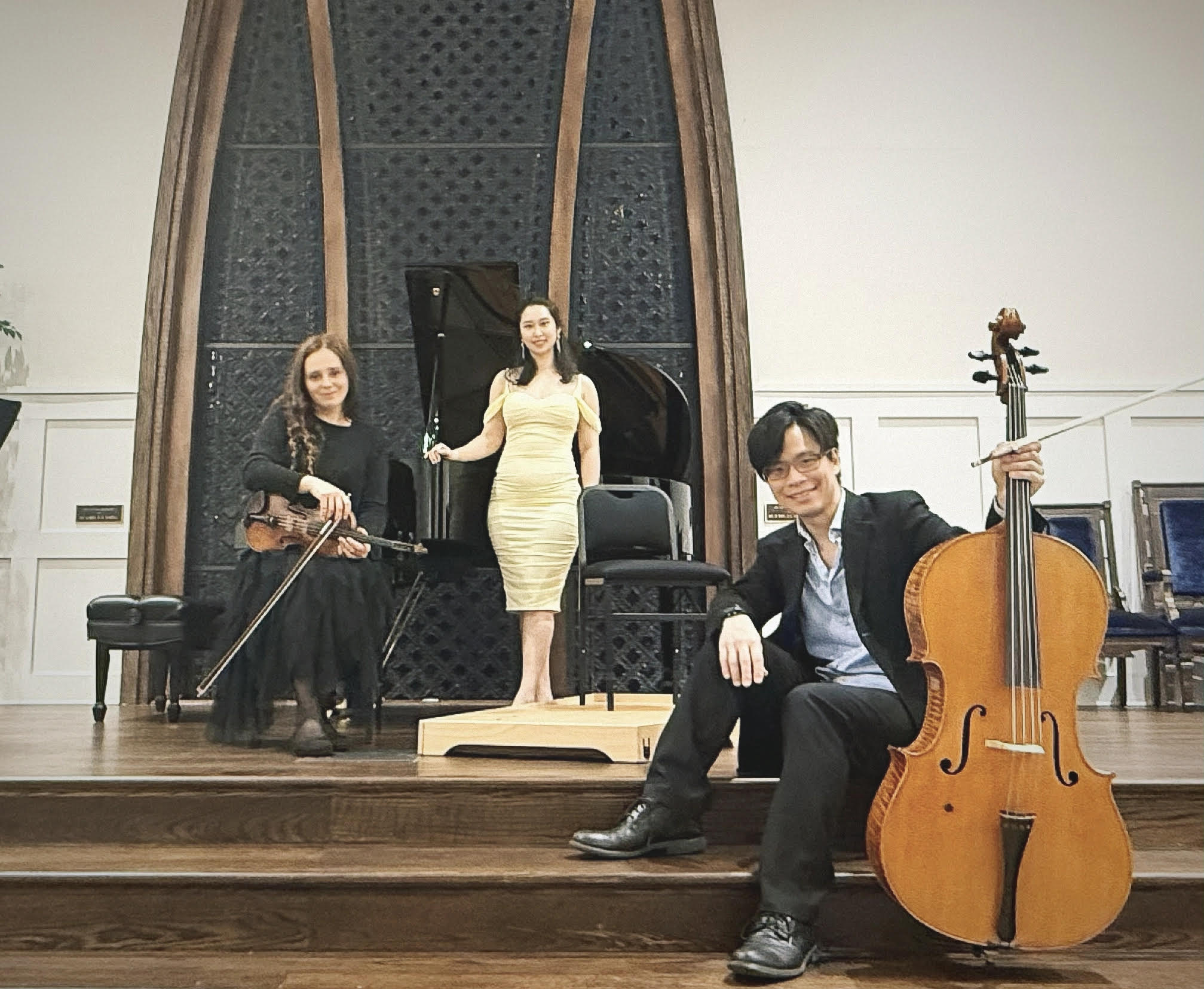
Emmanuel, you and pianist Xinzhuo Li performed a series of recitals across the Dallas–Fort Worth area this season—what inspired you to build a long-term cello–piano partnership rather than collaborate on individual performances?
First of all, thank you so much for having me — it’s truly an honor.
Building a long-term cello–piano duo has been a dream of mine for many years. The cello–piano partnership is one of the most intimate settings in chamber music. It’s not accompaniment — it’s dialogue. It’s shared storytelling.
In the past, I occasionally collaborated with different pianist friends for individual concerts. Those experiences were meaningful, but they often carried a certain pressure. When there is only one performance together, everything feels high-stakes — there’s limited space for growth, experimentation, or deeper artistic discovery. A duo partnership, on the other hand, is like any meaningful relationship: it develops over time through shared experiences and mutual trust.
That’s why we chose to build a recital series together rather than collaborate occasionally. Beyond the music, Xinzhuo and I are close friends, and we share a strong network of musician colleagues in the DFW area. Establishing a solid duo foundation not only strengthens our performances, but also makes future collaborations with other artists more natural, efficient, and artistically cohesive.
For readers who may be less familiar with chamber music, how would you describe the musical relationship between cello and piano, and how do you and Xinzhuo communicate to create a unified interpretation?
A large portion of the cello repertoire includes a substantial and sophisticated piano part. Historically, the relationship between cello and piano has always been deeply intertwined. If we look back to Beethoven’s time, many works we now call “cello sonatas” were originally titled “Sonata for Piano and Cello.” And yes — the piano was listed first. That speaks volumes about the equality and intimacy of the partnership.
In our rehearsals and preparation, communication is central. Thankfully, Xinzhuo is incredibly easy to work with. We don’t usually argue, or I should say, we really don’t argue at all. We approach music with openness. Whether it’s tempo, dynamics, articulation, phrasing, or the emotional narrative behind the piece, we listen carefully to each other’s ideas.
For me, chamber music isn’t about what she prefers or what I prefer. It’s about discovering the best possible interpretation at the meeting point where we both feel conviction and unity. That shared center is where the music truly comes alive.
How does this collaboration reflect your personal artistic values, especially when it comes to trust, communication, and the human connection behind the music?
I believe collaboration is built on trust, humility, understanding, and a willingness to grow together.
Over the years, I’ve seen situations where musicians lacked patience with one another — in extreme cases, even changing partners shortly before a concert. That always reminded me how important the human element is behind the scenes. What happens offstage directly affects what happens onstage.
We are not perfect as human beings, so communication, empathy, and mutual respect matter deeply. Audiences can feel more than we think. If there is tension, competition, or unresolved conflict between musicians, it subtly translates into the performance. On the other hand, when there is genuine friendship, harmony, and shared purpose, that energy is also communicated.
Music is meant to connect and to comfort. That connection begins between the performers themselves. To collaborate well, you must truly know your partner — what inspires them, what challenges them, where their strengths shine, and where they may need support. A strong duo is not about individuals; it is about listening, adapting, and lifting one another up. For me, that is the heart of chamber music — and the heart of this partnership.
You’ve performed in a wide range of venues, from churches and libraries to galleries and university halls—how does each setting influence your programming choices and the way you engage with audiences?
Programming is a serious and thoughtful process. It’s never just about choosing great pieces; it’s about understanding who will be in the audience.
Every venue brings a different group of listeners. Some are classically trained and attend concerts regularly. Others may be experiencing a live classical performance for the very first time. I truly believe music is for everyone — not just for a small, specialized circle.
In places like libraries or galleries, we may encounter audiences who have never attended a classical recital before. That’s both a responsibility and a beautiful opportunity. In those settings, our mission is to open their world a little wider — to invite them into the richness of this repertoire. Everyone is a potential music lover; sometimes they simply need the right door opened.
In those environments, we often program shorter, more accessible works. Rather than presenting a full four-movement sonata, we may select one or two movements and pair them with shorter pieces that are immediately engaging. The pacing matters. The emotional arc matters.
Speaking on stage also plays a role. Many classically trained musicians feel shy about addressing the audience, but I genuinely enjoy sharing my thoughts about the music. It creates a bridge between performer and listener. I remember one concert where I may have spoken a little too long — afterward, Xinzhuo jokingly told me she almost wanted to stop me and say, “Can we just play now?” We’re still refining that balance.
In university halls or more traditional concert venues, the atmosphere is different. The audience is often more accustomed to formal recital settings. In those cases, we may present a complete sonata and allow the music to speak for itself without as much verbal introduction. The environment invites deeper immersion.
Ultimately, each recital is shaped by context. Our goal remains the same — to connect. But how we build that connection depends on who is listening and where we are performing.
Looking ahead, how do you hope this partnership continues to grow, both artistically and in terms of reaching new audiences through chamber music?
Looking ahead, I believe this duo will continue to deepen — both artistically and relationally.
Artistically, there is still so much repertoire for us to explore. The cello–piano literature is incredibly rich, spanning from the great Romantic sonatas to 20th-century masterworks, and even contemporary pieces that deserve greater attention. For next season, we’ve already begun discussing works such as the Chopin Cello Sonata, the Rachmaninoff Piano Trio, and several other major pieces. I’m confident that as we continue working together, our interpretations will become more refined, more honest, and more courageous. The longer a duo plays together, the more intuitive the communication becomes. At a certain point, you don’t just play notes — you breathe together.
Beyond the standard repertoire, we are also excited to expand how we present chamber music. One of our goals is to explore cross-cultural programming that reflects the diversity of the Dallas–Fort Worth community. This includes collaborations featuring Chinese instruments, jazz trio elements, and a newly commissioned work by our composer friend Sunny Gan. She is currently creating a cross-cultural piano trio that brings together pipa, cello, and piano — possibly with percussion — for an upcoming concert. Projects like this allow chamber music to evolve while remaining deeply rooted in tradition.
Chamber music has a unique ability to feel intimate, even in larger spaces. I would love to continue bringing that intimacy to audiences who may not typically attend classical concerts.
In terms of reaching new listeners, I truly believe chamber music should never feel exclusive. It should feel welcoming. If someone walks into one of our concerts for the first time and leaves feeling moved, comforted, or simply curious to hear more, then we have accomplished something meaningful.
Ultimately, my hope and vision is simple: that this duo continues to grow not only in artistic excellence, but in its ability to connect people — to one another, and to something deeper through music.
Links: