






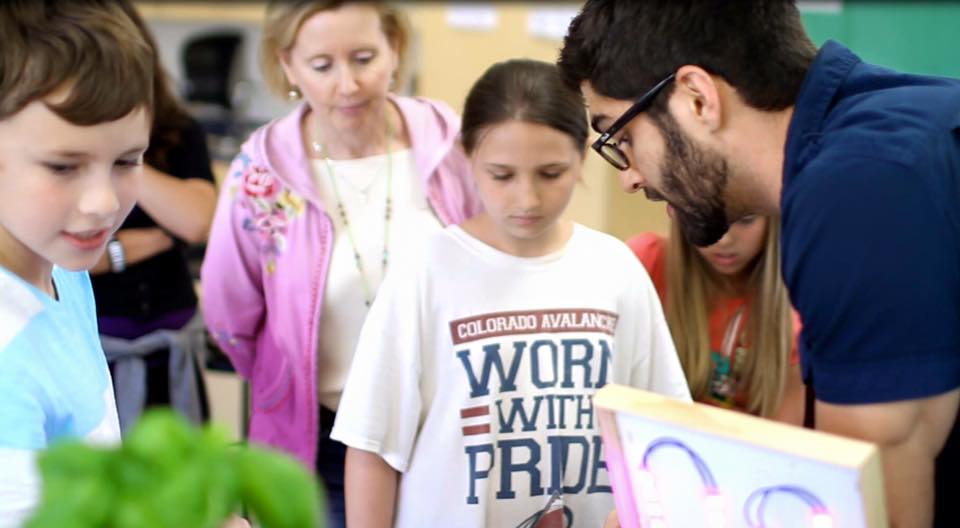
Today we’d like to introduce you to Christopher Brown.
So, before we jump into specific questions about the business, why don’t you give us some details about you and your story.
After I graduated from UNT with a bachelor’s in psychology and philosophy, employers weren’t exactly begging me to come work for them. I had 30k in student loan debt and two menial jobs that barely covered living expenses. One day, a coworker of mine put in her two-weeks, saying she found a job that actually utilized her psychology degree and paid much better. When she told me it was a pediatric autism therapy center, I wasn’t sure what to think. I had no experience working with children, let alone children with special needs. Still, she insisted I volunteer for a few days before ruling it out.
As if it wasn’t intimidating enough, I was the only male therapist at the center. The kids must have noticed too, because that first and every subsequent recess turned to “attack Mr. Chris at all costs!” I’d have three or four kids holding my legs, two kids suspended from my arms, and two more crawling up my back or trying to push me over…Seriously some of the best times in my life.
It’s crazy how fast you can connect with children on the spectrum. Like most kids, they’re completely uninhibited by social graces that skirt the naked truth. Some would even go so far as to say autism is an evolution in this respect; instead of worrying about time-consuming pleasantries, they hyper-focus on whatever captures their attention.
The company was just getting off the ground when I got there, so there was a lot of room for movement. After a year, I was promoted to center manager. I still worked with the kids, but I was also responsible for all center operations and parent correspondence. It was great, don’t get me wrong, but I found myself more interested in projects like building a huge sensory garden than I was managing schedules.
Six months later, I put together a presentation for the owner of the company and asked him to lunch. The proposition: create a new job title “Construction Project Manager” in the company and promote me to it. I didn’t know what I was doing, but I guess he couldn’t tell because it worked. For the next two years, my job was gutting old, run-down houses and renovating them into shiny new centers. With the owner’s permission, I actually lived in the houses with another guy (Damian) until they were ready. How-to videos and sleeping bags became dear friends of ours.
TOUR OF FAMOUS AUTISM CENTERS IN THE NORTHEAST
Damian and I were the right and left hand of our boss. We got things done. As a reward, our boss offered to pay for a 3-day weekend at the Great Wolf Lodge in Grapevine. Not just for us, but also for our girlfriends at the time. It was a gracious offer, but we didn’t want to vacation in Grapevine, Texas. I went home that night, calculated the total costs of our boss’s offer, and applied that towards traveling through the northeast. To sweeten the blow of rejecting his offer, I chose the destinations according to locations of top-rated autism facilities. Milwaukee, Chicago, Cleveland, Philadelphia and New York were listed as having the best in the nation, so I found the cheapest way of traveling between them. After planes, trains, and lodging, we were left with an extra $300 to spare. Our boss loved the idea.
That weekend, we hopped onto a plane and we were on our way. We scheduled tours of the facilities during hours of operation, allowing direct observation of the staff working with children. Each center had a different approach, different materials, and a different reason for doing what they do. Interviews of therapists and administration revealed stories of success, stories of failure, and personal views on what can be done better.
The trip was a total success. All that we learned gave us great ideas for what would become the development of our own program.
COMPANY BIRTH
To avoid gritty detail, I had strong ethical concerns for how the company was being run. Apparently, I wasn’t the only one at odds. Three co-workers invited me to dinner one night and had “something to tell me.” They proposed that we start our own center and wanted to know if I was in. Yeah, I was… For the next six months, we continued to hold these secret meetings. The center we were working for had no idea, and we vowed to keep it that way.
I spent hours after work and on the weekends researching company formation, writing a business plan, calculating taxes, projecting revenue, and understanding HIPAA. It was hard to think of anything else…for me, at least. After a few months, I noticed the others had all but lost interest in the idea. I’d try to keep momentum going by showing them what I had done, but it eventually became more of a one-man show.
About a year after our first meeting, one of the conspiring members blew our cover. She, the one who invited me to the original meeting, ratted us out. We were promptly sent home and fired that day. On Halloween day, actually.
The kids and therapists wrote “we miss you” cards and sent them to my house. I don’t think I’ve cried harder than after reading my kids ask if I was ever coming back.
PROGRAM DEVELOPMENT
The whole debacle motivated us even more to see this thing through. I had about eight months of unemployment benefits and free time on my hands. All the things I had learned as therapist, center manager, and construction project manager gave me a unique perspective on what to do. First up, program development.
I knew our center couldn’t be like other centers; often subscribing to a singular therapy (namely ABA) and a heavy reliance on flashcards. Our program needed to be as multi-dimensional as the children themselves. So, this being the information age, I got sucked into a google black hole. I researched emerging therapies, effective teaching practices, Ted Talks, and even stumbled upon something called Aquaponics.
What emerged from the research was something reminiscent of Frankenstein’s monster. In a good way. Elements of Applied Behavioral Analysis (ABA), Montessori, Speech Therapy, Occupational Therapy, Physical Therapy, life skills training, Aquaponics, computer classes, music lessons and yoga all come together to address the fact that children deserve an individualized program as unique as they are.
AQUAPONICS
I knew I wanted to get kids involved with growing their own food and sustainability practices. If they’re to have a chance in a world already riddled with shortages of food, water and energy, we need to get them involved as soon as possible. Traditional gardening doesn’t stand a chance against an iPad, so the real trick is making it interesting enough to hold their attention.
Hydroponics seemed interesting enough, but I didn’t know much about it beyond the substitution of water for soil. The more I read, the more interesting and complicated it seemed. Most of my search results probably landed me on some drug watch list somewhere, but amongst the forum debates over which nutrient solutions yield the dankest nugs, someone mentioned aquaponics.
Aquaponics, as I came to understand, is a method of raising fish and vegetables together in a symbiotic relationship. Waste water from Tilapia fertilizes plant crops, and upon absorbing those nutrients, the plants purify the water for the fish. Because the water recirculates in this way continuously, our system conserves 90% of the water that conventional farming methods lose to runoff and evaporation.
Materials consist of pipes, pumps, reservoirs, filters, water quality sensors, special drains, valves, and precise construction. It’s no simple thing, but where it lacks simplicity, it provides ample opportunity for kids to learn about complex ecological systems, aquaculture, horticulture, physics, and chemistry.
Now I needed a proof of concept. I started by retrofitting IBC water tanks into containers for fish and plants. After assembling a wooden support structure, installing powerful LED lights and incorporating various plumbing/electrical components, the prototype system was ready to accommodate over 200 pounds of organic Tilapia and over 30 species of organic fruits, vegetables, and herbs. The research, design and construction took a couple months. When it was done our basement looked like a cutting-edge science laboratory.
Next, it was time to spread the word and seek funding for a larger-scale system. I thought the hard part was over, but creating a successful crowdfunding campaign…well, I’m still not entirely sure what that takes. A team of six made a beautiful video, a gorgeous website, crafted press releases, e-mail campaigns, and promoted social media. Still, the campaign only made 10% of its total goal. Not even enough to cover the expenses of running the campaign.
After suffering a pretty devastating campaign failure, we turned our attention back to the autism center. That was the original purpose of the Aquaponics research, after all.
GETTING THE PROPERTY READY
Just as our lease was about to end, the perfect property appeared on Zillow. A beautiful 1924 house with a 19 car parking lot, a big yard, and best of all, it was zoned for both commercial and residential use. In other words, we could live there while operating a business from it. Couldn’t have asked for a bigger break.
There were few major caveats to moving in.
First, our former lease ended one month before the new property would be ready, so my roommates and I had to put everything in storage and couch surf with friends for a while.
Second, because of the combination of being zoned as a residential, and commercial property the group was required to have a company recognized by the IRS to get them into the location. “I assumed our therapy center company would get us in, but the city requires a lot of time and work to pass inspections for pediatric services. So, we created a shell company that offered “web consulting services.” That type of business requires zero square footage and services can be rendered remotely, effectively avoiding any inspections. Still, it took a month of emails and appearances at city hall to get us approved for moving in.
Third, unemployment ran out, and I had to get a full-time job.
Despite the hurdles, the shell company was approved and we moved in. That’s when the real work began.
Now that we were preparing for a therapy center, the city required all kinds of inspections, documentation, fees and a separate day care license from the state. It took weeks just to figure out which requirements apply to a commercial/residential house that offers day care services. Once the city agreed on that, it took weeks to meet with inspectors. Those inspectors each had a list of requirements such as installing fire exit signs, installing gates to block off certain parts of the house, disconnecting gas appliances and capping the gas lines, and building a fence to close off the back yard (which required a fence permit).
I didn’t have the money to pay contractors to do this work, so I applied to become a registered Denton contractor and asked the city if I could take care of these projects myself. They said yes. With the help of my dad and my roommates, we finished all the projects in about two months.
That still leaves the state-issued daycare license. To obtain a license, one must comply with a 211 page minimum standards manual that outlines background checks, extensive documentation of personal qualifications, creation of over 40 policy-related documents, fire exit maps, a changing table, child-proofing throughout the house, employee training modules, an incredibly thorough application, and a new round of inspections.
Obtaining permits and licensure took about 8 months. Purchasing therapy materials and remodeling took another 6 months. From that first secret meeting to now, this has been a 3 year endeavor.
From that first secret meeting to now, this has been a 5 year endeavor.
LIVE/WORK ARRANGEMENT
It’s a two story, victorian-style house built in 1924. All original floors, big, open rooms and even a basement. Max, Damian and I live upstairs. It’s probably weird for some people to imagine your downstairs, including your living room and kitchen looking like a school. But other than some cabinet locks and our living room disappearing, it really hasn’t been that inconvenient. We’ve adapted really well, actually. Our music room has a full music setup we can play on, and our physical therapy gym is sturdy enough for adults to exercise on. And who doesn’t enjoy rolling around on cushioned floors?
The city told us that until we move out of the house, we’re allowed a maximum of 6 children. Hey, you gotta start somewhere. Operating out of a home actually made things easier in some ways. For one, the state daycare licensing has fewer regulations for a “Day Care Home” vs. a “Day Care Center.” Certainly, doesn’t hurt with costs either. We’re living here and paying rent anyway, so it’s almost like getting a commercial property for free.
CURRENT STATUS
We have now grown to 8 clients, 8 teachers, the entire house is now dedicated to the therapy center, and we have a waiting list. Business is booming and the children are flourishing. Our starting pay for therapists is significantly higher than the industry standard, we offer insurance stipends, 1 hour lunch breaks and two 15 minute breaks, and Damian and I cook breakfast for the teachers every morning. Largely because of this work environment, everyone seems to love working here, so we’re hoping that will stave off the high turnover rates that plague this industry.
We’re getting ready to purchase the property and looking to expand to a new location by this time next year. Life is good.
PARTNERS:
Damian Miklojachak – One of the original conspirators of starting our own center. He lived in the run-down houses and renovated them with me, went on the Northeastern tour with me, created the Greenfinity Farms website, setup our on-site server for data management, and built Bright Mosaic’s website. He is the CTO and part-owner of Bright Mosaic.
Max Widmer – an old buddy from high school, he’s now a very successful electrical engineer who helped automate our aquaponics system and helped with various projects.
He’s part-owner of Bright Mosaic and a board member of Greenfinity Farms.
What were you like growing up?
A social nerd, above all else. I was super into animals, space, Legos, video games, and drawing when I was little. I was always the class clown, but managed to stay on teacher’s good sides by maintaining good grades.
Later in life, I invested time in painting figurines and battling them on tabletop games, playing drums, gardening, cooking, long philosophical discussions with friends. But I also had a wild side that should have gotten me in trouble. My body definitely took some abuse between the constant partying and sleep deprivation.
Contact Info:
- Address: 1922 N Locust St, Denton, Texas 76209
- Website: www.brightmosaic.org
- Phone: 940-536-3296
- Email: info@brightmosaic.org
- Instagram: https://www.instagram.com/brightmosaic/
- Facebook: https://www.facebook.com/BrightMosaicCenter/
- Twitter: https://twitter.com/brightmosaic
- Yelp: https://www.yelp.com/biz/bright-mosaic-denton


Getting in touch: VoyageDallas is built on recommendations from the community; it’s how we uncover hidden gems, so if you know someone who deserves recognition please let us know here.