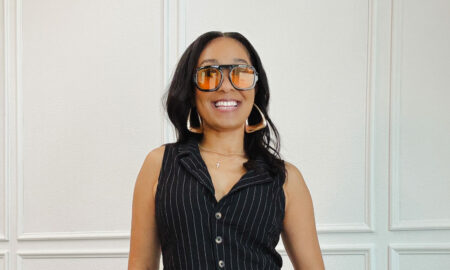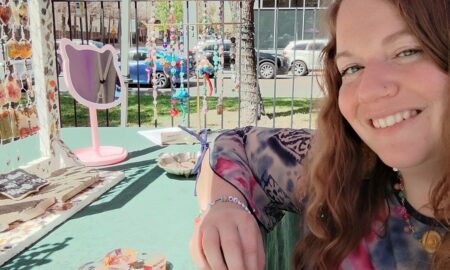







Today we’d like to introduce you to Dr. Morgan Heinzelmann.
Dr. Heinzelmann, let’s start with your story. We’d love to hear how you got started and how the journey has been so far.
As the daughter of a physician, I discovered my love for medicine early. My parents reminisce that I decided I wanted to be a doctor at the age of 4, having decided that I no longer wanted to be a cowgirl and candy store owner. From an early age, I took every opportunity to accompany my dad to the clinic or hospital to watch him in action. Outside of the clinical setting, I was constantly in awe at the number of people who approached my family to describe what a great physician my dad was and recount how he had saved their or their loved ones’ lives. He was able to make such an impact through medicine, and I wanted to be just like him – still do.
My love for medicine transformed when I discovered my complimentary love of neurology. My first introduction to the human brain was as a high school student, and I remember it vividly – marveling at the mysterious galaxy of cells, all invisible to the naked eye, which once communicated through a foreign language of neurotransmitters in order to support “humanness.” My fascination with the anatomy and physiology of the most complex organ of the human body continued to grow during my undergraduate years at Davidson College, where I studied neuroscience and conducted research on Alzheimer’s disease. Ironically, during my senior year of college, my interest in the neurosciences took a personal spin when I experienced a brain injury myself, requiring withdrawal from my classes and months of rehabilitation.
Discouraged by my slow recovery and inspired to further our understanding of brain injury, I moved to Washington, DC after graduation and completed a two-year research fellowship at the National Institutes of Health. There, I investigated traumatic brain injury in military personnel and professional athletes, and I spent my free time leading outreach programs about brain health at science-related events for children in the DC metro area. I then completed medical school at George Washington University, where my love for neurology continued to blossom. I ultimately matched into my top choice program for Neurology residency, and my residency training is what brought me to our awesome city of Dallas!
Has it been a smooth road?
The road has been marked by highs and lows, somewhat resembling the tracing of an EKG or EEG. On one hand, I remember the excitement I experienced when I received my first medical school acceptance and the joy when I opened the letter that informed me I had matched to my top choice residency program. On the other hand, I remember the exhaustion of long hours spent studying in the medical school library and the frustration of dealing with headaches and other lingering symptoms after my brain injury during college and medical school. Through it all, I have been extremely lucky to be surrounded by a wonderful support system of family, friends, classmates, colleagues, and mentors. Although the road has been challenging, it has been extremely rewarding and has given me invaluable insight into aspects of what my patients are experiencing. It’s an honor to be there for patients during some of their most vulnerable moments, and I can’t imagine having pursued anything else.
We’d love to hear more about your practice.
Having graduated from medical school a couple of years ago, I am now a physician in my second year of medical residency. I’m specializing in Neurology, the field of medicine that deals with the anatomy, physiology, and disorders of the brain and spinal cord. After residency, I plan to pursue a fellowship in Sports Neurology, a new and emerging field of neurology that is devoted to guiding athletes with pre-existing neurologic disease in regard to their participation in sports and to helping otherwise healthy athletes return to their activities after neurologic injury. I believe that my background as a former high-performance athlete (gymnast/cheerleader) and personal experience with brain injury set me apart and have equipped me with a unique “playbook” for treating this population of patients in the future.
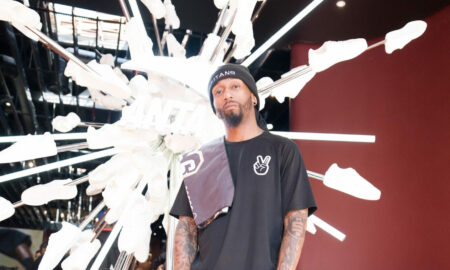
In and out of the hospital, I’m known for my interest and passion for this niche subspecialty of Sports Neurology. Through work, I evaluate patients in the clinic after concussion, assist with pre-season concussion testing for local sports teams, and conduct research in this field. Through social media, I collaborate with one of my mentors, Dr. Bert Vargas, to share what I’m learning about Sports Neurology topics that may be of interest to other healthcare providers, patients, athletes, parents, coaches, and sports fans through blog posts I call #SportsNeuroSunday. Oh, and I’m also known for my awesome sneaker collection. 🙂
Let’s touch on your thoughts about our city – what do you like the most and least?
Born, raised, and educated on the East Coast, I had actually never been to Dallas (or Texas) prior to interviewing and moving here. I quickly fell in love with the various neighborhoods that seemed to have their own distinct personalities, each contributing something unique to the Dallas landscape. I love the abundance of things to do in the DFW metroplex, the ability to fly almost anywhere in the world from DFW airport, and weather that allows me to ride to and from work in my convertible with the top down almost every day of the year. As someone who enjoys spending time outdoors on my days off, I do wish there were more places for hiking in the Dallas area. I also miss my family and friends on the East Coast, but luckily they’re a short plane ride away!
Contact Info:
- Email: [email protected]
- Instagram: moheinz_md
- Twitter: moheinz


Suggest a story: VoyageDallas is built on recommendations from the community; it’s how we uncover hidden gems, so if you or someone you know deserves recognition please let us know here.