





Today we’d like to introduce you to Moira Greyland.
Moira , we’d love to hear your story and how you got to where you are today both personally and as an artist. First, a link to a longer version of my story. https://askthebigot.com/2015/07/23/the-story-of-moira-greyland-guest-post/ Next, a link to my bestselling book, The Last Closet, (castalia House, 2017) https://www.amazon.com/Last-Closet-Dark-Side-Avalon-ebook/dp/B0787XLK4H/ref=tmm_kin_swatch_0?_encoding=UTF8&qid=1526418250&sr=1-1
I am the youngest child of two famous gay authors, Marion Zimmer Bradley, best known for the bestselling Mists of Avalon, and Walter Breen, best known for his Complete Encyclopedia of US and Colonial Coins.
My parents had some things in common which made for a remarkable professional collaboration. Both thought children had the “right” to make their own sexual decisions. My father, in particular, believed that since all boys were “naturally gay” but hung up, the only way to produce a gay child was to provide him with sexual experience before he could be “ruined” by a girl.
As the result of my parents’ philosophy (as laid out in my father’s book “Greek Love” (J.Z. Eglinton, 1962, edited by Marion Zimmer Bradley) my brothers and I grew up in an atmosphere of complete sexual chaos. My mother molested me from ages 3-12. My eldest brother left home at 14, shortly after Walter arrived in our home, because my mother and father invited him into a three-way sexual encounter.
I was a bright, precocious child, interested in many things, and I learned early on that if I stayed very, very busy, I did not have to think about what was happening in our “home” and I could find ways out of the house.
Fortunately, my mother was distracted, and sufficiently neglectful and busy with her own projects to not be overly concerned when I began disappearing from our “home” for days at a time. My mother and my aunt Diana founded the Society for Creative Anachronism, or SCA in 1966, and they had weekend events that I was allowed to attend with friends of the family. I also became a child actress, later director at the Renaissance Faire, and that also allowed me to be gone a lot.
I learned to sew when I was ten, since I needed to be able to make costume pieces, and the combination of excellent eyesight and a good memory for the way things looked enabled me to be] come an accomplished seamstress. I was a professional tailor at the age of twelve and approved by the Renaissance Faire to make costumes for anyone who needed them.
I studied voice in my early teens, then the concert harp. Once my mother’s books began to sell really well, my mother became quite wealthy, and she had no problem handing me money for my studies. From the age of ten onwards, I spent as much time as possible staying with friends and directors, and sleeping on couches, because anything was better than being at home.
When I was thirteen, I told my mother and her lesbian girlfriend Lisa that my father was sleeping with Gregg, a boy who spent a lot of time at our house. They did not go to the cops, or say anything to my father, but they moved back home, and had my father move into his own apartment. Naturally, this did not solve the problem. I did not dare to go to the cops without their approval, because I was sure they would deny everything to protect my father, and they threatened me with a foster home if I talked.
When I was 23, I walked in on my father molesting a little boy who had been staying with my father for a week-long visit. I made a report, and he was arrested. As I expected, my mother and Lisa defended him and denied everything. But the child talked to the police, and later on, another child came forward, and my father was sentenced to thirteen years in San Quentin.
My father had cancer and died before he could be transferred to San Quentin to serve his sentence. He did not deny what he had done but tried hard to persuade the judge that what he had done was “right,” and meant to stave off delinquency in the boys he molested.
I became a professional harpist and singer, performing all over the place for many years. I got a Bachelors, then a Master’s in music performance, and taught voice and harp to professionals and opera singers. I founded two opera companies in California, one in Southern CA and one in Northern CA, which is still active at the Dickens Christmas Fair in San Francisco.
My model for opera companies was to cherry pick the best singers from a community choir and train them to become soloists. We would present full-length operas in English, so everyone could get the jokes. Presenting operas had many advantages for my voice students: by the time we were done with an opera, people would have so much experience singing for one another that stage fright would be a distant memory, and they also had the chance to function as a community of singers, being supportive of other singers and watching one another improve over time.
I moved to Texas a few years ago after becoming acquainted with a few other children of gays and finding out that my experiences as the child of gays were not unique at all. I wrote my book, The Last Closet, after my Hugo-nominated blog post was read by a publisher, Vox Day, who took an interest in me. Writing the book was the hardest thing I ever did. Where I kept very busy all through my life, I had a very hard time with PTSD, suffering horrendously from flashbacks and a host of symptoms I will not bore you with here.
I completed the audiobook for The Last Closet a short time ago. Where writing the book was very, very rough, reading the audiobook aloud was absolutely miserable. There were times where I would finish a chapter and my husband would hear me crying, and he would shout upstairs to the studio “YOU’RE DONE!! That was his way of letting me know I could stop and he would listen.
The worst of these was when I read Chapter 25 aloud. Chapter 25 was written by Nick, another one of my father’s victims, and where I am used to blocking out my own pain, reading about what happened to Nick was horrible beyond belief. Nobody should have to experience those things. Not only did Nick suffer repeated rape at my father’s hands when he had nowhere else to go, but he lived through endless brainwashing where my father tried again and again to persuade Nick that he had been “born gay.”
My story is controversial because it shows an aspect of the gay community that children of gays are supposed to never, never talk about. The Big Secret is that nobody is born gay. Gayness is deliberately imposed by older adults on the young, and it is regarded as being a good thing, since being gay is so “liberating” and so forth.
I kept my parents’ secrets for many years, until long after both of them were dead. I probably would never have said a word except a friend who had hired me for a concert at a science fiction convention asked me if there was any truth to the rumors that my parents were child molesters. I did not expect my response would be seen by very many people, since I did not understand how famous my friend was as a blogger. My response to her, and my two poems “Mother’s Hands” and “They Did Their Best” were reblogged in 92 countries around the world. As a result, I received many letters from people who had also been molested and asked me to tell my story.
The result was my Hugo-nominated blog post “The Story of Moira Greyland” and then my book, The Last Closet.
Now that the book is done, I plan to return to giving harp concerts, and performing my original harp compositions and Celtic songs. I will also continue as a classical singer, performing around North Dallas and beyond. I also may, in the future, found another opera company in Allen. I perform regularly as a soloist for the Allen Symphony Chorus, and a few years ago, we presented an opera gala which was quite successful. In the meantime, I expect I will continue to teach voice and harp privately, both in person and worldwide Skype.
We’d love to hear more about your art. What do you do you do and why and what do you hope others will take away from your work?
I compose original music for voice and harp. Two of my original songs, “Guinevere’s Song” and “Sunrise Over Stonehenge” appear on my Celtic album, “Avalon’s Daughter.” It is available on Amazon, iTunes, Spotify and so forth. https://www.amazon.com/Avalons-Daughter-Greyland-featuring-Sierra/dp/B074K1WG8S/ref=sr_1_2?ie=UTF8&qid=1526472404&sr=8-2&keywords=Moira+greyland
The songs are also available to listen to free of charge on SoundCloud. https://soundcloud.com/moira-greyland
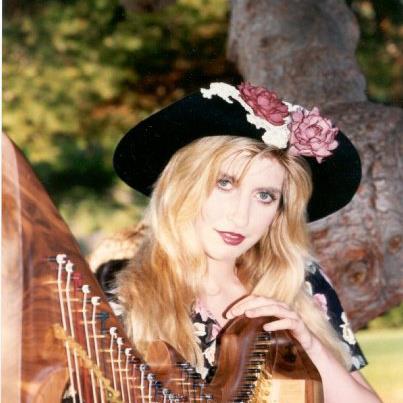
I play the concert harp and the Celtic harp, and I teach both harp and singing. I see teaching in an unusual way, where I am the mechanic, not the judge, and much of what I do is to rehabilitate “busted professionals,” experienced performers who have developed trouble with their technique and need me to help them cut through to the heart of the issue. I have done this for many singers, as well as for a number of harpists.
Since the harp is an unusual instrument, there are not nearly as many capable harp teachers as voice teachers, although we are blessed with some capable harpists and teachers here in the Metroplex. Still, where a normal town will have dozens to hundreds of piano teachers, there will only be a few harp teachers even in an entire state. As a result, technical problems can creep in for a harpist, and they may have no way to discover what is going wrong. Some might even be so accustomed to playing with pain that they cannot imagine pain being unnecessary. The problem with this is that pain, for a harpist, is a danger signal, and the eventual result can be carpal tunnel, surgery, and even permanent loss of function. The cure is simple, but there are simply not enough teachers to make sure that nobody has pain when they play.
In the future, I will publish a book on harp pedagogy, currently titled “The Box of Shapes.” Harp playing is made up of a combination of “shapes” or hand positions meant to grab a particular configuration of strings at one time, and I have often said that what I would like to give my students most would be a box of shapes, so they have all the hand positions. I am also writing a book on vocal pedagogy, with the working title of “The Five Skills” since all of singing can be defined in terms of five skills, and corrections in all five which are effective will result in a performer ready to resume their work, or a new singer who is now able to go onstage.
As I mentioned earlier, my recent book, “The Last Closet” and its related audiobook have taken mush of my time for the past few years. As a result, these other books have been on the back burner, but soon they will be “next up” in my list of projects. I have one original song to record for the audiobook: “The Monster’s Lullaby” and once that is done in the next few weeks, it will be time to resume writing my other books.
I have three books of original music and folk song arrangements which are 95% ready for publication, but they have also not been priorities because of my other projects. They include the music for my album, “Avalon’s Daughter,” and my song cycle. Anthem for America, an eleven-song original work for harp and voice. I am also finishing up a book of short harp compositions with the working title “Harp Chocolates.”
My future works include more recordings for harp and voice, including my song cycle, more Celtic works, an album of solos from oratorios, and selected operatic arias with harp accompaniment.
I make tailored clothing, including coats, performance gowns and the occasional costume. I do not plan to expand this part of my life very much, since performing is a much higher priority to me.
Artists face many challenges, but what do you feel is the most pressing among them?
There are two aspects to the challenges facing artists: the internal challenges and the external challenges, or what some might call “the locus of control.” Internal challenges are the things I can control and must control, and external challenges are the things I cannot control. For example, where I can work hard to become prepared, I cannot control the market for my services.
For me, the biggest challenge I face as an artist is simply choosing one task of many and focusing on only that. There is so much music I love and so many topics that interest me, it is hard to choose instead of just doing a little bit of everything. The way I solve it is to break down a project into pieces and track my progress. Recently, when I read the audiobook for The Last Closet, I broke it down into setup, chapters, moving the setup, and finally, the recording of the one song, which is the final hurdle.
Where I might not be able to control the market for my services, I can control mu visibility via marketing and through being physically present playing at coffeehouses and so forth, which is the easiest way to begin to generate business. I have good visibility on Facebook as a voice teacher, and I have taught students as far away as Switzerland and Singapore both in the harp and in singing.
The bottom line is that my success or failure is 100% mine. I have long heard that the best investment is intellectual property, so I expect I will be focusing on recordings and books for some time, rather than having public performance as my first priority. But books do not take forever, and once I complete the six books currently on the back burner, I expect I will be back onstage where I belong!
Do you have any events or exhibitions coming up? Where would one go to see more of your work? How can people support you and your artwork?
I am available to teach harp and voice in North Dallas, both in person and via Skype. Links for my book, The Last Closet, and my album, Avalon’s Daughter, appear elsewhere in this interview.
Contact Info:
- Website: www.moiragreyland.net
- Phone: 5105997828
- Email: [email protected]
- Facebook: https://www.facebook.com/moiragreylandpeat/


 Image Credit:
All images are owned by me
Getting in touch: VoyageDallas is built on recommendations from the community; it’s how we uncover hidden gems, so if you know someone who deserves recognition please let us know here.