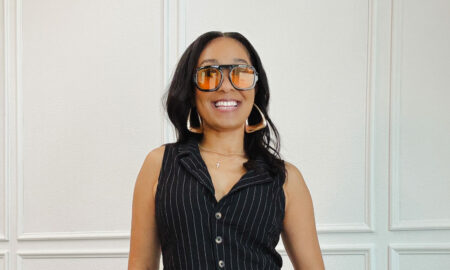





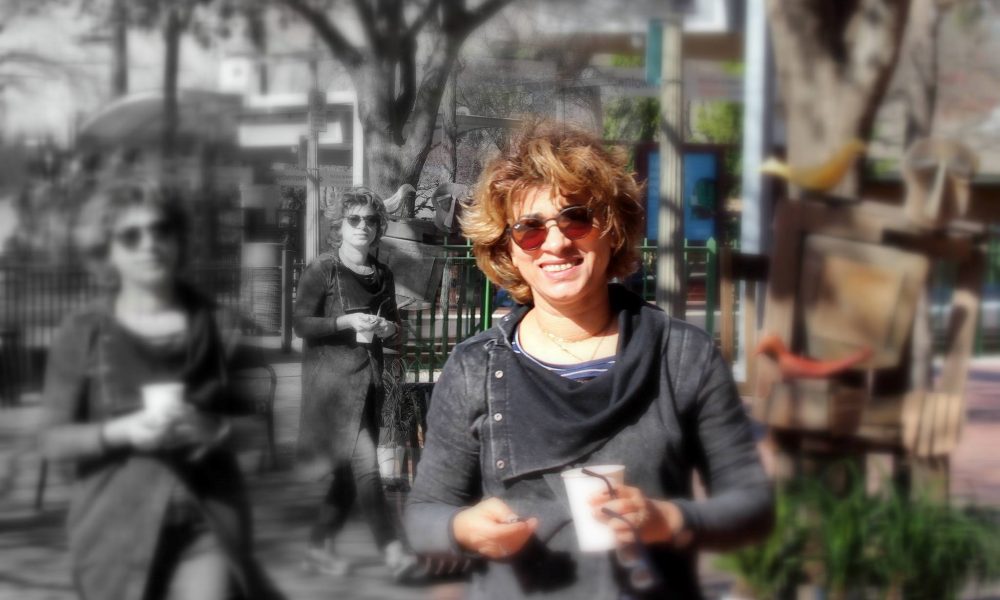
Today we’d like to introduce you to Soheyla Rashidyan.
Soheyla, let’s start with your story. We’d love to hear how you got started and how the journey has been so far.
There were two events in my childhood that helped set the direction of my life toward art.
When I was about seven years old, I was sitting in my classroom in elementary school eagerly watching my teacher review everyone’s homework. As she got to each student’s work, she would call them up to her desk to review it with them. “When would she get to mine?” I was thinking with a big smile on my face. I knew that I had turned in the best work and that my homework would change the lives of all the students, making their future assignments so much easier to do.
When she called my name, I had to keep myself from running to the front of the room. I stood next to her desk smiling, waiting for her praise. Then, I saw her eyes darken and her face scowl so hard that her nose turned up. She swung her arm upwards; then it came down, swatting me on the top of my head with my homework papers.
“Don’t cheat!” she yelled, her words polluted with punishment; I picked my papers up off the floor and went back to my desk.
I could not understand what happened. The assignment had been to fill each page of paper with a letter of the alphabet twenty times. I had been delighted to figure out that instead of repeating the same letter on line after line to fill the paper, her instructions could be accomplished by writing the letter so large that you could fill the page with just one letter. That was the first moment that I began thinking like a Graphic Artist.
A couple of years later, my sister and I were watching television. I stopped her from changing the channel when the program host started announcing a children’s art competition. The prize was the best art supplies; and I had never had any art supplies of my own. My sister helped me record the contact information. I created my artwork and sent it in. A few days later, I was watching television by myself when the host showed my drawing and announced that I had won. I called out for my family to come see, and my first sister, my second sister, my brother, and my Mom and Daddy rushed into the room, but they did not get to see the best news in the world. But I had seen it, and that was when I started to think of myself as an artist. Later, a package arrived addressed to me. When I opened it and found my art supplies, I shouted, “These are the best, and they are mine!” …and I didn’t have to share them with my sister or anyone else.
These two incidents set my direction, but the journey was just getting started.
After I received my diploma from the Fine Arts school in Isfahan, I entered an art competition of the Contemporary Art Museum of Tehran that was designed to identify young artists who could become talented children’s book illustrators. Out of 3,000 entrants, I was one of only 300 who were selected. With this success, I decided to enroll in the Art University of Tehran and focus on child art.
For my Bachelor of Fine Arts thesis requirement, I researched the great illustrators of children’s books throughout history and prepared a portfolio of their works. My study of what motivated these illustrators and the reasons behind their techniques inspired me to dig deeper into the world of Child Art and children’s perception of their environment. The illustrators had learned to see the world through children’s eyes. Their works delved into what children see and feel.
After college, I started a successful graphics design company in Tehran. Eventually, because of increasing government restrictions on advertisement and on art, I left Iran with my husband and two children. In 1998, our family was granted temporary asylum at a refugee camp in the Netherlands.
During the four years we were there, I voluntarily taught others in the camp. There were refugees from all over the Middle East and Eastern Europe. I discovered that there are no language or cultural barriers when you are teaching art to children. Also, I confirmed some of the lessons that I learned from my child art research in college – such as: regardless of the culture, language, or ethnicity that children grow up with, they all go through the same stages in their artistic development. When we were finally given permission to immigrate to the United States, my thoughts and feelings regarding child art began to germinate into a plan.
Settling in Plano, Texas, I went back to school, both to improve my English and to update my graphic art skills through adding computer techniques. I also created new art (paintings, sculptures, and mixed media), entered art competitions, and started another graphic design firm.
Fellow artists asked me to become the President of Plano Art Association (PAA). I accepted this honor and began two years of hard and exciting work. During my administration, we transformed PAA from a sleepy and quiet haven for local Plano artists to a dynamic organization whose downtown gallery became the scene of a series of exhibitions of excellent art from the best artists from the region and from across the nation. The energy that we, the only downtown art gallery, developed, coupled with our collaboration with another dynamic organization, the Historic Downtown Plano Association (HDPA), greatly contributed to downtown Plano being officially designated an “Arts District” in 2016.
During my two years, PAA also collaborated with the Plano Public Library System to help them create two of their initiatives: art in the libraries and artist-in-residence programs. In collaboration with HDPA, we also brought the first public art to downtown Plano with the Mural Project through obtaining a grant from Plano’s Heritage Commission. I was also chosen to be on the jury to select the artist for the City of Plano’s Portal Project that resulted in more public art by lining the main street into downtown with sculptures.
When my term limit with PAA was up in May of 2017, I resumed my passion and focus on child art, now enhanced with a deeper knowledge and great relationships with the Plano artistic community.
Overall, has it been relatively smooth? If not, what were some of the struggles along the way?
There have been a few bumps in the road along the way.
As a teenager, I was walking near our new family home in Isfahan, when I discovered an elegant building surrounded by a classic wrought iron fence; it was built with two-story tall columns and a front wall of classic windows. I had seen nothing like that in my hometown of Abadan. It was so fascinating that it drew me through the gate and into the front door.
When I stepped inside, I was surprised to find out that this was a high school …and not just an ordinary high school, but a high school where they taught painting classes. I had never seen such a thing; in Abadan, located in the middle of Iran’s oilfields, their high schools were specialized to focus on science and business. But I loved to paint, and this high school was here, right in my new neighborhood. I asked what I needed to do so I could take painting lessons here too. They sent me to the administration office.
First Bump: The administrators told me that I had to be 16. I was 18, but I magically suddenly became 16 again.
Second Bump: They wanted to see my school records – which would have told them my real age. I told that the records were in Abadan, which was surrounded by the Iraqi army. They understood that and decided to not worry about the records.
Third Bump: This was the last day for registration …and I had to take a test to get in – right then! So, I did.
I was sent to a room, where a Very Tall Teacher gave me a sketch pad and pencil and instructed me to sketch a still life that was sitting on the table. I did that, and he thought the work was excellent. He then told me to sketch him. I had never drawn a human before, but I did my best and was delighted when he pronounced it excellent and said that I had passed the drawing test.
We went back to the Administration Office, where they had me take a written test that not only tested my academic skills but also included the government-required questions on politics and religion. By stretching the truth a bit on the government questions, I passed this test too and was allowed to enroll.
The Last Bump: The reason that I had been out walking in the middle of a school day, was that I was no longer going to the high school that they had enrolled me into…and I hadn’t told my parents yet. There was a problem with my math score which affected what grade level I was in. Our family was still struggling to resettle in Isfahan after having been evacuated from Abadan, and I did not want to bring home more problems. So, I kept my new high school to myself until I knew that I was successful. When I let my parents know, their jaws dropped. In their confusion, my Mom asked, “What about your future?” I told them that I wanted my future to be as an artist and invited them to come with me to visit the school.
We went together to the school and talked to the administrators. It came out that I was 18 and had already completed my sophomore year at a “science” high school. However, by this time, it was apparent to the art instructors and the principal that I was the most hardworking and promising student in the school, and they did not want to lose me. Since I was willing to start over as a freshman, they would be delighted to keep me in their school. They convinced my parents that their daughter’s artistic ability was very special and that her skills should be developed.
So, because of a war and my curiosity and having the courage to take a test with no preparation (and a little “adjustment” of the truth), I got to start my artistic education at a school that I did not even know existed before I walked through its doors.
Another “bump” happened years later. The first time our family was granted permission to immigrate to the United States, we were scheduled to leave on September 12, 2001. When the attacks of 911 happened, all the flights were cancelled. In the high security environment that followed, we were kept in the Netherlands for another three years before we were cleared to complete our immigration.
Alright – so let’s talk business. Tell us about Contemporary Child Art Museum – what should we know?
In February of 2015, Mike Korman and I had formed a non-profit to create the Contemporary Child Art Museum. We put it on hold during our tenure at PAA. In June 2017, we attained 501(c) (3) status and began building the organization. We launched our website in late 2017.
The Contemporary Child Art Museum is a celebration of child art. It will house permanent exhibits of the stages of artistic development of children and master works describing what children are saying through their art. In addition, there will be galleries and gardens for exhibiting the masterworks of local and regional artists and a venue for events and shows with a local, national, and international appeal. Finally, we envision that this facility should include an excellent Museum Restaurant.
We have been in conversations with property owners and developers to identify the best location for the museum we have also been assembling a team of “like-minded” artists, appreciators of art, civic leaders, and other professionals dedicated to making this happen.
In addition to creating a space where art made by youth of all ages can inspire other children, as well as teach adults more about the meanings behind the art, this facility will be a center for research on youth art, would offer informational courses for parents and would be designed to attract artists and educators to hold workshops and seminars.
Please visit our website to see more specifics regarding our plan to make this happen.
Any shoutouts? Who else deserves credit in this story – who has played a meaningful role?
There have several people who have helped and inspired me along the way:
From the Art University of Tehran
Shahram Golparian
He was the lead professor for my graduation essay review team. From him, I was inspired to always look deeper into artworks to find the meaning inside the work, and I learned that you can excel as an artist in many areas; he is a graphic designer; but he is also internationally renowned as a guitarist and composer.
In the Netherlands
Massoud Wala
Massoud was a graduate of Building and Social Engineering in the Netherlands. In addition to his engineering work, he has also contributed to cultural and social work in the Netherlands, becoming one of that country’s most influential cultural figures.
From him, I learned to see a world with no limitations, just opportunities. One time, when I was working with him, we could not get a classroom for teaching my sculpture class, and he just had us teach the class on the public street outside the building.
In Texas
Donald Weasenforth
He was my English Instructor at Collin College. He has become the Dean of Academic Affairs, Communication and Humanities Division at Collin College and an Associate Provost of Instruction. He gave me my first “D” in college, which was not negative, but only inspired me to work harder. He loves and respects my artwork and owns several of my pieces. The warmth of his character gave me courage to not be in awe of professors. Everyone should have a teacher like him sometime in their life.
Mike Korman
Mike’s an entrepreneur who hired me to do my first graphics work in the United States. He helped me found my graphic arts company in Texas, and he supported me at PAA as Vice President as we transformed that organization and energized the art culture of downtown Plano. He has inspired me with his patience and his knowledge. Mike is the co-founder and Director of Operations of the Contemporary Child Art Museum.
In addition, there have been two artists from history who have inspired my artistic vision.
Nasrin Khosravi
Nasrin was an internationally respected illustrator. Her primary techniques were hand printing with ink and mixed media. She also painted on unconventional papers using the medium of acrylic with generous sprinklings of calligraphy. Her childlike technique still inspires me. She created images in her works using multiple angles in order to show all directions, like a child would do. She also used a child’s technique of using size to indicate its importance.
Vincent Van Gogh
When I see Van Gogh’s work, I realized that I am feeling it more than I was seeing it. He gave the color and brush freedom to move. He did not worry about style or technique. If he was drawing an old person, he did not try to recreate the wrinkle but his stroke would create the muscle movement that created the wrinkle. Every color was warm color; his work was never boring. His work is alive and breathing. He displayed much courage to move his brush everywhere, trusting his control.
Pricing:
- CCAM “Be a Founder” Benefactor: $5,000 donation
- CCAM “Be a Founder” Sponsor: $1,000 donation
- CCAM “Be a Founder” Member: $100 donation
Contact Info:
- Website: http://www.contemporarychildartmuseum.org/
- Phone: 469-628-9040
- Email: [email protected]
- Instagram: https://www.instagram.com/soheyla.art/
- Facebook: https://www.facebook.com/contemporarychildartmuseum.org/


Image Credit:
Massoud Wala, JW Lee, DK Layman, Mike Korman, Soheyla Rashidyan
Getting in touch: VoyageDallas is built on recommendations from the community; it’s how we uncover hidden gems, so if you know someone who deserves recognition please let us know here.