






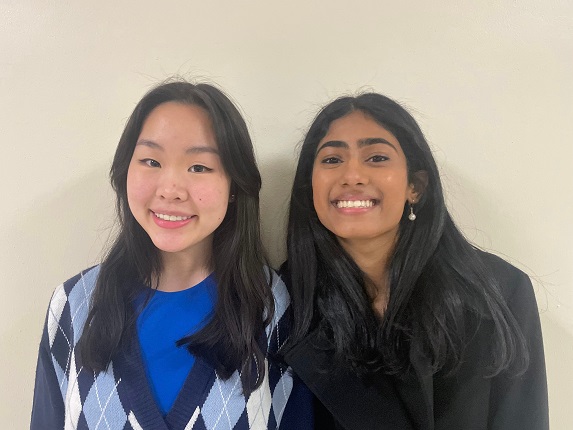
Today we’d like to introduce you to Julia Duan and Srjana Srivatsa.
Hi Julia and Srjana, please kick things off for us with an introduction to yourself and your story.
Coding had always seemed confusing to me (Srjana) when I was in middle school. Written in a seemingly harsh and foreign jumble of letters, I had always resigned it to something I could never understand- scary and untouchable. That is until I took a computer science class in my freshman year of high school. Suddenly, programming became exciting and challenging- something I actually wanted to do in my free time. Although I suddenly was thrust into the world of computer science, I felt that I lacked experience compared to individuals who enjoyed private resources at a younger age, a sentiment my classmate and friend Julia shared.
Nevertheless, Srjana and I (Julia) attempted to catalyze our computer science journeys by attending some hackathons (coding competitions). It didn’t take long for us to notice that the people winning and the target audience of workshops were experienced high schoolers or even college students. Beginner coders like ourselves were left in the dirt, so we researched if there were any interactive coding opportunities for people with less experience, to no avail. In fact, there were practically no events catered to younger students within our area, especially during a world post-COVID-19.
During my time in quarantine, I (Srjana) began to research the logistics of hosting a hackathon! I started to reach out to friends, contacting Julia to form a team to take on this mission with me. We decided that rather than hosting another coding event in the over-saturated field of high school, we wanted to focus on middle schoolers and the younger generation, providing them with opportunities we weren’t able to have ourselves. This, we decided, would truly build up the next generation of young coders and have a positive impact on our community- The Future of Code.
Soon enough, we established ourselves as a 501(c)3 nonprofit organization with the help of sponsors (Hack+, Reply.it, AOPs, Taskade, etc.) and the support of each other. Since then, we have focused on making access to beginner coding easily and readily available. We host workshops and our own hackathons that address real-world issues, presentation skills, and interactive learning that differentiate us from even the few coding opportunities we did find (Julia).
Alright, so let’s dig a little deeper into the story – has it been an easy path overall, and if not, what were the challenges you’ve had to overcome?
When Srjana and I (Julia) first started out, we were significantly affected by the pandemic, as many organizations in our areas were. Hackathons are typically in-person events, with tables crammed with eager coders, meet-and-greet guest speaker panels, and pizza breaks. We wondered how we would be able to deliver a fun experience alongside our Virtual Hackathon 1.0. Fortunately, we found workarounds to these issues, choosing to host online Skribbl.io sessions (a game similar to Pictionary!) on Zoom and hosting online guest speaker events, focusing on interactivity as much as possible.
Julia and I also struggled to develop a curriculum that was simple enough for middle schoolers to understand, yet still comprehensive. We spent hours with our education team, making iteration after iteration of each lesson plan and sitting down with younger students to ensure the material was understandable. Our team sought out new strategies, like mid-lesson pop quizzes, coding challenges, and in-class breakout room sessions to help students stay engaged and inquisitive during workshops. (Srjana)
Alright, so let’s switch gears a bit and talk business. What should we know about your work?
In January of 2021, Srjana and I (Julia) hosted our first hackathon, a coding competition that encouraged middle schoolers to create projects with 1-1 help from qualified instructors, which was intentionally different from lecture-based classes. We offered cash prizes out of our own pocket as an incentive to get young students engaged. After gaining insight from the approximate 50 participants that attended, we realized that there was still a demand for learning the basics of coding through instruction. We then put together our first Summer Workshop, which saw over 40 students raising virtual Zoom hands and answering practice questions during weekly classes for either JavaScript or Python.
In 2022, our community mostly went back to being in-person, which was our sign to host gatherings at local middle schools, increase advertising, and reach out more effectively to news outlets.
Now, 3 hackathons and 3 seasonal workshops later, we have raised more than $1500 that we are looking to donate to charity this fall, impacted over 250 students, and have heard from parents, who sat next to their kids during our workshops, who thanked TFC for “changing the game”.
Can you talk to us a bit about the role of luck?
Julia and I (Srjana) admittedly thought we were unlucky in our ventures as we started out– our initiatives took hours of effort and planning, yet we faced trouble getting participants to sign up for these no-cost opportunities. However, upon the very first day of seeing rows of faces tuned into our hackathon opening ceremony, we knew just how lucky we were to be able to nurture each and every child that wanted to learn how to code.
Later on, we realized that we were blessed by the support we received from our dedicated students and their parents. It put a smile on our faces to read appreciative emails from parents, calls with kids detailing the excitement they had attending our coding workshops, and seeing recurring participants who attended each and every event. Julia and I are also fortunate to be able to work with our best friend on such an important mission. I can’t imagine doing TFC without her and am endlessly grateful for 3 A.M. planning sessions spent giggling and typing away furiously on our shared planner.
Perhaps one of the things we are most lucky on our TFC journey to have been our own siblings, who patiently attend our initiatives and give us feedback on what we can do to improve. Julia’s sister Jennifer (13), and my brother Vihaan (11), have often been our “lab rats”, sitting through hours of workshops to give us observations on what they enjoyed and what they didn’t. It’s extremely gratifying to see our siblings learn and grow in computer science as we take on this organization.
Pricing:
- Summer Workshop: $25 for 9 hours
- Hackathon: typically $5-$10
Contact Info:
- Website: https://thefutureofcode.wixsite.com/t-f-c
- Instagram: https://www.instagram.com/thefutureofcode/
- Facebook: https://m.facebook.com/TheFutureOfCodeTFC