





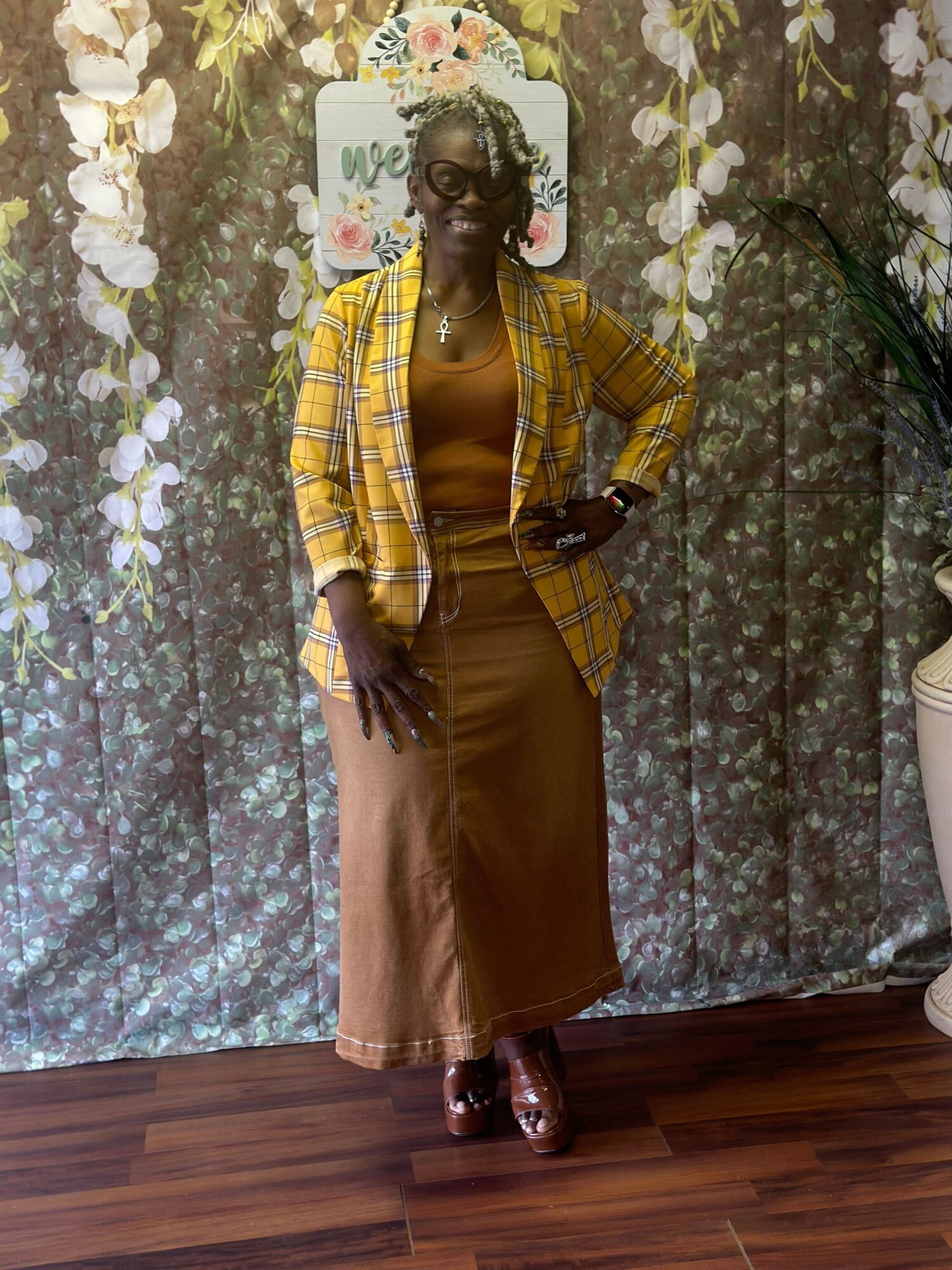
Today we’d like to introduce you to MARSHA JONES.
Alright, so thank you so much for sharing your story and insight with our readers. To kick things off, can you tell us a bit about how you got started?
My story has never really been about building a name for myself. At the core of who I am, I’m a servant. I’ve never desired greatness for the sake of recognition, even though scripture says, “if anyone among you would be great, let them first be a servant.” What I desired was to help people live, survive, heal, and have dignity.
My work began through faith and HIV advocacy. I started my first organization because I believed the faith community could do better in how we treated people living with HIV. Too many people were being abandoned, judged, and left to carry shame instead of being met with love, compassion, and support. I could not reconcile my faith with silence while people were suffering.
That belief shaped everything that came after. As I grew into leadership, I became intentional about creating opportunities for people who were often seen as “unhirable” or undesirable. I believed those were exactly the people who deserved opportunity, living wages, support, and the chance to build stable, meaningful lives. For me, leadership was never about titles—it was about opening doors wider for other people.
Later, when I learned about the devastating maternal mortality rates impacting Black women and discovered how Black doulas were helping save lives, I paid for Black women to be trained as doulas and hired them. I’ve always believed that when we identify a problem harming our community, we should also be willing to help build the solution.
So there isn’t one defining story that explains how I got here. My life has really been a series of moments where I saw suffering, inequity, or neglect and decided I could not look away. That commitment led me into reproductive justice, HIV advocacy, maternal health, leadership development, and now building Women’s Health & Evolutionary Wellness—an organization rooted in healing, power, and the belief that Black women deserve not just survival, but wellness, dignity, and the ability to thrive.
We all face challenges, but looking back would you describe it as a relatively smooth road?
No, it has not been a smooth road at all. The work I’ve done has often required me to challenge systems, narratives, and beliefs that people were deeply invested in protecting. I’ve spent much of my life confronting harm with truth, and truth makes people uncomfortable.
I remember putting up a billboard that said, “Abortions are self-care.” For me, it was important to counter the harmful narrative that Black women are irresponsible or that abortion is simply the result of “bad decisions.” Black women’s reproductive choices have been controlled, judged, and condemned since we were brought to this country by force. We are often damned if we parent and damned if we don’t.
The backlash was intense. People were furious. There were threats to shut down my organization. Some of the same people publicly preaching “pro-life” and “love” were willing to see people lose jobs, stability, and housing because they disagreed with me. That experience taught me a great deal about how conditional people’s compassion can be.
But I didn’t stop. I dug in deeper.
Being unapologetically Black, outspoken, and committed to bodily autonomy has made many people uncomfortable over the years. I’ve learned that when you center Black women honestly—our lives, our humanity, our right to choose, our right to survive—you will face resistance. Still, I have never believed comfort was the assignment. Service was.
The road has been difficult, but it has also been deeply rewarding. I’ve seen lives changed. I’ve seen women survive. I’ve watched people who were counted out become leaders in their communities. I’ve witnessed healing happen in real time.
And despite every challenge, I would do it all over again.
Thanks for sharing that. So, maybe next you can tell us a bit more about your work?
I chose “other” because my life and work have never fit neatly into a title or profession. My work is deeply rooted in service, advocacy, faith, community, and the belief that people deserve dignity regardless of how society sees them.
Over the years, I’ve worked across HIV advocacy, reproductive justice, maternal health, leadership development, and community organizing—always centering Black women and communities too often ignored or underserved. I’m probably best known for telling hard truths unapologetically and building spaces where people feel seen, valued, and supported. Whether that meant advocating for people living with HIV when stigma was overwhelming, training and hiring Black doulas to address maternal mortality, or challenging harmful narratives around Black women’s reproductive autonomy, my work has always been about responding to real harm with real action.
What I’m most proud of is not recognition or titles, but the people. I’m proud of the women who found stability through jobs and leadership opportunities when others overlooked them. I’m proud of the lives impacted through community-centered health advocacy. I’m proud that people who were once silenced or marginalized found power, voice, and support through organizations and initiatives I helped build.
What sets me apart is that I’ve never approached this work as a career ladder or branding opportunity. I approach it as a responsibility. I lead with conviction, compassion, and accountability to the people most impacted. I’m unapologetically Black, deeply committed to justice, and willing to stand in difficult spaces even when it comes with criticism or personal cost.
At the heart of it all, I believe wellness is more than healthcare—it’s the ability for people to live with dignity, choice, safety, and the opportunity to thrive. That belief continues to shape everything I do through Women’s Health & Evolutionary Wellness and every space I enter.
In terms of your work and the industry, what are some of the changes you are expecting to see over the next five to ten years?
I honestly struggle with calling this an “industry” because this work is about real people with real lived experiences. These are people’s bodies, families, survival, grief, dignity, and futures. And if we are not careful, everything communities have fought for over generations can be lost very quickly.
Over the next 5–10 years, I believe we’re going to see even deeper battles around bodily autonomy, healthcare access, voting rights, and truth itself. The attacks on reproductive rights are not isolated—they are connected to attacks on education, public health, democracy, racial equity, LGBTQ+ communities, and economic stability. Communities are being forced to fight for basic care and basic humanity at the same time.
At the same time, I think we will continue to see Black women leading some of the most transformative work in this country, especially around maternal health, HIV advocacy, healing justice, and community survival. Black women have always built solutions long before systems decided to pay attention. We are already seeing stronger conversations around doulas, maternal mortality, menstrual equity, community care, and culturally grounded health models.
I also believe there will be a major shift away from people waiting for institutions to save them. Communities are building their own ecosystems of care, mutual aid, political education, and healing-centered support because many systems have proven they are unwilling—or unable—to protect the most vulnerable people.
For me personally, the biggest concern is making sure this work does not become performative or disconnected from the people most impacted. There’s a danger in movements becoming brands instead of accountability to community. I think the future will require leaders who are deeply rooted in lived experience, honesty, courage, and real relationships with the people they serve.
What gives me hope is that people are still fighting. Even in hostile environments, communities are organizing, telling the truth, protecting each other, and refusing to disappear. I think the next decade will demand more courage, more collaboration, and more willingness to confront uncomfortable truths—but I also think it will produce some of the strongest community-led leadership we’ve ever seen.
Contact Info:
- Facebook: Marsha Jones