






Today we’d like to introduce you to Aliyah Ladak.
Hi Aliyah, please kick things off for us with an introduction to yourself and your story.
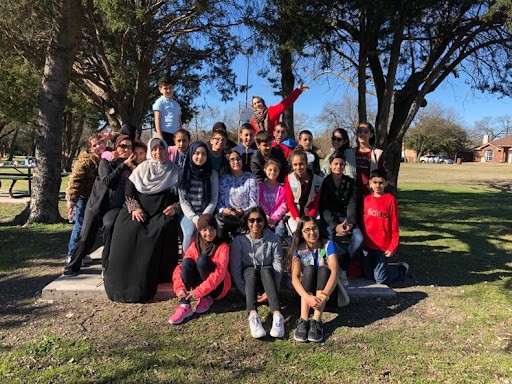
While watching the news with my parents in late 2019, I was heartbroken to see the terrified faces of refugees fleeing war in the Middle East entering the United States. The stream of refugees included mostly women and children, their dirt-caked faces streaked with tears and their nervous eyes darting around at the cameras, dazed and confused. I immediately knew I wanted to help in any way that I could. I gathered a group of my friends and explained my desire to aid the helpless refugees entering our country. Since many of these refugees were coming from Syria and Iraq, I thought to contact Muslim Women Shelters in the Dallas area. To my surprise, many shelters in the area were aware of the influx of refugees and were preparing for their arrival. While talking to a manager of one of the shelters, I was informed that a major issue these refugees faced was trying to learn the English language and adapt to the American way of life. Since many of the refugees’ fathers, husbands, and brothers were lost fighting in the war, there was a lot of pressure on uneducated Arabic-speaking mothers to teach their children English. Almost immediately after landing in the United States, these refugee children were thrown into the American schooling system with no knowledge of the language or culture. They were finding it very hard to adapt to this new way of life and were falling behind in school, quickly becoming discouraged. I sought to tackle this problem with my friends. We organized a day full of games for refugees in the Dallas area and we taught them simple English terms and word structures. The kids enjoyed the day immensely and we got to bond with the children despite the language barrier. To make our reach sustainable and long-lasting, we decided to hold tutoring sessions for the refugee children as we transitioned to a virtual world during the pandemic in early 2020. These tutoring sessions were a success, and the kids grew more hopeful of being integrated in their new lives in Dallas, Texas.
I’m sure you wouldn’t say it’s been obstacle-free, but so far would you say the journey has been a fairly smooth road?
This journey has definitely not been a smooth road, but all of the obstacles have helped me learn and ultimately be successful in this endeavor. A prominent challenge I ran into during this process was the language barrier. Although these refugee children were eager to communicate with us, they found it difficult to form sentences in English. We also could not speak to them in Arabic. To overcome this challenge, we tried to use a translator app. This helped us with short phrases like “please” and “thank you,” but it was not enough. Instead, we decided to communicate through our actions. We played games around the park and signaled to one another using hand motions. We also communicated through laughter and could tell when the children were bored or excited. Another challenge was the initial tension we felt when we were first introduced to the children. They were very quiet and didn’t seem excited to participate in the games we had set up for them. This was a little disheartening for us initially, but we had to understand that these children had just fled from a war-torn country and had lost more in their few years of life than most of us would ever lose in our entire lives. Luckily, after warming up to us a bit, they reciprocated our energy and were full of smiles after they got to know us better. Since we began this journey with the refugee children in late 2019, none of us anticipated the pandemic that would shut our world down in the following months. However, we also adapted to this change by holding tutoring sessions for the children via Zoom. With the help of my partners — Sipara Subzali, Alhena Kerawala, Iman Hirani, and Zeeya Merchant — I was able to overcome these obstacles.
Thanks for sharing that. So, maybe next you can tell us a bit more about your business?
In this organization that my friends and I created during the pandemic, we sought to allow easy access to our tutoring services for the refugees who might need it. All of our services were completely free, as many refugees were short on resources, and our only intention was to help out in any capacity. We specialized in all subjects aimed towards elementary-aged children. We are so proud of the feedback we have received from parents. We have gotten such positive remarks from single mothers struggling to provide for their children and we truly feel like we have made a difference in these kids’ lives.
You can check out our website here: https://tutoringforrefugee.wixsite.com/website
So, before we go, how can our readers or others connect or collaborate with you? How can they support you?
Since my goal is widespread and a current issue not only specific to Dallas, people can help in many different capacities. Devoting time or resources to uplifting others is a great way to begin the journey of helping others. If you don’t have money to donate, you can give spread your knowledge and skills to help others. My project focused on refugee children in the Dallas area. There are other age groups — teens, young adults, and seniors — that also need help. There are places other than Dallas who are experiencing an influx of refugees. There are problems threatening refugees other than learning English. You can take action and help tackle any of these problems in your own community by educating yourself on such issues. Raise your voice and speak up for those who don’t have the power to do so themselves. You can support my goal and uplift other refugees just by taking action in your area!
Contact Info:
- Email: [email protected]
- Website: https://tutoringforrefugee.wixsite.com/website
- Other: https://tmwf.org/


Image Credits
Aliyah Ladak
Iman Hirani
Sipara Subzali
Alhena Kerawala
Zeeya Merchant