






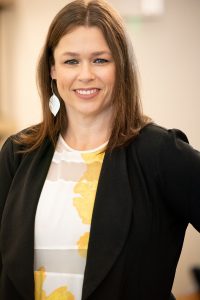
Today we’d like to introduce you to Anne Jensen-Smith.
Hi Anne, it’s an honor to have you on the platform. Thanks for taking the time to share your story with us – to start, maybe you can share some of your backstories with our readers.
My name is Anne Jensen-Smith, Licensed Professional Counselor with Anne Jensen Counseling Services, located in Texas. My career experience began with Denton County Friends of the Family, a non-profit specializing in interpersonal/domestic violence and sexual assault. Following this I worked in the Denton County jail, offering group and individual therapy. From there, I became the primary therapist at Center for Discovery, a residential facility for teens with eating disorders. The combination of these experiences led to a desire to explore more trauma-centered therapy, which I had the opportunity to develop at Dallas Counseling and Treatment Center. My tenure there inspired me to start my own practice, and I love it.
A career in mental health therapy came later in life. During my 20s and 30s, I lived in Los Angeles, working in various arenas within the entertainment industry: music, film, television, and stage. During that time, I was invited to work as a story developer for the stage and television production, “Mortified.” This experience was the launchpad for the work I do today. The “Mortified” concept involved interviewing everyday adults as they shared their childhood journals and diaries with us as the producers. We described it as “curating.” Ultimately the goal was to focus on a narrative in a particular person’s life that could be developed into a comedic stage production where those same adults read their diaries aloud in front of hundreds of complete strangers. The comedy emerged from the human connection between the performer and the audience — those universal human moments where people are disarmed by the vulnerability on display: The “OMG I did that too!” moments. The Mortified show was fun, meaningful, and an all-around joy to work on. But it was the interview process itself, which happened behind the scenes, that started my journey on a new path.
Many of the performers came to us after discovering an old box in the attic of their childhood home on a holiday visit. Their initial readings in a small production office were sometimes light-heartedly silly, other times shocking. However, as we began probing the deeper attachments to things they had written at 14 or 15 years old, the challenges facing that childhood version of the person in front of us were still very present in the adult version. Conversations would connect dots that they had not previously considered: Unresolved family issues, trauma, challenges with intimacy, tragedy, and grief. Those sharing their diaries had arrived to present material that might provide casual entertainment for a good date night for an audience who paid a cover charge to have a few drinks and a few laughs. However, in these preliminary interviews the person would often do as much crying as laughing — as did we.
My experience with “Mortified,” watching average people bare their most embarrassing moments from childhood in front of packed theater crowds, shifted a paradigm for me personally. It took a great deal of courage for these performers to essentially live the nightmare we have all had at some point in our lives: Showing up to school or work, somehow having forgotten to wear clothes. But rather than being demeaned by the audience for what would be considered “cringe” in current nomenclature, the performers were embraced for demonstrating courage and lauded for providing a much-needed catharsis for the audience members. Many performers testified to feeling more confident after their performances, having been liberated from demons lurking in their past. Observing this process from inception to fulfillment illuminated two very important things: 1 — Speaking secrets out loud diminishes their power over us. 2 — I had also spent my youth concealing something about myself: a condition called microtia, in which one of my ears was never fully developed. As I result, I was only able to hear on one side. Though it was difficult for me to accept this as a child, it taught me to listen very intently at an early age. This skill has proved valuable in my practice.
After my husband Adam and I decided to have children, we knew that we needed more secure careers that could sustain us in a way that the inconsistencies of Hollywood could not. I was confident that I could repurpose what I had learned in my prior career helping people process and reframe vulnerability, and it’s been a perfect fit ever since.
Can you talk to us a bit about the challenges and lessons you’ve learned along the way? Looking back, would you say it’s been easy or smooth in retrospect?
The road was nothing resembling smooth. I hadn’t been to college yet, because I worked as an actress since age 18, so I found myself navigating my first college course in my early 30s, surrounded by recent high school graduates. I had my first child on a Monday and took a final that Friday. I worked full-time to put myself through college. Adam and I had to moved from our home in California to Texas so his family could help us take care of our kids while I went to grad school. I had my second kid a few months before grad school started, and he had colic. I was up all night with him, attended school all day, and then studied and wrote papers until falling asleep each night around midnight, and Adam filled in during all of the other times while working full time as well. It was exhausting for the both of us. I also left my social system back in Los Angeles and felt alone. I was diagnosed with postpartum depression, my eldest son with Autism, my brother died, my dog died. It wasn’t until I met my Texas friend group that I finally started to feel like myself again- a quirky but introverted, justice-seeking advocate but shy, great at interaction but only one on one, person who has had a full life.
Appreciate you sharing that. What should we know about Anne Jensen Counseling Services?
Anne Jensen Counseling Services is a business of one, myself. I see a few teenage and mostly adult clients of individual therapy both virtually and in person, and I take most major insurances. I specialize in trauma, eating disorders, depression, and anxiety. I take a very Interpersonal approach and incorporate Cognitive Behavioral Therapy (CBT), Dialectical Behavioral Therapy (DBT), am trained in Eye Movement Desensitization and Reprocessing (EMDR) and also utilize Internal Family Systems (IFS).
What sets me apart is the connection I have with my clients, my use of humor, and my ability to make the therapeutic space feel safe and comfortable for clients to begin the difficult process of opening up. My hope is for my brand to always represent acceptance, inclusion, connection, and empowerment. I work mostly with teens, women, LGBTQIA+, neurodivergent, beginning therapists, creatives, and young adults.
What I am most proud of is that my clients keep coming back. I’m proud of their courage, their growth, and their ability to tell the ugly side of a story. I’m proud of the changes I’ve seen and the trust I’ve developed with my clients who chose me to be a witness to it. I’m proud of the emotional growth I’ve had to get here.
Risk-taking is a topic that people have widely differing views on – we’d love to hear your thoughts.
I view taking risks as necessary in life. It can be so scary, but it is how we grow and how the world grows larger around us. Risks offer opportunity, failure, self-reflection, knowledge. I took a risk when moving by myself at age 18 to Los Angeles to become an actor. I took a risk in leaving the entertainment industry and took a risk in leaving California for Texas to become a therapist and a risk to leave an amazing group practice to start my own therapy practice. With each risk, I learned more and was able to course-correct.
The anxious brain doesn’t want us to take risks. Its job is to search out threat and let us know if there is something to fear. If we listen to it, we isolate. Taking risks is the best exposure therapy a person could do to give a big middle finger to their worries. It can open you up to a world you didn’t know existed.
Now, “risk-taking,” on the other hand, can be a diagnostic symptom of certain mental health diagnoses, and I would certainly advise against it. That one was for my fellow therapists.
Pricing:
- I take most insurances (Aetna, Cigna, BCBS, Oscar, Oxford, United)
- Private Pay is 165/hour
Contact Info:
- Website: https://jensencounselingservices.com


Image Credits
Joan Cristobal Holdburg
Brittany Broussard Walker