




Today we’d like to introduce you to Adrian Garcia Mendez.
Hi Adrian, we’re thrilled to have a chance to learn your story today. So, before we get into specifics, maybe you can briefly walk us through how you got to where you are today?
I’ve always believed that the most compelling stories aren’t found in a single, perfectly planned frame, but in the grit, the contrast, and the moments when you have nothing but time to look at the world differently.
My journey really began during the COVID-19 lockdown. Like a lot of people, I suddenly found myself with a lot of time on my hands—and I chose to spend it with a camera. Before long, I became completely addicted to film photography. I fell in love with the process, obsessively experimenting with different film stocks and moving across various film formats to see how they changed the mood of a shot. To document the process, I started making YouTube videos, taking viewers along with me as I walked the streets, captured the energy of lowrider cruises and park meet-ups, and explored the quiet, gritty beauty of empty buildings.
About a year into that journey, I needed a way to get deeper into the craft, which led me to a community darkroom called Lone Star Darkroom. That’s where the real magic happened—I learned the hands-on alchemy of developing, scanning, and making traditional darkroom prints. Another year later, ready to expand my skill set even further, I found FLOCC. There, I stepped out of the streets and into the studio, mastering artificial lighting and learning how to control a space completely.
Between those formative years and today, my photography evolved from a serious hobby into a full-fledged creative engine. I didn’t just want to take photos; I wanted to build a tangible culture around them. I started creating zines, printing stickers, designing T-shirts, and getting my work into various art shows across the DFW area, steadily building a name for myself both within my local community and online through Instagram.
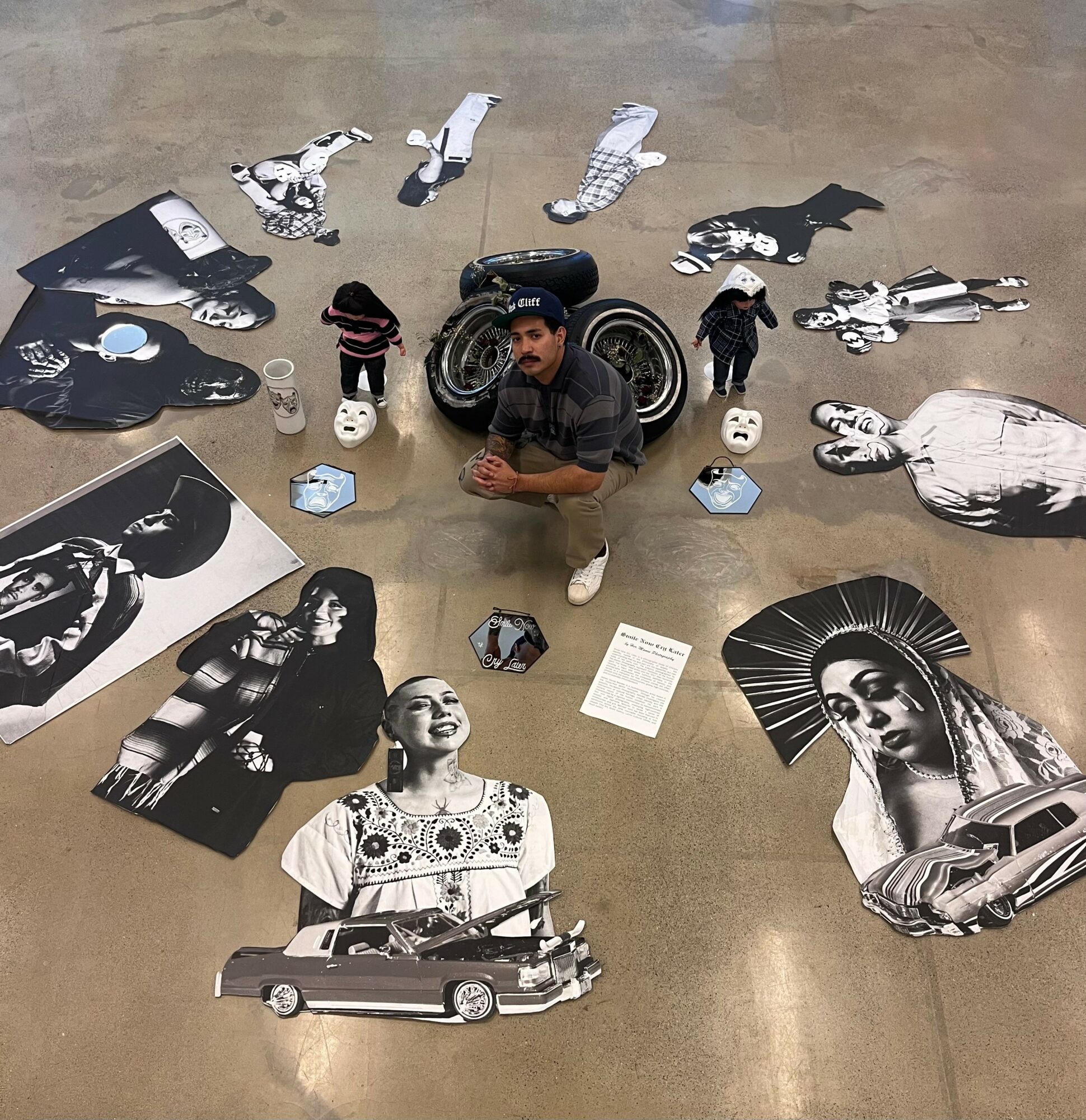
But as my footprint grew, I realized I wanted to lift others up, too. I organized a group art show called *Lone Star Shooterz*, which specifically highlighted Chicano culture and gave local artists a platform to showcase their vision. Then, at the beginning of this year, things came full circle when I hosted my very first solo exhibition, *Smile Now Cry Later*—a milestone that felt like the culmination of everything I’ve been building.
It’s been six years since I first started taking photography seriously. What began as a way to pass the time during a global standstill has transformed into a lifelong obsession, a thriving community, and a visual legacy that I’m only just beginning to write.
Can you talk to us a bit about the challenges and lessons you’ve learned along the way. Looking back would you say it’s been easy or smooth in retrospect?
It definitely hasn’t been a conventional road, but in terms of execution, it actually *has* been a smooth ride—mostly because I’m the boss and the creative director. When you hold the keys to your own vision, you don’t have to fight through red tape, corporate compromise, or someone else’s watered-down ideas to make things happen. I dictate the pace, the aesthetic, and the direction.
But being your own boss doesn’t make you immune to the internal battles. For me, the real struggles haven’t been external logistical nightmares; they’ve been mental.
The biggest hurdle has always been the inevitable creative block. There have been seasons where I’d look at my work and feel hit by a wave of frustration—worrying that my style was becoming redundant, or worse, unoriginal. When you hit a groove and people start recognizing you for a specific look—like street photography or lowrider cruises—it’s incredibly easy to fall into a routine and start on-the-clock reproducing what you *know* works, rather than discovering something new.
Whenever I feel that stagnation creeping in and the work starts feeling a bit too predictable, I force myself to shift gears entirely. I use that friction as a signal to experiment and break the mold.
* **Switching the Process:** If I feel stuck in a rut shooting on the streets, I’ll take it into the controlled environment of the studio at FLOCC to obsess over lighting.
* **Changing the Medium:** If standard framing feels repetitive, I’ll dive back into the darkroom alchemy, alter my scanning techniques, or push the boundaries of high-contrast halftone and graphic textures.
* **Shifting the Outlet:** When single images feel limited, I channel that energy into a completely different format—like designing apparel, binding a new zine, or curation, like pivoting my focus to putting together the *Lone Star Shooterz* group show.
Ultimately, the struggle is just a necessary part of the cycle. I’ve learned that feeling like your work is becoming redundant isn’t a sign to stop; it’s just the creative alarm clock telling you it’s time to experiment, reinvent, and evolutionize the vision once again.
As you know, we’re big fans of you and your work. For our readers who might not be as familiar what can you tell them about what you do?
At its core, my work is about capturing the raw, unfiltered soul of my community, but doing it through a lens that refuses to stay inside the lines. I am a photographer and visual artist, and over the past six years, I’ve built a practice that bridges the gap between traditional documentary photography and hands-on mixed-media art.
I specialize in three distinct but deeply connected worlds: studio portraits, street photography, and lowrider car culture.
To capture these subcultures, I don’t tie myself to one piece of technology. I choose the tool that fits the emotion of the scene, moving fluidly between:
Analog Film- For the grit, texture, and deliberate pace of the streets and car meets.
Digital- For the precision, control, and sharp execution required in the studio.
Instant Film- For that raw, immediate, one-of-one snapshot of a single moment.
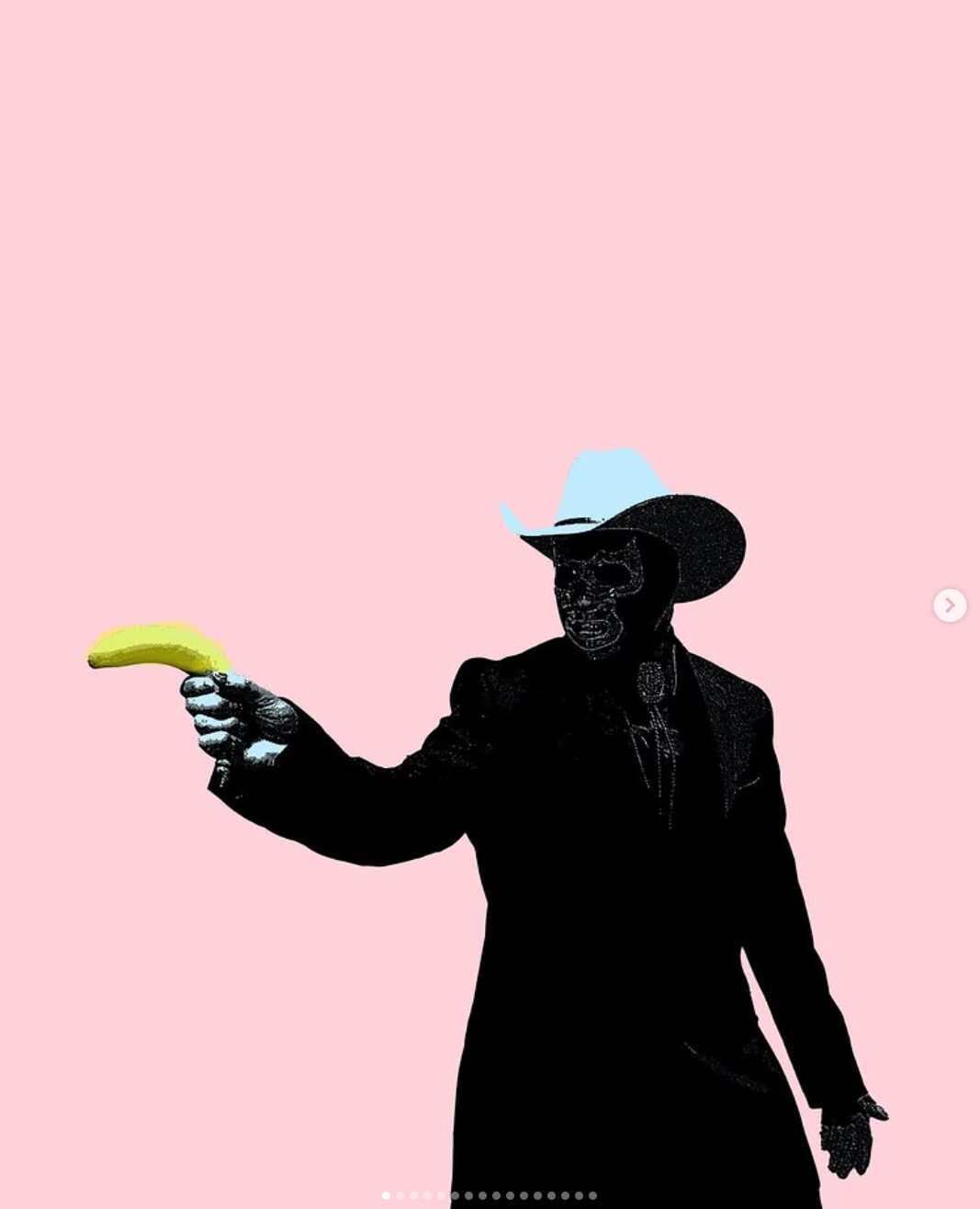
If you ask people in the DFW creative scene or online what defines my style, they’ll tell you it’s a refusal to let a photograph just be a flat image. I treat a print as a starting point, not a final product. I am constantly experimenting with **mixed media**—whether that’s shooting in-camera double exposures, introducing screen printing and paint directly onto the images, or finding entirely unconventional ways to print and present my work, like high-contrast halftone textures.
While I’m incredibly proud of my recent first solo exhibition, *Smile Now Cry Later*, what truly fulfills me is using my momentum to lift up the people around me. Organizing the group art show *Lone Star Shooterz*—a gallery space dedicated entirely to highlighting Chicano culture and giving local shooters a platform—is easily one of my proudest achievements. Creating art is great, but creating a self-sustaining community through that art is everything.
What sets me apart is that I’m not just a photographer who takes a picture and sends a digital file; **I am a maker.**
Because I came up learning the alchemy of the darkroom at Lone Star Darkroom and the precise control of studio lighting at FLOCC, I understand how to manipulate an image at every single stage of its life. I operate as my own creative director. When you look at my work—whether it’s on a gallery wall, a zine, a sticker, or a T-shirt—you are seeing an image that has been felt, pushed, pulled, and manipulated by hand. I don’t just document the culture; I build tangible pieces of it.
Alright so before we go can you talk to us a bit about how people can work with you, collaborate with you or support you?
Follow my instagram @her.manosphotography. I post my work and market flyers for shows I’m in.
Contact Info: