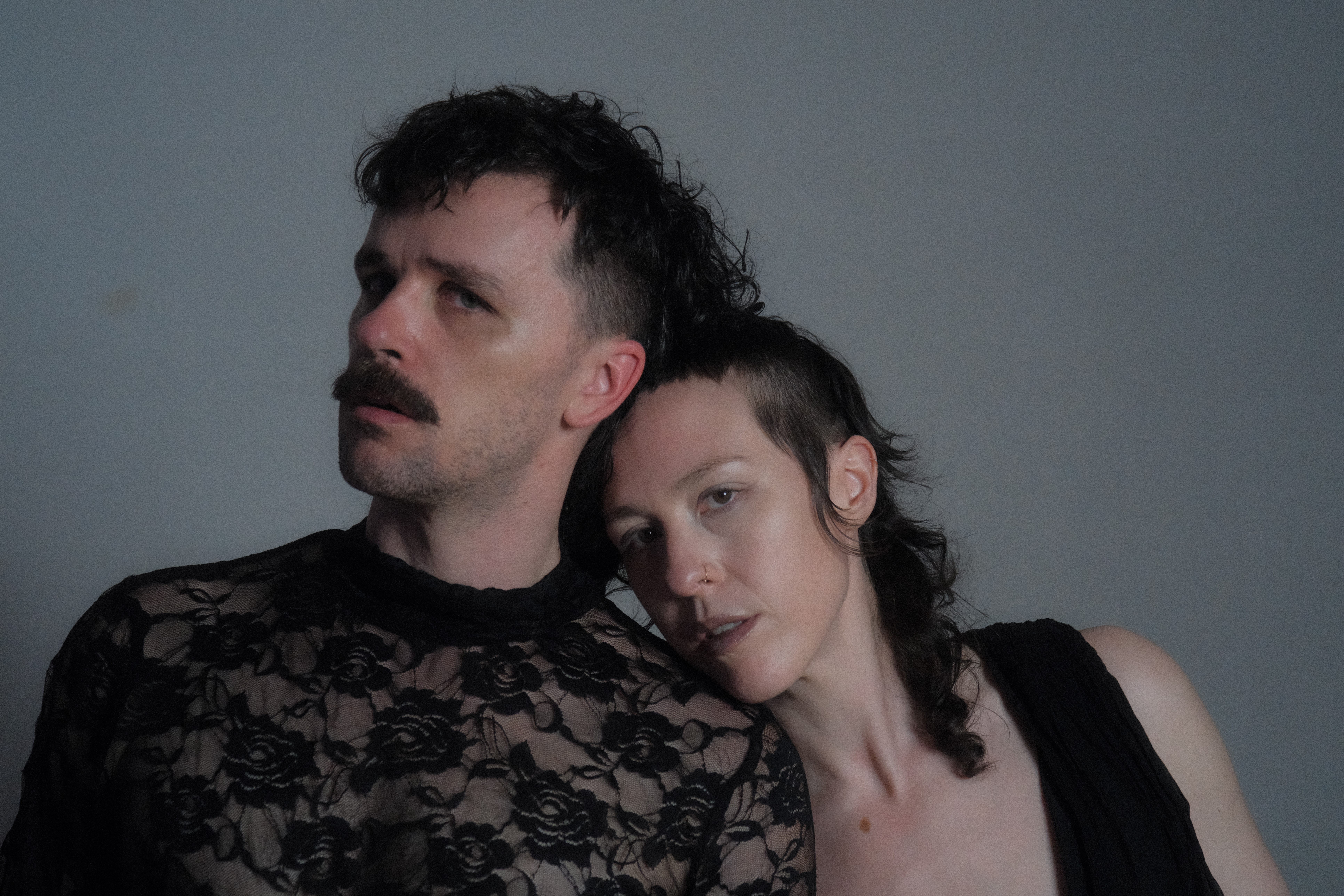






Today we’d like to introduce you to Anna + Taylor Thompson + Knight.
Hi anna + taylor, so excited to have you on the platform. So before we get into questions about your work-life, maybe you can bring our readers up to speed on your story and how you got to where you are today?
We are a multidisciplinary performance entity creating work at the intersection of dance, contemporary performance, electronic music, and bespoke technology. Co-artistic director taylor knight is a Dallas native and attended Booker T Washington High School for the Performing Arts (graduated in 2008). anna thompson is from Baltimore, MD and we both met while attending Point Park University’s Conservatory of the Performing Arts for Dance between 2009-2012 in Pittsburgh, PA. Between 2012-2025 we lived and worked in Pittsburgh while maintaining a fairly rigorous touring presence with our work throughout the USA and eventually abroad. In this time we reconnected with the Agora Artists folks (Avery-Jai and taylor went to high school together!) via their Mini Movement Fest in 2024.
slowdanger mission statement:
slowdanger is a project based multidisciplinary performance entity creating at the intersection of dance, electronic music, media art, and bespoke technology since 2013. Led by co-founding artistic directors, anna thompson and taylor knight, slowdanger brings audiences closer to their own bodies through performance, immersive experiences and open-level workshops. From directing music videos, to scoring plays and performing DJ sets, slowdanger transforms its shape to adapt to a variety of different containers. slowdanger has performed internationally in venues ranging from proscenium theater and gallery to nightclub and dive bar. The name, slowdanger, was inspired by Pittsburgh road signs that signify a demolition of old surfaces to build upon the remnants. They continue to return to this overarching concept cyclically in performance creation; rebuilding, slowing down to examine the remains and re-imagine new futures. slowdanger centralizes innovation and experimentation in the creation of collaboratively devised multidisciplinary performances with intersectional and diverse teams of national/international collaborators and community members. Cultivating intersectionality of race, gender, sexuality, age, experience level, discipline and thought are at the root of their practice as artist citizens. They use contemporary performance methods, community facilitation, and interdisciplinary research to broaden entry points of access to potential audiences for experimental performance. This multi-modal approach invites audiences, patrons, and workshop participants to engage in a work as it’s being made and establishes community stakeholders to support the efficacy of the work’s mission and central research inquiries. They centralize prolonged relationships with aligned institutions to support the development and presentation of new work.
slowdanger provokes audiences to acknowledge art viewership as a tool for questioning and examining one’s lived experiences. They cultivate kinesthetic empathy through creating community in transformational embodied experiences. Their collaborative practice is a form of disseminating information and creating space for discussion with extensive communal engagement and interdisciplinary dialogue at the center of their performance research. They believe there is no wrong way to interpret performance and empower audiences to draw meaning from the ephemerality of their own sensations and perceptions.
Bio+notable awards:
Since 2016, slowdanger has received numerous grants, recognitions, and awards from entities such as The Heinz Endowments, National Performance Network, New England Foundation for the Arts and Foundation for Contemporary Arts. In 2018, slowdanger presented work at the prestigious Place Des Arts and Usine C in Montreal as resident choreographers at Springboard Danse. That same year they were named one of Dance Magazine’s “25 to Watch”. In 2019, they had their first national tour with evening-length work, empathy machine, which received funding support from The Heinz Endowments, Mid Atlantic Arts Foundation, Opportunity Fund, and Pittsburgh Foundation A W Mellon Grant. In 2019, they were resident artists at Carnegie Mellon University’s Frank-Ratchye Studio for Creative Inquiry and Carnegie Museum of Art. In 2020, their digital work, for shadowing, was featured in the Arts Across America platform via The Kennedy Center. From 2021-2023 slowdanger were artists in residence at the Clarice Smith Performing Arts Center at University of Maryland to develop their work, SUPERCELL.
SUPERCELL responded to climate consciousness and environmental collapse created in partnership with The Clarice and the Kelly Strayhorn Theater. This work was awarded national funding through the NEFA/National Dance Project Production Award, Mid-Atlantic Arts CONNECT, and NPN Creation Fund and was named a “Must See” by Dance Magazine.
They were inaugural New Work Development Artists In Residence at Texas A&M College of Performance Visualization and Fine Art in 2024 for their work STORY BALLET. STORY BALLET has been awarded funding from Opportunity Fund, Pittsburgh Foundation, New Music USA and National Performance Network Creation Fund with development and touring support from Kelly Strayhorn Theater, Texas A&M, Dance Place, Maryland Hall, and Jacob’s Pillow.
slowdanger’s recent site specific and adaptive sonic, physical, and visual performance installation, ABYSS, has received support and performance engagements from Pittsburgh Cultural Trust, Pittsburgh Downtown Partnership, Triplets Amsterdam, Lore Festival, The Island Bristol, Springboard Danse, Point Park University, the Dollar Bank Three Rivers Festival, Citizens Bank, and the Pittsburgh Parking Authority. slowdanger is contributing a chapter to the Routledge Handbook for Health and Environmental Humanities (2026) for their research on SUPERCELL and performance methods for cultivating embodied resiliency mechanisms in the apocalypse.
Would you say it’s been a smooth road, and if not what are some of the biggest challenges you’ve faced along the way?
Of course not! We are continuously met with challenges as full time artists living in a capitalist society. It is also still a challenge to find consistent funding for the development of new work in the performing arts. The performing arts is powered by people, making it a very expensive artform to invest in which has led us to build collaborative projects over longer periods of time. The complexity of our work and practices as artists is often diminished because we are not ‘one thing’. As multidisciplinary artists we are deeply invested in providing multiple modes of entry to audience members through movement, sound and media and are often still inundated with questions about what our ‘main artform’ is. While our multidisciplinary nature can be a challenge for understanding, it is also the very nature that has allowed us to survive and thrive as artists. We do not seek to conjure a ‘traditional dance audience’ in the making and touring of our work and have witnessed success in our how work extends from the body into visual art, electronic music, interdisciplinary collaboration, climate awareness, wellness, and club/nightlife spaces.
It is unfortunate to us that people in our culture often do not witness art and specifically the performing arts as vital resources to our culture. We seek to find portals to shift that by working expansively and interdisciplinary. Our work seeks to engage vital and current issues with interdisciplinary advisory cohorts that support to dramaturgically shape the work alongside us.
Alright, so let’s switch gears a bit and talk business. What should we know about your work?
slowdanger provokes audiences to acknowledge art viewership as a tool for questioning and examining one’s lived experiences. We witness success in the realization of unexpected entry points connecting audiences to their own body, prompting them to question how their body engages with the broader social, energetic and environmental spheres within which they intersect. We work to engage intersectional audiences and communities through open-level movement workshop initiatives, expansive performance engagements and interdisciplinary collaborations and dialogues, motivated by horizontal process structures. From club to gallery, proscenium to sidewalk, DIY warehouse to dance studio, we witness the intersections of our communities via the use of multi-modal and multidisciplinary practices within both expected and unexpected spaces for experimental performance to emerge. Within workshops, we decentralize the hierarchical perspective of virtuosic dance forms. We offer participants embodied process mechanisms and dialogue prompts we are currently engaging in within our creative processes and performance making.
We believe that experimental and contemporary art can be accessible if we work with audiences to provide them entry points to accessing and believing in their own perceptions and feelings when viewing work. In addition to our work in proscenium and stage environments, we have seen success in this with our work engaging in unlikely spaces and places for performance to exist. Ie a warehouse rave, a parking garage, a nightclub, a museum sculpture garden, and a street corner.
—-
Our work STORY BALLET is an Eisemann Edge Initiative awardee for 2026 through the Communities Foundation of Texas.
Through this opportunity we will be sharing, STORY BALLET, at the Eisemann Center in Richardson, TX.
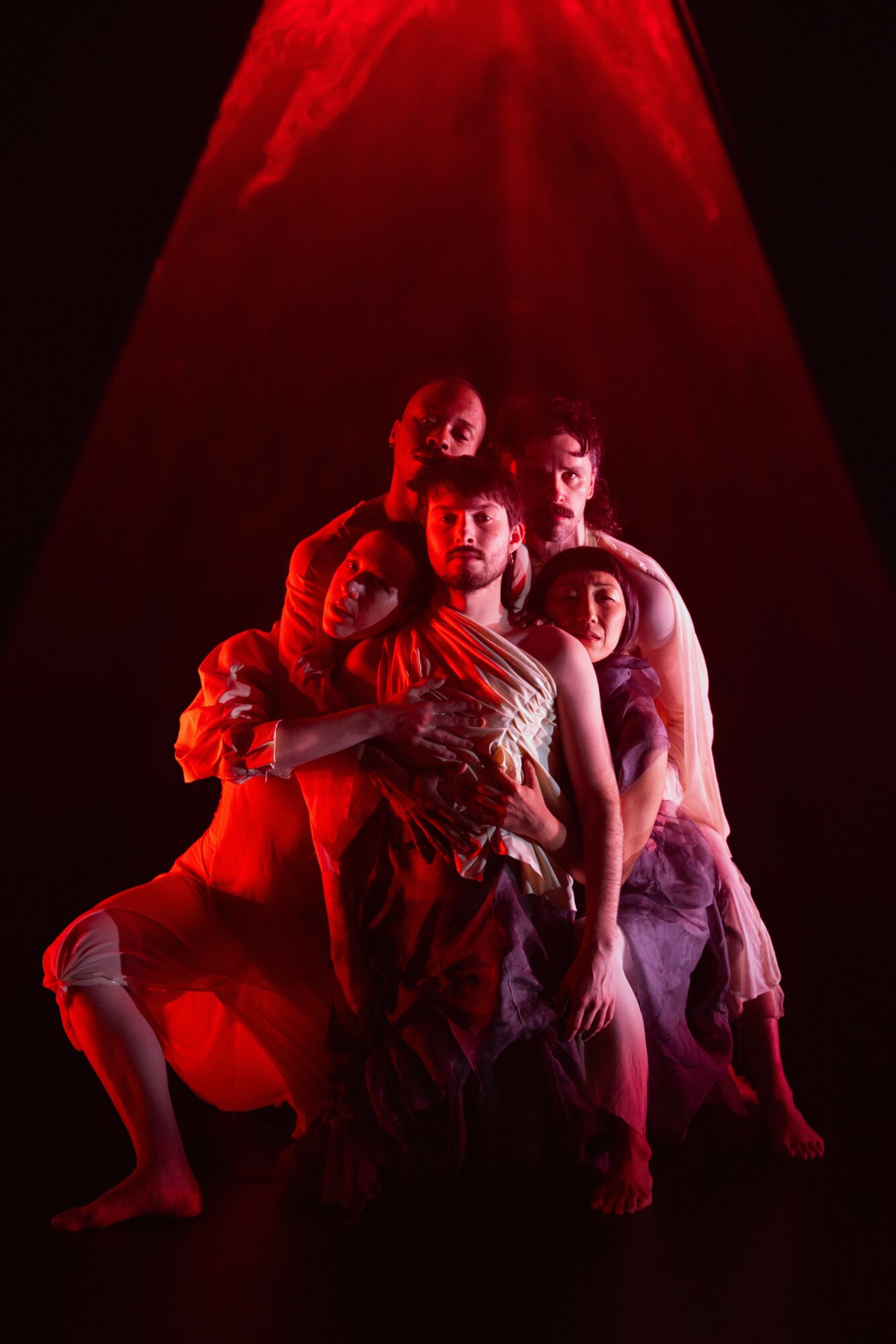
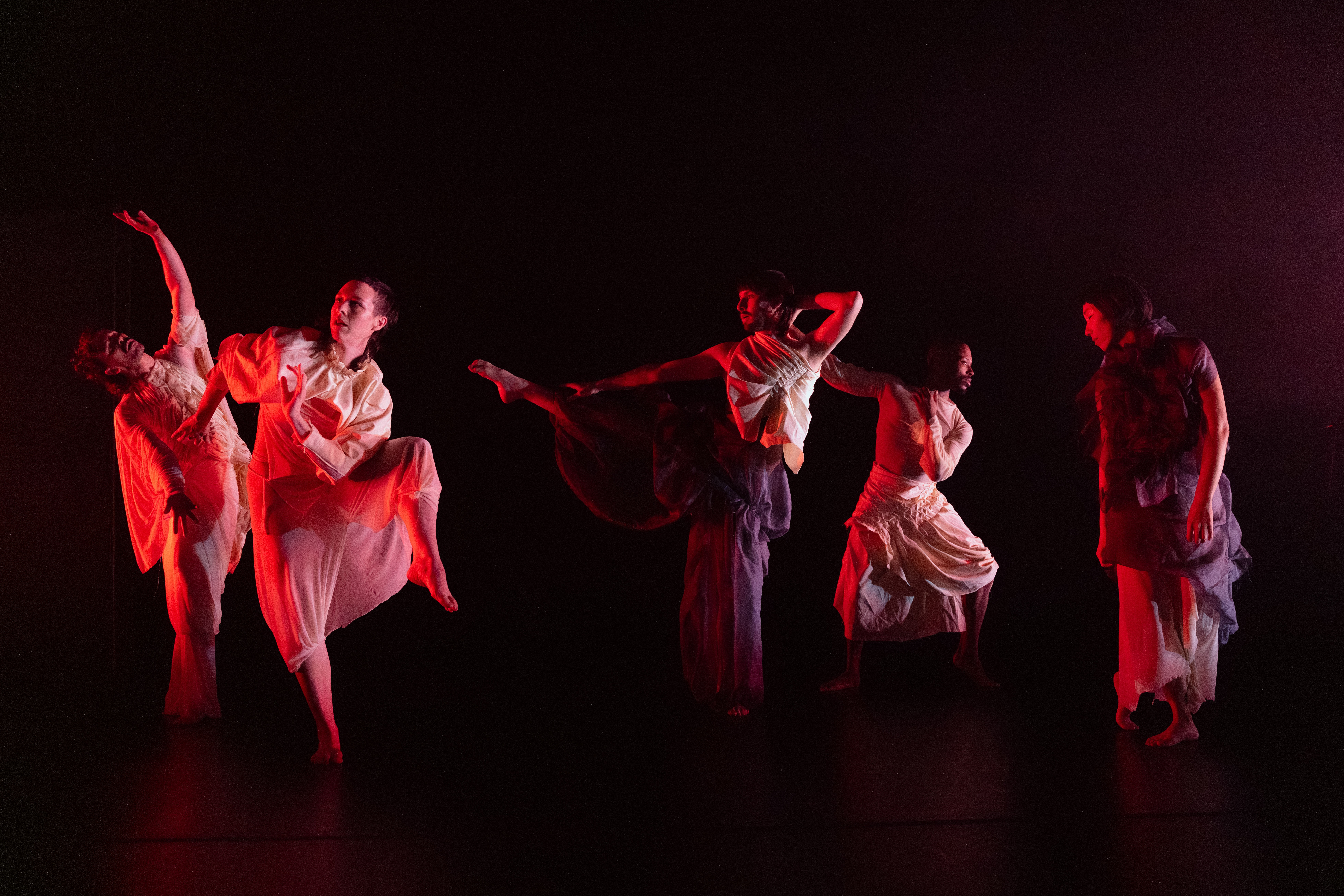
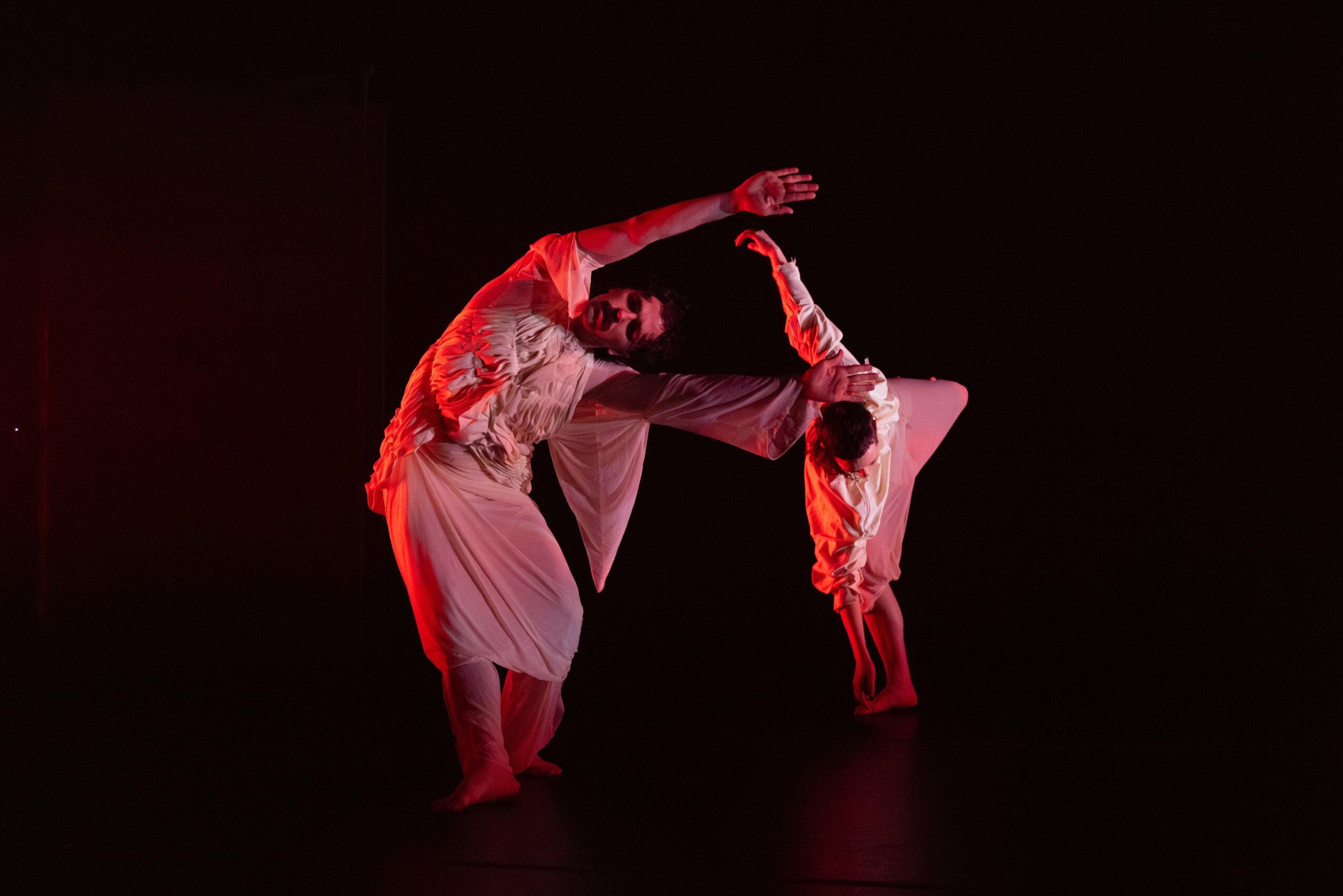
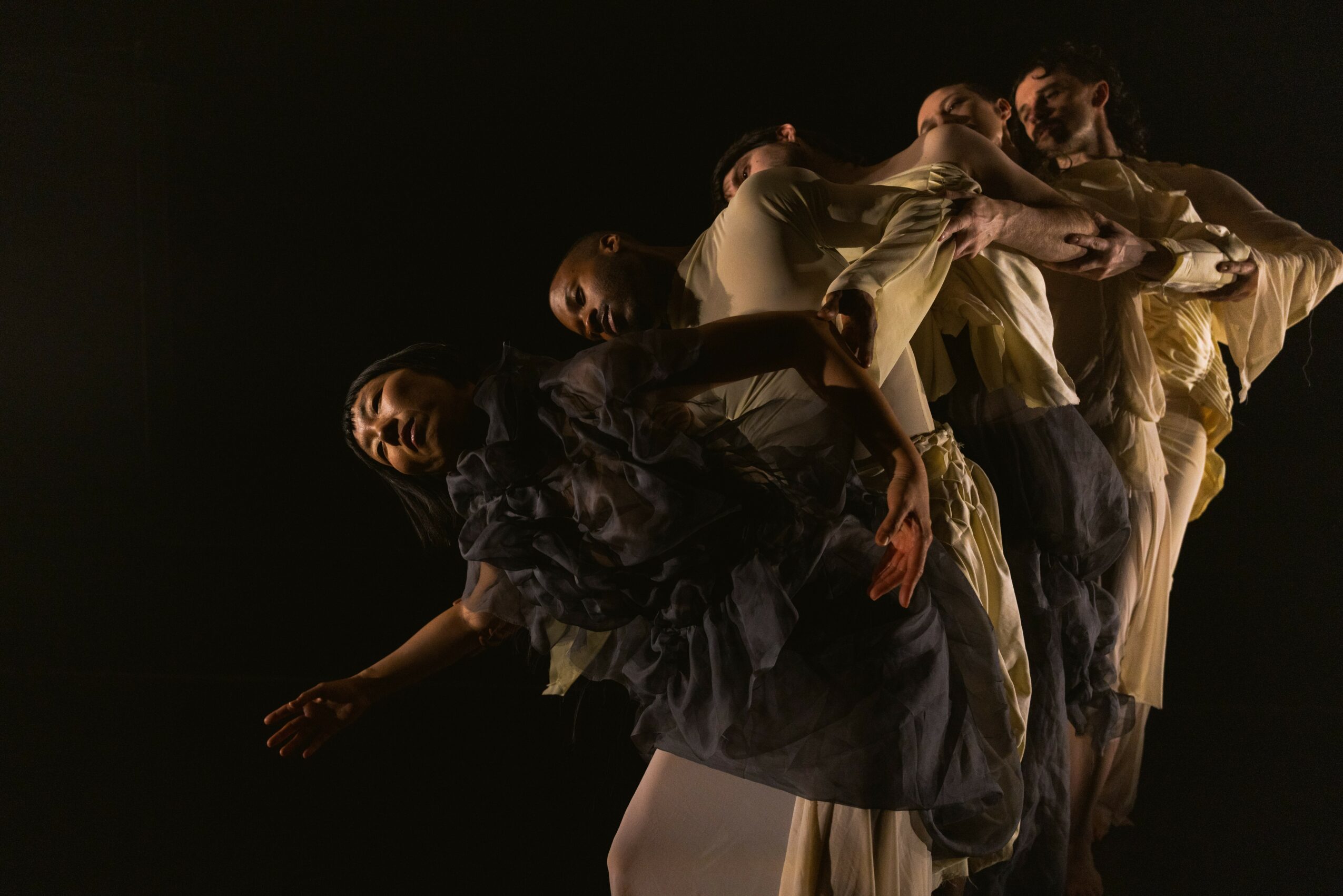
STORY BALLET is a surreal dance theater performance re-interpolating Hector Berlioz’s historic 1830 composition, Symphonie Fantastique. This re-contextualization queers the original tale into an evening length contemporary performance exploring the intersection of mental health de-stigmatization and perception, begging, what holds us together? The work engages technology to externalize the internal experience of the lived realities of performers navigating capitalism, physical labor, and identity.
Berlioz’s original narrative objectifies “the/a woman” as an obsession that haunts him throughout the program’s musical story. STORY BALLET subverts this concept, redefining the symphony’s story as “dancing with the ghost of one’s self.” The cast of five embodies different facets of the central character, each grappling with their own obsessions and past selves. The fixation on physical identity and preservation within a dancer’s career serves as a framework for shaping each performer’s ghost.This framework emerged from our ongoing conversations with performers about injury, precarity, and the pressure to maintain a fixed physical identity over time.
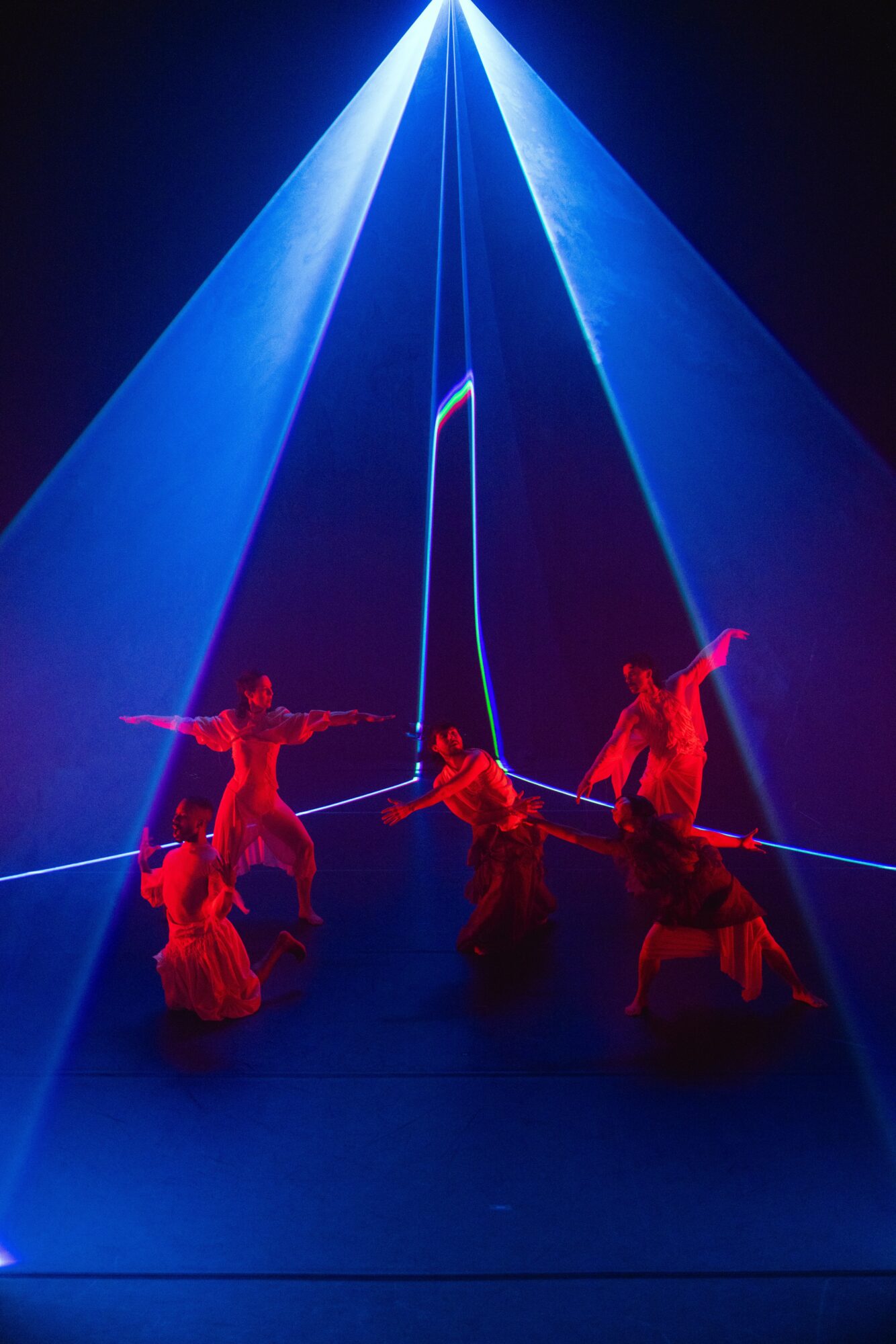
What defines this project is how technology is not illustrating these ideas, but actively structuring how they are experienced. Noir lighting, holographic projections akin to 1800’s Pepper’s Ghost illusions, motion capture and live sound sampling reinforce the themes and the world the work lives within. We are building integrated systems where motion capture, live sound sampling, and projection mapping softwares, MadMapper, VDMX, Ableton Live, and Max for Live, are networked together in real time. A seismic microphone amplifies the dancers’ physical impact with the floor, translating weight and exertion into sound. Performers’ voices are looped and processed live, while analog synthesizers and drum machines construct a score that shifts with their physical and emotional states.
Visually, a three-layered projection structure, resembling a folding book, acts as both a surface and a container for holographic “ghosts” of the performers, referencing early Pepper’s Ghost illusions. Motion capture data and pre-recorded video are manipulated live within this structure, allowing performers to encounter distorted versions of themselves that accumulate and fracture over the course of the piece. As the work progresses, this structure is physically deconstructed into a trap or cage, collapsing the boundary between psychological and environmental constraints.
Through this system, internal experiences, obsession, dissociation, exhaustion, are translated into shared sensory conditions. The performance environment begins to overtake the body, mirroring how performers describe the loss of agency within cycles of production and expectation. Rather than representing mental health, the work attempts to stage it as a physicalized presence represented by the performers’ growing enmeshment with technology.
Our process is central to this inquiry. We are working with an interdisciplinary advisory committee that includes Kathleen Gaines, Founder of Minding the Gap, whose work addresses mental health literacy, stigma reduction, and systemic inequities within dance culture; Liana Maneese, Founder of Transitional Characters, whose liberation-based mental health framework centers care practices for marginalized communities navigating trauma and identity; and Morgan Peterson, a clinical therapist working with queer and trans communities. These collaborators serve as dramaturgical and research partners throughout development, helping us interrogate how mental health is embodied, externalized, and collectively processed within the work.
Through workshops, feedback sessions, and collaborative devising, we gather embodied research from artists navigating systemic inequities in the field, as well as strategies for resilience and care. These exchanges directly inform both the technological systems and choreographic structures.
The shift we are advocating for is not simply the use of advanced technological tools, but a reorientation of performance-making where technology is a responsive partner in processing lived experience. In STORY BALLET, bodies are in constant negotiation with an echoing and ghostly technological system creating responsive feedback loops that shape performers and the performance space.
This work points toward a future where performing arts can function as sites for collective sensing and meaning-making around mental health: not as narrative alone, but as immersive, adaptive environments that allow audiences and performers to encounter these experiences and themselves together, in real time.
Are there any books, apps, podcasts or blogs that help you do your best?
Books:
Anna Daley + Ralph Lemon – geography: art / race / exile
Deborah Hay – Lamb at the Altar: the Story of a Dance
N. K. Jemison – Broken Earth Trilogy
Ursula K. Le Guin – the Dispossessed: an Ambiguous Utopia
William Gibson – Neuromancer
T. Fleischmann – Time is a Thing a Body Moves Through
Toni Morrison – Playing in the Dark: Whiteness and the Literary Imagination
Pricing:
- no
Contact Info:
- Website: https://www.slowdangerslowdanger.com
- Instagram: https://www.instagram.com/slowdanger__/
- Facebook: https://www.facebook.com/slowdangerslowdanger/
- Youtube: https://www.youtube.com/channel/UCeF_LbN-go3InO7oQN5Zlmw
- Soundcloud: https://soundcloud.com/slowdangerslowdanger
- Other: https://slowdanger.bandcamp.com/music