



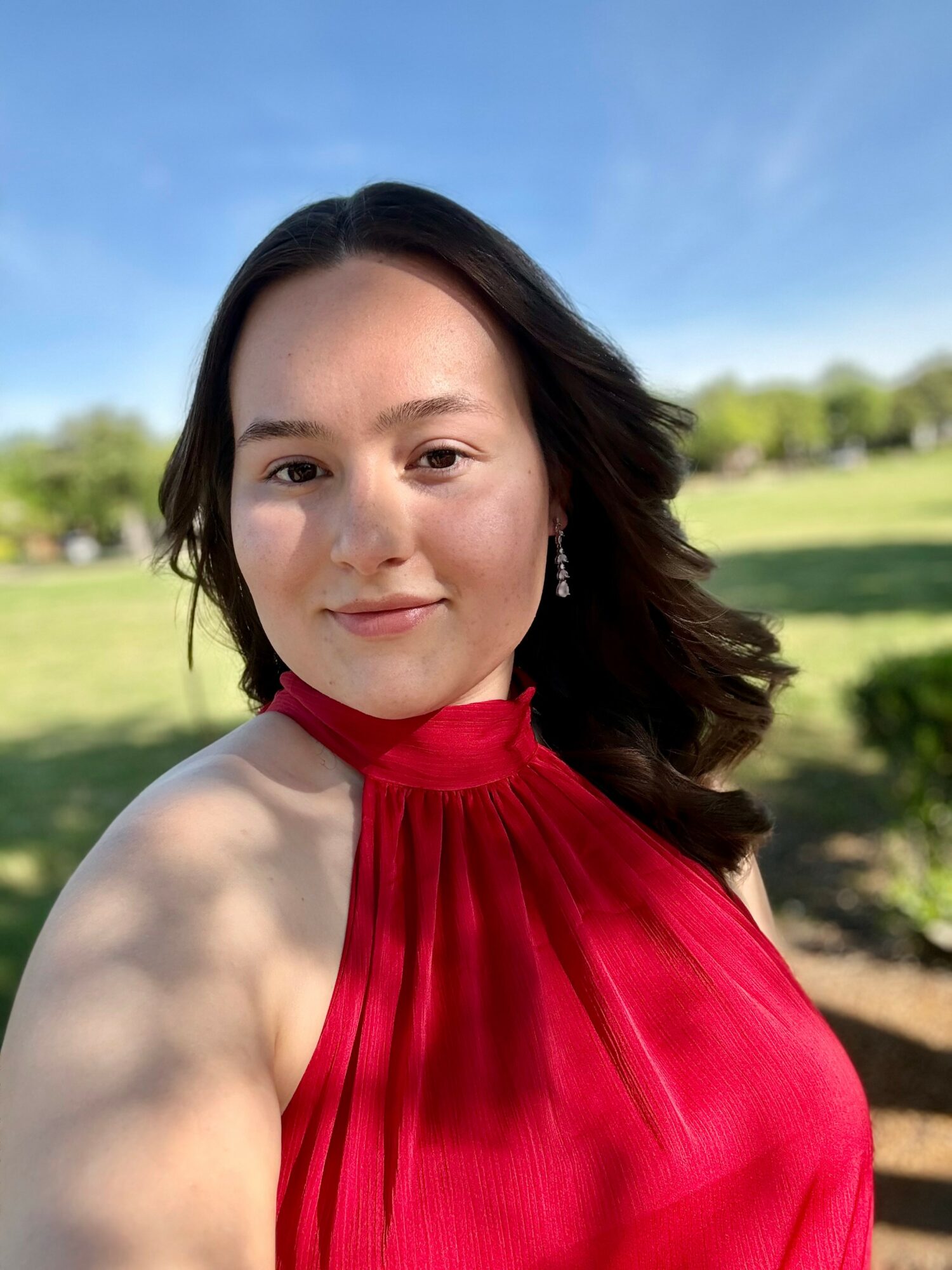
Today we’d like to introduce you to Kasia Badger.
Hi Kasia, thanks for joining us today. We’d love for you to start by introducing yourself.
If you had asked me in high school what my future looked like, I would have confidently told you that I was going to become an airline pilot.
Flying always felt like freedom to me. I loved the excitement of it, the challenge of it, and honestly, I loved that it was difficult. I also wanted to prove something. Aviation is still heavily male-dominated, and from a young age, I was drawn toward spaces where women were underrepresented because I wanted to show that we belong there too. At 17, I became a private pilot, the minimum age possible. Learning to fly taught me something that would shape almost every major decision afterward: most limits are mental long before they are real.
As I got older, I started thinking less about what career sounded exciting and more about what kind of impact I wanted to leave behind. I knew I wanted my work to matter to people who were often overlooked. That realization slowly pulled me away from aviation and toward economics, specifically development economics, because I wanted to understand poverty, inequality, and why access to opportunities — especially education for girls — remains so uneven around the world.
That passion eventually brought me to Europe. With my Polish heritage, living abroad had always felt like something I was meant to do. Moving overseas to study economics and build a life there felt like the beginning of the future I had carefully planned for myself.
Then, at 19 years old, my plans changed almost overnight.
Serious health problems forced me to immediately leave school, return to the United States, and give up the independence I had worked so hard to build. At first, there were more questions than answers. I went from building a life abroad to navigating appointments, testing, specialists, and the strange reality of not knowing what was happening to my own body. More than anything, I remember feeling confused. I remember grieving the version of my life I thought I was supposed to have. And I remember feeling isolated watching everything familiar suddenly become uncertain.
Eventually, I was diagnosed with multiple rare diseases. But what changed me most was not the diagnoses themselves — it was realizing how little was understood.
One moment still stays with me. I remember being told that doctors could treat symptoms, but they did not really know why those symptoms were happening. Sitting with that reality changed something in me. For years, I had wanted to dedicate my career to solving problems that disproportionately affected underserved populations. I realized that rare disease patients often live inside another kind of underserved community — one where awareness is limited, research is lacking, and many people spend years searching for answers that may not even exist yet.
What started as a disruption slowly became direction.
Today, I am pursuing my bachelor’s degree in neuroscience with a focus on research neuroscience, particularly mechanistic and translational approaches to rare diseases that disproportionately affect women. Alongside school, I work as a caregiver for a young woman living with rare diseases, helping support her independence while learning firsthand how different and complex these conditions can be from person to person.
Being both a patient and a caregiver has significantly changed how I think about research. Research is no longer abstract to me. It is the difference between uncertainty and answers, between being overlooked and being understood.
Across every chapter of my life — from aviation to economics to neuroscience — one thing has stayed consistent: I have always been drawn toward difficult problems, underrepresented groups, and creating positive change. Whether through publishing books centered around empowerment and positivity, advocating for women, or pursuing a future in neuroscience research, that mission has remained the same even when the path changed.
My long-term goal is to lead my own rare disease research lab. Because if my experiences have taught me anything, it is that the absence of answers is not a reason to stop asking questions.
I’m sure it wasn’t obstacle-free, but would you say the journey has been fairly smooth so far?
It definitely has not been a smooth road, and for a long time I struggled with accepting that my path was not going to look the way I originally planned.
One of my first major challenges was realizing that changing directions is not the same thing as failing. I worked incredibly hard to become a private pilot at 17 and later moved to Europe to study economics because I thought I had my future figured out. Having to step away from plans I had spent years building was difficult, especially because I tied a lot of my identity to achievement and long-term goals.
The biggest challenge came when serious health issues forced me to leave school abroad and return to the United States unexpectedly. Losing independence at a young age was something I was not prepared for. Going from building a life overseas to suddenly navigating specialists, testing, uncertainty, and eventually multiple rare disease diagnoses was emotionally difficult because there were long periods where there simply were not clear answers. I struggled with grief, isolation, and the frustration that comes with feeling like your life has been interrupted without warning.
Another challenge has been learning how to navigate systems that are not always designed for complex cases. Through my own experiences and now through caregiving, I have seen how difficult it can be for patients with rare diseases to access answers, resources, and understanding. That experience changed how I think about resilience. I used to think resilience meant pushing through challenges without slowing down. Now I think resilience is being willing to adapt, rebuild, and continue moving forward even when the path changes completely.
Looking back, I would not describe my journey as smooth, but I would describe it as transformative. Many of the experiences that felt like setbacks at the time ultimately shaped my research interests, career goals, and the way I understand the people I hope to serve through my work in neuroscience.
Thanks for sharing that. So, maybe next you can tell us a bit more about your work?
Writing has been part of my life for as long as I can remember. Before neuroscience, before economics, before flying airplanes, there was always writing.
I have written and published books across different genres, including poetry, nonfiction, children’s books, and books centered around personal growth and empowerment. For me, writing was never something I planned to turn into a long list of projects — it just became the way I moved through the world. It was how I processed experiences, explored ideas, and tried to make sense of things that felt too big to carry around in my head.
I think I started writing because I have always cared deeply about people and about understanding experiences that are different from my own. A lot of my work naturally grew around themes like self-love, resilience, relationships, empowerment, and caring for others because those were the conversations I kept wanting to have — not only with readers, but with myself too.
Writing also stayed with me during periods when everything else felt uncertain. When my health changed unexpectedly, when my career goals shifted, when I had to rebuild plans I thought were permanent, writing remained one of the few places where I could be honest, creative, and reflective at the same time.
What I am most proud of is creating work that feels authentic to who I am and what I care about. Across everything I do — writing, caregiving, research, advocacy — the common goal is people. I care about helping people feel understood, represented, and less alone in their experiences.
What sets me apart is probably that I do not separate creativity from the rest of my life. The same curiosity and empathy that drives my writing is what led me toward neuroscience, caregiving, and rare disease research. To me, they all come from the same place: wanting to understand people better and contribute something meaningful.
Where we are in life is often partly because of others. Who/what else deserves credit for how your story turned out?
I have been really lucky to have a few people in my life who believed in me at different stages, but one person who stands out is my former high school teacher, Mrs. Laken Foster.
She was one of the first people who didn’t just see me as a student trying to succeed academically, but as someone with a lot of ideas, ambition, and questions about the world. She encouraged me to take myself seriously, even when I was still figuring out what direction I wanted to go in. When I decided to pursue aviation, she supported that. When my interests shifted toward economics and later toward neuroscience, she supported that too. What mattered most to her was that I was thinking deeply about impact and challenging myself.
During some of the more difficult periods in my life, especially when I had to step away from school because of health issues and uncertainty, she continued to check in on me and remind me that my path was not “ruined” just because it changed. That perspective made a big difference for me at a time when I was rebuilding a lot of things in my life from scratch.
More than anything, she taught me that growth is not linear and that it is okay for your goals to evolve as you do. I think that lesson is a big part of why I was able to redirect my focus toward neuroscience and rare disease research without feeling like I had lost my way.
I honestly credit her with helping me stay confident in my ability to keep moving forward, even when life did not go according to plan.
Contact Info:
- Website: https://www.blurb.com/user/kasianbadger
- LinkedIn: https://www.linkedin.com/in/kasia-natalia-badger-researcher