





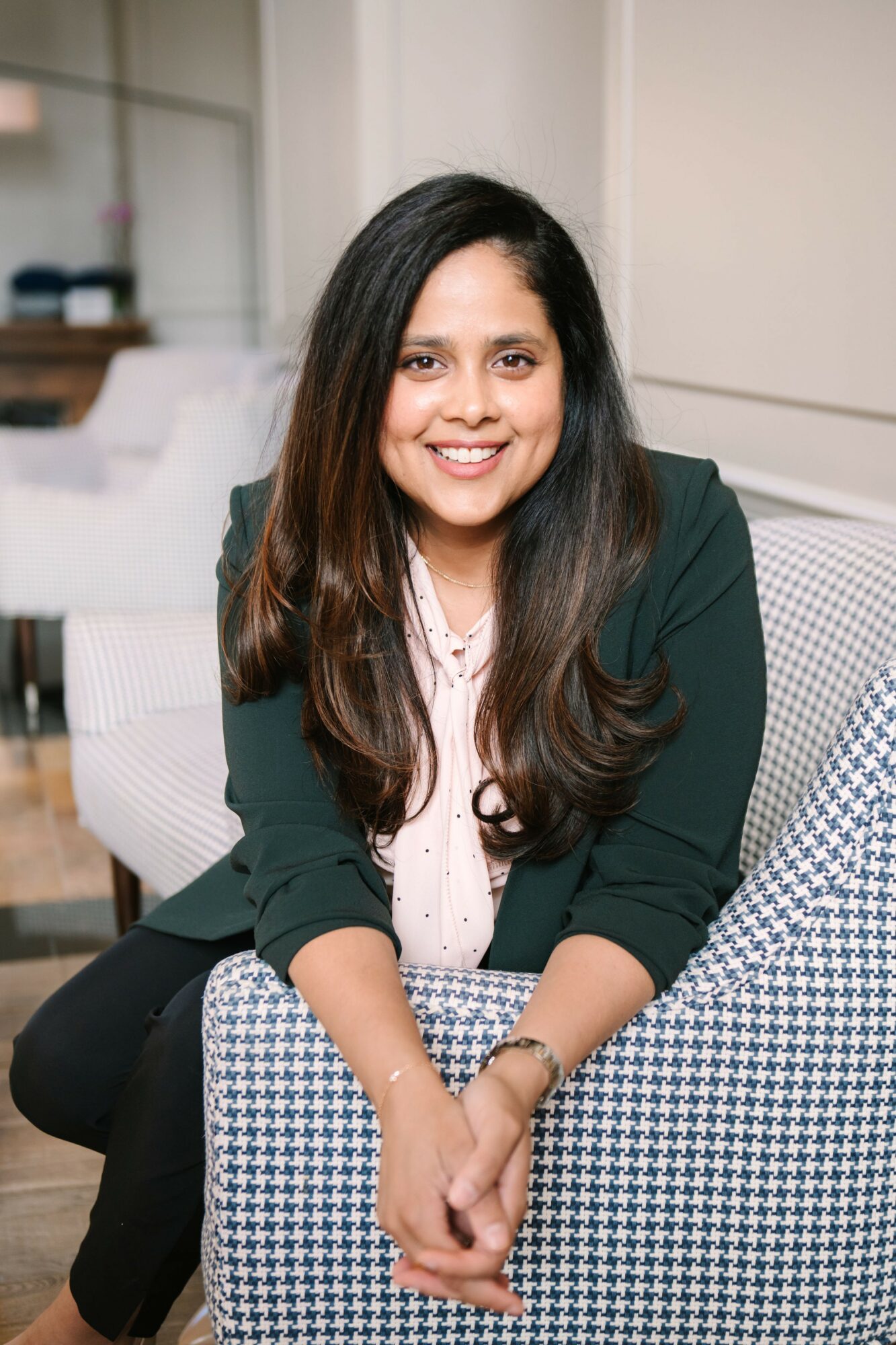
Today we’d like to introduce you to Heena Khan.
Hi Heena, please kick things off for us with an introduction to yourself and your story.
The Bloom Center for Motherhood was born from both professional and personal experience. After becoming a mother myself, I experienced firsthand how overwhelming the postpartum period can be. While there is so much preparation around pregnancy, labor, and caring for a baby, no one truly prepared me for the emotional and mental health challenges that can come with motherhood, the anxiety, identity shifts, emotional ups and downs, isolation, and pressure to hold everything together while struggling internally.
As a mental health counselor, I recognized many of the signs professionally, but living through it personally gave me an entirely different understanding and compassion for mothers navigating this stage of life. I realized how many women were silently suffering and how few spaces truly existed where moms felt understood, supported, and safe enough to talk honestly about their experiences.
I began by offering specialized therapy and support for women navigating pregnancy, postpartum depression and anxiety, birth trauma, infertility, motherhood transitions, and relationship stress at my private practice-Uplift Counseling Services. But as I worked with more and more moms, I began noticing a major gap in the mental health system, especially here in Texas-which gradually evolved into launching The Bloom Center for Motherhood- Texas first and only holistic, exclusive perinatal IOP.
Many mothers struggling with moderate to severe perinatal mental health concerns needed more support than weekly therapy, but the only option available was often a general mental health Intensive Outpatient Program (IOP). These programs were not designed specifically for mothers and often focused primarily on stabilization rather than addressing the unique mother-hood focused emotional, relational, hormonal, identity, attachment, and parenting-related challenges moms face during the perinatal period.
The reality was shocking: Texas is one of the largest states in the country, yet there were no specialized maternal mental health IOP programs exclusively for mothers. Moms were being placed into generalized programs where they often felt misunderstood, disconnected, or unable to fully relate to the treatment environment.
That realization became the catalyst for The Bloom Center’s mission. I set out to create something that did not exist, a space specifically designed for mothers who need a higher level of mental health support while still honoring the unique realities of motherhood. Our goal was not just to help moms survive, but to help them heal, reconnect with themselves, strengthen attachment and relationships, and feel genuinely supported by people who understand this season of life.
Today, The Bloom Center for Motherhood continues to grow as a specialized maternal mental health center offering higher levels of care designed specifically for women during pregnancy and postpartum, classes to prepare couples for the emotional ups and downs in pregnancy/postpartum and professional trainings for perinatal providers. At the heart of everything we do is the belief that mothers deserve care that is compassionate, specialized, and built around their real lived experiences, because motherhood should never feel like something women have to struggle through alone.
Alright, so let’s dig a little deeper into the story – has it been an easy path overall and if not, what were the challenges you’ve had to overcome?
It definitely has not been a smooth road, but every challenge reinforced why this work is so needed.
One of the biggest struggles has been building something that largely did not exist before. When you create a specialized maternal mental health program in a space where there is very little existing infrastructure, there is no clear roadmap to follow. I have had to educate referral sources, insurance companies, providers, and even families about why mothers need care specifically designed for the perinatal period rather than simply being placed into generalized mental health programs.
Another major challenge has been advocating for maternal mental health in systems that historically have not prioritized it. Even though perinatal mood and anxiety disorders are incredibly common, many mothers still struggle in silence due to shame, fear, lack of resources, or difficulty accessing specialized care. There were moments where it felt like we were constantly pushing against barriers, whether that was insurance limitations, lack of awareness, or trying to build programs that had never been offered in Texas before.
On a personal level, balancing entrepreneurship, leadership, clinical work, and motherhood has also come with its own challenges. Building The Bloom Center required long hours, emotional investment, risk-taking, and an enormous amount of perseverance. There were many moments of uncertainty and exhaustion, especially in the early stages, but the stories of the mothers we serve continued to remind me why this mission matters.
One of the hardest realities to witness was how many women were reaching crisis levels before receiving adequate support. So many moms would tell us they felt unseen, dismissed, or misunderstood in other treatment settings. Hearing those stories was heartbreaking, but it also fueled our determination to create a different kind of experience, one where mothers feel safe, understood, and genuinely cared for.
At the same time, the growth has been incredibly meaningful. Watching mothers heal, feel more confident as a mother, reconnect with themselves, strengthen their relationships, and realize they are not alone has made every obstacle worth it. The challenges have shaped not only the center itself, but also our commitment to continuing to advocate for better maternal mental health care in Texas.
As you know, we’re big fans of The Bloom Center for Motherhood. For our readers who might not be as familiar what can you tell them about the brand?
The Bloom Center for Motherhood is a specialized maternal mental health center dedicated to supporting women through pregnancy, postpartum, and the many emotional transitions that come with motherhood. Our program is designed for the Mom that needs more than one hour, once a week therapy to feel better.
What makes our center different is that everything we do was intentionally built specifically for mothers. Many women struggling with postpartum depression, anxiety, trauma, identity loss, or relationship challenges are often placed into generalized mental health settings where they do not feel fully understood. At The Bloom Center, moms are surrounded by providers and programs that truly understand the emotional, relational, hormonal, and attachment-related experiences that can happen during pregnancy and postpartum.
I recognized a major gap in Texas for mothers who needed more support than weekly therapy but did not fit well within traditional general mental health IOP programs. My mission has been to create a more specialized and compassionate approach to care that honors the realities of motherhood while helping women stabilize, heal, and reconnect with themselves.
I’m also passionate about prevention and education. In addition to therapy services, we offer classes and support focused on preparing couples for the emotional ups and downs that can come with pregnancy and postpartum, because we believe maternal mental health conversations should happen before families reach a crisis point. We also provide professional trainings for therapists, healthcare professionals, and perinatal providers to help improve the quality of maternal mental health care in our communities.
Brand-wise, what I am most proud of is the environment and culture we have created. We intentionally designed The Bloom Center to feel warm, safe, validating, and human. Mothers often tell us that for the first time, they feel truly seen and understood and feel more confident and empowered by the time they discharge. That means everything to us.
More than anything, I want readers to know that motherhood and mental health can coexist. Struggling during pregnancy or postpartum does not make someone a bad mother, and moms deserve specialized support without shame or judgment. Moms don’t have to hit rock bottom to get the support they need-infact the earlier mom gets professional help, the sooner she will start feeling better. Our hope is that The Bloom Center continues helping normalize these conversations while making compassionate, expert maternal mental health care more accessible to women across Texas.
What sort of changes are you expecting over the next 5-10 years?
I believe the maternal mental health industry is going to experience significant growth and transformation over the next 5–10 years, and honestly, it is long overdue.
For a long time, conversations around pregnancy and postpartum focused almost exclusively on physical health and the baby’s wellbeing, while the mother’s emotional and mental health was often minimized or overlooked. We are finally starting to see a major cultural shift where people are recognizing that maternal mental health is not a niche issue, it is a public health issue that impacts entire families, child development, relationships, and communities.
One of the biggest shifts I see happening is the expansion of specialized maternal mental health services and higher levels of care. Historically, moms needing intensive support were placed into generalized mental health programs that were never designed for the unique realities of pregnancy and postpartum. I believe we will continue seeing more programs specifically tailored to mothers, including maternal mental health IOPs, day programs, dyadic and attachment-focused care, and integrated models that combine mental health support with parenting, infant bonding, and family systems work.
I also think there will be a much larger emphasis on prevention and early intervention. Instead of waiting until mothers are in crisis, healthcare systems are beginning to understand the importance of preparing women and couples emotionally during pregnancy, screening earlier, and offering support proactively. We are seeing growing awareness around topics like birth trauma, postpartum anxiety, intrusive thoughts, identity loss, and the mental load of motherhood, conversations that were often ignored in previous generations.
Another major trend is the movement toward collaborative and multidisciplinary care. Maternal mental health does not exist in isolation, so I believe the future will involve stronger partnerships between therapists, OB-GYNs, psychiatrists, pediatricians, doulas, lactation consultants, pelvic floor therapists, and other perinatal professionals. The industry is moving toward more integrated and holistic care models rather than fragmented treatment.
I also see virtual care continuing to expand access, especially in large states like Texas where many women do not have access to specialized providers in their area. Telehealth has helped normalize mental health support for mothers and has made specialized care more accessible to women who otherwise may have gone without help.
At the same time, I think the industry will continue moving toward more trauma-informed, attachment-focused, and relationship-centered approaches to treatment. We now understand that maternal mental health is not just about symptom reduction, it is about helping women feel supported, connected, emotionally safe, and empowered in their relationships with themselves, their babies, and their families.
What gives me hope is that stigma is slowly decreasing. More women are speaking openly about their struggles, and more providers are recognizing that motherhood can be both beautiful and incredibly difficult at the same time. My hope is that over the next decade, specialized maternal mental health care becomes the standard rather than the exception
Contact Info:
- Website: https://www.bloomcenterformotherhood.com
- Instagram: https://www.instagram.com/bloomcenterformotherhood
- Facebook: https://www.facebook.com/BloomCenterforMotherhood