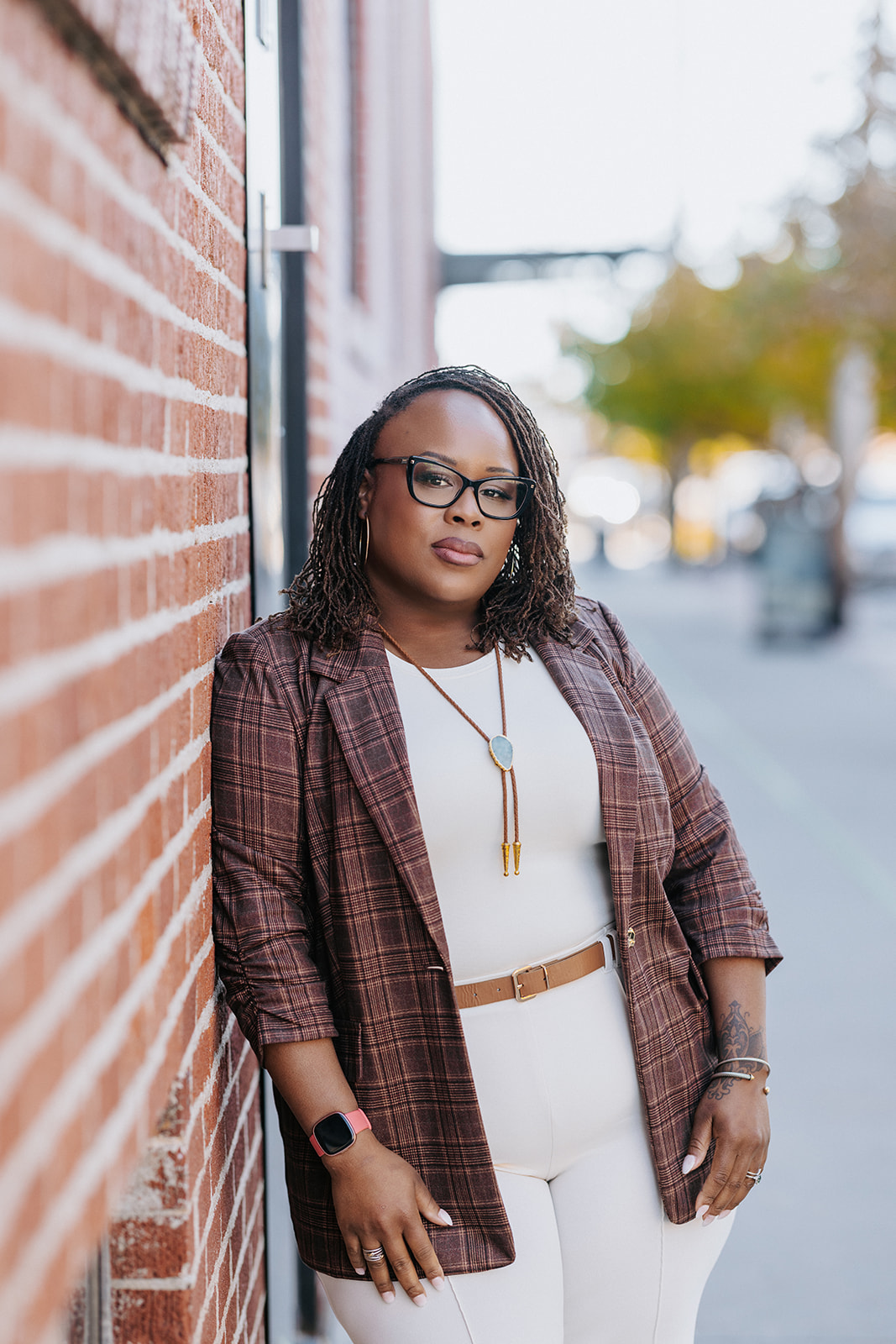






Today we’d like to introduce you to Dr. J. Montana Cain.
Hi Dr. J. Montana, thanks for joining us today. We’d love for you to start by introducing yourself.
To answer this question, I have to start at the very beginning, because looking back, every moment prepared me for the next, even the ones that felt like detours.
Growing up, I was convinced I was going to be a pediatrician. Then organic chemistry arrived, and a shadowing experience made something very clear: medicine was not the path for me. Turns out I am not a fan of blood or touching people. LOL. Looking back, I am grateful for that detour, because it led me exactly where I needed to go.
I found my way into education instead, spending seven years teaching high school across three very different environments, and what I witnessed changed everything. In Brookline, Massachusetts, I took the bus to work while my students drove Porsches. The classrooms were small, the resources were abundant, and opportunity felt like a given. In Newburgh, New York, students showed up ready to learn with tattered books and not enough seats. The talent and determination in that building were undeniable, but the resources simply were not there. Later, at a well-funded school on an HBCU campus in Fayetteville, North Carolina, I saw firsthand what intentional investment in young people could produce.
Each setting left me asking the same question: why do some communities have access to opportunities that others do not?
Those questions eventually led me to graduate school, but not in the way most people might expect. I did not leave teaching energized. I left burned out. What I found in graduate school, though, cracked something wide open in me.
I began learning the history behind the tools I had used my entire life as both a student and a teacher. Achievement tests. Standardized assessments. The very measures we treated as objective truth. What I discovered was that much of the history of testing in this country was rooted in something deeply sinister, the eugenics movement, and a deliberate effort to use science to prove the myth of white supremacy. To prove that Black people and other subjugated groups were lesser than. Achievement tests, I learned, are far better measures of race and socioeconomic circumstance than they are of actual intelligence or potential.
That knowledge did not make me want to abandon data. It made me want to reclaim it.
I found evaluation, the process of determining the extent to which an objective is actually being met, and I saw it as a vehicle for something different. A way to use evidence honestly. A way to ask better questions. A way to use data in service of communities that are harmed by it rather than helped.
That conviction is still at the center of everything I do today. When I sit across from a nonprofit leader trying to demonstrate their impact, or a foundation trying to understand whether their investments are creating real change, I am not just doing technical work. I am participating in something I believe matters. Data should tell the truth about what communities are achieving, what they need, and what they deserve. That is THE work.
For my 40th birthday, I hired a career coach. Together we narrowed my options to two paths: pursue a C-suite role or start a business. Being the practical (i.e., risk-averse) person I am, I chose the C-suite route. My coach stopped me cold with one question: “Is that decision coming from fear or clarity?” I knew the answer immediately. It was fear. So…I started my business, scared as ever.
Launching JMC Consulting Firm has been one of the best decisions I have ever made. Doing it in Tulsa, Oklahoma, home of Historic Greenwood, makes it even more meaningful. This community reminds me daily of what resilience, vision, and investment can build.
The journey has not been linear. There have been seasons of uncertainty, self-doubt, and profound growth. Becoming a first-time mother in my forties added a dimension I never anticipated, a deeper sense of purpose, a sharper sense of time, and a clarity about what truly matters. But I now see that none of it happened by accident. I did not almost become a doctor by accident. I did not teach across three very different schools by accident. I did not leave a job I thought I was supposed to want by accident. Every detour prepared me for the next chapter, and somehow, all of them led me exactly where I was supposed to be.
Can you talk to us a bit about the challenges and lessons you’ve learned along the way. Looking back would you say it’s been easy or smooth in retrospect?
Ha! I wish.
It has definitely not been a smooth road, but honestly, I think that is part of the journey.
One of my biggest early challenges was simply making money. When I started, I was focused on proving I could do it. Could I find clients? Could I deliver quality work? Could I replace my salary? Like many service-based business owners, I spent the first few years saying yes to almost everything, wearing every hat, and figuring things out as I went. In many ways, I built myself a job. A well-paying job that I enjoyed far more than my previous employment, but a job nonetheless.
One of my biggest internal hurdles early on was simply seeing myself as an entrepreneur. I thought entrepreneurs were the people on Shark Tank. People who invented products, raised venture capital, and seemed larger than life. I never saw myself in that picture.
When I first started, Tulsa gave me something I did not know I needed: proof that entrepreneurship was possible for someone like me. Through organizations like Build in Tulsa, New U, and Leadership Tulsa, I met down-to-earth everyday people building meaningful businesses and creating real opportunities for others. I was especially inspired by Black women founders navigating the same doubts, the same responsibilities, the same imperfect plans. Seeing them changed what I believed was possible for myself.
What I did not realize then was that I was spending almost all of my time working in the business and very little time working on it. No intentional visibility. No relationship stewarding. No systems for bringing in new clients. I did not need to think about any of that early on because my former colleagues and clients were generous with referrals. The work just came.
Then came year three.
I had been pregnant, taken maternity leave, and when I came back, the pipeline that I thought would be there simply was not. The warm leads had gone cold. And I realized this was not something that happened to me. It was the natural consequence of time plus my own inaction. I had not built the visibility or the relationships that sustain a business when life inevitably interrupts. I had to essentially start over, except this time I had to be intentional about it.
Listen, I am a horrible salesperson. And I am an introvert, which makes the idea of putting myself out there feel even more unnatural. But what I have learned is that I do not have to be a salesperson. I have to be a relationship builder. Almost every client I have ever had has come through a relationship, a conversation, a referral, a genuine connection. Once I stopped trying to sell and started focusing on serving and connecting, things shifted and the weight was lifted. This is a process and I am acknowledging that.
Pricing was another hard lesson. In a service based business there is no product, no inventory, no easy way to think about margins. For a long time I priced like an employee, calculating hourly rates and working backwards. What I have learned, and am still learning, is that pricing has to reflect value and transformation, not just time. What does the client walk away with? What becomes possible for their organization because of this work? That is what determines the price. Learning to be bolder there has been one of the most important shifts I have made.
The business landscape has also changed around me. I started out responding to RFPs, which felt like a natural fit for my background. Now, with the shifts in government funding making that space far more competitive, I am learning to be proactive. That means naming my offers clearly, building packages that potential clients can understand and say yes to, and creating visibility so that people know what I do before they ever need it.
Now, my network has grown intentionally. I have a clearer picture of who my clients are and what it takes to reach them. That means showing up at new conferences, speaking outside my usual circles, and getting in front of people who have never heard of me. More visibility, more conversation, more connection. Even doing this interview! I am geetting more comfortable with putting myself out there.
Today my challenges look very different. I am no longer asking whether the business can survive. Now I am asking how it can scale sustainably. That shift has required me to think less like a practitioner and more like a CEO. I spend a lot more time thinking about systems, delegation, and sustainability. I am learning how to balance time working in the business, time working on the business, and just as importantly, time away from it entirely. As a recovering overachiever, that last one might be the hardest lesson of all.
The funny thing about entrepreneurship is that every time you solve one problem, you unlock the next level. It is not just a new business challenge. It is a new version of yourself. The person who started this business is not the same person leading it today. I am finally starting to feel like a CEO.
Appreciate you sharing that. What should we know about JMC Consulting Firm?
Through JMC Consulting Firm, I help nonprofit organizations, foundations, and mission-driven leaders clarify, communicate, and strengthen their impact.
Most organizations come to me because they need evaluation. Maybe they need a report for a funder, a logic model, a strategic plan, or help understanding whether their programs are actually making a difference. Those needs are real and important.
But what we often discover together is that the challenge runs deeper.
Organizations are doing incredible work, but they struggle to explain their impact. Different staff members describe the organization differently. Reports focus on activities rather than outcomes. Data is collected but rarely used to guide decisions. They know they are making a difference, but they cannot clearly articulate how.
That gap between the impact you feel and the impact you can show is where I do my best work.
I developed the GATES Framework, which stands for Getting to Action Through Equity and Systems, because too many organizations are drowning in data, planning documents, and competing priorities while still struggling to answer one simple question: Are we actually making the impact we want to make?
GATES helps organizations move from confusion to clarity. We start by understanding what success really looks like, align programs and strategies around that vision, build the systems needed to measure progress, and then use what we learn to make better decisions. In simple terms, it helps organizations connect their mission, their work, and their results so they can create greater impact.
One example that captures the heart of this work is a nonprofit that came to me knowing they were making a difference but unable to clearly explain how their programs connected to their larger mission. Staff were working hard, collecting data, and serving people, but everyone was telling a slightly different story about the organization’s impact.
Together we clarified their intended outcomes, aligned their programs around those outcomes, redesigned how they collected and used data, and created a shared framework for decision-making. The result was not just a better evaluation plan. The organization gained a common language for impact, stronger alignment across teams, greater confidence when communicating with funders, and a clearer path for strategic decisions.
That is the work I love most. Not producing reports, but helping organizations see themselves more clearly and act with greater confidence.
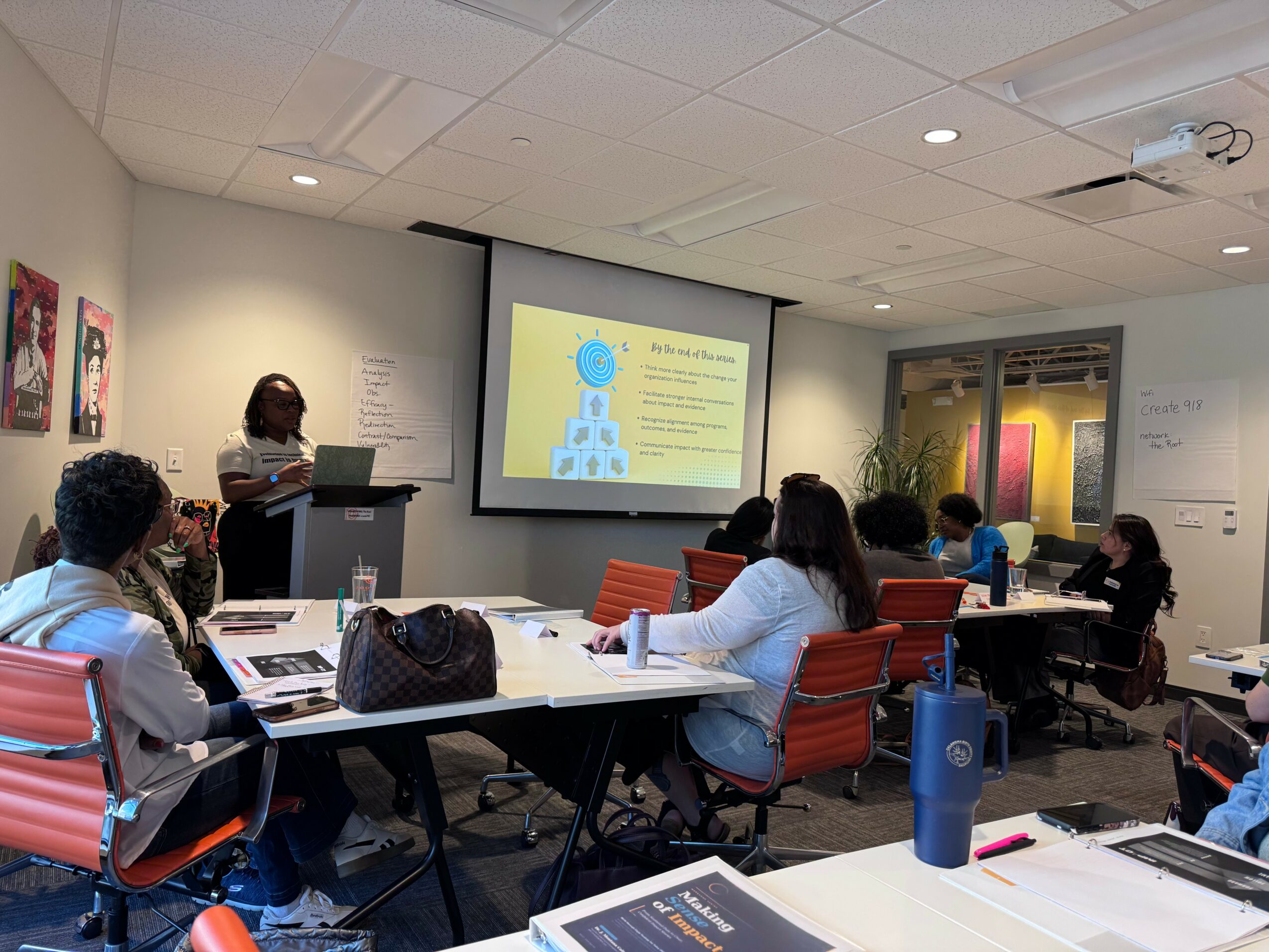
Over time I have become known for helping organizations answer one deceptively simple question: How do we turn the impact we feel into impact we can show? What sets my work apart is the combination of education, evaluation, and strategy. I do not just help organizations measure impact. I help them make sense of it. My clients often tell me I have a unique ability to take complex ideas, competing priorities, and scattered information and turn them into a clear path forward. I joke that my real title should be Chief Sensemaking Officer.
I want readers to walk away thinking, “I have never thought about evaluation that way before.” Whether they become a client, attend a workshop, or simply start asking better questions about impact in their own organization, that is a win. But more than anything, I want people to see evaluation differently. It is not just about reporting outcomes. It is about learning, making better decisions, and building stronger organizations that can deliver on the promises they make to their communities.
Looking ahead, I am focused on bringing the GATES Framework to a broader audience through my forthcoming book, “The Getting to Action Through Equity and Systems Action Guide.” The book captures the lessons I have learned helping organizations align their vision, strategy, and evidence so they can make better decisions and create greater impact. Every client engagement, every workshop, every cohort experience has been field testing the ideas that will live in those pages.
The book is the foundation. Once it exists, it answers the essential questions: What is GATES? Why does it matter? How does it work? What are the principles? From there, the longer term vision is to expand into the GATES Academy, a learning community designed to help leaders apply these concepts inside their own organizations, with curriculum, coaching, and community built around the framework.
The goal has always been the same: helping organizations move from “we know we are making a difference” to “we can clearly explain, demonstrate, and strengthen the difference we are making.” Because when you can articulate your impact with confidence, everything else becomes easier. Fundraising. Reporting. Partnerships. Strategic decisions. Getting your team aligned around a shared vision.
Because here is what I know to be true: evaluation is technical. Impact is human. And the organizations doing the work deserve tools that help them achieve both.
Is there something surprising that you feel even people who know you might not know about?
Most people assume that because I facilitate workshops, speak at conferences, and spend my days helping organizations wrestle with complex questions, I must be naturally extroverted and endlessly “on.” The truth is I am deeply introverted. I recharge in solitude. The visibility that comes with running a business has been a stretch, not a default.
But here is the one that might surprise people.
I am a line dancing enthusiast. Full stop. Give me a good song and a crowd that knows the steps (even if I don’t) and I am completely in my element. Now, I have to be honest. I have not mastered Tamia yet, and I have officially given up. Now, I am learning the Country Girl Trail Ride line dance to break in my cowboy boots.
I also love a good psychological thriller. The world (and just adulting in general) is already pretty chaotic (!!!!). Sometimes I just need to sit down, focus, and figure out whodunnit.
At the end of the day I am a researcher, a consultant, a founder, a mother, a woman who will meet you on the dance floor, and someone who absolutely needs to know how the story ends. In work and in life, that has always been true.
Contact Info:
- Website: https://www.jmcainconsulting.com
- Instagram: jmcconsultingfirm
- LinkedIn: https://www.linkedin.com/in/jmontanacain/